Портрет Жан-Жозеф Бенджамін-Констант

85 найвідоміших картин Жан-Жозеф Бенджамін-Констант, кожна з яких є унікальною

Оновлено Листопад 2026 · за рейтингом нашої популярності (кількість пошукових запитів, переглядів та замовлень для кожної роботи) · 88 робіт Жан-Жозеф Бенджамін-Констант у нашому каталозі

Коротко кажучи

Scene in a Harem (Un Envoi de Serbie) (1876) — це картина Жан-Жозеф Бенджамін-Констант, яка привертає найбільше уваги; оригінал зберігається в Метрополітен-музей, Нью-Йорк. Після цього погляд переходить на Caucasian Boy (1902) та Театр Імператора у Візантії. Серед 88 робіт Жан-Жозеф Бенджамін-Констант у нашому каталозі ці 85 є найвідомішими: кожна з них — унікальний оригінал із зазначенням року створення, музею та причини її безсмертя.

1845 – 1902, Париж Orientalism Найбільше робіт: Musée des Augustins

Топ-10 картин Жан-Жозеф Бенджамін-Констант крізь призму галереї

1
Scene in a Harem (Un Envoi de Serbie) (1876) авторства Жан-Жозеф Бенджамін-Констант

Scene in a Harem (Un Envoi de Serbie)

1876 · Oil On Canvas · Метрополітен-музей, Нью-Йорк

The canvas presents Scene in a Harem (Un Envoi de Serbie), a work that invites the viewer into a private, shadowed interior. This painting, created in 1876, carries several names that whisper of its complex subject matter. It is known as Three Figures in an Interior (Un Envoi de Serbie) and also bears the alternative title The Serbian Concubine (Un Envoi de Serbie). Each name offers a different lens through…

2
Caucasian Boy (1902) авторства Жан-Жозеф Бенджамін-Констант

Caucasian Boy

The painting depicts a young girl positioned as the central figure. She wears a red hat adorned with a single feather. Her long hair descends along her back, and her gaze is directed toward a point outside the frame. She is dressed in clothing consistent with the traditional attire of the Caucasus region. In the background, several other figures are visible, including one person standing to the left of the…

3
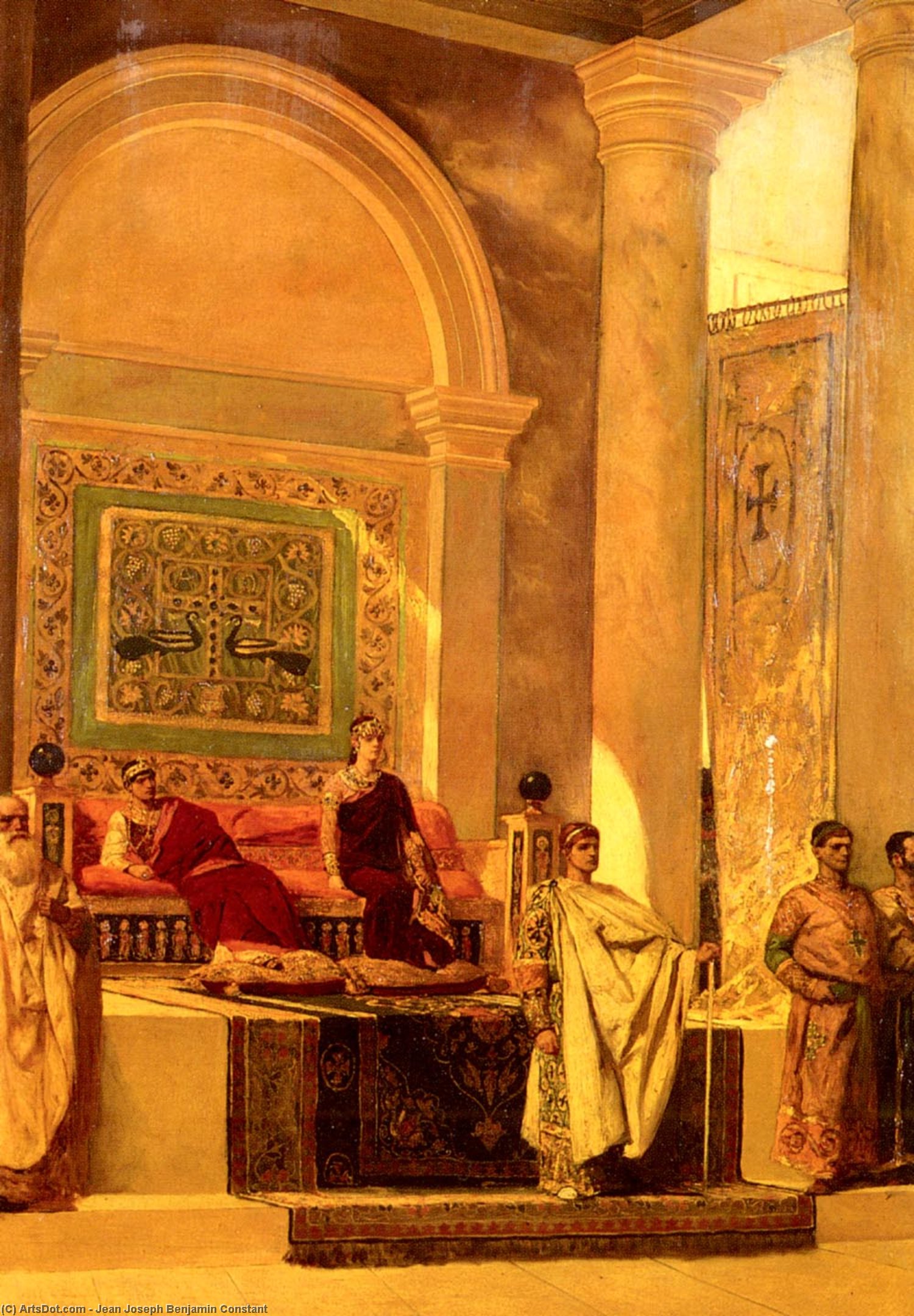
Театр Імператора у Візантії авторства Жан-Жозеф Бенджамін-Констант

Театр Імператора у Візантії

Олія на полотні

Глибокий погляд у імперську владу: Картина Жана-Жозефа Бенджамін-Констант «Священний зал Візантії» Картина Жана-Жозефа Бенджамін-Констант «Священный зал Візантії» – це захоплююча праця академічного історика, що переносить глядача у світ імперської могутності та загадкової атмосфери. Мистець не просто зображує владу; він запрошує до роздумів про авторитет, судження та тягар лідерства, викликаючи емоції та інтелектуальну цікавість. Його полотно – це візуальний діалог з історією та філософією мистецтва XIX століття. Академічний стиль Бенджамін-Констант відзначається…

4
Entrée du sultan Mehmet II à Constantinople le 29 mai 1453 Entrée de Mahomet II à Constantinople (Ancien titre) авторства Жан-Жозеф Бенджамін-Констант

Entrée du sultan Mehmet II à Constantinople le 29 mai 1453 Entrée de Mahomet II à Constantinople (Ancien titre)

Oil On Canvas · Musée des Augustins, Тулуза

The canvas titled Entrée du sultan Mehmet II à Constantinople le 29 mai 1453 Entrée de Mahomet II à Constantinople (Ancien titre) captures a monumental shift in history. Jean-Joseph Benjamin-Constant brings the viewer into the immediate aftermath of the siege of Constantinople in 1453 CE. The oil on canvas presents the triumphant entrance of the Ottoman Sultan, Mehmed II, as he moves through the city. This moment marks the conclusion…

5
John Brooks Henderson (1895) авторства Жан-Жозеф Бенджамін-Констант

John Brooks Henderson

1895 · Oil · Національна портретна галерея, Вашингтон, округ Колумбія

In this medium close-up portrait, Jean-Joseph Benjamin-Constant centers John Brooks Henderson against a dark, atmospheric background. The subject is framed by a heavy, black fur-trimmed coat worn over a dark suit. A white shirt and a green cravat provide a sharp point of contrast against the somber tones of the attire. The man’s face is defined by a well-groomed grey beard and thin-rimmed spectacles that catch the light. To the…

6
Entrance of Mohammed II авторства Жан-Жозеф Бенджамін-Констант

Entrance of Mohammed II

Oil On Canvas

The oil on canvas titled Entrance of Mohammed II was painted by Jean-Joseph Benjamin-Constant in 1876. This work depicts the historical conquest of Constantinople. The subject matter focuses on the triumphant entrance of the Ottoman Sultan, Mehmed II, into the city. The scene captures a specific moment of transition following the siege of the city in 1453 CE.

7
Arabes assis авторства Жан-Жозеф Бенджамін-Констант

Arabes assis

Oil On Canvas · Dahesh Museum of Art, Нью-Йорк

In Arabes assis, Jean-Joseph Benjamin-Constant places three figures within a quiet, shared space. Two adults and a child sit together, their forms gathered in a moment of stillness. They rest upon an ornate rug, the patterns of which anchor the group to the ground. The scene captures individuals from North Africa or the Middle East, presented through the lens of the 19th-century Orientalist movement.

8
Portrait of a Bearded Young Man Called l'Albinos (1875) авторства Жан-Жозеф Бенджамін-Констант

Portrait of a Bearded Young Man Called l'Albinos

1875 · Oil On Canvas · Musée des Augustins, Тулуза

In "Portrait of a Bearded Young Man Called l'Albinos" by Jean-Joseph Benjamin-Constant, the subject emerges from a heavy, shadow-filled void. This bust-length portrait, created about 1875, centers on a young man whose pale features and light hair earn him the name l'Albinos. He sits with arms crossed against his chest, a posture that suggests a quiet guardedness or a deep, inward-looking introspection. The man’s light-colored hair and beard catch the…

9
Sketch for the church of Clichy-la-Garenne: The Immaculate Conception (1874) авторства Жан-Жозеф Бенджамін-Констант

Sketch for the church of Clichy-la-Garenne: The Immaculate Conception

1874 · Oil · Petit Palais, Париж

The artwork titled Sketch for the church of Clichy-la-Garenne: The Immaculate Conception was created by the French artist Jean-Joseph Benjamin-Constant. This piece dates to about 1874. The subject matter is religious in nature, specifically representing the Immaculate Conception. The composition focuses on a single seated figure, depicted in a manner consistent with classical academic traditions.

Знамениті картини Жан-Жозеф Бенджамін-Констант, з 11 по 85

11The Pasha's Soldiers (1880) авторства Жан-Жозеф Бенджамін-КонстантThe Pasha's Soldiers1880 · Rhode Island School of Design Museum of Art 12Dance of the Veil (1880) авторства Жан-Жозеф Бенджамін-КонстантDance of the Veil1880 13Odalisque (1882) авторства Жан-Жозеф Бенджамін-КонстантOdalisque1882 14Odalisque (1880) авторства Жан-Жозеф Бенджамін-КонстантOdalisque1880 15Carpet Seller in Tangiers (1883) авторства Жан-Жозеф Бенджамін-КонстантCarpet Seller in Tangiers1883 16Lutetia Famae Genitrix. (1880) авторства Жан-Жозеф Бенджамін-КонстантLutetia Famae Genitrix.1880 · Musée des Augustins 17Benjamin-Constant - Le caïd marocain Tahamy (1880) авторства Жан-Жозеф Бенджамін-КонстантBenjamin-Constant - Le caïd marocain Tahamy1880 · Musée d'art et d'histoire de Narbonne 18Sketch for the Ballroom of the Hôtel de Ville de Paris: The City of Paris Inviting the World to its Festivities (1889) авторства Жан-Жозеф Бенджамін-КонстантSketch for the Ballroom of the Hôtel de Ville de Paris: The City of Paris Inviting the World to its Festivities1889 · Petit Palais 19Sketch for the Hôtel de Ville de Paris: The City of Paris Inviting the World to its Festivities (1890) авторства Жан-Жозеф Бенджамін-КонстантSketch for the Hôtel de Ville de Paris: The City of Paris Inviting the World to its Festivities1890 · Petit Palais 20Evening on the Seashore—Tangiers (1891) авторства Жан-Жозеф Бенджамін-КонстантEvening on the Seashore—Tangiers1891 · Milwaukee Art Museum 21Arcadian (1893) авторства Жан-Жозеф Бенджамін-КонстантArcadian1893 · Musée Victor Hugo 22Portrait of Jean Montfraix at the Age of Twelve Years (1893) авторства Жан-Жозеф Бенджамін-КонстантPortrait of Jean Montfraix at the Age of Twelve Years1893 · Musée des Augustins 23Portrait of Henri d'Orléans, Duke of Aumale (1896) авторства Жан-Жозеф Бенджамін-КонстантPortrait of Henri d'Orléans, Duke of Aumale1896 · Музей Конде 24Mary Henderson (1895) авторства Жан-Жозеф Бенджамін-КонстантMary Henderson1895 · Національна портретна галерея 25Portrait of His Two Sons (André and Emmanuel) (1899) авторства Жан-Жозеф Бенджамін-КонстантPortrait of His Two Sons (André and Emmanuel)1899 · Musée des Augustins 26Portrait of Angèle Delasalle (1900) авторства Жан-Жозеф Бенджамін-КонстантPortrait of Angèle Delasalle1900 · Petit Palais 27Portrait of Elia Demidof (1900) авторства Жан-Жозеф Бенджамін-КонстантPortrait of Elia Demidof1900 · Національна галерея 28The Rt Hon. William McEwan MP (1827-1913) (1900) авторства Жан-Жозеф Бенджамін-КонстантThe Rt Hon. William McEwan MP (1827-1913)1900 · Polesden Lacey 29Odalisque (1900) авторства Жан-Жозеф Бенджамін-КонстантOdalisque1900 · Musée d'art et d'histoire de Narbonne 30Portrait of my son André (1895) авторства Жан-Жозеф Бенджамін-КонстантPortrait of my son André1895 · Музей д’Орсе 31Lying Odalisque (1870) авторства Жан-Жозеф Бенджамін-КонстантLying Odalisque1870 · Музей д’Орсе 32Entry of Mahomet II into Constantinople авторства Жан-Жозеф Бенджамін-КонстантEntry of Mahomet II into Constantinople 33L'Imperatrice Theodora Au Colisee авторства Жан-Жозеф Бенджамін-КонстантL'Imperatrice Theodora Au Colisee 34Favorite of the Emir авторства Жан-Жозеф Бенджамін-КонстантFavorite of the Emir 35The Cherifas (1884) авторства Жан-Жозеф Бенджамін-КонстантThe Cherifas1884 · Musée des Beaux-Arts 36Favorite of the Emir (1879) авторства Жан-Жозеф Бенджамін-КонстантFavorite of the Emir1879 37Dr John Chapman (1885) авторства Жан-Жозеф Бенджамін-КонстантDr John Chapman1885 · Nottingham Castle Museum And Art Gallery 38Oriental Woman with a Drum (1880) авторства Жан-Жозеф Бенджамін-КонстантOriental Woman with a Drum1880 39Empress Theodora at the Coliseum (1889) авторства Жан-Жозеф Бенджамін-КонстантEmpress Theodora at the Coliseum1889 40Sketch for the Ballroom of the Hôtel de Ville de Paris: The City of Paris Inviting the World to its Festivities (1893) авторства Жан-Жозеф Бенджамін-КонстантSketch for the Ballroom of the Hôtel de Ville de Paris: The City of Paris Inviting the World to its Festivities1893 · Petit Palais 41Henrietta Maria Walter, Wife of Arthur Fraser Walter of Bearwood, High Steward of Woking (1896) авторства Жан-Жозеф Бенджамін-КонстантHenrietta Maria Walter, Wife of Arthur Fraser Walter of Bearwood, High Steward of Woking1896 42Odalisque (1880) авторства Жан-Жозеф Бенджамін-КонстантOdalisque1880 · Baltimore Museum of Art 43Portrait of a Renaissance Man авторства Жан-Жозеф Бенджамін-КонстантPortrait of a Renaissance ManMusée des Augustins 44In the Sultan's Palace авторства Жан-Жозеф Бенджамін-КонстантIn the Sultan's PalaceUtah Museum of Fine Arts 45The Daughter of Caesar авторства Жан-Жозеф Бенджамін-КонстантThe Daughter of Caesar 46At Rest авторства Жан-Жозеф Бенджамін-КонстантAt Rest 47Autoportrait авторства Жан-Жозеф Бенджамін-КонстантAutoportraitMusée des Augustins 48Portrait Of Mme M. S. Derviz авторства Жан-Жозеф Бенджамін-КонстантPortrait Of Mme M. S. DervizДержавний музей-заповідник «Ермітаж» 49Arabian Nights авторства Жан-Жозеф Бенджамін-КонстантArabian Nights 50Salome with the Head of St. John the Baptist авторства Жан-Жозеф Бенджамін-КонстантSalome with the Head of St. John the Baptist 51Contemplation авторства Жан-Жозеф Бенджамін-КонстантContemplation 52Helene Vincent авторства Жан-Жозеф Бенджамін-КонстантHelene Vincent 53Herodiade авторства Жан-Жозеф Бенджамін-КонстантHerodiade 54Les Chérifas авторства Жан-Жозеф Бенджамін-КонстантLes Chérifas 55Le Masque de Beethoven авторства Жан-Жозеф Бенджамін-КонстантLe Masque de BeethovenMusée des Augustins 56Portrait d'Emmanuel, fils de l'artiste авторства Жан-Жозеф Бенджамін-КонстантPortrait d'Emmanuel, fils de l'artisteMusée des Augustins 57The Palace Guard With Two Leopards авторства Жан-Жозеф Бенджамін-КонстантThe Palace Guard With Two Leopards 58Victory авторства Жан-Жозеф Бенджамін-КонстантVictory 59The Favorite of the Emir (1879) авторства Жан-Жозеф Бенджамін-КонстантThe Favorite of the Emir1879 · Національна галерея мистецтв 60Judith авторства Жан-Жозеф Бенджамін-КонстантJudithМетрополітен-музей 61The Count of Toulouse Has His Standards Blessed at Saint-Sernin авторства Жан-Жозеф Бенджамін-КонстантThe Count of Toulouse Has His Standards Blessed at Saint-SerninMusée des Augustins 62Bird and Animal авторства Жан-Жозеф Бенджамін-КонстантBird and AnimalStatens Museum For Kunst 63Gifts from a Pasha авторства Жан-Жозеф Бенджамін-КонстантGifts from a PashaМузей искусств Мульхауза 64The Watchful Guard авторства Жан-Жозеф Бенджамін-КонстантThe Watchful Guard 65Judith авторства Жан-Жозеф Бенджамін-КонстантJudith 66Judith авторства Жан-Жозеф Бенджамін-КонстантJudith 67The Houses of Parliament, London авторства Жан-Жозеф Бенджамін-КонстантThe Houses of Parliament, London 68The Sultan's Tiger авторства Жан-Жозеф Бенджамін-КонстантThe Sultan's TigerМетрополітен-музей 69Victrix авторства Жан-Жозеф Бенджамін-КонстантVictrix 70Maures à Tanger авторства Жан-Жозеф Бенджамін-КонстантMaures à TangerVictoria Art Gallery 71On the Terrace авторства Жан-Жозеф Бенджамін-КонстантOn the Terrace 72Harem Women авторства Жан-Жозеф Бенджамін-КонстантHarem Women 73Paris Welcoming The World авторства Жан-Жозеф Бенджамін-КонстантParis Welcoming The World 74Drying Clothes авторства Жан-Жозеф Бенджамін-КонстантDrying Clothes 75Portrait d'Emmanuel Arago (Fils de l'astronome François Arago. Benjamin Constant a épousé une de ses filles.) авторства Жан-Жозеф Бенджамін-КонстантPortrait d'Emmanuel Arago (Fils de l'astronome François Arago. Benjamin Constant a épousé une de ses filles.)Musée des Augustins 76Harem Scene авторства Жан-Жозеф Бенджамін-КонстантHarem Scene 77Twilight Hours авторства Жан-Жозеф Бенджамін-КонстантTwilight Hours 78Afternoon Langour авторства Жан-Жозеф Бенджамін-КонстантAfternoon Langour 79Antigone au chevet de Polynice авторства Жан-Жозеф Бенджамін-КонстантAntigone au chevet de PolyniceMusée des Augustins 80Portrait Of An Arab Woman авторства Жан-Жозеф Бенджамін-КонстантPortrait Of An Arab Woman 81Guarding The Chieftain авторства Жан-Жозеф Бенджамін-КонстантGuarding The Chieftain 82Toulouse Capitole entrée du pape Urbain II авторства Жан-Жозеф Бенджамін-КонстантToulouse Capitole entrée du pape Urbain II 83Odalisque авторства Жан-Жозеф Бенджамін-КонстантOdalisqueМетрополітен-музей 84Le jour des funérailles - Scène du Maroc (1889) авторства Жан-Жозеф Бенджамін-КонстантLe jour des funérailles - Scène du Maroc1889 · Petit Palais 85Evening on Terraces (Morocco) (1879) авторства Жан-Жозеф Бенджамін-КонстантEvening on Terraces (Morocco)1879 · Монреальський музей образотворчих мистецтв

Знамениті картини Жан-Жозеф Бенджамін-Констант за періодами творчості

Теми, що привертали увагу Жан-Жозеф Бенджамін-Констант

Чотири сюжети, які найчастіше зустрічаються в цих оригіналах, кожен із найкращим прикладом.

Музеї, у яких зберігаються оригінали Жан-Жозеф Бенджамін-Констант

8 музеїв, у яких зберігається найбільша кількість картин із цього списку.

Музей Місто Твори Жан-Жозеф Бенджамін-Констант Картини зі цього списку
Musée des Augustins, ТулузаMusée des Augustins Тулуза 12 Entrée du sultan Mehmet II à Constantinople le 29 mai 1453 Entrée de Mahomet II à Constantinople (Ancien titre), Portrait of a Bearded Young Man Called l'Albinos, Lutetia Famae Genitrix.
Petit Palais, ПарижPetit Palais Париж 6 Sketch for the church of Clichy-la-Garenne: The Immaculate Conception, Sketch for the Ballroom of the Hôtel de Ville de Paris: The City of Paris Inviting the World to its Festivities, Sketch for the Hôtel de Ville de Paris: The City of Paris Inviting the World to its Festivities
Метрополітен-музей, Нью-ЙоркМетрополітен-музей Нью-Йорк 4 Scene in a Harem (Un Envoi de Serbie), Judith, The Sultan's Tiger
Національна портретна галерея, Вашингтон, округ КолумбіяНаціональна портретна галерея Вашингтон, округ Колумбія 2 John Brooks Henderson, Mary Henderson
Musée d'art et d'histoire de Narbonne, NarbonneMusée d'art et d'histoire de Narbonne Narbonne 2 Benjamin-Constant - Le caïd marocain Tahamy, Odalisque
Музей д’Орсе, ПарижМузей д’Орсе Париж 2 Portrait of my son André, Lying Odalisque
Арт-палац Грузії - Музей культурної історії, ТбілісіАрт-палац Грузії - Музей культурної історії Тбілісі 1 Caucasian Boy
Dahesh Museum of Art Нью-Йорк 1 Arabes assis

Жан-Жозеф Бенджамін-Констант крізь десятиліття: одна унікальна оригінальна робота для кожного

Роботи за десятиліттями

Оберіть десятиліття, щоб побачити оригінальний твір, який його визначає.

Картини Жан-Жозеф Бенджамін-Констант: запитання до галереї

Яка найвідоміша робота Жан-Жозеф Бенджамін-Констант?Дізнатися відповідь

Scene in a Harem (Un Envoi de Serbie) (1876), Метрополітен-музей, Нью-Йорк. Далі йдуть Caucasian Boy (1902) та Театр Імператора у Візантії.

У якому віці Жан-Жозеф Бенджамін-Констант створив(ла) Scene in a Harem (Un Envoi de Serbie)?Дізнатися відповідь

31 років: Scene in a Harem (Un Envoi de Serbie) датована 1876 роком, а Жан-Жозеф Бенджамін-Констант народився(-лася) у 1845.

Які десять найвідоміших картин Жан-Жозеф Бенджамін-Констант?Дізнатися відповідь

Scene in a Harem (Un Envoi de Serbie), Caucasian Boy, Театр Імператора у Візантії, Entrée du sultan Mehmet II à Constantinople le 29 mai 1453 Entrée de Mahomet II à Constantinople (Ancien titre), John Brooks Henderson, Entrance of Mohammed II, Arabes assis, Portrait of a Bearded Young Man Called l'Albinos, Sketch for the church of Clichy-la-Garenne: The Immaculate Conception та Harem in Morocco. У рейтингу вище вказано рік створення та музей для кожної картини.

Скільки відомих робіт належить Жан-Жозеф Бенджамін-Констант?Дізнатися відповідь

Наш каталог містить 88 робіт Жан-Жозеф Бенджамін-Констант, датованих періодом з 1870 по 1902.

Де можна побачити найвідоміші оригінали Жан-Жозеф Бенджамін-Констант?Дізнатися відповідь

Переважно в Musée des Augustins (Тулуза), Petit Palais (Париж) та Метрополітен-музей (Нью-Йорк). У таблиці музеїв вище наведено їхній повний перелік.

У який період Жан-Жозеф Бенджамін-Констант створив свої найвідоміші картини?Дізнатися відповідь

У 1880s: 14 із 85 робіт на цій сторінці були створені тоді, серед них The Pasha's Soldiers.

Яка з найвідоміших картин Жан-Жозеф Бенджамін-Констант була написана найраніше, а яка — найпізніше?Дізнатися відповідь

На цій сторінці найдавніша робота датована Lying Odalisque (1870), а найновіша — Caucasian Boy (1902).

Яким сюжетам віддавав перевагу Жан-Жозеф Бенджамін-Констант?Дізнатися відповідь

Woman (13), Man (12) та Women (9), у 85 роботах на цій сторінці.

Якими матеріалами найчастіше користувався Жан-Жозеф Бенджамін-Констант?Дізнатися відповідь

Oil On Canvas, для 28 із 85 робіт на цій сторінці.

До якого напряму належить творчість Жан-Жозеф Бенджамін-Констант?Дізнатися відповідь

Orientalism, судячи з оригіналів на цій сторінці.

Які оригінальні роботи Жан-Жозеф Бенджамін-Констант можна побачити в Musée des Augustins?Дізнатися відповідь

Entrée du sultan Mehmet II à Constantinople le 29 mai 1453 Entrée de Mahomet II à Constantinople (Ancien titre), Portrait of a Bearded Young Man Called l'Albinos та Lutetia Famae Genitrix.: Musée des Augustins, Тулуза зберігає 12 робіт із цієї сторінки.

Жан-Жозеф Бенджамін-Констант: портрет художника

A Life Immersed in Color and Light: The World of Jean-Joseph Benjamin-Constant

Jean-Joseph Benjamin-Constant, a name that resonates with the allure of the Orient and the precision of academic training, stands as a pivotal figure in 19th-century French art. Born in Paris in 1845, his artistic journey began within the hallowed halls of the École des Beaux-Arts in Toulouse, under the tutelage of Alexandre Cabanel – an experience that instilled within him a deep respect for classical techniques and a mastery of meticulous detail. This foundational period wasn’t merely about learning to draw; it was about absorbing the very essence of artistic tradition, shaping his approach to composition and rendering. Early works reflected this influence, demonstrating an aptitude for dramatic narratives rooted in historical painting – scenes brimming with heroic figures and grand events. However, a transformative voyage to Morocco in 1872 irrevocably altered the course of Benjamin-Constant’s artistic vision, igniting a passion for the exotic and setting him on a path toward becoming one of the most celebrated Orientalist painters of his time. This journey wasn't simply a change of scenery; it was an immersion into a world pulsating with vibrant colors, unfamiliar customs, and captivating light – elements that would forever shape his artistic expression and become the defining characteristic of his oeuvre.

The Allure of the Orient: Capturing Moroccan Life

Upon returning from Morocco, Benjamin-Constant’s artistic sensibilities underwent a profound shift. The sensory richness of North Africa—the scent of spices hanging heavy in the air, the warmth of the sun on ancient stone, the intricate patterns woven into textiles – all became potent sources of inspiration. He began to produce a series of paintings that weren't mere depictions of Morocco; they were evocative interpretations, capturing not just what he *saw*, but how it *felt* to be immersed in this new world. Paintings like “Last Rebels,” “Justice in the Harem,” and “Moroccan Prisoners” quickly garnered attention, showcasing his remarkable talent for atmospheric detail and a genuine fascination with the exotic locales of North Africa. He possessed an uncanny ability to translate the sensory experience of Morocco onto canvas – transforming fleeting moments into enduring images filled with life and emotion. Beyond these intimate scenes of daily Moroccan life, Benjamin-Constant also demonstrated his capacity for grand historical narratives, as evidenced by his monumental canvas “The Entrance of Mahomet II into Constantinople,” a work that earned him significant recognition within the Parisian art world and solidified his reputation as a master of dramatic composition. His Orientalist works weren’t simply about portraying a different culture; they were about exploring universal themes – power, justice, faith, and the human condition – against a backdrop of breathtaking beauty and profound mystery.

A Versatile Hand: From Murals to Portraiture

Around 1880, Benjamin-Constant's artistic focus underwent a significant evolution. While his Orientalist paintings had established him as a rising star, he began to dedicate himself increasingly to mural decorations and portraiture, demonstrating an impressive versatility and adaptability. This transition wasn’t a departure from his core artistic principles but rather an expansion of them – applying the same meticulous attention to detail and dramatic flair that characterized his earlier work to these new mediums. He brought the same level of technical skill and compositional mastery to large-scale murals as he did to intimate portraits, creating works that were both visually stunning and emotionally resonant. His monumental paintings, such as “Paris Convening the World,” exhibited at the Musée de la Ville, showcased his ability to depict complex scenes with numerous figures – creating dynamic compositions that drew viewers into a world of bustling activity and civic pride. This remarkable versatility led to commissions from some of the most prominent figures of the era, including Pope Leo XIII, Queen Alexandra of the United Kingdom, and Lord John Lumley-Savile, further cementing his reputation as a skilled portraitist capable of capturing not just physical likeness but also the essence of his subjects’ personalities.

Recognition and Legacy: A Lasting Impression

Throughout his career, Benjamin-Constant received numerous accolades for his artistic achievements. He was awarded a medal of honor at the Salon in 1896 for “Mons Fils André,” a testament to his enduring skill and innovation. His election to the Institute in 1893 and subsequent appointment as a Commander of the Legion of Honor further underscored his standing within the French art establishment – a recognition of his contributions to both artistic excellence and national pride. Today, Benjamin-Constant’s work is represented in prestigious collections worldwide, including the Metropolitan Museum of Art (where “Justinian in Council” commands attention), the Musée des Augustins in Toulouse, and the U.S. National Gallery of Art in Washington D.C., ensuring that his artistic vision continues to inspire and captivate audiences for generations to come. Benjamin-Constant’s legacy lies not only in his technical mastery but also in his ability to synthesize academic training with a romantic sensibility. He created compelling works that captured both the grandeur of historical narratives and the alluring mystique of distant lands, establishing himself as an important figure in 19th-century French art. **He remains celebrated for his evocative depictions of Orientalist themes and his remarkable versatility as an artist.**

Influences and Techniques

Benjamin-Constant’s artistic development was shaped by a confluence of influences. His early training under Alexandre Cabanel instilled within him a deep appreciation for classical composition, anatomical accuracy, and the meticulous rendering of detail – hallmarks of academic art. However, he deliberately moved beyond this rigid framework, drawing inspiration from a diverse range of sources. The works of Eugène Delacroix, with his dramatic use of color and dynamic compositions, profoundly influenced his approach to historical painting. Furthermore, the influence of Rubens and Watteau—masters of Baroque and Rococo painting respectively—can be detected in his skillful handling of light, atmosphere, and decorative elements. His travels through Morocco provided a direct source of inspiration, exposing him to vibrant colors, exotic patterns, and unfamiliar customs that infused his paintings with a sense of authenticity and immediacy. He was also influenced by the works of other Orientalist painters such as Jean-Léon Gérôme, though he ultimately developed a distinct style characterized by its romanticism, emotional intensity, and meticulous attention to detail. Benjamin-Constant’s technique involved layering thin glazes of oil paint to achieve luminous colors and subtle gradations of tone. He employed a careful study of light and shadow to create a sense of depth and atmosphere, and he paid close attention to the rendering of textures – from the rough fabric of Moroccan robes to the polished surfaces of Byzantine architecture.