Ісаак Лазаревич Ізраельс: Життя в дусі амстердамського імпресіонізму
- Народився: Амстердам, Нідерланди (3 лютого 1865)
- Помер: Гаага, Нідерланди (7 жовтня 1934)
Ранні роки та мистецькі витоки
Ісаак Лазаревич Ізраельс народився в родині, що була глибоко вкорінена у мистецькому світі Нідерландів. Він був сином Йозефа Ізраельса, видатного художника, пов'язаного з Гаазькою школою, та Алейди Шаап. Ця спадщина прищепила Ісааку ранню любов до живопису, і він продемонстрував надзвичайний талант ще з юних років. У період між 1880 та 1882 роками він навчався в Королівській академії мистецтв у Гаазі, де зустрів Джорджа Гендріка Брейтнера; їхня дружба, що тривала все життя, суттєво вплинула на його творчу траєкторію. У віці лише шістнадцяти років Ізраельс здобув раннє визнання, коли продав свою роботу «Муштра трубачів» художнику та колекціонеру Гендріку Вільгельму Мессдагу ще до того, як полотно було повністю завершене. Портрети його бабусі та подруги сім'ї, створені того ж року, продемонстрували його вже тоді значну технічну майстерність.
Амстердамський імпресіоніст
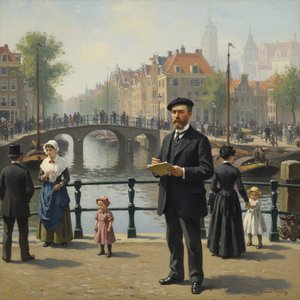
Ізраельс став провідною постаттю в русі амстердамського імпресіонізму. Під впливом філософії «Вісімдесяти» — групи письменників та художників, які виступали за те, щоб стиль відображав зміст, а емоційно насичені сюжети передавалися через інтенсивну техніку, — він переключив свою увагу на захоплення живих сцен повсякденного життя Амстердама. Він часто проводив літо зі своїм батьком у Схеве heavyнгені, малюючи яскраві морські пейзажі. Його творчість відображала прагнення зобразити гамірні вулиці, кафе та кабаре Амстердама, відходячи від більш традиційних сюжетів, які віддавали перевагу попередні нідерландські майстри.
- Ключові роботи: «Транспортування колоніальних солдатів» (Музей Кроллер-Мюллера), «Сортувальники кави» (Музей Бойманса ван Беунінгена), Портрет Мати Харі (Музей Кроллер-муллера)
Подорожі та мистецька еволюція
У 1904 році Ізраельс переїхав до Парижа, де відкрив власну студію та почав втілювати у своїх роботах унікальні мотиви цього міста. Він поглибив свій інтерес до моди, навчаючись у модних будинках Paquin та Drecoll. Початок Першої світової війни змусив його повернутися до Голландії, де він зосередився переважно на портретному жанрі. Після війни він вирушив у тривалі подорожі Європою та Азією, включаючи два роки, проведені за ескізуванням та живописом в Індії та Голландській Східній Індії. Ці досвіди розширили його мистецькі горизонти, відкривши йому нові сюжети та перспективи, що збагатили його пізніші роботи.
Спадщина та визнання
Ісаак Лазаревич Ізраельс залишив по собі значну спадщину, що прославлена завдяки яскравим кольорам, вільним мазкам пензля та проникливому зображенню повсякденного життя. Його картини сьогодні зберігаються у престижних музеях по всьому світу, зокрема у Музеї Ван Гога та Мауріцгаусі. Він здобув міжнародне визнання, зокрема вигравши золоту медаль на Олімпійських іграх 1928 року за свою картину «Червоний вершник». Спадщина Ізраельса полягає не лише в його мистецьких досягненнях, а й у його внеску в розвиток амстердамського імпресіонізму, що закріпило за ним місце одного з найважливіших нідерландських художників своєї епохи.
Питання та відповіді
На які періоди поділено кар'єру Ісаак Ізраельс?
Кар'єра Ісаак Ізраельс розгортається період за періодом на сторінці Хронологія творчого шляху: це горизонтальна часова шкала творів, згрупованих за етапами кар'єри.
Де я можу знайти статистику щодо творів Ісаак Ізраельс?
Сторінка зі статистикою Статистика відвідувань для Ісаак Ізраельс містить дані, розраховані на основі творів цього митця, представлених на цей сайт.
Де і в якому році народився/народилася Ісаак Ізраельс?
Ісаак Ізраельс народився/народилася в Амстердам у 1865 році.