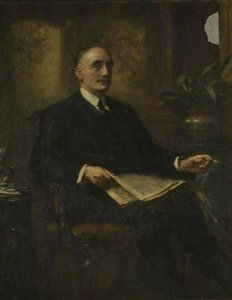
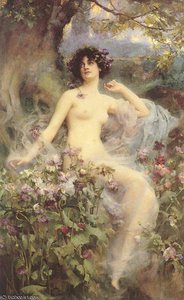
Генрієта Рей: портрет художника
Henrietta Rae: A Victorian Visionary – Bridging Myth, Literature, and a Woman’s Artistic Journey
Born in the heart of London on December 30th, 1859, Henrietta Emma Ratcliffe Rae emerged from a lineage steeped in artistic heritage—her father, James Ward, a celebrated animal painter, and her mother, hailing from a distinguished family of sculptors. This rich background provided an early exposure to the world of art, yet it was within the constraints of Victorian society that young Henrietta’s path toward realizing her own creative potential would be forged – a journey marked by both triumph and persistent challenges for women artists at the time. Initially steered towards musical training as a means to secure financial stability—a common practice for young ladies of her era—Henrietta soon discovered an undeniable passion for the visual arts, a calling that resonated far deeper than any melody. This pivotal shift wasn’t merely a change in direction; it represented a profound act of self-determination, a declaration of intent that would ultimately define her career and contribute to broader shifts within the artistic landscape. Her early education at Queen Square School, later evolving into the prestigious Royal Female School of Art, alongside studies at Heatherley's School of Art, provided foundational skills—yet it was her unwavering determination to gain admission to the esteemed Royal Academy Schools that truly signaled her commitment to pursuing a professional artistic life. This arduous process, requiring multiple applications before finally succeeding in 1877, underscored the systemic barriers faced by women seeking recognition within the male-dominated art world.
Classical Echoes and Literary Inspirations – Shaping a Distinctive Artistic Voice
Henrietta Rae’s artistic focus quickly gravitated towards subjects rooted in classical mythology, allegorical narratives, and beloved works of literature—a deliberate choice that allowed her to explore profound themes of heroism, vulnerability, and the complexities of human emotion with both technical mastery and symbolic depth. Her canvases weren't simply depictions; they were carefully constructed stories, imbued with a sense of timelessness and emotional resonance. Works like *Elaine Guarding the Shield of Lancelot* (1885), inspired by Tennyson’s poignant poem, exemplify this approach—capturing a moment of quiet devotion and anticipation, rendered with exquisite detail and a subtle understanding of human psychology. Perhaps her most enduring masterpiece, *The Lady with the Lamp* (1891), stands as a testament to her artistic vision. This iconic portrayal of Florence Nightingale at Scutari transcends its immediate subject matter, evolving into a powerful symbol of compassion, unwavering dedication, and the vital role women played in providing care during times of crisis—an image that continues to evoke empathy and admiration today. The influence of classical art is evident throughout her oeuvre, particularly in her meticulous compositions, balanced arrangements, and attention to idealized beauty. However, Rae’s work wasn't merely a slavish imitation of the past; she skillfully blended these influences with a distinctly personal style, imbuing her paintings with a sense of immediacy and emotional intensity. Other notable works, such as *Eurydice Sinking Back to Hades* (1886), which garnered critical acclaim at international exhibitions in Paris and Chicago, and *Psyche at the Throne of Venus* (1894)—a monumental work featuring thirteen figures—demonstrate her mastery of composition, color, and narrative storytelling.
Breaking Barriers – A Woman’s Struggle for Recognition
The path to artistic recognition for Henrietta Rae was undeniably challenging, reflecting the significant obstacles faced by women artists during the Victorian era. The prevailing societal attitudes often relegated women to domestic roles, while the art world remained overwhelmingly dominated by men—limiting opportunities and perpetuating biases. Henrietta's initial attempts to gain acceptance into established institutions were met with resistance, particularly regarding access to life drawing classes—traditionally considered unsuitable for female students. To circumvent these restrictions, she sought alternative avenues for artistic development, diligently practicing her skills through independent study and by observing the works of master artists at the British Museum’s Antique Galleries. Her relentless pursuit of admission to the Royal Academy Schools – a process that required multiple applications before finally succeeding in 1877 – underscored the systemic barriers she faced. Despite these challenges, Rae remained steadfast in her commitment, consistently exhibiting her work at prestigious venues such as the Royal Academy and the Grosvenor Gallery, steadily building a reputation for herself. A pivotal moment arrived in 1896 when she was elected an associate member of the Royal Academy—a remarkable achievement for a woman artist at that time, signifying a significant step forward in her career and challenging prevailing prejudices. This recognition paved the way for her full academicianship in 1922, solidifying her position within the established art community and marking a historic milestone for female artists.
Major Achievements – A Legacy of Innovation and Influence
Henrietta Rae’s artistic achievements extended beyond mere exhibition success; she actively sought to expand the boundaries of representation and challenge conventional notions of beauty and heroism. Her decision to depict strong, independent female figures—often drawn from classical mythology or literary narratives—represented a deliberate departure from the traditional portrayal of women in art. Her work *The Lady with the Lamp*, for example, not only captured the likeness of Florence Nightingale but also imbued her with an aura of strength, compassion, and unwavering dedication – qualities that resonated deeply with audiences at the time. Furthermore, Rae’s participation in international exhibitions—including those held in Paris and Chicago—garnered critical acclaim and broadened her artistic influence beyond British borders. In 1893, she received a gold medal at the World's Columbian Exposition for *Eurydice Sinking Back to Hades*, solidifying her reputation as a skilled and innovative artist. Notably, in 1897, she became the first woman to serve on a Hanging Committee for a major public exhibition at the Liverpool Corporation Art Galleries—a testament to her expertise and influence within the art world. Her decision to marry Ernest Normand, a fellow Royal Academy student, further cemented her position as a pioneering figure – a woman successfully navigating both artistic ambition and personal life.
A Lasting Legacy – A Symbol of Resilience and Artistic Vision
Henrietta Rae’s career stands as an enduring testament to talent, perseverance, and a pioneering spirit—a beacon for future generations of female artists. Her ability to seamlessly blend classical training with a distinctly personal style resulted in paintings that continue to captivate audiences with their beauty, skill, and historical significance. *The Lady with the Lamp* remains not only a visually stunning work but also an enduring symbol of compassion, dedication, and the vital role women played in shaping society—an image whose resonance continues to grow over time. Beyond her artistic achievements, Rae’s commitment to social justice—particularly her support for women's suffrage—demonstrates a belief in equality and representation that informed both her creative practice and her personal life. Her story serves as an inspiring reminder of the power of determination, the importance of challenging convention, and the enduring legacy of artists who dare to forge their own paths.