

1


Оновлено Листопад 2026 · за рейтингом нашої популярності (кількість пошукових запитів, переглядів та замовлень для кожної роботи) · 2 робіт Giovanni Bon у нашому каталозі
Коротко кажучи
З усіх оригінальних робіт, які залишив Giovanni Bon, найвідомішою є The Fall of Adam and Eve (1400) із колекції Палаццо Дукале, Венеція. Наш каталог містить 2 робіт Giovanni Bon; галерея зберегла 2 найвідоміших у світі творів, кожен із яких представлений із датою створення, назвою музею та своєю історією.
1 музеїв, у яких зберігається більшість картин на цій сторінці.
| Музей | Місто | Твори Giovanni Bon | Картини зі цього списку |
|---|---|---|---|
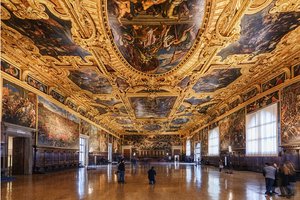 Палаццо Дукале |
Венеція | 2 | The Fall of Adam and Eve, Porta della Carta |
Від 1400 до 1438, Giovanni Bon працював протягом 39 років: ця добірка відображає цей тривалий творчий шлях рік за роком через його найкращі оригінальні роботи.
Оберіть рік, щоб переглянути оригінали.

The Fall of Adam and Eve (1400)
20 років: The Fall of Adam and Eve датована 1400 роком, а Giovanni Bon народився(-лася) у 1380.
Наш каталог містить 2 робіт Giovanni Bon, датованих періодом з 1400 по 1438.
Переважно в Палаццо Дукале (Венеція). У таблиці музеїв вище наведено їхній повний перелік.
На цій сторінці найдавніша робота датована The Fall of Adam and Eve (1400), а найновіша — Porta della Carta (1438).
The Fall of Adam and Eve та Porta della Carta: Палаццо Дукале, Венеція зберігає 2 робіт із цієї сторінки.
In the vibrant, salt-misted atmosphere of the early 15th century, a period where the delicate elegance of the Gothic era began to dance with the burgeoning humanism of the Renaissance, the name Giovanni Bon emerged as a cornerstone of Venetian identity. Born around 1380 in the rugged, strategically vital enclave of Campione d'Italia, Bon’s early life was shaped by the artistic traditions of Lombardy. This heritage, steeped in intricate detail and expressive movement, provided him with a foundational language that he would later translate into the grander, more monumental scale required by the maritime republic of Venice. As he moved toward the heart of Venetian power, his work became an essential thread in the city's growing architectural and sculptural tapestry.
The development of Bon’s artistry was not a solitary journey but one deeply embedded in the collaborative spirit of the workshop tradition. It is widely believed that he honed his technical mastery under the influence of masters like Bartolomeo Buonatello, whose command over classical forms offered a glimpse into the future of Italian art. Within the bustling studios of Venice, Bon operated within a milieu where craftsmanship was a communal endeavor. This period of his life was defined by a profound synthesis of styles; he possessed the unique ability to retain the flowing, rhythmic drapery and emotive dynamism characteristic of the Gothic style while simultaneously embracing the structural clarity and anatomical burgeoning that signaled the arrival of the Renaissance.
The true magnitude of Giovanni Bon’s contribution is best witnessed through his monumental architectural commissions, which served as much as civic statements as they did artistic triumphs. His hands helped shape the very face of Venetian authority, most notably through his involvement with the Porta della Carta (the Gate of Lead) at the Doge’s Palace. This masterpiece, a breathtaking intersection of sculpture and architecture, stands as a testament to his ability to command large-scale narratives in stone. His work on such projects was not merely about decoration; it was about imbuing the physical structures of the state with a sense of divine and temporal permanence.
Beyond the gates of the Doge's Palace, Bon’s influence reached into the sacred spaces of the city. His contributions to the decoration of significant religious sites, such as the Sant'Andrea Maggiore and his involvement in the intricate marble works that adorned Venice's most prestigious basilicas, showcased a versatility that few of his contemporaries could match. To look upon his work is to see the transition of an era: