Friedensreich Hundertwasser: Життя, присвячене гармонії та кольору
- Народився: 15 грудня 1928 року, Відень, Австрія
- Помер: 19 лютого 2000 року (у віці 71 року), на борту лайнера RMS Queen Elizabeth 2 у відкритому морі
- Повне ім'я: Фрідріх Штоуассер (прийняв псевдонім Friedensreich Regentag Dunkelbunt Hundertwasser)
Friedensreich Hundertwasser, який за народженням був Фрідріхом Штоуассером, — це австрійський митець та архітектор, чиє ім'я назавжди пов'язане з унікальними органічними формами, що кинули виклик традиційним архітектурним нормам. Сама його назва — «Царство Миру, Сто Вод» — є відображенням його глибокої філософіття, втіленням візії гармонії з природою та рішучого відкидання жорстких, негнучких структур.
Ранні роки та становлення митця
- Важкі випробування: Ранні роки життя Гунтервассера були позначені труднощами, особливо в епоху нацизму. Він та його мати єврейського походження ледь уникнули переслідувань, видаючи себе за християн. Цей досвід глибоко сформував його світосприйняття та подальший художній вираз.
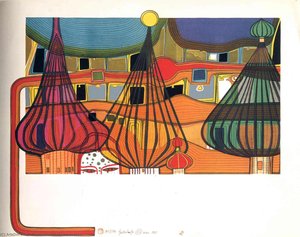
- Мистецька освіта та бунт проти канонів: Хоча він короткочасно навчався в Академії образотворчих мистецтв у Відні, він швидко відкинув її суворий академічний стиль. Цей протест став паливом для його незалежного творчого шляху, що призвів до створення самобутньої візуальної мови, сповненої яскравих кольорів, вихорливих візерунків та неприйняття прямих ліній.
- Подорожі та впливи: Широкі мандрівки Європою та Африкою у 1950-х роках відкрили для Гунтервассера різноманітні культури та ландвидні пейзажі, що зміцнило його відданість органічним формам і природній красі. Саме у Флоренції він зустрів Рене Бро, чия дружба стала визначальною для його подальшого розвитку.
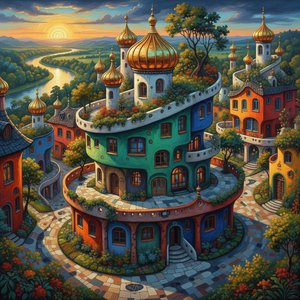
- Мотив спіралі: Спіраль стала центральним символом у творчості Гунтервассера, уособлюючи ріст, гармонію та циклічність життя — пряму протилежність жорсткій геометрії, яку він так зневажав.
Архітектурна філософія та визначні проєкти
- Концепція «цілющої архітектури»: Гунтервассер розробив власну концепцію, яку назвав «цілющою архітектурою». Він вірив, що будівлі мають перебувати в симбіозі з природою, сприяючи добробуту та творчому потенціалу своїх мешканців.
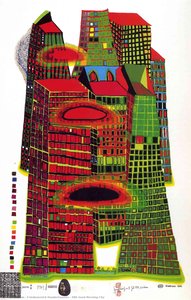
- Hundertwasserhaus (Відень): Його найвідоміший твір, Будинок Гунтервассера, — це яскравий житловий будинок у Відні, що вражає своїми хвилястими підлогами, нерівномірними вікнами та кольоровим фасадом, прикрашеним деревами та рослинами. Він є ідеальним прикладом його відмови від стандартизованого дизайну.
- Будинок із пляшок (Нова Зеландія): Розташований у Каварау-Фолс, цей унікальний будинок побудований з використанням перероблених скляних пляшок. Проєкт демонструє відданість митця принципам сталого розвитку та інноваційному використанню ресурсів.
- Giardino Eden (Італія): Придбавши та відновивши сад Giardino Eden, включаючи палац Villa delle Rose, він ще раз продемонстрував свою пристрасть до збереження історичних садів та інтеграції архітектури в природний ландшафт.
Екологічний активізм та спадщина
- Захисник екології: Гунтервассер був палким еко-активістом, який невтомно боровся за екологічну свідомість. Він виступав за масову посадку дерев, створення зелених зон у містах та захист водних ресурсів.
- «Право на вікно»: Ключовим елементом його філософії було «право на вікно», яке давало мешканцям свободу змінювати вигляд своїх вікон на власний розсуд, підтримуючи індивідуальність у спільному життєвому просторі.
- Політичні переконання: Митець також мав чітку політичну позицію, виступаючи за конституційну монархію в Австрії та критикуючи те, як Європейський Союз іноді ігнорує регіональні особливості.
- Безсмертний вплив: Спадщина Friedensreich Hundertwasser виходить далеко за межі його полотен та будівель. Він надихнув покоління митців, архітекторів та екологів приймати творчість, кидати виклик традиціям і прагнути до гармонійних стосунків між людством та природою. Його творчість продовжує резонувати з людьми в усьому світі, нагадуючи нам про важливість краси, індивідуальності та екологічної відповідальності.