


1


Оновлено Листопад 2026 · за рейтингом нашої популярності (кількість пошукових запитів, переглядів та замовлень для кожної роботи) · 30 робіт Frederick J Brown у нашому каталозі
Коротко кажучи
На думку експертів галереї, найвідоміший витвір Frederick J Brown — це Peasant fare (1883). Marketing (1887) та Hard Times (1886) доповнюють тріо, яке впізнає кожне око. З 30 робіт Frederick J Brown у нашому каталозі галерея представляє 27 найвідоміших нижче — кожна з них є оригіналом із зазначенням року створення, музею та унікальних особливостей.


 Landscape, the Storm1914
12
 Portrait of the Artist1926 · Ferens Art Gallery
13
 Genesis - Dedicated to Noah Goldowsky1978 · Метрополітен-музей
14
 John Henry1979
15
 Stagger Lee1983 · Смитсонівський музей американського мистецтва
16
 Portrait of Jake (Stagger Lee Series #3)1983 · Метрополітен-музей
17
 Portrait of Jake (Stagger Lee Series 3)1983
18
 The Ascension1982
19
 Reverend Reid1981
20
 Stagger Lee1983
21
 Junior Wells1989 · Смитсонівський музей американського мистецтва
22
 Portrait of Otis Spann1989
23
 Junior Wells1989
24
 Green Window1970
25
 Candidates for Girton
26
 The Ivy Arch
27
 On the Wye, Chepstow
5 музеїв, у яких зберігається найбільша кількість картин із цього списку.
| Музей | Місто | Твори Frederick J Brown | Картини зі цього списку |
|---|---|---|---|
 Метрополітен-музей |
Нью-Йорк | 2 | Genesis - Dedicated to Noah Goldowsky, Portrait of Jake (Stagger Lee Series #3) |
 Смитсонівський музей американського мистецтва |
Вашингтон, округ Колумбія | 2 | Stagger Lee, Junior Wells |
 Walker Art Gallery |
Ліверпуль | 1 | Hard Times |
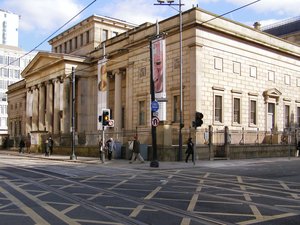 Манчестерська картинна галерея |
Манчестер | 1 | Marketing |
 Ferens Art Gallery |
Галл | 1 | Portrait of the Artist |
20 років творчості Frederick J Brown, від 1970 до 1989: галерея простежує їхній шлях рік за роком через найвідоміші оригінали кожного періоду.
Оберіть рік, щоб переглянути оригінали.

The Green Window painting by Frederick Brown is a stunning example of modern art that continues to fascinate audiences today. Created in 1970, this oil on canvas piece measures 229 x 103 cm and is currently housed at the Smithsonian American Art Museum in the United States. A Brief Overview of Frederick Brown Frederick Brown was a British painter known for his portraits and genre scenes. His artistic career spanned…


Peasant fare (1883). Далі йдуть Marketing (1887) та Hard Times (1886).
Peasant fare, Marketing, Hard Times, Portrait of the Painter, Genesis Dedicated to Noah Goldowsky, Just Love, Impromptu Dance, a Scene on the Chelsea Embankment, Marketing, Whin Hill, the Common, Southwold, Suffolk та Self Portrait. У рейтингу вище вказано рік створення та музей для кожної картини.
Наш каталог містить 30 робіт Frederick J Brown, датованих періодом з 1970 по 1989.
Переважно в Метрополітен-музей (Нью-Йорк), Смитсонівський музей американського мистецтва (Вашингтон, округ Колумбія) та Walker Art Gallery (Ліверпуль). У таблиці музеїв вище наведено їхній повний перелік.
У 1983: 4 із 27 робіт на цій сторінці були створені тоді, серед них Stagger Lee.
На цій сторінці найдавніша робота датована Green Window (1970), а найновіша — Junior Wells (1989).
Genesis - Dedicated to Noah Goldowsky та Portrait of Jake (Stagger Lee Series #3): Метрополітен-музей, Нью-Йорк зберігає 2 робіт із цієї сторінки.
Born in Georgia and raised amidst the vibrant, often turbulent, landscape of Chicago’s South Side in 1945, Frederick J. Brown's artistic journey is inextricably linked to his heritage—a potent blend of blues music, working-class roots, and a deep engagement with the complexities of American identity. From an early age, he was immersed in the sounds and stories of the city’s Black community, absorbing the rhythms of jazz and the narratives of hardship and resilience that permeated its streets. This formative experience profoundly shaped his artistic vision, informing his distinctive style—a captivating fusion of abstract expressionism, figurative painting, and a keen interest in portraying marginalized figures within American society.
Brown’s early career unfolded during the dynamic art scene of New York City's SoHo district in the 1970s. He found himself amidst a constellation of influential artists—Willem de Kooning, Jim Nutt, and Richard Lindner—whose work challenged conventional notions of representation and explored themes of sexuality, social critique, and psychological intensity. De Kooning’s encouragement proved particularly pivotal, solidifying Brown's commitment to pushing the boundaries of his own artistic practice. This period witnessed a shift in his style, moving from primarily abstract gestural painting towards a more nuanced approach that incorporated collage elements and a heightened sense of narrative depth.
A defining characteristic of Brown’s oeuvre is his extensive series of portraits dedicated to the giants of jazz and blues music. These are not merely likenesses; they are deeply felt evocations of character, imbued with a palpable sense of history, struggle, and triumph. Influenced by his Chicago upbringing and his lifelong love for the Blues, Brown sought to capture the essence of these musical icons—their spirit, their vulnerability, and their profound impact on American culture. He meticulously researched each subject, often incorporating photographs into his compositions, creating layered visual narratives that blended portraiture with collage.
The portraits are characterized by a distinctive approach: Brown frequently employed bold outlines, gestural brushwork, and a carefully calibrated palette of colors to convey both the physical presence and the inner lives of his subjects. He wasn’t interested in simply replicating appearances; instead, he aimed to distill their personalities—the weariness of a seasoned performer, the intensity of a young innovator, or the quiet dignity of an elder statesman—into powerful visual statements. His work with musicians like Ornette Coleman, Anthony Braxton, and Memphis Slim demonstrates his ability to translate musical energy into compelling visual forms.
As Brown’s career progressed, his artistic interests expanded beyond the realm of jazz portraits. He began exploring a wider range of subjects—gamblers, hustlers, transvestites, and other figures inhabiting the shadowy corners of urban life. These works often carried a subtle undercurrent of social commentary, reflecting on themes of poverty, inequality, and the complexities of American identity. His paintings frequently juxtaposed seemingly disparate elements—historical references, religious iconography, and contemporary imagery—creating visually arresting compositions that demanded close scrutiny.
This period saw the emergence of his “History of Art” series – a monumental undertaking comprising 110 interlocking paintings that traced the evolution of Western art from its earliest beginnings to the present day. This ambitious project served as both a personal reflection on Brown’s own artistic journey and a broader meditation on the enduring power of art to shape our understanding of the world.
Frederick J. Brown's work has garnered significant recognition throughout his career, with pieces held in prestigious collections including the Smithsonian American Art Museum, the Metropolitan Museum of Art, and the Kemper Museum of Contemporary Art. His retrospective exhibition at the National Museum of China in Beijing in 1988 marked a pivotal moment, establishing him as one of the first Western artists to exhibit in mainland China. Brown’s legacy extends beyond his individual achievements; he remains an important figure in American art history—a soulful portraitist who captured the spirit of a nation through his evocative and often challenging works.
Brown passed away in 2012, leaving behind a rich body of work that continues to resonate with audiences today. His paintings serve as powerful reminders of the complexities of the American experience—the beauty and the brutality, the joy and the sorrow, all interwoven into a vibrant tapestry of human life.