Портрет Франц фон Штук

100 найвідоміших картин Франц фон Штук: добірка галереї

Оновлено Листопад 2026 · за рейтингом нашої популярності (кількість пошукових запитів, переглядів та замовлень для кожної роботи) · 259 робіт Франц фон Штук у нашому каталозі

Коротко кажучи

З усіх оригінальних робіт, які залишив Франц фон Штук, найвідомішою є Гріх (1893) із колекції Баварські державні художні колекції, Мюнхен. Слідом за ними йдуть Люцифер (1890) та Поранена амазонка (1904). Наш каталог містить 259 робіт Франц фон Штук; галерея зберегла 100 найвідоміших у світі творів, кожен із яких представлений із датою створення, назвою музею та своєю історією.

1863 – 1928, Теттенвайс Символізм Найбільше робіт: Баварські державні художні колекції

10 найкращих картин Франц фон Штук: вибір галереї

1
Гріх (1893) авторства Франц фон Штук

Гріх

1893 · Олія на полотні · Баварські державні художні колекції, Мюнхен

The Sin is an 1893 painting by the German artist Franz von Stuck. In this work, the artist presents the figure of Eve, depicted nude and entwined with a large serpent that wraps around her body. This specific motif emerged from a previous exploration of subject matter, specifically developing from Stuck's 1889 painting Sensuality (Die Sinnlichkeit).

2
Люцифер (1890) авторства Франц фон Штук

Люцифер

1890 · Олія на полотні · Національна художня галерея Болгарії, Софія

In 1890, Franz von Stuck rendered Lucifer as an oil on canvas, a work that anchors his "dark monumental" period. The figure emerges from a void, a seated man-demon caught in a moment of heavy, brooding stillness. He is a creature of muscle and shadow, his form defined by the tension of a body that is both human and something far more ancient. His gaze is fixed, piercing through the…

3
Поранена амазонка (1904) авторства Франц фон Штук

Поранена амазонка

1904 · Олія на полотні

У надзвичайно евокативній картині Поранена амазонка, створеній у 1904 році, Франц Ріттер фон Штук запрошує нас у момент глибокої вразливості та первісного конфлікту. Полотно являє оголену жіночу фігуру, амазонку, застиглу в стані сильного відчаю. Вона стоїть на колінах на землі, а її тіло несе на собі слід битви — помітну рану під грудьми. Намагаючись захиститися від невидимих загроз, вона піднімає руки до обличчя, що передає відчуття відчайдушного самозахисту. Композицію стабілізує…

4
Sin (1893) авторства Франц фон Штук

Sin

1893 · Oil On Canvas · Нова Пінакотека, Мюнхен

Franz Ritter von Stuck: The Sin The dark, decadent art of Franz Ritter von Stuck is ushered into the light for its first American retrospective. Jo-Ann Birnie Danzker, curator at the Frye Art Museum, hopes that it will lead to a reevaluation of Stuck’s importance as an artist in his own right – his work seemed old-fashioned and irrelevant to a generation that had endured World War I. Stuck's reputation…

5
Lucifer авторства Франц фон Штук

Lucifer

Oil On Canvas

Franz von Stuck presents the fallen angel in Lucifer, an oil on canvas executed between 1890 and 1891. The figure is rendered as a seated, naked, and brooding presence within an undefined dark space. This depiction of a central figure from Christian mythology emphasizes an intense, muscular physicality. The subject's posture is heavy, conveying a sense of profound melancholy and internal struggle.

6
Wine (1889) авторства Франц фон Штук

Wine

1889 · Oil On Canvas · Художній музей Цюриха, Цюрих

To stand before Franz Ritter von Stuck’s Wine is to step directly into the charged, evocative atmosphere of late 19th-century German Symbolism. This piece from 1889 is far more than a mere depiction; it is an emotional tableau, a meditation on human connection, nature's embrace, and perhaps, the intoxicating mystery of desire itself. The composition immediately draws the eye to the central drama: a nude male figure clinging with desperate…

7
The Sin (1912) авторства Франц фон Штук

The Sin

1912 · Oil On Canvas · Alte Nationalgalerie, Берлін

, also known as Die Sünde, is an oil on canvas work by the German artist Franz von Stuck. Created in 1912, this piece represents one of several versions of this specific theme developed by the artist. The work is a significant example of the Symbolist movement, focusing on psychological depth and dramatic tension.

8
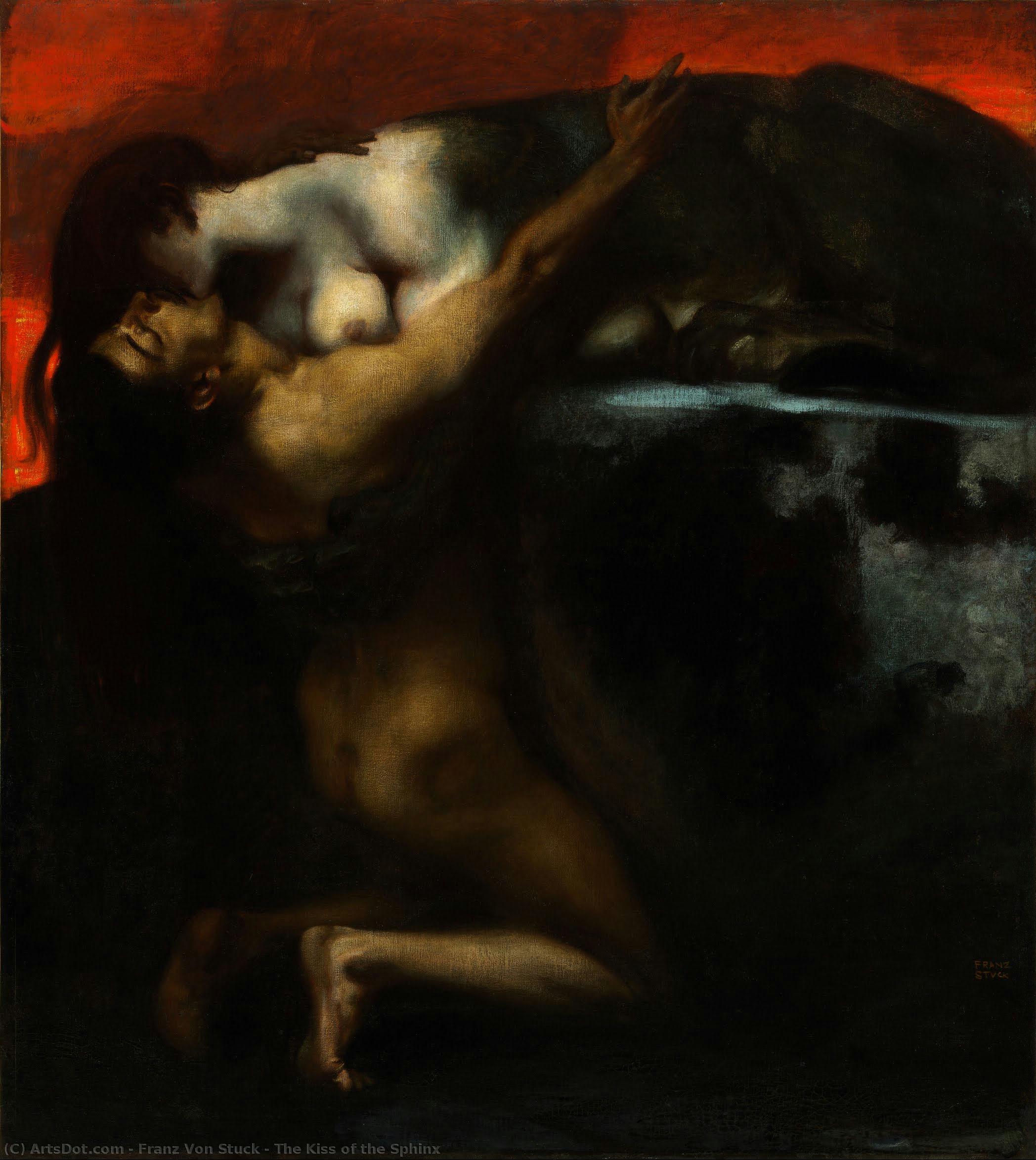
The Kiss of the Sphinx (1895) авторства Франц фон Штук

The Kiss of the Sphinx

1895 · Oil On Canvas · Музей мистецтв Будапешта, Будапешт

In the twilight of the nineteenth century, few images captured the psychological tremors of the era as profoundly as Franz Ritter von Stuck’s "The Kiss of the Sphinx." Completed in 1895, this masterpiece serves as a haunting cornerstone of German Symbolism, inviting the viewer into a realm where the boundaries between the physical and the metaphysical dissolve. The painting presents a dramatic tableau of a sensual encounter, set against the…

9
Sisyphus (1920) авторства Франц фон Штук

Sisyphus

1920 · Oil

In the 1920 painting titled Sisyphus, the artist Franz von Stuck depicts a man engaged in a repetitive physical struggle. The subject is shown in the process of pushing a large boulder up a steep incline. The man is positioned with the weight of the rock resting directly upon his back. He wears a simple loincloth, leaving his muscular form exposed as he labors against the terrain. One hand is…

10
Glow Worms (1898) авторства Франц фон Штук

Glow Worms

1898 · Oil On Canvas

In this work, titled Glow Worms, we encounter a piece from 1898 by the German artist Franz von Stuck. It is a quiet moment captured in oil on canvas, reflecting the specific sensibilities of the late nineteenth century. The artist, who was born in Tettenweis, Germany, brings a particular sense of atmosphere to this nocturnal scene, moving away from the rigid academicism of his era toward something more personal and…

Вибірка Франц фон Штук триває, від 11 до 100

11Wild Chase (1889) авторства Франц фон ШтукWild Chase1889 · Lenbachhaus 12Inferno (1908) авторства Франц фон ШтукInferno1908 · Метрополітен-музей 13Portrait of Frau Feez авторства Франц фон ШтукPortrait of Frau Feez 14The Guardian of Paradise (1889) авторства Франц фон ШтукThe Guardian of Paradise1889 · Museum Villa Stuck 15von Lucifer авторства Франц фон Штукvon Lucifer 16Gertrud Littmann (1911) авторства Франц фон ШтукGertrud Littmann1911 · Баварські державні художні колекції 17Amazon and Centaur авторства Франц фон ШтукAmazon and Centaur 18Faun and Nymph (Teasing) (1892) авторства Франц фон ШтукFaun and Nymph (Teasing)1892 · Національна галерея Праги 19Florentine Lady (1901) авторства Франц фон ШтукFlorentine Lady1901 20Professor Lujo Brentano (1914) авторства Франц фон ШтукProfessor Lujo Brentano1914 · Баварські державні художні колекції 21The Murderer (1891) авторства Франц фон ШтукThe Murderer1891 22Sin (1893) авторства Франц фон ШтукSin1893 23Junge авторства Франц фон ШтукJunge 24Crucifixion (1913) авторства Франц фон ШтукCrucifixion1913 · Museum der bildenden Künste 25Salome (1906) авторства Франц фон ШтукSalome1906 · Lenbachhaus 26The Architect Max Littmann (1903) авторства Франц фон ШтукThe Architect Max Littmann1903 · Баварські державні художні колекції 27Young Girl with Wreath (Bust, octagonal) (1862) авторства Франц фон ШтукYoung Girl with Wreath (Bust, octagonal)1862 28a Lady Monna Vanna (1879) авторства Франц фон Штукa Lady Monna Vanna1879 · Stadtisches Museum 29Portrait of the Artist's Wife (1888) авторства Франц фон ШтукPortrait of the Artist's Wife1888 30Children Sledding (1888) авторства Франц фон ШтукChildren Sledding1888 31Double Portrait of Two Girls (1888) авторства Франц фон ШтукDouble Portrait of Two Girls1888 32Portrait of a Lady in Profile (1888) авторства Франц фон ШтукPortrait of a Lady in Profile1888 33Female Portrait (Back View and Profile) (1888) авторства Франц фон ШтукFemale Portrait (Back View and Profile)1888 34Female Portrait (1888) авторства Франц фон ШтукFemale Portrait1888 35Female Nude, Venus (1888) авторства Франц фон ШтукFemale Nude, Venus1888 36Self-Portrait in Profile (1888) авторства Франц фон ШтукSelf-Portrait in Profile1888 · Stadtisches Museum 37Sphinx (1892) авторства Франц фон ШтукSphinx1892 38Lost (1891) авторства Франц фон ШтукLost1891 39bathing nymph + looking Satyr (1888) авторства Франц фон Штукbathing nymph + looking Satyr1888 40portrait of Tilla Durieux as line (1888) авторства Франц фон Штукportrait of Tilla Durieux as line1888 41Susanna and the two eldermen (1888) авторства Франц фон ШтукSusanna and the two eldermen1888 42Helios (1888) авторства Франц фон ШтукHelios1888 43girl with wreath of violets (1888) авторства Франц фон Штукgirl with wreath of violets1888 44Portrait of a man (1888) авторства Франц фон ШтукPortrait of a man1888 45Female head (1888) авторства Франц фон ШтукFemale head1888 46A crying nix - woman (1888) авторства Франц фон ШтукA crying nix - woman1888 47Head of Medusa (1892) авторства Франц фон ШтукHead of Medusa1892 48Portrait of Beethoven авторства Франц фон ШтукPortrait of Beethoven 49Drunken Cantaur (1889) авторства Франц фон ШтукDrunken Cantaur1889 50Boy Bacchus Riding on a Panther авторства Франц фон ШтукBoy Bacchus Riding on a Panther 51Innocentia (1889) авторства Франц фон ШтукInnocentia1889 52Sensuality (1897) авторства Франц фон ШтукSensuality1897 53Franz and Mary Stock in the Studio (1902) авторства Франц фон ШтукFranz and Mary Stock in the Studio1902 54Portrait of a Girl (1899) авторства Франц фон ШтукPortrait of a Girl1899 55Portrait of the Artist's Daughter (1903) авторства Франц фон ШтукPortrait of the Artist's Daughter1903 56Portrait of His Wife (1903) авторства Франц фон ШтукPortrait of His Wife1903 57Portrait of a Woman (Wife of the Artist) (1903) авторства Франц фон ШтукPortrait of a Woman (Wife of the Artist)1903 58Runner (1903) авторства Франц фон ШтукRunner1903 59Portrait of a Woman (his wife) (Lady's Portrait) (1903) авторства Франц фон ШтукPortrait of a Woman (his wife) (Lady's Portrait)1903 60Portrait of a lady (1902) авторства Франц фон ШтукPortrait of a lady1902 61Head of a girl (1903) авторства Франц фон ШтукHead of a girl1903 62Portr. of a lady (1903) авторства Франц фон ШтукPortr. of a lady1903 63Half-length. ............ (1903) авторства Франц фон ШтукHalf-length. ............1903 64dancers (1903) авторства Франц фон Штукdancers1903 65Lady with head-dress (1903) авторства Франц фон ШтукLady with head-dress1903 66Wind + wave (1903) авторства Франц фон ШтукWind + wave1903 67The see - saw (1903) авторства Франц фон ШтукThe see - saw1903 68Rape of a maremaid (1902) авторства Франц фон ШтукRape of a maremaid1902 69head of a girl (1903) авторства Франц фон Штукhead of a girl1903 70Susanna in the bath (1904) авторства Франц фон ШтукSusanna in the bath1904 · Kunstmuseum 71Bacchanal (1905) авторства Франц фон ШтукBacchanal1905 72The Ride (1903) авторства Франц фон ШтукThe Ride1903 73The Kiss of the Sphinx (1905) авторства Франц фон ШтукThe Kiss of the Sphinx1905 74The Artist's Daughter with Cornflowers in Her Hair (1909) авторства Франц фон ШтукThe Artist's Daughter with Cornflowers in Her Hair1909 · Westfälisches Landesmuseum 75"The swing of love" (1909) авторства Франц фон Штук"The swing of love"1909 76Portrait of a girl (1907) авторства Франц фон ШтукPortrait of a girl1907 77Portrait of lady between Doric columns (1906) авторства Франц фон ШтукPortrait of lady between Doric columns1906 78Bathsheba (1912) авторства Франц фон ШтукBathsheba1912 · Національний музей образотворчого мистецтва 79Phryne (1917) авторства Франц фон ШтукPhryne1917 · Portland Art Museum 80Spanish duel "the deal" (1917) авторства Франц фон ШтукSpanish duel "the deal"1917 81Pygmalion (1926) авторства Франц фон ШтукPygmalion1926 82Wind and Waves (unfinished) (1928) авторства Франц фон ШтукWind and Waves (unfinished)1928 83The Struggle for Woman авторства Франц фон ШтукThe Struggle for Woman 84Pietà (1891) авторства Франц фон ШтукPietà1891 · Städelsche Kunstinstitut Und Städtische Galerie 85Fighting Centaurs (1894) авторства Франц фон ШтукFighting Centaurs1894 · Städelsche Kunstinstitut Und Städtische Galerie 86Fighting Fauns (1889) авторства Франц фон ШтукFighting Fauns1889 · Bayerische Staatsgemaldesammlungen 87Encounter (1921) авторства Франц фон ШтукEncounter1921 · Баварські державні художні колекції 88The Spring (1902) авторства Франц фон ШтукThe Spring1902 · Музей мистецтв Будапешта 89Mary with a red hat (1902) авторства Франц фон ШтукMary with a red hat1902 90War (1894) авторства Франц фон ШтукWar1894 · Баварські державні художні колекції 91Ostrich Hunt (1919) авторства Франц фон ШтукOstrich Hunt1919 · Баварські державні художні колекції 92The Diner авторства Франц фон ШтукThe DinerБаварські державні художні колекції 93Evening Star авторства Франц фон ШтукEvening Star 94Portrait of Marie Stuck авторства Франц фон ШтукPortrait of Marie Stuck 95The Wild Hunt (1899) авторства Франц фон ШтукThe Wild Hunt1899 · Музей д’Орсе 96Pallas Athene (1898) авторства Франц фон ШтукPallas Athene1898 97children on sledges (1888) авторства Франц фон Штукchildren on sledges1888 98Landscape with Waterfall (1896) авторства Франц фон ШтукLandscape with Waterfall1896 · Баварські державні художні колекції 99Dancers (1896) авторства Франц фон ШтукDancers1896 100Fighting Amazon (1897) авторства Франц фон ШтукFighting Amazon1897 · Lenbachhaus

Знамениті картини Франц фон Штук за періодами творчості

Теми, що привертали увагу Франц фон Штук

Чотири сюжети, які найчастіше зустрічаються в цих оригіналах, кожен із найкращим прикладом.

Музеї, у яких зберігаються оригінали Франц фон Штук

8 музеїв, у яких зберігається найбільша кількість картин із цього списку.

Музей Місто Твори Франц фон Штук Картини зі цього списку
Баварські державні художні колекції, МюнхенБаварські державні художні колекції Мюнхен 9 Гріх, Gertrud Littmann, Professor Lujo Brentano
Lenbachhaus, МюнхенLenbachhaus Мюнхен 4 Wild Chase, Salome, Fighting Amazon
Музей мистецтв Будапешта, БудапештМузей мистецтв Будапешта Будапешт 2 The Kiss of the Sphinx, The Spring
Stadtisches Museum, ГельзенкірхенStadtisches Museum Гельзенкірхен 2 a Lady Monna Vanna, Self-Portrait in Profile
Städelsche Kunstinstitut Und Städtische Galerie, ФранкфуртStädelsche Kunstinstitut Und Städtische Galerie Франкфурт 2 Pietà, Fighting Centaurs
Alte Nationalgalerie, БерлінAlte Nationalgalerie Берлін 4 The Sin
Museum Villa Stuck, МюнхенMuseum Villa Stuck Мюнхен 3 The Guardian of Paradise
Національна художня галерея Болгарії, СофіяНаціональна художня галерея Болгарії Софія 1 Люцифер

Франц фон Штук десятиліття за десятиліттям: оригінали, що визначають кожне з них

Роботи за десятиліттями

Оберіть десятиліття, щоб побачити оригінальний твір, який його визначає.

Запитання колекціонерів про картини Франц фон Штук

Яка робота Франц фон Штук є найвідомішою?Дізнатися відповідь

Гріх (1893), Баварські державні художні колекції, Мюнхен. Далі йдуть Люцифер (1890) та Поранена амазонка (1904).

Скільки років було Франц фон Штук, коли було створено Гріх?Дізнатися відповідь

30 років: Гріх датована 1893 роком, а Франц фон Штук народився(-лася) у 1863.

Які десять найвідоміших картин Франц фон Штук?Дізнатися відповідь

Гріх, Люцифер, Поранена амазонка, Sin, Lucifer, Wine, The Sin, The Kiss of the Sphinx, Sisyphus та Glow Worms. У рейтингу вище вказано рік створення та музей для кожної картини.

Скільки картин залишив Франц фон Штук?Дізнатися відповідь

Наш каталог містить 259 робіт Франц фон Штук, датованих періодом з 1879 по 1928.

У яких музеях виставляються шедеври Франц фон Штук?Дізнатися відповідь

Переважно в Баварські державні художні колекції (Мюнхен), Lenbachhaus (Мюнхен) та Музей мистецтв Будапешта (Будапешт). У таблиці музеїв вище наведено їхній повний перелік.

У які роки Франц фон Штук створив свої найвідоміші роботи?Дізнатися відповідь

У 1900s: 31 із 100 робіт на цій сторінці були створені тоді, серед них Поранена амазонка.

Які перша та остання відомі оригінальні роботи Франц фон Штук?Дізнатися відповідь

На цій сторінці найдавніша робота датована a Lady Monna Vanna (1879), а найновіша — Wind and Waves (unfinished) (1928).

Які сюжети Франц фон Штук обирав найчастіше?Дізнатися відповідь

Woman (51), Man (22) та Portrait (18), у 100 роботах на цій сторінці.

Яку техніку найчастіше використовував(ла) Франц фон Штук?Дізнатися відповідь

Oil On Canvas, для 54 із 100 робіт на цій сторінці.

До якого художнього напряму належить Франц фон Штук?Дізнатися відповідь

Символізм, судячи з оригіналів на цій сторінці.

Які роботи Франц фон Штук виставлені в Баварські державні художні колекції?Дізнатися відповідь

Гріх, Gertrud Littmann та Professor Lujo Brentano: Баварські державні художні колекції, Мюнхен зберігає 9 робіт із цієї сторінки.

Франц фон Штук: життя та творчість

A Life Steeped in Myth and Symbol

Franz Ritter von Stuck, a name that echoes through the halls of German art history, was more than just an artist; he was a cultural phenomenon, a “Prince of Art” as he was affectionately known during his lifetime. Born in 1863 in the tranquil Bavarian village of Tettenweis, nestled amidst rolling hills and ancient forests, Stuck’s journey began far from the bustling studios of Munich, yet it would ultimately lead him to become one of the most influential figures of the Symbolist movement. Initially destined for a life following his father as a forester – a path of quiet rural existence – young Franz possessed an undeniable artistic spark that refused to be contained within the boundaries of tradition. This innate inclination manifested early on, with a fascination for drawing and caricature, capturing the quirks and personalities of his local community. It was this nascent talent that ultimately steered him towards Munich, where he first enrolled at the School of Applied Arts in 1878 and later, from 1882 to 1884, at the prestigious Academy of Fine Arts, profoundly influenced by the hauntingly beautiful mythological scenes created by Arnold Böcklin – a formative encounter that would shape his artistic vision for years to come. Stuck’s story is not simply one of an artist's development; it’s a testament to the transformative power of pursuing one’s passion and defying expectations.

The Rise of a Symbolist Master

Stuck’s ascent to prominence was remarkably swift, almost startling in its speed. His breakthrough arrived in 1889 with *The Guardian of Paradise*, an arresting painting exhibited at the Munich Glass Palace. The work immediately captivated critics and audiences alike, earning him a gold medal and establishing him as a rising star within the art world. *The Guardian of Paradise* wasn’t merely a technically proficient artwork; it was a declaration – a bold announcement of a new artistic voice, one that seamlessly blended the precision and formality of classical tradition with the evocative mystery and emotional depth characteristic of Symbolism. He quickly became a central figure in challenging the established norms of the art establishment, co-founding the Munich Secession in 1892 alongside like-minded artists who sought to break free from the constraints of academic conservatism and champion the possibilities of modern art. This act of artistic rebellion coincided with his exploration into sculpture, culminating in *Athlete* (1892), a striking bronze figure that demonstrated his remarkable versatility as an artist. However, it was *The Sin* (1893) – a dramatic portrayal of temptation and desire – that truly cemented his reputation as a master of Symbolist painting, captivating audiences with its intense emotionality and psychological complexity. This period marked the full flowering of Stuck’s unique style—a potent combination of sensuality, classical form, and symbolic resonance, a visual language that would define his artistic legacy.

Themes and Influences: A World of Desire and Myth

The artistic universe of Franz von Stuck is profoundly shaped by recurring motifs and themes, revealing his deep engagement with timeless concepts and narratives. Mythology served as an enduring source of inspiration, drawing upon the rich tapestry of Greek, Roman, and biblical stories – tales that he reimagined with a distinctly personal flair and imbued with a sense of potent symbolism. These weren’t mere retellings; they were explorations of the human condition filtered through the lens of ancient myths, offering profound insights into our desires, fears, and moral dilemmas. Equally prominent was his fascination with sensuality and the *femme fatale* – the alluring yet dangerous woman—powerfully embodied in his numerous depictions of Salome. These paintings weren’t simply about physical beauty; they delved into the psychological complexities of female power, its potential for both allure and destruction, and the inherent ambiguity of desire itself. Underlying all these elements was a deep reverence for classical art, evident in his meticulous technique, anatomical accuracy, and compositional rigor—a testament to his formal training and his commitment to mastering the traditions of the past. Beyond Arnold Böcklin, Stuck acknowledged influences from the Pre-Raphaelites and Gustave Moreau, artists who similarly explored themes of mythology, symbolism, and emotional intensity. However, he wasn’t merely an imitator; he synthesized these diverse influences into something uniquely his own, forging a distinctive artistic style that resonated with a generation seeking to break free from the confines of academic tradition.

Major Works and Enduring Significance

Throughout his prolific career, Franz von Stuck produced a remarkable body of work—a testament to his versatility and creative vision. Some of his most celebrated pieces include:
  • The Spring (1886): A vibrant depiction showcasing his early mastery of color and composition, capturing the exuberance of nature and the promise of renewal.
  • Dissonance (1893): An unsettling portrayal embodying emotional turmoil through a woman playing the violin—a poignant exploration of inner conflict and artistic expression.
  • Salome (various versions): Perhaps his most iconic work, depicting the biblical story with striking sensuality and psychological depth, capturing the allure and danger inherent in forbidden desire.
  • Athlete (1892): A powerful sculpture demonstrating his skill in three-dimensional form—a dynamic representation of human strength and athleticism.
Beyond these individual masterpieces, Stuck’s influence extended to numerous other works, including decorative panels, illustrations, and architectural designs for the Villa Stuck – a stunning example of Art Nouveau architecture that further showcased his artistic versatility. His legacy is not confined to his paintings and sculptures; it lives on through the countless artists he inspired—a testament to his profound impact on the development of modern art.

A Knight of Bavaria

In 1905, Franz Ritter von Stuck received a significant honor – being ennobled by the Bavarian Crown, becoming “Ritter von Stuck” (Knight of Stuck). This recognition reflected not only his artistic achievements but also his contributions to German culture and society. He continued to teach at the Munich Academy, guiding the next generation of artists—including Paul Klee, Wassily Kandinsky, and Josef Albers—and remained a prominent figure in the art world until his death in 1928. His funeral address described him as “the last prince of art of Munich’s great days,” encapsulating his enduring legacy as a visionary artist who shaped the course of German art history. Franz von Stuck's work continues to be exhibited and studied today, reminding us of the power of art to evoke emotion, explore complex themes, and transcend time.