Еміль Муньє: художник
Émile Munier: A Weaver of Light and Innocence
Émile Munier, born on June 2nd, 1840, in the heart of Paris, wasn’t merely a painter; he was a chronicler of gentle moments, a weaver of light and innocence. His life unfolded within the vibrant tapestry of late 19th-century France, inextricably linked to artistic lineage and an unwavering dedication to capturing the beauty of childhood and domesticity – a legacy profoundly shaped by his family’s connection to the prestigious Gobelins Manufactory and the masterful guidance of William-Adolphe Bouguereau. From his earliest years, Munier demonstrated a remarkable aptitude for drawing, producing self-portraits as a teenager that hinted at the extraordinary talent he would later cultivate. His father, Pierre François Munier, was an artist upholsterer at the Gobelins, and his mother, Marie Louise Carpentier, honed her skills in polishing cashmere cloth – a familial connection to artistry that instilled within young Émile a deep appreciation for craftsmanship and visual beauty.
The walls of the Gobelins became his initial classroom, where he learned the fundamentals of draftsmanship under the tutelage of Abel Lucas, absorbing techniques in drawing, painting, anatomy, perspective, and even the chemistry involved in wool dyeing – skills essential to his future career as an artist upholsterer. It was here that he met Henriette Lucas, Abel’s daughter, a pivotal encounter that blossomed into a marriage in 1861. This union not only solidified his artistic circle but also brought him closer to a family deeply rooted in the Parisian art scene. Tragedy struck early in their life together when Henriette succumbed to illness after giving birth to their son, Emile Henri – a loss that undoubtedly shaped Munier’s approach to his work, imbuing it with a poignant sensitivity and a focus on themes of tenderness and familial connection. Despite this profound sorrow, Munier persevered, finding solace and renewed purpose in his art, dedicating himself fully to capturing the fleeting beauty of everyday life.
The Influence of Bouguereau: A Master’s Embrace
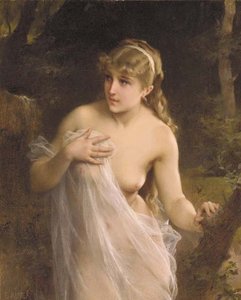
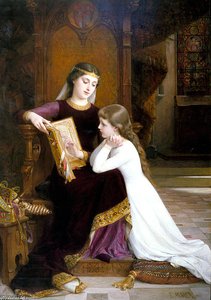
Munier's artistic trajectory took a decisive turn upon encountering William-Adolphe Bouguereau, an encounter that fundamentally shaped his style and approach to painting. Bouguereau, renowned for his meticulous technique, idealized figures, and harmonious compositions, became Munier’s mentor and inspiration. The young artist was drawn to Bouguereau's ability to capture the delicate nuances of human emotion and the ethereal quality of light – a pursuit that resonated deeply with Munier’s own artistic sensibilities. He spent countless hours studying Bouguereau’s work, meticulously analyzing his brushstrokes, color palettes, and compositional strategies. This immersion in Bouguereau's world resulted in Munier adopting similar themes—idyllic scenes of childhood, pastoral beauty, and mythological narratives—and striving for an equally high level of technical proficiency. Bouguereau affectionately nicknamed Munier “la sagesse” or “le sage Munier,” recognizing in him a thoughtful, discerning artist with a quiet dedication to his craft – a testament to the profound impact of their artistic relationship.
Munier’s early works already demonstrate a remarkable ability to capture the delicate beauty of form and light, foreshadowing the signature qualities that would define his mature style. The influence of Bouguereau is evident in Munier's idealized figures, soft lighting, and harmonious compositions. He wasn’t simply imitating Bouguereau; he was absorbing his principles and translating them into his own unique artistic vision. This mentorship fostered not merely a student-teacher relationship but a genuine friendship built on mutual respect and artistic admiration.
Themes of Innocence and Domestic Harmony
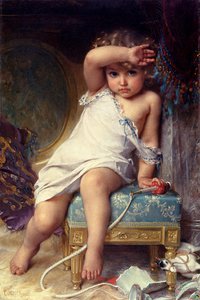
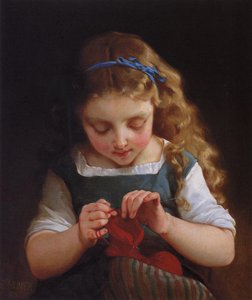
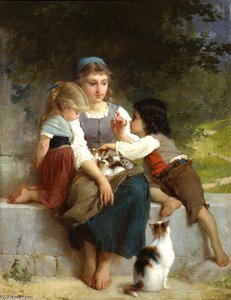
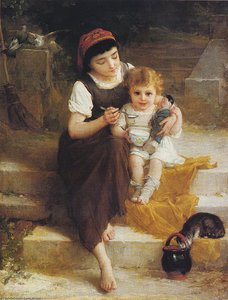
Munier's oeuvre is characterized by a profound exploration of themes—primarily the beauty of childhood, the serenity of domestic life, and the quiet dignity of rural existence. His canvases frequently depict children engaged in innocent play, often accompanied by beloved pets – scenes brimming with tenderness, warmth, and an almost palpable sense of tranquility. He possessed a remarkable ability to capture the fleeting expressions of youth—a mischievous grin, a thoughtful gaze, or a moment of shared joy—transforming ordinary moments into enduring works of art. Munier’s paintings are not merely representations of these scenes; they are imbued with a genuine emotional resonance, inviting viewers to step into a world of gentle beauty and quiet contemplation.
Among his most celebrated works is *Trois Amis* (Three Friends), a charming depiction of a young girl accompanied by a kitten and a dog – a scene that achieved widespread popularity and was famously utilized in advertising campaigns for Pears soap. Other notable paintings include the deeply moving *Angel Comforting His Grieving Mother*, commissioned by Jane Stanford as a poignant memorial to her son, Leland Stanford Jr., now housed at the Cantor Arts Center at Stanford University; and *La jeune fille et le panier de chatons* (The Young Girl and Basket of Kittens), completed shortly before his death, encapsulating the artist’s enduring fascination with childhood innocence. A particularly endearing aspect of Munier's work is his frequent use of family members as models – his daughter Marie Louise often graced his canvases, lending a personal touch to his idyllic scenes.
Recognition and a Lasting Legacy
Munier’s artistic reputation extended far beyond the borders of France, garnering significant recognition in America. Patrons like Chapman H. Hyams and his wife became devoted collectors of his work, amassing a substantial collection that now resides at the New Orleans Museum of Art. His inclusion in the 1893 Chicago World's Fair further solidified his international standing, exposing his paintings to a wider audience and earning critical acclaim. Émile Munier passed away on June 29th, 1895, leaving behind a body of work that continues to resonate with viewers today. He represents a crucial link in the continuation of French academic art during a period of evolving artistic styles—a testament to his skill, sensitivity, and unwavering dedication to capturing the beauty of the human spirit. His paintings offer a captivating glimpse into an idealized vision of domestic life, reflecting the aesthetic values and sensibilities of his time, and reminding us of the enduring power of simple joys and quiet moments.