Портрет Едвард Вілліс Редфілд

32 найвідоміших картин Едвард Вілліс Редфілд, кожна з яких є унікальною

Оновлено Листопад 2026 · за рейтингом нашої популярності (кількість пошукових запитів, переглядів та замовлень для кожної роботи) · 35 робіт Едвард Вілліс Редфілд у нашому каталозі

Коротко кажучи

Fontainebleau (1894) — це картина Едвард Вілліс Редфілд, яка привертає найбільше уваги; оригінал зберігається в James A. Michener Art Museum, Дойлестаун. Після цього погляд переходить на France (1899) та The Burning Of Center Bridge. Серед 35 робіт Едвард Вілліс Редфілд у нашому каталозі ці 32 є найвідомішими: кожна з них — унікальний оригінал із зазначенням року створення, музею та причини її безсмертя.

1869 – 1965, Бриджвілл Impressionism Найбільше робіт: James A. Michener Art Museum

Топ-10 картин Едвард Вілліс Редфілд крізь призму галереї

Знамениті картини Едвард Вілліс Редфілд, з 11 по 32

Теми, що привертали увагу Едвард Вілліс Редфілд

Чотири сюжети, які найчастіше зустрічаються в цих оригіналах, кожен із найкращим прикладом.

Музеї, у яких зберігаються оригінали Едвард Вілліс Редфілд

3 музеїв, у яких зберігається більшість картин із цього списку.

Музей Місто Твори Едвард Вілліс Редфілд Картини зі цього списку
James A. Michener Art Museum, ДойлестаунJames A. Michener Art Museum Дойлестаун 5 Fontainebleau, The Upper Delaware, Meadow Brook
Terra Fondation für Amerikanische Kunst, ЧикагоTerra Fondation für Amerikanische Kunst Чикаго 1 France
Huntington Museum of Art, ГантінгтонHuntington Museum of Art Гантінгтон 1 Road and River

Едвард Вілліс Редфілд крізь десятиліття: одна унікальна оригінальна робота для кожного

Роботи за десятиліттями

Оберіть десятиліття, щоб побачити оригінальний твір, який його визначає.

Картини Едвард Вілліс Редфілд: запитання до галереї

Яка найвідоміша робота Едвард Вілліс Редфілд?Дізнатися відповідь

Fontainebleau (1894), James A. Michener Art Museum, Дойлестаун. Далі йдуть France (1899) та The Burning Of Center Bridge.

У якому віці Едвард Вілліс Редфілд створив(ла) Fontainebleau?Дізнатися відповідь

25 років: Fontainebleau датована 1894 роком, а Едвард Вілліс Редфілд народився(-лася) у 1869.

Які десять найвідоміших картин Едвард Вілліс Редфілд?Дізнатися відповідь

Fontainebleau, France, The Burning Of Center Bridge, Horse And Sleigh Days, The Island, The Upper Delaware, Meadow Brook, Road and River, The Brook at Carversville та The Canal, Evening. У рейтингу вище вказано рік створення та музей для кожної картини.

Скільки відомих робіт належить Едвард Вілліс Редфілд?Дізнатися відповідь

Наш каталог містить 35 робіт Едвард Вілліс Редфілд, датованих періодом з 1894 по 1926.

Де можна побачити найвідоміші оригінали Едвард Вілліс Редфілд?Дізнатися відповідь

Переважно в James A. Michener Art Museum (Дойлестаун), Terra Fondation für Amerikanische Kunst (Чикаго) та Huntington Museum of Art (Гантінгтон). У таблиці музеїв вище наведено їхній повний перелік.

У який період Едвард Вілліс Редфілд створив свої найвідоміші картини?Дізнатися відповідь

У 1890s: 2 із 32 робіт на цій сторінці були створені тоді, серед них Fontainebleau.

Яка з найвідоміших картин Едвард Вілліс Редфілд була написана найраніше, а яка — найпізніше?Дізнатися відповідь

На цій сторінці найдавніша робота датована Fontainebleau (1894), а найновіша — Road and River (1926).

Яким сюжетам віддавав перевагу Едвард Вілліс Редфілд?Дізнатися відповідь

Winter landscape (4), Winter (3) та Snow scene (2), у 32 роботах на цій сторінці.

До якого напряму належить творчість Едвард Вілліс Редфілд?Дізнатися відповідь

Impressionism, судячи з оригіналів на цій сторінці.

Які оригінальні роботи Едвард Вілліс Редфілд можна побачити в James A. Michener Art Museum?Дізнатися відповідь

Fontainebleau, The Upper Delaware та Meadow Brook: James A. Michener Art Museum, Дойлестаун зберігає 5 робіт із цієї сторінки.

Едвард Вілліс Редфілд: портрет художника

Early Life and Artistic Foundations

Edward Willis Redfield, born December 18, 1869, in the quiet Delaware town of Bridgeville, emerged as a pivotal figure in American Impressionism. Though details surrounding his early family life remain somewhat scarce, it’s clear that an environment supportive of artistic inclination nurtured his burgeoning talent. From a young age, Redfield demonstrated a keen interest in painting, a passion he would pursue with dedication and ultimately transform into a celebrated career. His formal training began at the prestigious Pennsylvania Academy of the Fine Arts in Philadelphia from 1887 to 1889, where he came under the tutelage of influential instructors like Thomas Anshutz, James Kelly, and Thomas Hovenden. These mentors, deeply rooted in the methods pioneered by Thomas Eakins, emphasized rigorous study of anatomy and the human form – a foundational element that would inform Redfield’s later landscapes. It was during his time at the Academy that he forged a crucial friendship with Robert Henri, a relationship that proved instrumental in shaping his artistic direction; Henri's future role as a leading figure in the Ashcan School would subtly influence Redfield’s evolving perspective on American art.

Impressionistic Influences and the New Hope Colony

Driven by a thirst for broader artistic horizons, Redfield ventured to France in the 1890s, enrolling at both the Académie Julian and the École des Beaux-Arts. There, he studied under William Adolphe Bouguereau, immersing himself in traditional academic techniques. However, it was his exposure to the burgeoning Impressionist movement that truly ignited his artistic vision. He deeply admired the works of Claude Monet, Camille Pissarro, and Fritz Thaulow, absorbing their innovative approaches to light, color, and atmosphere. Upon returning to America in 1898, Redfield settled near New Hope, Pennsylvania, a location that would become synonymous with his name and artistic identity. He quickly became a founding member of the influential artist colony that flourished along the Delaware River. The New Hope School, as it came to be known, distinguished itself by forging a distinctly American style – one that moved away from direct imitation of French Impressionism towards a more nationalistic expression. Art critic Guy Pène du Bois recognized Redfield’s significant contribution, acknowledging his role in defining an authentically “American” artistic voice focused on depicting the unique character of the nation's landscapes.

Artistic Development and Thematic Explorations

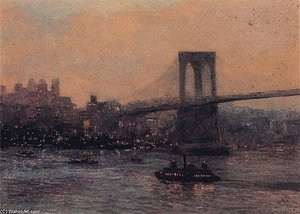
Redfield’s artistic journey was marked by a gradual evolution from early tonalist works towards the vibrant palette and broken brushwork characteristic of Impressionism. He became particularly renowned for his captivating depictions of winter scenes in Bucks County, Pennsylvania – serene landscapes blanketed in snow that captured the quiet beauty and contemplative mood of the season. These paintings weren’t merely representations of scenery; they were evocative studies of light and atmosphere, imbued with a sense of tranquility and solitude. Beyond Pennsylvania, Redfield also found inspiration along the Maine coastline, spending summers in Boothbay Harbor and painting the rugged beauty of Monhegan Island. A significant turning point came in 1909 when he embarked on a series of large-scale urban landscapes depicting New York City. Works like “Brooklyn Bridge at Night” and “Between Daylight and Darkness” showcased an idealized vision of urban life, emphasizing mood and atmosphere over strict realism. Throughout his career, recurring themes of rural America, the changing seasons, and the interplay of natural light consistently appeared in his work, reflecting a deep connection to the land and its rhythms.

Legacy and Lasting Impact

Edward Willis Redfield’s influence on American landscape painting is undeniable. His distinctive style profoundly impacted subsequent generations of artists, most notably Emile Gruppe, who greatly admired Redfield's bold brushwork and masterful use of color. Praised by his contemporaries for his ability to capture the essence of the American landscape with a unique and authentic voice, Redfield’s works were widely exhibited in museums and galleries across the United States during his lifetime. He died on October 19, 1965, leaving behind a rich artistic legacy that continues to resonate today. His contribution to American Impressionism, coupled with his evocative portrayals of rural landscapes, ensures his place as a significant figure in the history of American art. Redfield’s paintings are not simply depictions of places; they are expressions of a deep emotional connection to the land and a celebration of the beauty found within the everyday. His ability to transform ordinary scenes into moments of poetic contemplation continues to captivate audiences, solidifying his enduring impact on the world of art.