Портрет Едвард Бёрд

54 найвідоміших картин Едвард Бёрд: добірка галереї

Оновлено Листопад 2026 · за рейтингом нашої популярності (кількість пошукових запитів, переглядів та замовлень для кожної роботи) · 54 робіт Едвард Бёрд у нашому каталозі

Коротко кажучи

З усіх оригінальних робіт, які залишив Едвард Бёрд, найвідомішою є The Scavengers (1800) із колекції Musée Cognacq-Jay, Париж. Слідом за ними йдуть Village Choristers Rehearsing an Anthem for Sunday (1810) та Mr Ricketts' Return From Shooting. Наш каталог містить 54 робіт Едвард Бёрд; галерея зберегла 54 найвідоміших у світі творів, кожен із яких представлений із датою створення, назвою музею та своєю історією.

1772 – 1819, Вулвергемптон Найбільше робіт: Sunnycroft

10 найкращих картин Едвард Бёрд: вибір галереї

1
The Scavengers (1800) авторства Едвард Бёрд

The Scavengers

1800 · Oil On Canvas · Musée Cognacq-Jay, Париж

Two small figures occupy the center of a shadowed world. They are children, caught in a quiet act of discovery amidst the heavy, dark foliage of a large tree. A strong light descends from the upper left, carving their pale faces out of the gloom and catching the light-colored fabric of a girl's apron. The scene is a study in contrast, where the soft skin of youth meets the rough,…

2
Village Choristers Rehearsing an Anthem for Sunday (1810) авторства Едвард Бёрд

Village Choristers Rehearsing an Anthem for Sunday

1810 · Oil On Canvas · Королівська колекція, Лондон

The scene unfolds within a crowded, dimly lit room where a group of villagers has assembled for a musical rehearsal. The composition is dense, with figures arranged in a semi-circle around a central wooden table. To the left, seated musicians anchor the group, while standing figures occupy the right side of the frame. Light enters from a window on the far left, casting directional beams that illuminate faces and hands…

3
Mr Ricketts' Return From Shooting авторства Едвард Бёрд

Mr Ricketts' Return From Shooting

Oil

The room is heavy with the scent of roasted meat and the warmth of a low fire. At the head of the table, a man sits in a green coat, his yellow waistcoat catching the light as he turns his gaze toward the viewer. He has returned from the field, his presence anchoring the domestic scene. Beside him, a woman in a blue dress looks upward, her posture a silent…

4
The Reading Of The Will Concluded авторства Едвард Бёрд

The Reading Of The Will Concluded

Oil On Panel

The air in the room feels heavy, thick with the unspoken expectations of those gathered. A man stands at the center of the composition, his posture firm as he holds a document that holds the power to shift fortunes. He reads aloud, his voice cutting through the stillness of the drawing room. Around him, the figures are frozen in a state of intense observation. Some sit in chairs, their bodies…

5
Proclaiming Joash King авторства Едвард Бёрд

Proclaiming Joash King

Oil

Proclaiming Joash King is an oil painting by the English artist Edward Bird. Created about 1815, the work depicts a specific narrative from the Old Testament of the Bible. The scene focuses on the anointing of the young Joash as the king of Judah. This historical and religious subject matter reflects the artist's transition toward large-scale historical and religious themes during this period of his career.

6
Princess Caraboo of Javasu , (1817) авторства Едвард Бёрд

Princess Caraboo of Javasu ,

1817 · Oil

Edward Bird painted Princess Caraboo of Javasu , in 1817. The portrait presents Mary Baker in exotic attire, presenting her as the fictional Princess Caraboo of Javasu. This identity was a fabrication used by Baker, an English impostor, to claim royal lineage from a non-existent island in the Indian Ocean.

Вибірка Едвард Бёрд триває, від 11 до 54

Знамениті картини Едвард Бёрд за періодами творчості

Теми, що привертали увагу Едвард Бёрд

Чотири сюжети, які найчастіше зустрічаються в цих оригіналах, кожен із найкращим прикладом.

Музеї, у яких зберігаються оригінали Едвард Бёрд

4 музеїв, у яких зберігається більшість картин із цього списку.

Музей Місто Твори Едвард Бёрд Картини зі цього списку
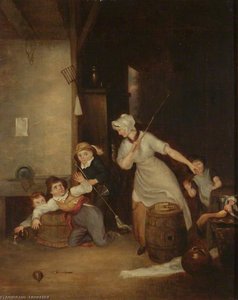
Sunnycroft, WellingtonSunnycroft Wellington 2 A Dame Scolding Naughty Children, The Toy Prisoner Being Shot In The School Room
Musée Cognacq-Jay, ПарижMusée Cognacq-Jay Париж 1 The Scavengers
Королівська колекція, ЛондонКоролівська колекція Лондон 1 Village Choristers Rehearsing an Anthem for Sunday
Anglesey AbbeyAnglesey Abbey 1 The Life Guards In A Guardroom

Едвард Бёрд рік за роком: оригінали, що визначають кожен період

Від 1800 до 1817, Едвард Бёрд працював протягом 18 років: ця добірка відображає цей тривалий творчий шлях рік за роком через його найкращі оригінальні роботи.

Роботи за роками

Оберіть рік, щоб переглянути оригінали.

Запитання колекціонерів про картини Едвард Бёрд

Яка робота Едвард Бёрд є найвідомішою?Дізнатися відповідь

The Scavengers (1800), Musée Cognacq-Jay, Париж. Далі йдуть Village Choristers Rehearsing an Anthem for Sunday (1810) та Mr Ricketts' Return From Shooting.

Скільки років було Едвард Бёрд, коли було створено The Scavengers?Дізнатися відповідь

28 років: The Scavengers датована 1800 роком, а Едвард Бёрд народився(-лася) у 1772.

Які десять найвідоміших картин Едвард Бёрд?Дізнатися відповідь

The Scavengers, Village Choristers Rehearsing an Anthem for Sunday, Mr Ricketts' Return From Shooting, The Reading Of The Will Concluded, Proclaiming Joash King, Princess Caraboo of Javasu ,, The Arrival of Louis XVIII at Calais, The Birth, The Duet та The Life Guards In A Guardroom. У рейтингу вище вказано рік створення та музей для кожної картини.

Скільки картин залишив Едвард Бёрд?Дізнатися відповідь

Наш каталог містить 54 робіт Едвард Бёрд, датованих періодом з 1800 по 1817.

У яких музеях виставляються шедеври Едвард Бёрд?Дізнатися відповідь

Переважно в Sunnycroft (Wellington), Musée Cognacq-Jay (Париж) та Королівська колекція (Лондон). У таблиці музеїв вище наведено їхній повний перелік.

Які перша та остання відомі оригінальні роботи Едвард Бёрд?Дізнатися відповідь

На цій сторінці найдавніша робота датована The Scavengers (1800), а найновіша — Princess Caraboo of Javasu , (1817).

Які сюжети Едвард Бёрд обирав найчастіше?Дізнатися відповідь

Children (5), Man (3) та Royalty (3), у 54 роботах на цій сторінці.

Яку техніку найчастіше використовував(ла) Едвард Бёрд?Дізнатися відповідь

Oil, для 3 із 54 робіт на цій сторінці.

Які роботи Едвард Бёрд виставлені в Sunnycroft?Дізнатися відповідь

A Dame Scolding Naughty Children та The Toy Prisoner Being Shot In The School Room: Sunnycroft, Wellington зберігає 2 робіт із цієї сторінки.

Едвард Бёрд: життя та творчість

Edward Bird (1772–1819): A Life Rooted in Craft

Edward Bird, born in Wolverhampton in 1772, stands as a pivotal figure within the burgeoning British artistic landscape of the early nineteenth century. Unlike many artists of his time who pursued grand narratives of history painting, Bird’s artistic journey began humbly—within the practical confines of his father's carpentry workshop—a formative experience that instilled a meticulous attention to detail and an unwavering dedication to craftsmanship.

  • Early Influences: Bird’s initial training centered on japanning artistry, honing skills in applying decorative designs onto tea trays. This painstaking process demanded precision and fostered an appreciation for textural nuances—elements that would permeate his subsequent oeuvre.
  • George Cumberland & Artistic Inspiration: A crucial connection was forged with George Cumberland, a wealthy art collector whose expansive library provided invaluable access to the works of Old Masters, profoundly shaping Bird’s aesthetic sensibilities. Cumberland's patronage wasn’t merely financial; it nurtured an intellectual environment conducive to artistic exploration.
  • The Bristol School & Collaborative Spirit: Bird relocated to Bristol in 1794, immersing himself in the vibrant cultural milieu of the city and establishing a formative relationship with fellow artists like Edward Villiers Rippingille and Nathan Cooper Branwhite. This informal collective—known as the Bristol School—championed experimentation and mutual encouragement, fostering a dynamic exchange of ideas that propelled artistic boundaries.

The Bristol School’s distinctive style prioritized fresh color palettes and an astute observation of everyday life—qualities that would become hallmarks of Bird’s work. Notably, his friendship with Cumberland facilitated access to Cumberland's impressive art collection, broadening his artistic horizons.

Genre Painting & The Pursuit of Naturalism

Bird initially sought to challenge David Wilkie’s dominance in genre painting—a stylistic choice that reflected a broader trend toward naturalistic representation. This ambition was fueled by an unwavering commitment to capturing the authenticity of human experience, mirroring the ethos of the Bristol School.

  • Wilkie Rivalry: Bird's artistic endeavors were marked by a spirited rivalry with Wilkie, demonstrating a willingness to push stylistic boundaries and engage in critical dialogue within the art world.
  • Bristol Landscape Studies: Regular evening sketching sessions and excursions into the surrounding countryside fostered both technical skill and a shared artistic vision—particularly evident in landscapes like ‘Landscape with Cottage,’ which showcased Bird’s ability to convey atmospheric subtleties.

Bird's meticulous technique—characterized by careful brushwork and nuanced color blending—became synonymous with the Bristol School’s aesthetic, establishing him as a leader of his generation.

Recognition & Historical Themes

His success at the Royal Academy in 1809 cemented Bird’s reputation and secured royal patronage. The acquisition of ‘Good News’ by Prince Regent underscored the significance of his artistic achievements—a testament to his ability to resonate with discerning audiences.

  • Royal Patronage: Bird's connection with Cumberland extended beyond mere intellectual companionship; Cumberland’s generosity provided crucial financial stability, allowing him to pursue ambitious projects and explore diverse artistic avenues.
  • Historical Commissions: Bird transitioned towards history painting—a genre demanding both technical mastery and a compelling narrative voice—accepting commissions that reflected his growing artistic confidence. Notable works include ‘The Field of Chevy Chase’ and ‘The Day After the Battle,’ demonstrating his capacity to convey dramatic emotion and capture pivotal moments in history.

His dedication to capturing the essence of historical events solidified Bird's legacy as a master storyteller—a distinction that distinguishes him from many artists of his era who prioritized stylistic convention over narrative depth.

Legacy & Artistic Style

Edward Bird’s influence extended beyond his immediate circle, inspiring subsequent generations of artists who embraced naturalism and sought to convey the immediacy of human experience. His meticulous attention to detail—a hallmark of his genre paintings—continues to captivate viewers today.

  • Bristol School Influence: Bird's stylistic innovations profoundly impacted fellow Bristol School artists, notably Francis Danby, shaping the trajectory of British art history.
  • Naturalistic Palette & Technique: Bird’s artistic style was characterized by a vibrant palette—inspired by Cumberland’s collection—and masterful brushwork—resulting in textured surfaces and luminous colors.

Ultimately, Edward Bird remains an emblem of artistic integrity—a testament to the enduring power of craftsmanship and the transformative potential of collaborative creativity.