

1


Оновлено Листопад 2026 · за рейтингом нашої популярності (кількість пошукових запитів, переглядів та замовлень для кожної роботи) · 3 робіт Edith Corbet у нашому каталозі
Коротко кажучи
Lady Adelaide Chetwynd-Talbot, Countess Brownlow (1844-1917) (1885) — це картина Edith Corbet, яка привертає найбільше уваги; оригінал зберігається в Бельтон Хаус, Grantham. Після цього погляд переходить на Macgillicuddy's Reeks (1892) та Cicero's Villa and the Bay of Baiae (1909). Серед 3 робіт Edith Corbet у нашому каталозі ці 3 є найвідомішими: кожна з них — унікальний оригінал із зазначенням року створення, музею та причини її безсмертя.
2 музеїв, у яких зберігається більшість картин із цього списку.
| Музей | Місто | Твори Edith Corbet | Картини зі цього списку |
|---|---|---|---|
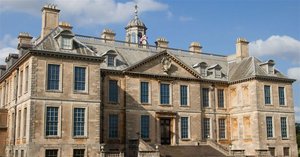 Бельтон Хаус |
Grantham | 1 | Lady Adelaide Chetwynd-Talbot, Countess Brownlow (1844-1917) |
 Галерея Нового Південного Уельсу |
Сідней | 1 | Macgillicuddy's Reeks |
Оберіть десятиліття, щоб побачити оригінальний твір, який його визначає.


Lady Adelaide Chetwynd-Talbot, Countess Brownlow (1844-1917) (1885), Бельтон Хаус, Grantham. Далі йдуть Macgillicuddy's Reeks (1892) та Cicero's Villa and the Bay of Baiae (1909).
39 років: Lady Adelaide Chetwynd-Talbot, Countess Brownlow (1844-1917) датована 1885 роком, а Edith Corbet народився(-лася) у 1846.
Наш каталог містить 3 робіт Edith Corbet, датованих періодом з 1885 по 1909.
Переважно в Бельтон Хаус (Grantham) та Галерея Нового Південного Уельсу (Сідней). У таблиці музеїв вище наведено їхній повний перелік.
На цій сторінці найдавніша робота датована Lady Adelaide Chetwynd-Talbot, Countess Brownlow (1844-1917) (1885), а найновіша — Cicero's Villa and the Bay of Baiae (1909).
Edith Corbet enters the historical record on 28 December 1846, born in Goulburn, New South Wales, Australia. She is the second daughter and fifth child of Henry Edenborough and Margaret Stedman. Her father, a sea captain, had made several voyages to Australia between 1833 and 1837 before deciding to settle there in 1840. The family establishes a life on a farm south of Goulburn known as 'Wollogorang,' a property featuring a two-storey brick and stone rubble building with distinctive French windows. This pastoral existence remains the family's reality until 1854.
The landscape of her childhood shifts when the family sells the Wollogorang property and returns to England. The Edenborough family, originally from Leicestershire, settles in London. There, they transition into the life of prosperous merchants, dealing in hosiery and silk. By 1861, the family is living in Kensington, Middlesex, with Edith aged fourteen. The domestic scene is marked by the loss of her father, Henry, who died in 1855 at Chesham Lodge in Surrey.
The move to Rome marks a definitive shift in her trajectory. Following her marriage to the Victorian painter and illustrator Arthur Murch, she settles into the Italian landscape. Here, the focus turns toward the direct observation of nature. She begins working alongside Giovanni Costa, the leader of the Macchiaioli group, from the mid-1870s onwards. The collaboration is more than mere proximity; Costa holds her artistic gifts in high regard, remembering their excursions to paint from nature at Fusino.
The light of the Mediterranean becomes her primary subject. In 1876, she and Costa travel to Venice. This period of movement and shared study defines her immersion in the Macchiaioli circle, as she moves away from traditional studio constraints to capture the immediate effects of natural light.
By 1871, Corbet is already a presence in the London art scene, exhibiting her work in the city. Her career gains momentum through the 1880s. During this decade, she becomes a frequent contributor to the Grosvenor Gallery and the New Gallery, placing her landscapes within the competitive pulse of Victorian exhibition culture.
The scope of her reach extends beyond the British Isles. In 1893, her work travels to the Palace of Fine Arts at the World's Columbian Exposition in Chicago, Illinois. This international exposure marks a significant moment in her professional trajectory. Following her marriage to Matthew Ridley Corbet in 1891, her exhibition pattern shifts. She moves away from the previous galleries to exhibit mainly at the Royal Academy, maintaining a presence in London for the remainder of her life.
The influence of the Macchiaioli group—often referred to as the Tuscans or the Etruscans—defines her approach to the landscape. She rejects the rigid constraints of academic tradition, choosing instead to work outdoors. This practice allows her to capture the immediate effects of natural light as they shift across the terrain. Her focus remains on the way light interacts with the environment, seeking to render the atmosphere through direct observation.
Her compositions frequently adopt a panoramic format. She utilizes elongated horizontal canvases to accommodate these wide vistas. This choice of scale dictates the way she organizes space, stretching the view to encompass the breadth of the scenery. The physical shape of the canvas works in tandem with her subject matter to emphasize the expansive nature of the landscapes she depicts.
Color application in her work follows a specific logic. She maintains a preoccupation with harmonious and subdued opaque colour. Rather than relying on high-contrast intensity, she builds her scenes through these controlled tones. This method creates a sense of atmospheric unity across the elongated surfaces, prioritizing the subtle shifts in light and tone over dramatic chromatic shifts.