Портрет Dorothy Dehner

Картини Dorothy Dehner: 11 найвідоміших у погляді галереї

Оновлено Листопад 2026 · за рейтингом нашої популярності (кількість пошукових запитів, переглядів та замовлень для кожної роботи) · 11 робіт Dorothy Dehner у нашому каталозі

Коротко кажучи

На думку експертів галереї, найвідоміший витвір Dorothy Dehner — це Heads 3 (1970). Still Life with Shells (1931) та Desert (1948) доповнюють тріо, яке впізнає кожне око. З 11 робіт Dorothy Dehner у нашому каталозі галерея представляє 11 найвідоміших нижче — кожна з них є оригіналом із зазначенням року створення, музею та унікальних особливостей.

1901 – 1994, Cleveland

Топ 10 картин художника Dorothy Dehner у галереї

9
Folk Song (1948) авторства Dorothy Dehner

Folk Song

1948

The Smithsonian American Art Museum is home to a diverse collection of artworks, including the captivating piece "Folk Song" by Dorothy Dehner. Created in 1948, this gouache painting measures 41 x 32 cm and showcases the artist's unique style. As a professional expert in Art and https://AllPaintingsStore.com salesman, I can appreciate the beauty and significance of this piece. Artist Background Dorothy Dehner was an American artist known for her abstract…
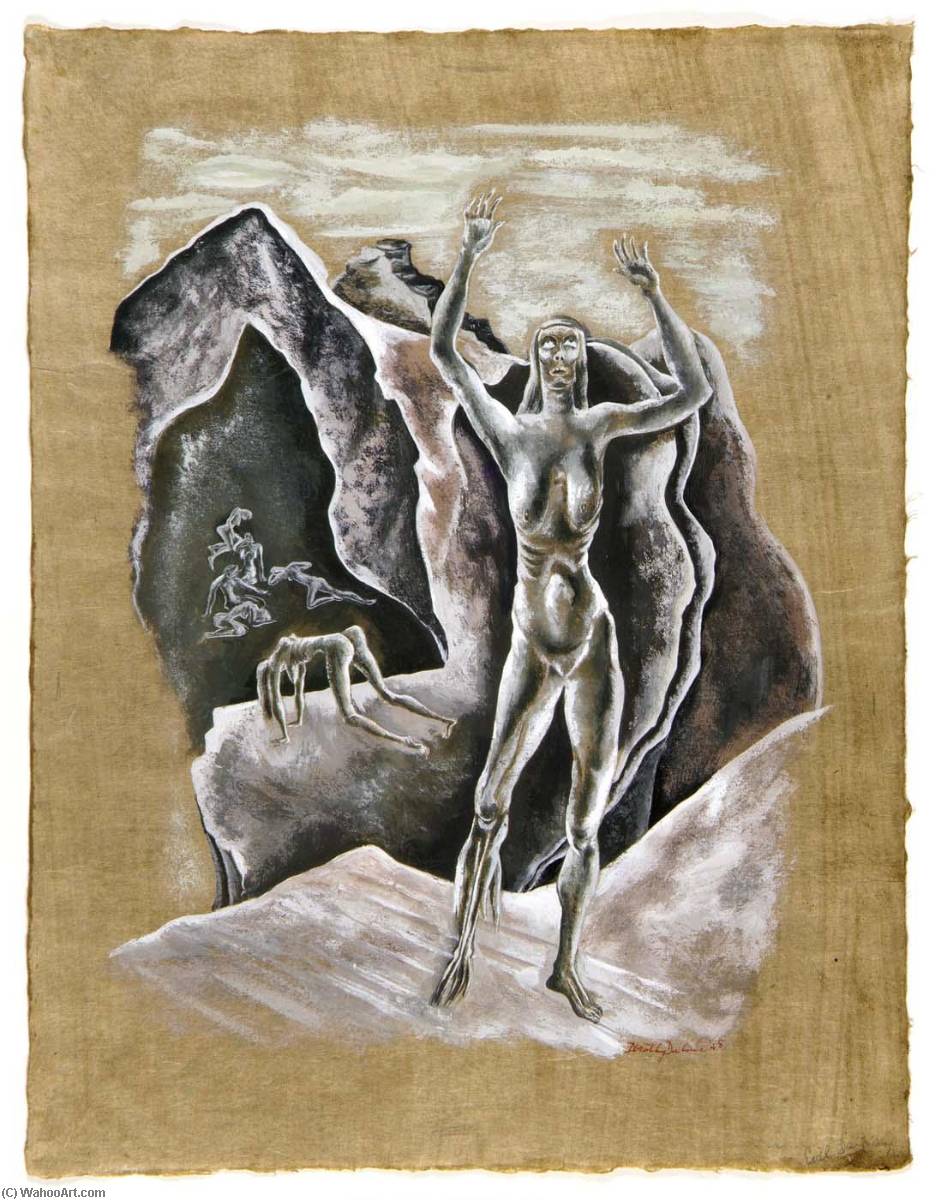
10
Evil (1948) авторства Dorothy Dehner

Evil

1948

The painting "Evil" by Dorothy Dehner is a thought-provoking artwork that has sparked intense debate and curiosity among art enthusiasts. Created in 1948, this gouache painting measures 41 x 32 cm and is currently housed at the Smithsonian American Art Museum in the United States. Understanding the Artist's Vision Dorothy Dehner was an American artist known for her unique style, which blended elements of abstraction and surrealism. Her paintings often…

Картини художника Dorothy Dehner, від 11 до 11 місця в рейтингу

Dorothy Dehner, одна фірмова картина за десятиліття

Роботи за десятиліттями

Оберіть десятиліття, щоб побачити оригінальний твір, який його визначає.

Картини Dorothy Dehner: відповіді галереї

Яка картина Dorothy Dehner є найвідомішою серед усіх?Дізнатися відповідь

Heads 3 (1970). Далі йдуть Still Life with Shells (1931) та Desert (1948).

Скільки років було Dorothy Dehner, коли він/вона завершив/завершила Heads 3?Дізнатися відповідь

69 років: Heads 3 датована 1970 роком, а Dorothy Dehner народився(-лася) у 1901.

Які 10 найкращих картин Dorothy Dehner?Дізнатися відповідь

Heads 3, Still Life with Shells, Desert, Bird Machine 1, The Maiden Aunts, River Landscape 1, Monolith, Untitled, Folk Song та Evil. У рейтингу вище вказано рік створення та музей для кожної картини.

Скільки творів створив Dorothy Dehner?Дізнатися відповідь

Наш каталог містить 11 робіт Dorothy Dehner, датованих періодом з 1931 по 1991.

Коли Dorothy Dehner створив свої найвідоміші картини?Дізнатися відповідь

У 1950s: 4 із 11 робіт на цій сторінці були створені тоді, серед них Bird Machine 1.

Які найранніші та найпізніші відомі роботи Dorothy Dehner?Дізнатися відповідь

На цій сторінці найдавніша робота датована Still Life with Shells (1931), а найновіша — Untitled (1991).

Dorothy Dehner: художник

Dorothy Dehner: Sculpting the Echoes of Experience

Dorothy Dehner (1901-1994) wasn’t a name that frequently echoed through the halls of 20th-century art history until relatively recently. Yet, beneath the surface of her prolific career—spanning sculpture, drawing, and printmaking—lies an artist deeply attuned to the complexities of human emotion and the enduring power of memory. Born in Cleveland, Ohio, into a family profoundly shaped by loss and resilience, Dehner’s life became a crucible for her artistic vision, forging a unique style that blended Surrealist intuition with Constructivist rigor and a profound connection to the natural world. Her work isn't easily categorized; it resists simple labels, instead offering a deeply personal dialogue between abstraction, symbolism, and the lived experience of a woman navigating both personal tragedy and the evolving landscape of modern art.

Early Life and Influences: A Foundation Forged in Loss

Dehner’s childhood was marked by significant upheaval. The untimely deaths of her father and mother within a few years of each other, coupled with the subsequent care provided by her aunts, instilled in her a sensitivity to loss and a quiet determination to find meaning amidst hardship. This early experience profoundly shaped her artistic approach – a willingness to confront difficult emotions through abstract forms and symbolic imagery. She initially pursued an acting career, finding herself drawn to the theatrical world before realizing that her true calling lay in visual art. A brief sojourn in California exposed her to burgeoning modernism, including exposure to European avant-garde movements like Cubism and Surrealism. Crucially, her travels through Europe in 1925 proved transformative, igniting a passion for the work of artists like Jan Matulka, whose emphasis on emotional expression resonated deeply with Dehner’s own artistic sensibilities. The influence of Russian Constructivism, particularly its focus on geometric abstraction and the exploration of social themes, also became a significant touchstone in her development.

The Bolton Landing Years: Totems of Memory

Following her marriage to sculptor David Smith in 1927, Dehner and Smith established a farm at Bolton Landing in upstate New York, a location that would become central to her artistic output for nearly two decades. This period witnessed the evolution of her most recognizable work – the “totem” sculptures. These monumental, often vertical structures, constructed from wax, bronze, wood, and steel, are not simply decorative objects; they’re complex visual narratives rooted in memory, personal experience, and a deep engagement with the natural world. The early totem sculptures, created during her marriage to Smith, frequently depicted fragmented figures—a poignant reflection of their troubled relationship. The use of layered wax slabs, often incorporating small metal pieces or pebbles, created tactile surfaces that invited close examination, inviting viewers to decipher the symbolic language embedded within each form. During this time, Dehner’s work began to incorporate elements of mythology and classical iconography, reflecting a desire to connect with universal themes of human experience.

Post-Smith: A Return to Introspection and Line

The separation from David Smith in 1950 marked a significant turning point in Dehner’s artistic trajectory. Following this personal upheaval, she returned to New York City, where she continued to explore her artistic interests through drawing and printmaking. Her later work during the 1970s and 80s saw a shift towards smaller, more intimate pieces—often characterized by delicate lines and subtle color palettes. These drawings, frequently inspired by the landscape surrounding Bolton Landing, offered a quieter, more introspective reflection on themes of memory, loss, and the passage of time. The “Folk Song” series, for example, captures the essence of her surroundings with an understated elegance, utilizing ink and watercolor to evoke the textures and rhythms of nature.

Legacy and Significance: A Quiet Voice in Modern Art

Dorothy Dehner’s artistic legacy has been steadily gaining recognition in recent decades. While she remained largely outside the mainstream art world during her lifetime, her work is now celebrated for its emotional depth, innovative use of materials, and profound engagement with themes of memory, loss, and the human condition. Her “totem” sculptures stand as powerful testaments to her ability to translate complex personal experiences into universal symbols. Dehner’s influence extends beyond her own creations; she fostered a supportive environment for emerging artists, including David Smith, and contributed significantly to the development of American abstract sculpture in the mid-20th century. Her work continues to resonate with viewers today, offering a quiet but compelling invitation to contemplate the echoes of experience that shape our lives.