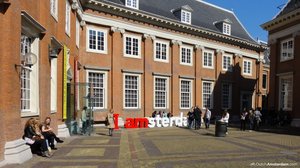
Портрет Cornelis Anthonisz

Картини Cornelis Anthonisz: 6 найвідоміших у погляді галереї

Оновлено Листопад 2026 · за рейтингом нашої популярності (кількість пошукових запитів, переглядів та замовлень для кожної роботи) · 6 робіт Cornelis Anthonisz у нашому каталозі

Коротко кажучи

На думку експертів галереї, найвідоміший витвір Cornelis Anthonisz — це Banquet of Members of Amsterdam's Crossbow Civic Guard (1533), оригінал якого експонується в Історичний музей Амстердама, Амстердам. Portrait of Sybrand Pompejusz. Occo (1538) та Portrait of a Man (1530) доповнюють тріо, яке впізнає кожне око. З 6 робіт Cornelis Anthonisz у нашому каталозі галерея представляє 6 найвідоміших нижче — кожна з них є оригіналом із зазначенням року створення, музею та унікальних особливостей.

1505 – 1553, Amsterdam Найбільше робіт: Amsterdam Museum

Топ 10 картин художника Cornelis Anthonisz у галереї

1
Banquet of Members of Amsterdam's Crossbow Civic Guard (1533) авторства Cornelis Anthonisz

Banquet of Members of Amsterdam's Crossbow Civic Guard

1533 · Oil · Історичний музей Амстердама, Амстердам

The air in the room feels heavy with the scent of roasted meats and spilled wine. Men gather around a long, sturdy table, their bodies frozen in a moment of communal celebration. They wear the heavy, textured fabrics of the early sixteenth century, with collars that frame faces set in dignified, somewhat stiff expressions. Some men stand, looming over the seated figures, while others lean into the conversation, their hands…

2
Portrait of Sybrand Pompejusz. Occo (1538) авторства Cornelis Anthonisz

Portrait of Sybrand Pompejusz. Occo

1538 · Oil On Panel · Kunsthistorisches Museum, Відень

A man sits anchored in the stillness of 1538. Sybrand Pompejusz Occo meets the viewer with a gaze that carries the gravity of his station. He is framed by the heavy geometry of classical ruins, where weathered stone columns rise like silent witnesses to his status. The light enters from the upper left, carving the sharp lines of his face and casting soft shadows that give his features a sculptural…

3
Portrait of a Man (1530) авторства Cornelis Anthonisz

Portrait of a Man

1530 · Oil On Panel · Детройтський інститут мистецтв, Детройт

The Portrait of a Man is a painting by Cornelis Anthonisz, an artist born around 1505 in Amsterdam, Netherlands. Created in 1530, this work captures a single male figure in a moment of quiet stillness. The subject is rendered in period-appropriate attire, his presence defined by the heavy weight of his garments and the steady gaze of his eyes.

4
Civic Guardsmen of Squad A of the Arquebusier Civic Guards (1531) авторства Cornelis Anthonisz

Civic Guardsmen of Squad A of the Arquebusier Civic Guards

1531 · Oil On Panel · Amsterdam Museum, Амстердам

The scene unfolds through the oil on panel work titled Civic Guardsmen of Squad A of the Arquebusier Civic Guards. Attributed to the artist Cornelis Anthonisz, this large-scale assembly captures a specific moment in the history of the Habsburg Netherlands. The figures gather in a dense, organized formation, presenting a formal militia group portrait that reflects the communal strength of their unit. Every man in the squad carries the weight…

5
Henry VIII of England on Horseback (1538) авторства Cornelis Anthonisz

Henry VIII of England on Horseback

1538 · Олія на полотні · Рейксмюзеум, Амстердам

The year is 1538. Henry VIII, already a figure of immense power and turbulent change, stands poised upon his warhorse – a potent symbol of both military might and the evolving image he sought to project. Cornelis Anthonisz’s “Henry VIII of England on Horseback” isn't merely a portrait; it’s a meticulously crafted document of an era, a visual testament to the king’s ambition and the burgeoning artistic landscape of Amsterdam.…

Теми, що привертали увагу Cornelis Anthonisz

Чотири сюжети, які найчастіше зустрічаються в цих оригіналах, кожен із найкращим прикладом.

Музеї, у яких зберігаються оригінали Cornelis Anthonisz

5 музеїв, у яких зберігається найбільша кількість картин із цього списку.

Музей Місто Твори Cornelis Anthonisz Картини зі цього списку
Amsterdam Museum, АмстердамAmsterdam Museum Амстердам 2 Civic Guardsmen of Squad A of the Arquebusier Civic Guards, Bird’s-eye View of Amsterdam
Історичний музей Амстердама, АмстердамІсторичний музей Амстердама Амстердам 1 Banquet of Members of Amsterdam's Crossbow Civic Guard
Kunsthistorisches Museum, ВіденьKunsthistorisches Museum Відень 1 Portrait of Sybrand Pompejusz. Occo
Детройтський інститут мистецтв, ДетройтДетройтський інститут мистецтв Детройт 1 Portrait of a Man
Рейксмюзеум, АмстердамРейксмюзеум Амстердам 1 Henry VIII of England on Horseback

Cornelis Anthonisz, знаковий живопис кожного року

Десятиліття, з 1530 по 1538, було достатньо для Cornelis Anthonisz: галерея проходить крізь них рік за роком, один відомий оригінал за іншим.

Роботи за роками

Оберіть рік, щоб переглянути оригінали.

Картини Cornelis Anthonisz: відповіді галереї

Яка картина Cornelis Anthonisz є найвідомішою серед усіх?Дізнатися відповідь

Banquet of Members of Amsterdam's Crossbow Civic Guard (1533), Історичний музей Амстердама, Амстердам. Далі йдуть Portrait of Sybrand Pompejusz. Occo (1538) та Portrait of a Man (1530).

Скільки років було Cornelis Anthonisz, коли він/вона завершив/завершила Banquet of Members of Amsterdam's Crossbow Civic Guard?Дізнатися відповідь

28 років: Banquet of Members of Amsterdam's Crossbow Civic Guard датована 1533 роком, а Cornelis Anthonisz народився(-лася) у 1505.

Скільки творів створив Cornelis Anthonisz?Дізнатися відповідь

Наш каталог містить 6 робіт Cornelis Anthonisz, датованих періодом з 1530 по 1538.

Де висять найвідоміші оригінали робіт Cornelis Anthonisz?Дізнатися відповідь

Переважно в Amsterdam Museum (Амстердам), Історичний музей Амстердама (Амстердам) та Kunsthistorisches Museum (Відень). У таблиці музеїв вище наведено їхній повний перелік.

Коли Cornelis Anthonisz створив свої найвідоміші картини?Дізнатися відповідь

У 1538: 3 із 6 робіт на цій сторінці були створені тоді, серед них Portrait of Sybrand Pompejusz. Occo.

Які найранніші та найпізніші відомі роботи Cornelis Anthonisz?Дізнатися відповідь

На цій сторінці найдавніша робота датована Portrait of a Man (1530), а найновіша — Portrait of Sybrand Pompejusz. Occo (1538).

До яких сюжетів Cornelis Anthonisz звертався найчастіше?Дізнатися відповідь

Man (2), Landscape (2) та Sky (2), у 6 роботах на цій сторінці.

У якій техніці найчастіше працював Cornelis Anthonisz?Дізнатися відповідь

Oil On Panel, для 3 із 6 робіт на цій сторінці.

Які оригінальні роботи Cornelis Anthonisz зберігаються в Amsterdam Museum?Дізнатися відповідь

Civic Guardsmen of Squad A of the Arquebusier Civic Guards та Bird’s-eye View of Amsterdam: Amsterdam Museum, Амстердам зберігає 2 робіт із цієї сторінки.

Cornelis Anthonisz: художник

Cornelis Anthonisz: The Pioneer of Amsterdam’s Bird's Eye View

Cornelis Anthonisz (ca. 1505 – 1553), anthonisz., also spelled anthonissen or teunissen, was a Dutch painter, engraver, and mapmaker whose legacy rests primarily on his groundbreaking achievement: the creation of the first complete map of Amsterdam—a monumental undertaking that cemented his place in art history. Born around 1505 in Amsterdam, Anthonisz’s artistic lineage traced back to Jacob Cornelisz van Oostsanen, a painter who instilled in him a foundational understanding of visual representation and perspective. His cousin, Dirck Jacobsz., further nurtured his talent within the vibrant artistic milieu of Haarlem.
  • Early Life & Artistic Training:
  • Commission for Amsterdam:
  • The Bird’s Eye View: A Revolutionary Map:
  • Other Notable Works: Portraits and Allegorical Prints:
  • Death & Legacy:

Commission for Amsterdam: Shaping the City's Image

In 1538, Anthonisz received an extraordinary commission from Amsterdam’s city fathers—a task that would propel him to international acclaim. They tasked him with producing a map of Amsterdam as a gift intended for Charles V, Holy Roman Emperor during his visit to the burgeoning Dutch Republic. This project demanded meticulous observation and artistic skill; Anthonisz embarked on a detailed survey of the city's topography, incorporating architectural features and street layouts with unprecedented accuracy. The resulting map wasn’t merely decorative—it was a powerful statement about Amsterdam’s status as a center of commerce and civic pride. It showcased a remarkable grasp of aerial perspective, skillfully conveying depth and spatial relationships through shading and tonal variations—a technique that would become synonymous with Anthonisz's style.

The Bird’s Eye View: A Revolutionary Map

Anthonisz’s magnum opus is undeniably his 1544 bird’s eye view of Amsterdam, a woodcut print consisting of twelve meticulously crafted blocks that captured the city in breathtaking detail. This ambitious undertaking involved painstaking preparation and execution—the artist spent considerable time studying the cityscape, sketching preliminary designs, and transferring them onto wooden planks. The printing process itself was laborious, requiring skilled craftsmen to carve intricate lines into the blocks and apply ink with precision. What distinguishes this map from its predecessors is not just its visual splendor but also its scientific rigor; it represents the first truly comprehensive depiction of Amsterdam’s urban landscape—a landmark achievement in cartography that would inspire generations of artists and engravers. Remarkably, the print was copied repeatedly until well into the seventeenth century, demonstrating its enduring authority as the definitive representation of Amsterdam at the time.

Other Notable Works: Portraits and Allegorical Prints

Beyond his monumental mapmaking endeavors, Anthonisz produced a diverse portfolio of artworks encompassing portraits and allegorical prints. His portrait of Reinoud III van Brederode exemplifies his mastery of anatomical realism and expressive rendering—a testament to his meticulous observation of human form and his ability to convey psychological nuance. Similarly, his militia group portrait ("The Civic Guard") captures the spirit of Amsterdam’s civic life, portraying members of the crossbow guild with a stiff yet dignified posture. Anthonisz's allegorical prints explored themes of virtue and morality through symbolic imagery—demonstrating his versatility as an artist and his engagement with broader intellectual currents of the Renaissance.

Death & Legacy

Cornelis Anthonisz died in Amsterdam in 1553, leaving behind a legacy that continues to resonate today. Although only two paintings attributed to him survive—the militia group portrait and the portrait of Reinoud III van Brederode—his influence extended far beyond his artistic output. The enduring fame of his bird’s eye view testifies to its pioneering spirit and its contribution to visual culture—a masterpiece that remains a symbol of Amsterdam's historical significance and Anthonisz’s unparalleled artistic achievement. Furthermore, the meticulous restoration of the damaged map in 1932 ensured that this iconic image would endure for future generations, safeguarding a tangible link to the Renaissance era and cementing Anthonisz’s place as one of the most important artists of his time.