Портрет Чімабуе

49 найвідоміших картин Чімабуе, кожна з яких є унікальною

Оновлено Жовтень 2026 · за рейтингом нашої популярності (кількість пошукових запитів, переглядів та замовлень для кожної роботи) · 52 робіт Чімабуе у нашому каталозі

Коротко кажучи

Насмішка над Христом (1280) — це картина Чімабуе, яка привертає найбільше уваги; оригінал зберігається в Лувр, Париж. Після цього погляд переходить на Крестування (1287) та Святий Франциск Ассизький (деталь). Серед 52 робіт Чімабуе у нашому каталозі ці 49 є найвідомішими: кожна з них — унікальний оригінал із зазначенням року створення, музею та причини її безсмертя.

1240 – 1302, Флоренція Проторенесанс Найбільше робіт: Галерея Уффіці

Топ-10 картин Чімабуе крізь призму галереї

1
Насмішка над Христом (1280) авторства Чімабуе

Насмішка над Христом

1280 · Яєчна темпера на дерев'яній панелі · Лувр, Париж

Повітря в межах картини здається важким, густим від напруги натовпу, що тисне з усіх боків. У центрі цього маленького дерев'яного світу стоїть Ісус, його тіло оповите глибокою синьою накидкою поверх червоної туніки. Він не чинить опору. Його руки безпорадно опущені, а вираз обличчя залишається незворушним, навіть коли постаті навколо нього сповнені агресії. Чоловік тягнеться вгору, намагаючись схопити край німба Христа, прагнучи позбавити його самого символу божественності. Навколо цієї центральної постаті…

2
Крестування (1287) авторства Чімабуе

Крестування

1287 · Яєчна темпера на дерев'яній панелі · Museo dell'Opera di Santa Croce, Флоренція

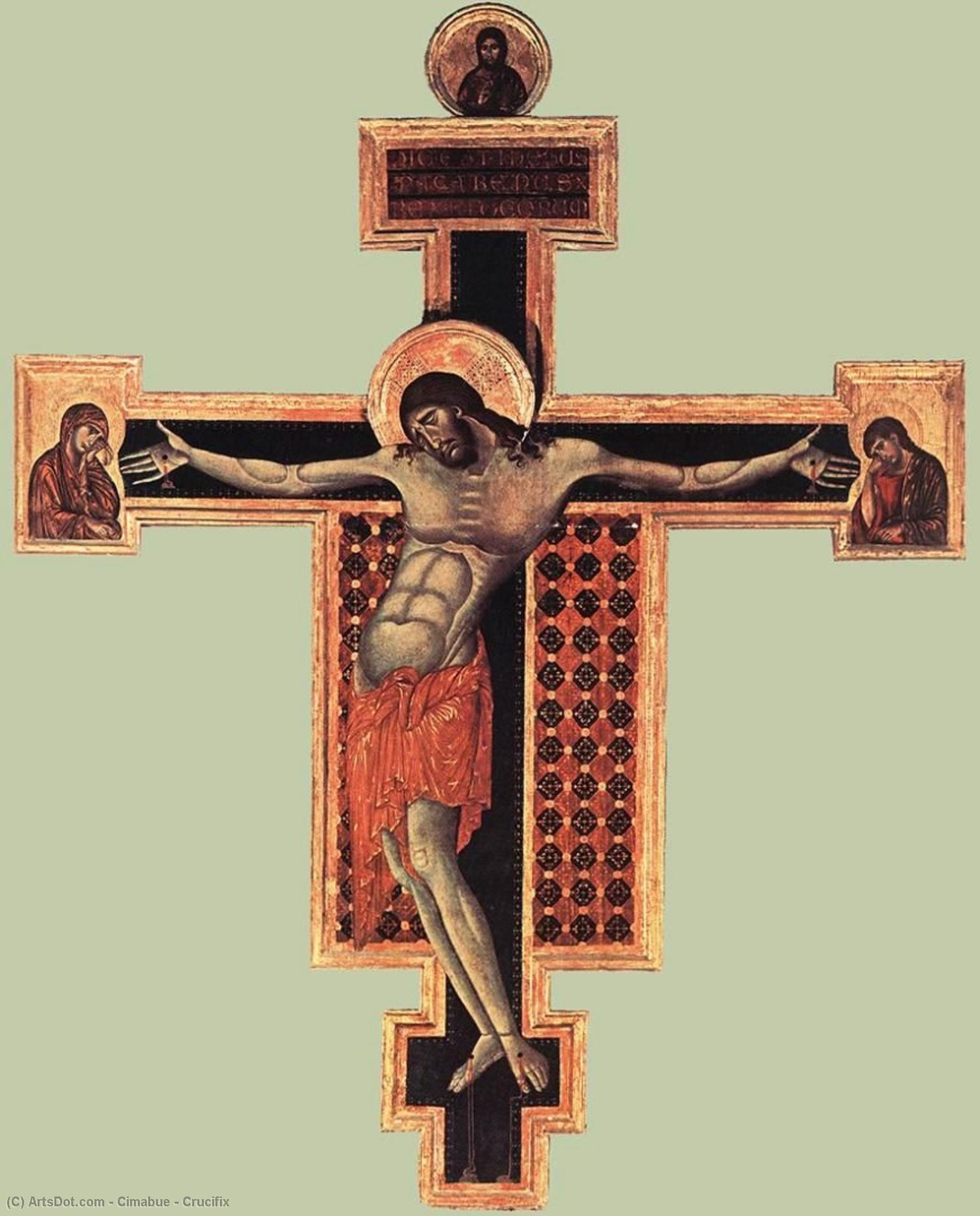
У серці Флоренції, у Basilica di Santa Croce, зберігається шедевр середньовісної іконографії – "Кружіль" (Crucifix) Кімбаче, створений близько 1287 року. Це не просто картина; це – вікно в епоху, коли традиційні форми християнського мистецтва поступово поступалися місцем новаторським ідеям раннього Ренесансу. Робота Кімбаче є свідченням його витонченого підходу до створення, що поєднує багату спадщину візантійської живопису з першими кроками на шляху до реалістичного зображення та емоційної глибини.

3
Святий Франциск Ассизький (деталь) авторства Чімабуе

Святий Франциск Ассизький (деталь)

Акрил на полотні

«Святий Франциск Ассизький (деталь)» роботи Чімабуе — це не просто зображення релігійної постаті; це пронизливе втілення зарождающегося гуманізму, який незабаром визначить епоху італійського Відродження. Написана приблизно у 1285–1290 роках, ця інтимна сцена закарбовує ніжний момент — обійми між Святим Франциском і маленькою дитиною, що випромінюють майже відчутну безтурботність. Твір слугує важливим свідченням ролі Чімабуе у переході західного мистецтва від жорсткої формальності візантійської іконографії до більш натуралістичного та емоційно насиченого стилю.…

4
Мадонна у величі (деталь) (1285) авторства Чімабуе

Мадонна у величі (деталь)

1285 · Акрил на полотні · Галерея Уффіці, Флоренція

Погляд Божественної Величі: Деталі «Мадонни у величі» Цімабуе Цей вишуканий фрагмент з «Мадонни у величі» Цімабуе, написаний у 1285 році, пропонує захоплююче вікно у період переходу від візантійської традиції до розквіту Відродження в італійському мистецтві. Маючи розміри 91 x 75 см, цей фрагмент уособлює духовний запал та художні інновації своєї епохи. Візантійське коріння та виникнення реалізму Цімабуе (бл. 1240–1302), народжений Ченні ді Пепо у Флоренції, є ключова фігура. Він відіграв…

5
Мадонна в Величі (1285) авторства Чімабуе

Мадонна в Величі

1285 · Яєчна темпера на дерев'яній панелі · Галерея Уффіці, Флоренція

Уявіть собі момент, коли час зупиняється, а перед вами відкривається вікно у світ середньовіччя – епоху, що перетворювала духовне на мистецтво. Це – "Мадонна в Величі" (деталь) від генія Цімбуе, створена у 1285 році, і зараз зберігається в галереї Уффіці у Флоренції. Цей невеликий фрагмент, лише 48 на 39 сантиметрів, криє в собі величезну силу та історичну значущість – він є свідченням переходу від суворої, бізонтійської традиції до народження Відродження.…

6
Crucifix (1272) авторства Чімабуе

Crucifix

1272 · Tempera On Panel

The Crucifix by Cimabue emerges from the shadows of the late thirteenth century, a profound religious work that captures the central moment of the crucifixion of Jesus Christ. Painted about 1272, this piece exists as a powerful meditation on divine suffering. The figure of Christ hangs upon the cross, his body caught in a moment of profound agony. It is a scene that demands an immediate, visceral response from anyone…

7
Crucifix (1268) авторства Чімабуе

Crucifix

1268 · Tempera On Panel · San Domenico, Арецо

In the heart of Italian art history, Giovanni Cimabue stands as a monumental figure, a master who skillfully navigated the artistic currents flowing from the rigid grandeur of the Byzantine Empire toward the burgeoning innovations of the early Renaissance. His Crucifix is not merely a religious icon; it is a profound testament to a period of transformative change. Painted with an unwavering determination that earned him the nickname “bull-ed,” Cimabue…

8
Apocalyptical Christ (detail) (1280) авторства Чімабуе

Apocalyptical Christ (detail)

1280 · Фреска

Three angels surge upward in a vertical composition, their forms appearing to burst from the wall. This detail, part of a larger fresco cycle, captures a moment of urgent divine announcement. The figures possess elongated limbs and stylized silhouettes, a hallmark of the transition from the rigid Byzantine tradition toward a more naturalistic approach. Their movement is directed heavenward, mirroring the spiritual aspiration of the viewer. Each angel carries a…

9
Madonna Enthroned with the Child, St Francis and four Angels (detail) (1278) авторства Чімабуе

Madonna Enthroned with the Child, St Francis and four Angels (detail)

1278 · Acrylic On Canvas

Giovanni Cimabue's “Madonna Enthroned with the Child, St Francis and four Angels (detail)” – a captivating work from 1278 – isn’t merely a depiction of biblical figures; it’s a pivotal moment in the evolution of Western art. Born Cenni di Pepo in Florence, Cimabue was a courageous innovator who dared to subtly challenge the rigid conventions inherited from Byzantine iconography, laying the groundwork for the vibrant artistic revolution that would…

10
Crucifix (detail) (1268) авторства Чімабуе

Crucifix (detail)

1268 · Акрил на полотні · San Domenico, Арецо

A Glimpse into Divine Sorrow: Cimabue’s *Crucifix (detail)* This exquisite detail from Cimabue's larger *Crucifix* (circa 1268) offers a profoundly moving encounter with the Virgin Mary and infant Jesus. Painted during a pivotal moment in art history, this work transcends mere religious iconography to become a powerful expression of maternal grief and spiritual contemplation. It’s a piece that resonates across centuries, offering both artistic beauty and emotional depth. Historical Context…

Знамениті картини Чімабуе, з 11 по 49

11Christ Enthroned between the Virgin and St John the Evangelist (detail) (1301) авторства ЧімабуеChrist Enthroned between the Virgin and St John the Evangelist (detail)1301 · Muso dell'Opera del Duomo 12Madonna Enthroned with the Child with Angels авторства ЧімабуеMadonna Enthroned with the Child with Angels 13The Madonna in Majesty (Maestà) (1285) авторства ЧімабуеThe Madonna in Majesty (Maestà)1285 · Галерея Уффіці 14The Madonna in Majesty (detail) (1285) авторства ЧімабуеThe Madonna in Majesty (detail)1285 · Галерея Уффіці 15St Luke (detail) (1280) авторства ЧімабуеSt Luke (detail)1280 16View of the frescoes in the left transept (1280) авторства ЧімабуеView of the frescoes in the left transept1280 17St Luke (detail) (1280) авторства ЧімабуеSt Luke (detail)1280 18Apocalyptical Christ (detail) (1280) авторства ЧімабуеApocalyptical Christ (detail)1280 19Madonna Enthroned with the Child, St Francis, St. Domenico and two Angels авторства ЧімабуеMadonna Enthroned with the Child, St Francis, St. Domenico and two AngelsГалерея Уффіці 20Crucifix (1280) авторства ЧімабуеCrucifix1280 21Crucifix (detail) (1268) авторства ЧімабуеCrucifix (detail)1268 · San Domenico 22St Matthew (detail) (1280) авторства ЧімабуеSt Matthew (detail)1280 23St John (detail) (1280) авторства ЧімабуеSt John (detail)1280 24St Matthew (detail) (1280) авторства ЧімабуеSt Matthew (detail)1280 25Crucifix (detail) (1268) авторства ЧімабуеCrucifix (detail)1268 · San Domenico 26Kristi gripande (detail) авторства ЧімабуеKristi gripande (detail) 27The Flagellation of Christ (1280) авторства ЧімабуеThe Flagellation of Christ1280 · The Frick Collection 28Madonna Enthroned with the Child and Two Angels авторства ЧімабуеMadonna Enthroned with the Child and Two AngelsSanta Maria dei Servi 29Virgin and Child авторства ЧімабуеVirgin and Child 30Madonna Enthroned with the Child, St Francis and Four Angels (1278) авторства ЧімабуеMadonna Enthroned with the Child, St Francis and Four Angels1278 31Virgin and Child авторства ЧімабуеVirgin and Child 32Virgin Enthroned with Angels (1290) авторства ЧімабуеVirgin Enthroned with Angels1290 · Лувр 33Maestà di Santa Maria dei Servi (1280) авторства ЧімабуеMaestà di Santa Maria dei Servi1280 34Saint Francis (1290) авторства ЧімабуеSaint Francis1290 35Madonna with Child (1284) авторства ЧімабуеMadonna with Child1284 36Vision of the Throne (1277) авторства ЧімабуеVision of the Throne1277 37The Virgin and Child Enthroned with Two Angels авторства ЧімабуеThe Virgin and Child Enthroned with Two AngelsНаціональна галерея 38Miracle of Saint Peter (1277) авторства ЧімабуеMiracle of Saint Peter1277 39Vault of the Evangelists (1277) авторства ЧімабуеVault of the Evangelists1277 40Dormition (1277) авторства ЧімабуеDormition1277 41Peter heals a lame man (1277) авторства ЧімабуеPeter heals a lame man1277 42St Michael and the Dragon by Cimabue (1277) авторства ЧімабуеSt Michael and the Dragon by Cimabue1277 43Fall of Simon Magus (1277) авторства ЧімабуеFall of Simon Magus1277 44Vision of Saint John at Patmos (1277) авторства ЧімабуеVision of Saint John at Patmos1277 45Christ at the Apocalypse (1277) авторства ЧімабуеChrist at the Apocalypse1277 46Crucifixion of Peter (1283) авторства ЧімабуеCrucifixion of Peter1283 47Vision of Angels at the Four Corners of the Earth (1277) авторства ЧімабуеVision of Angels at the Four Corners of the Earth1277 48Martyrdom of Saint Paul (1283) авторства ЧімабуеMartyrdom of Saint Paul1283 49Fragment of angels (1277) авторства ЧімабуеFragment of angels1277

Знамениті картини Чімабуе за періодами творчості

Florentine Dawn

1280 – 1284 · 3 робіт у цьому списку

Теми, що привертали увагу Чімабуе

Чотири сюжети, які найчастіше зустрічаються в цих оригіналах, кожен із найкращим прикладом.

Музеї, у яких зберігаються оригінали Чімабуе

8 музеїв, у яких зберігається найбільша кількість картин із цього списку.

Музей Місто Твори Чімабуе Картини зі цього списку
Галерея Уффіці, ФлоренціяГалерея Уффіці Флоренція 5 Мадонна у величі (деталь), Мадонна в Величі, The Madonna in Majesty (Maestà)
San Domenico, АрецоSan Domenico Арецо 4 Crucifix, Crucifix (detail), Crucifix (detail)
Лувр, ПарижЛувр Париж 2 Насмішка над Христом, Virgin Enthroned with Angels
Museo dell'Opera di Santa Croce, ФлоренціяMuseo dell'Opera di Santa Croce Флоренція 1 Крестування
Muso dell'Opera del Duomo, ПізаMuso dell'Opera del Duomo Піза 1 Christ Enthroned between the Virgin and St John the Evangelist (detail)
The Frick Collection, Нью-ЙоркThe Frick Collection Нью-Йорк 1 The Flagellation of Christ
Santa Maria dei Servi, БолоньяSanta Maria dei Servi Болонья 1 Madonna Enthroned with the Child and Two Angels
Національна галерея, ЛондонНаціональна галерея Лондон 1 The Virgin and Child Enthroned with Two Angels

Чімабуе крізь десятиліття: одна унікальна оригінальна робота для кожного

Роботи за десятиліттями

Оберіть десятиліття, щоб побачити оригінальний твір, який його визначає.

Картини Чімабуе: запитання до галереї

Яка найвідоміша робота Чімабуе?Дізнатися відповідь

Насмішка над Христом (1280), Лувр, Париж. Далі йдуть Крестування (1287) та Святий Франциск Ассизький (деталь).

У якому віці Чімабуе створив(ла) Насмішка над Христом?Дізнатися відповідь

40 років: Насмішка над Христом датована 1280 роком, а Чімабуе народився(-лася) у 1240.

Які десять найвідоміших картин Чімабуе?Дізнатися відповідь

Насмішка над Христом, Крестування, Святий Франциск Ассизький (деталь), Мадонна у величі (деталь), Мадонна в Величі, Crucifix, Crucifix, Apocalyptical Christ (detail), Madonna Enthroned with the Child, St Francis and four Angels (detail) та Crucifix (detail). У рейтингу вище вказано рік створення та музей для кожної картини.

Скільки відомих робіт належить Чімабуе?Дізнатися відповідь

Наш каталог містить 52 робіт Чімабуе, датованих періодом з 1268 по 1301.

Де можна побачити найвідоміші оригінали Чімабуе?Дізнатися відповідь

Переважно в Галерея Уффіці (Флоренція), San Domenico (Арецо) та Лувр (Париж). У таблиці музеїв вище наведено їхній повний перелік.

У який період Чімабуе створив свої найвідоміші картини?Дізнатися відповідь

У 1280s: 20 із 49 робіт на цій сторінці були створені тоді, серед них Насмішка над Христом.

Яка з найвідоміших картин Чімабуе була написана найраніше, а яка — найпізніше?Дізнатися відповідь

На цій сторінці найдавніша робота датована Crucifix (1268), а найновіша — Christ Enthroned between the Virgin and St John the Evangelist (detail) (1301).

Яким сюжетам віддавав перевагу Чімабуе?Дізнатися відповідь

Medieval art (12), Religious iconography (11) та Angels (11), у 49 роботах на цій сторінці.

Якими матеріалами найчастіше користувався Чімабуе?Дізнатися відповідь

Fresco, для 9 із 49 робіт на цій сторінці.

До якого напряму належить творчість Чімабуе?Дізнатися відповідь

Проторенесанс, судячи з оригіналів на цій сторінці.

Які оригінальні роботи Чімабуе можна побачити в Галерея Уффіці?Дізнатися відповідь

Мадонна у величі (деталь), Мадонна в Величі та The Madonna in Majesty (Maestà): Галерея Уффіці, Флоренція зберігає 5 робіт із цієї сторінки.

Чімабуе: портрет художника

The Life and Identity of Cimabue

In the bustling streets of Florence, Italy, a man named Giovanni Cimabue began his life around 1240. He was known to many by the names Cenni di Pepo or Cenni di Pepi, names that belonged to a man destined to shape the visual language of his age. He was a painter and a designer of mosaics, a craftsman whose hands worked with both the delicate brush and the enduring stone. His spirit was said to be strong, perhaps even rebellious, earning him a nickname that suggested a bull-headed determination. This stubbornness was not a flaw, but rather the driving force that allowed him to look at the rigid traditions of the Byzantine style and seek something more human.

His path was one of constant movement and evolving purpose. While his roots remained firmly planted in the Florentine tradition, his work carried him across the landscape of Tuscany. He did not merely replicate the icons of the past; he sought to breathe a sense of life into the figures he painted. This ambition led him to experiment with how light might fall upon a face or how a body might occupy space. He was a man caught between two worlds, honoring the spiritual formality of the old ways while reaching toward a new way of seeing the world through a more natural lens.

The final years of his life took him away from the city of his birth, leading him toward the coast. He eventually passed away in Pisa in 1302. Though his life was marked by the quiet labor of the workshop and the grand scale of mosaic design, his presence left a permanent mark on the history of Italian art. He lived through a time of profound change, acting as a bridge for those who would follow in his footsteps.

Early Life and Artistic Training

Born in Florence, Italy, around 1240, the young man who would become known as Cimabue entered a world where the traditions of Byzantium still held a firm grip on the spirit of art. He was a child of the Florentine streets, growing up in a landscape where the heavy, golden formality of the East met a new, restless desire for something more human. While the exact details of his childhood remain veiled by the passage of centuries, his early years were clearly shaped by the rigorous discipline of the Florentine workshops. Here, he learned to command the delicate medium of egg tempera and the demanding art of mosaic design, skills that would define his long career as both a painter and a designer of mosaics.

His training was not merely a matter of learning to apply pigment to wood, but a deep immersion into the sacred language of iconography. He absorbed the ways in which light was used to signify the divine, often through the application of shimmering gold leaf that seemed to radiate from the panel itself. Yet, even in these formative years, a certain strength of will began to emerge. There was a sense that he was not content to simply replicate the flat, symbolic figures of the past. Instead, he began to experiment with the way a body might occupy space, seeking to give his figures a sense of weight and presence that had been absent in the works of those who came before him. This early struggle to balance established religious tradition with a burgeoning interest in the natural world would become the defining characteristic of his hand.

Artistic Technique and Evolving Style

In the quiet labor of his workshop, Cimabue sought to breathe a new kind of life into the sacred figures of his age. He worked largely with egg tempera on wood panels, a medium that demanded a patient, disciplined hand. To achieve the celestial glow required for his religious subjects, he often applied this pigment over a background of shimmering gold leaf. In other instances, he utilized distemper with gold leaf to create a sense of divine light. His hands were equally adept at the grand scale of fresco and the intricate, enduring patterns of mosaic, showing a versatility that allowed him to move between the walls of a cathedral and the intimate size of a devotional panel.

As his vision matured, a subtle change began to appear in the way he treated the human form. He moved away from the flat, two-dimensional silhouettes of the Byzantine tradition, seeking instead to capture the weight and presence of real flesh. He achieved this through a more sophisticated use of shading to suggest volume, allowing a face or a limb to appear rounded and three-dimensional rather than merely outlined. This growing interest in lifelike figural proportions meant that his saints and Madonnas possessed a physical reality that felt closer to the people who knelt before them. He was no longer content with mere symbols; he wanted to show the body as a vessel of actual weight and emotion.

Major Commissions and Key Works

The early years of his career reveal a man already wrestling with the weight of tradition. Around 1268, he produced a Crucifix, a work that would later be studied for its profound meditation on suffering. This was followed by the Crucifix at San Domenico in Arezzo, dating around 1270, where the body of Christ appears to buckle under the weight of his own agony. In that same period, he painted the Virgin and Child in Majesty surrounded by Six Angels, a work from 1270 that shows his hand working within the established patterns of the time. Even in these early efforts, one can sense a spirit seeking to move beyond the flat, distant figures of the past.

As the decades passed, his brush grew more daring. By 1278, he had completed the Madonna Enthroned with the Child, St Francis and Four Angels, a composition that brought a new sense of presence to the sacred figures. This evolution continued into the next decade. Around 1280, he executed the Maestà, now held in the Louvre, and the Flagellation of Christ, a complex scene that suggests a growing interest in spatial relationships. He was a man of many hands, also working in the medium of mosaic, leaving his mark upon the very stones of the Baptistery of Florence.

His later works show a refined ability to suggest volume and human emotion. A detail from his Madonna in Majesty, painted in 1285, reveals a subtle use of shading that hints at the physical reality of the Virgin. Even in smaller, more intimate pieces like the 13th-century Mocking of Christ, his ability to capture a sense of human experience remains evident. His output was vast, spanning from large altarpieces to small, devotional panels.

The Master and His Famous Pupil

The legacy of Cimabue lived on through the hands of those who sat at his side in the Florentine workshops. Among his most significant pupils was Giotto di Bondone, who received crucial training under Cimabue's guidance. Their relationship was marked by a dynamic that pushed the boundaries of what a painter could achieve. It is said that during his apprenticeship, the young Giotto once playfully painted a fly upon a portrait Cimabue was working, a small prank that revealed a spirit as spirited as the master's own. While Giotto would eventually move toward a more radical naturalism, his foundation was built upon the lessons learned from Cimabue's evolving approach to form and expression.

Beyond this famous connection, Cimabue's influence reached other talented hands that operated within his artistic orbit. One such figure is the artist known as the Master of Varlungo, who has been identified as a principal pupil of Cimabue. This painter worked during the same transformative period, absorbing the stylistic shifts that Cimabue helped initiate. Through these students, the transition from the rigid Byzantine traditions toward a more humanistic style was carried forward, ensuring that the innovations of the master would ripple through the generations of Italian painters.

Where to See His Masterpieces Today

To follow the path of his brush is to travel across the great cities of Europe and beyond. In Paris, the Musée du Louvre holds the Maestà, a work that once graced the church of San Francesco in Pisa. The museum also recently welcomed The Mocking of Christ, which was acquired in 2023. These works allow us to see how his hand moved through the halls of such grand institutions, bridging the distance between the sacred spaces of the past and the public galleries of the present.

The spirit of his work remains deeply rooted in the Italian landscape. In Florence, the Galleria degli Uffizi preserves a detail of the Madonna in Majesty, offering a close look at his evolving hand. Nearby, the Museo dell'Opera del Duomo in Pisa keeps a detail of Christ Enthroned between the Virgin and St John the Evangelist. If one travels to Assisi, the Madonna with Child Enthroned, Four Angels and St Francis can still be found, while the Basilica of San Domenico in Arezzo holds the Crucifix that shows his departure from older traditions.

His reach extended far across the seas, finding homes in collections far from his Florentine origins. The Frick Collection in New York preserves The Flagellation of Christ, and the National Gallery in London holds a detail of the Crucifix. These scattered treasures remind us of the many hands that have cared for his legacy through the centuries.