Портрет Alfio Giuffrida

Картини Alfio Giuffrida: 36 найвідоміших у погляді галереї

Оновлено Листопад 2026 · за рейтингом нашої популярності (кількість пошукових запитів, переглядів та замовлень для кожної роботи) · 36 робіт Alfio Giuffrida у нашому каталозі

Коротко кажучи

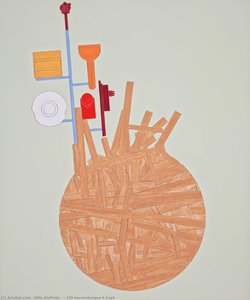
На думку експертів галереї, найвідоміший витвір Alfio Giuffrida — це URBAN SCREENS Exp43 (2017). Überwindungen A Exp3 (2018) та Natura Exp24 (2018) доповнюють тріо, яке впізнає кожне око. З 36 робіт Alfio Giuffrida у нашому каталозі галерея представляє 36 найвідоміших нижче — кожна з них є оригіналом із зазначенням року створення, музею та унікальних особливостей.

Conceptual art Найбільше робіт: Statens Museum For Kunst

Топ 10 картин художника Alfio Giuffrida у галереї

Картини художника Alfio Giuffrida, від 11 до 36 місця в рейтингу

Теми, що привертали увагу Alfio Giuffrida

Чотири сюжети, які найчастіше зустрічаються в цих оригіналах, кожен із найкращим прикладом.

Музеї, у яких зберігаються оригінали Alfio Giuffrida

1 музеїв, у яких зберігається більшість картин на цій сторінці.

Музей Місто Твори Alfio Giuffrida Картини зі цього списку
Statens Museum For Kunst, КопенгагенStatens Museum For Kunst Копенгаген 1 TORE Exp1

Alfio Giuffrida, знаковий живопис кожного року

Оригінали Alfio Giuffrida, представлені на цій сторінці, датовані періодом у 2 років, від 2017 до 2018: у галереї показано найвідоміші з них.

Картини Alfio Giuffrida: відповіді галереї

Яка картина Alfio Giuffrida є найвідомішою серед усіх?Дізнатися відповідь

URBAN SCREENS Exp43 (2017). Далі йдуть Überwindungen A Exp3 (2018) та Natura Exp24 (2018).

Які 10 найкращих картин Alfio Giuffrida?Дізнатися відповідь

URBAN SCREENS Exp43, Überwindungen A Exp3, Natura Exp24, Exponate Exp15, Eingangstore Exp7, Eingangstore Exp1, Eingangstore Exp4, Exponate Exp9, URBAN SCREENS Exp45 та Exponate Exp11. У рейтингу вище вказано рік створення та музей для кожної картини.

Скільки творів створив Alfio Giuffrida?Дізнатися відповідь

Наш каталог містить 36 робіт Alfio Giuffrida, датованих періодом з 2017 по 2018.

Де висять найвідоміші оригінали робіт Alfio Giuffrida?Дізнатися відповідь

Переважно в Statens Museum For Kunst (Копенгаген). У таблиці музеїв вище наведено їхній повний перелік.

Коли Alfio Giuffrida створив свої найвідоміші картини?Дізнатися відповідь

У 2017: 21 із 36 робіт на цій сторінці були створені тоді, серед них URBAN SCREENS Exp43.

Які найранніші та найпізніші відомі роботи Alfio Giuffrida?Дізнатися відповідь

На цій сторінці найдавніша робота датована URBAN SCREENS Exp43 (2017), а найновіша — Überwindungen A Exp3 (2018).

До яких сюжетів Alfio Giuffrida звертався найчастіше?Дізнатися відповідь

Geometric shapes (2) та Abstract composition (2), у 36 роботах на цій сторінці.

З яким напрямом пов'язаний Alfio Giuffrida?Дізнатися відповідь

Conceptual art, судячи з оригіналів на цій сторінці.

Alfio Giuffrida: художник

A Sculptor of Systems: The World of Alfio Giuffrida

Alfio Giuffrida, born in Italy in 1953, is an artist whose work defies easy categorization. He’s simultaneously a sculptor, installation artist, painter, and set designer—a polymath who explores the boundaries between art, design, and everyday life with a unique blend of Pop Art sensibilities and conceptual rigor. Giuffrida's journey began with a return to non-figurative representation in 1975, marked by his participation in the X Rome Quadriennale. This early foray into abstract forms laid the groundwork for a career dedicated to dissecting and reassembling the visual language of modernity. For much of the 1970s and 80s, he worked as a freelance painter and set designer in Rome, honing his skills in spatial composition and color theory before relocating to Cologne in 1986—a pivotal move that would significantly influence his artistic trajectory.

The A.G. Sinnwerke® Project: Art as Production

The founding of the fictitious factory A.G. Sinnwerke® in 2003 represents a turning point in Giuffrida’s oeuvre. This self-created entity wasn't merely a branding exercise; it was a deliberate exploration of art’s relationship to production, consumption, and authorship. Initially focused on CDs, CD-Sets, and “Selbstbau-Sets” (Do-It-Yourself Kits), A.G. Sinnwerke® challenged the traditional notion of the artist as sole creator. The factory offered components—Ovali, Kugeln, Irrigatoren, Mona Lisa sets—packaged in blister packs, inviting viewers to actively participate in the creation process. This wasn’t about mass production for its own sake; it was a conceptual gesture questioning the value and meaning of art objects in a consumer-driven society. The adjustable sculptures that followed, presented as models in corset form, further emphasized this theme—the idea of structure, support, and the potential for individual interpretation. Parallel to these object cycles, Giuffrida continued painting, extending the factory’s visual vocabulary onto canvas with works like Irrigatoren-Sätze, CD-Homes, and Kathedralen. He essentially provided the raw materials, allowing buyers to construct their own unique images—a radical act of decentralizing artistic control.

Stage Design & Spatial Narratives

Giuffrida’s work as a set designer, spanning from 1995 to 2003 and beyond, is inextricably linked to his sculptural practice. His collaborations with opera houses and theaters—including Oper der Stadt Köln, Schlosserei Schauspiel Köln, Internationales Tanzfestival Wien, Tiroler Landestheater Innsbruck, and Deutsche Oper am Rhein—allowed him to translate his spatial concepts into immersive environments. Productions like *Notebook*, *Die Verlobung in St. Domingo*, *Goya-Danzas negras*, and *Caravaggio* demonstrate a keen understanding of how form, color, and light can shape narrative and evoke emotion. These stage designs weren’t simply backdrops; they were extensions of Giuffrida's sculptural language—complex arrangements that challenged conventional perspectives and invited viewers to question the boundaries between reality and illusion. The influence of his painting is also visible in these works, with vibrant color palettes and dynamic compositions creating a visually arresting experience.

Exhibitions & Critical Reception

Throughout his career, Giuffrida’s work has been showcased in numerous exhibitions across Germany and beyond. Early shows at Bahnwärterhaus Villa Merkel – Galerie der Stadt Esslingen (1989) established his presence within the contemporary art scene. Later exhibitions at institutions like Suermondt-Ludwig-Museum Aachen (2001), Stadtmuseum Siegburg (2001), Mannheimer Kunstverein (2004), and Märkisches Museum Witten (2006) solidified his reputation as a thought-provoking and innovative artist. His exhibitions often featured a combination of sculptures, paintings, and installations, creating a holistic experience that highlighted the interconnectedness of his various artistic pursuits. While Giuffrida’s work doesn't adhere to any single stylistic movement, it resonates with Pop Art’s embrace of consumer culture, Minimalism’s emphasis on form and structure, and Conceptual art’s questioning of traditional artistic values.

Legacy & Historical Significance

Alfio Giuffrida stands as a significant figure in contemporary Italian sculpture, not for adhering to established norms but for actively dismantling them. His A.G. Sinnwerke® project remains a compelling example of art’s potential to critique and subvert the systems that govern its own creation and reception. By blurring the lines between artist, producer, and consumer, Giuffrida challenges us to reconsider our understanding of authorship, originality, and value. His work is a testament to the power of artistic experimentation—a continuous exploration of form, space, and the complex relationship between art and life. He doesn’t offer easy answers but instead invites viewers to engage in a dialogue with his creations, prompting them to question their own perceptions and assumptions about the world around them. Giuffrida's influence can be seen in contemporary artists who explore similar themes of production, consumption, and participation—artists who recognize that art is not merely an object but a dynamic process.