Introduction
To step into the world of Contemporary Realism is to enter a profound dialogue between the tangible world and the human soul. While much of the modern art narrative has been defined by the fragmentation of Cubism or the abstraction of the mid-20th century, Contemporary Realism emerged as a powerful, grounding force—a movement that refuses to look away from the exquisite, often heartbreaking details of our lived reality. It is an art of presence, where the artist’s brush does not seek to distort, but rather to deepen our perception of light, texture, and the quiet dignity of the subject.
Historically, this movement represents a sophisticated evolution of the classical traditions. It draws its lineage from the meticulous precision of the Old Masters, yet it breathes with the urgency of the present day. These artists do not merely replicate a photograph; they capture the essence of a moment, utilizing advanced techniques in light, shadow, and composition to evoke an emotional resonance that transcends simple imitation. In an era increasingly dominated by the fleeting and the digital, these works offer a sanctuary of permanence and tactile truth.
The masterpieces we explore today remain profoundly meaningful because they bridge the gap between the seen and the felt. Whether through the hyper-detailed rendering of a solitary figure or the atmospheric weight of a landscape, these paintings remind us of our connection to the physical world. They invite us to slow down, to observe the way light clings to a surface, and to find the extraordinary within the ordinary.
As we begin our journey through this curated selection, prepare to encounter works that define the very pinnacle of technical mastery and emotional depth. From breathtaking portraits that seem to breathe behind the canvas to landscapes that pulse with life, the following ten masterpieces stand as pillars of the movement—each a testament to the enduring power of the realistic image.
Freedom from want - Norman Rockwell
 Freedom from want - Norman Rockwell
In Freedom from Want by Norman Rockwell, the composition achieves a profound structural harmony that anchors its place among the top masterpieces of contemporary realism. Rockwell utilizes a masterful semi-circular arrangement, employing soft, organic shapes and a dynamic diagonal line that leads the eye directly to the central act of service: the presentation of the roasted turkey. This geometric balance creates a sense of timeless perfection, where the weight of the bountiful table is perfectly offset by the radiating expressions of the gathered family.
The painting’s internal equilibrium mirrors the principles of modern minimalist design; despite its narrative complexity, the work possesses a grounded, clean aesthetic that avoids clutter through intentional focal points and diffused, warm lighting. This structural clarity allows the rich textures—the glistening turkey and crisp linens—to resonate without overwhelming the viewer. For collectors seeking to bring this sense of stability into a contemporary space, our hand-made oil reproductions capture every meticulous brushstroke and tonal depth, offering a soulful connection to this quintessential vision of American gratitude.
Reflection with Two Children (Self-Portrait) - Lucian Freud
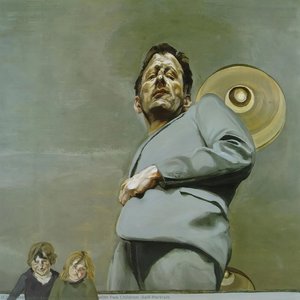 Reflection with Two Children (Self-Portrait) - Lucian Freud
In Reflection with Two Children (Self-Portrait) , Lucian Freud presents a profound psychological inquiry that transcends the boundaries of traditional portraiture. The painting serves as a haunting meditation on identity and the heavy mantle of familial connection. Freud’s central figure, rendered with an almost monumental gravity, gazes upward with an expression of quiet unease, while the two smaller figures flanking him appear as spectral reflections—fragile echoes of innocence caught within his introspective orbit.
The work’s significance within the Top 10 Masterpieces That Defined the Contemporary Realism Art Movement lies in its rejection of the idealized. Through thick, visceral impasto and a somber, muted palette of olive greens and golds, Freud captures the raw physicality of existence. This unflinching approach to the human condition resonates deeply in today’s curated spaces, where the tension between vulnerability and strength remains a vital cultural dialogue. As a cornerstone of Contemporary Realism , this masterpiece continues to captivate collectors by transforming the mere observation of flesh into a profound exploration of the soul's weight.
First Steps - Georgios Jakobides
 First Steps - Georgios Jakobides
In First Steps by Georgios Jakobides, the structural harmony of the composition serves as a masterclass in the principles of realism. The artist employs a subtle triangular arrangement, anchoring the elderly woman and the toddler as a strong vertical axis that is perfectly balanced by the seated child observing from the periphery. This geometric stability creates a sense of timeless perfection, a quality that secures its place among the top 10 masterpieces that defined the contemporary realism art movement .
The interplay of light and shadow—streaming from a single window to illuminate textures of stone and fabric—mirrors the intentionality found in modern minimalist design. Just as minimalism relies on clean lines and essential forms to ground a space, Jakobides uses organic shapes and a muted palette of ochre and cream to create an atmosphere of profound stillness. This internal balance allows the painting to act as a sophisticated anchor in contemporary interiors, offering a soulful, historical depth that complements a clean, modern aesthetic while celebrating the enduring beauty of human connection.
Benefits Supervisor Sleeping (also known as Big Sue) - Lucian Freud
 Benefits Supervisor Sleeping (also known as Big Sue) - Lucian Freud
To capture the true essence of Benefits Supervisor Sleeping , Lucian Freud did not merely paint a subject; he engaged in a grueling, months-long physical confrontation with reality. The sitter, Sue Tilley, remained motionless for countless hours, allowing Freud to map every subtle undulation of flesh with an almost clinical intensity. This 1995 masterpiece stands as a cornerstone of the Contemporary Realism movement because it rejects the polished idealization of classical nudes in favor of a visceral, unapologetic truth.
Through his signature heavy impasto technique, Freud built up layers of oil paint to create a tactile landscape of skin and shadow. The muted earth tones and the dramatic interplay of light across the voluminous form demand that the viewer confront the raw vulnerability of the human condition. There is a profound, quiet strength in this level of dedication—a focused, unflinching gaze that transforms a private moment into a monumental study of existence. Bringing such a powerful presence into a modern study or home office can inspire an atmosphere of deep contemplation and intellectual rigor, reminding us of the beauty found in absolute authenticity.
Automat - Edward Hopper
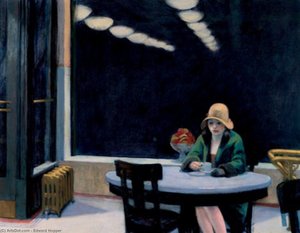 Automat - Edward Hopper
In Edward Hopper’s 1927 masterpiece, Automat , light does not merely illuminate a scene; it acts as a silent protagonist in a drama of urban isolation. As you stand before this quintessential work of American Realism, you feel the weight of the stillness. The artist composed light like a somber sonata, using the stark, directional glow from the large windows to carve a solitary figure out of the surrounding darkness. This light catches the edge of a porcelain cup and the reflective surface of the table, creating a sharp contrast against the deep, melancholic blues and shadows that define the restaurant's interior.
The woman sits in quiet contemplation, her detachment from the bustling world outside captured through Hopper’s masterful use of geometric structure and tonal depth. It is this precise manipulation of atmosphere—the way the light invents a sense of profound loneliness—that secures its place among the defining works of the movement. This evocative mood is waiting to spill into your own space, turning a simple wall into a portal of historical inspiration through our museum-quality, hand-painted oil reproductions.
The Gross Clinic - Thomas Eakins
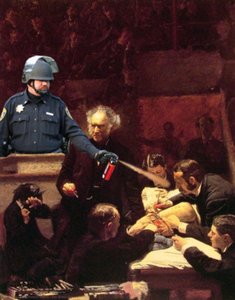 The Gross Clinic - Thomas Eakins
Acquiring The Gross Clinic by Thomas Eakins is more than a purchase; it is an investment in a profound legacy of American taste and anatomical truth. As a cornerstone of the Contemporary Realism movement, this 1875 masterpiece commands immense historical authority, capturing Dr. Samuel D. Gross with a scientific precision that borders on the cinematic. Eakins utilizes a dramatic, chiaroscuro-driven palette—deep earthy tones clashing with the stark, visceral reality of the surgical theater—to bridge the gap between medical progress and human suffering.
The painting’s influence is undeniable, marking a pivotal moment where art moved away from romanticism toward an unflinching, documentary-style realism. The tension held within the composition, from the somber shadows of the onlookers to the intense focus of the surgeons, offers a masterclass in emotional weight. For the discerning collector, a high-quality oil reproduction of this work brings a sense of intellectual gravity and aesthetic prestige to modern luxury interiors. Whether gracing a private study or a sophisticated corporate gallery, Eakins’ work provides an enduring focal point of status and historical resonance.
Gas - Edward Hopper
 Gas - Edward Hopper
In Gas (1940), Edward Hopper captures a profound sense of stillness that transcends the mere depiction of a roadside stop. The painting does not just show a gas station; it evokes a heavy, palpable atmosphere of American solitude. As you stand before this masterpiece, you are drawn into a world of muted earthy greens and sharp, vibrant reds, where the soft, diffused light of an overcast day illuminates a landscape defined by quiet introspection. There is a haunting psychological depth in the way Hopper uses geometric shapes and long, subtle shadows to mirror the loneliness and transient nature of modern life.
As one of the most significant works within the Top 10 Masterpieces That Defined the Contemporary Realism Art Movement , Gas serves as a universal mirror for the human experience of isolation. Bringing this powerful emotional resonance into your own home can transform a personal sanctuary into a space for profound reflection and calm. For those seeking to preserve this evocative mood, our museum-quality, hand-painted oil reproductions allow you to possess the very texture and light that define Hopper's legendary mastery of shadow.
Chop Suey - Edward Hopper
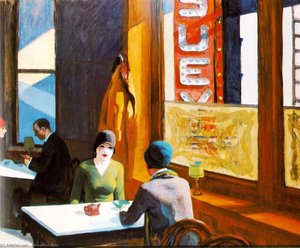 Chop Suey - Edward Hopper
In Chop Suey , Edward Hopper masterfully orchestrates a dramatic interplay of light and shadow, a hallmark of the Contemporary Realism movement that secures its place among the era's defining masterpieces. The composition is anchored by the intense, artificial glow of a neon sign, which casts a warm, amber radiance across the diner’s interior, clashing beautifully with the cool, encroaching shadows of the urban night. This sophisticated use of chiaroscuro does more than illuminate a scene; it creates a psychological landscape of quiet introspection and modern solitude.
Hopper’s command of light transforms a mundane cafe setting into a cinematic experience, where every highlight on a porcelain cup or windowpane tells a story of late-night urban life. For the discerning collector, owning a hand-made oil reproduction of this work allows these evocative textures and deep tonal ranges to breathe within a modern home. The visible brushstrokes and the rich, saturated palette of yellows and deep blues add an unparalleled layer of architectural depth and luxury, bringing the hauntingly beautiful atmosphere of 1929 America directly onto your walls.
Office at Night - Edward Hopper
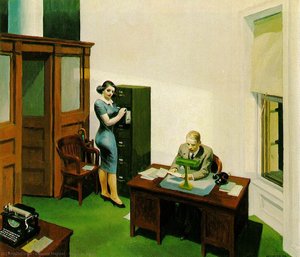 Office at Night - Edward Hopper
In Office at Night by Edward Hopper, a somber, deep green dominates the floor and surroundings, establishing a mood of profound stillness and bureaucratic introspection. This muted palette, punctuated only by the striking blue of a woman’s dress, exemplifies why this work is a cornerstone of the Contemporary Realism movement. Hopper’s mastery lies in his ability to use light and shadow to transform a mundane mid-century workspace into a stage for quiet psychological drama, capturing the tension between professional routine and urban isolation.
For the modern collector, integrating such a masterpiece into a home allows one to curate an atmosphere of sophisticated calm. The painting’s structured geometry and cool, nocturnal tones can serve as a visual anchor in a study or dining room, providing a sense of stability and contemplative depth. Whether you are drawn to the original's evocative solitude or wish to bring this era of American Realism into your space through a hand-painted oil reproduction , Hopper’s interplay of light remains an unparalleled tool for defining the emotional character of a room.
Summertime - Edward Hopper
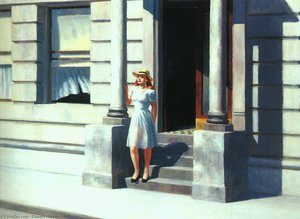 Summertime - Edward Hopper
In Edward Hopper’s 1943 masterpiece, Summertime , light is not merely an illumination; it is a silent protagonist. As you stand before this quintessential work of American Realism, you realize the artist did not simply paint light—he composed it like a haunting, solitary sonata. The way the sun strikes the concrete steps and catches the brim of the woman's straw hat creates a visual language of profound stillness.
Hopper captures a moment of suspended animation, where the sharp, geometric shadows of the classical architecture contrast with the soft, light blue fabric of the woman’s dress. This interplay of light and shadow evokes the quiet anxieties and urban solitude characteristic of the era's contemporary realism. There is a palpable tension in her waiting, an atmospheric depth that invites you to inhabit her contemplative silence. This evocative mastery of texture and tone is why Summertime remains an essential pillar of the movement. That transformative light is waiting to spill into your own space, turning a simple wall into a portal of historical inspiration through a museum-quality oil reproduction.
Conclusion
As the light fades on our journey through these profound works, we are reminded that Contemporary Realism is far more than a mere technical pursuit of accuracy; it is a profound dialogue between the visible world and the human soul. These ten masterpieces do not exist solely as static relics preserved behind museum glass, but as living presences that continue to breathe, pulse, and move us across the boundaries of time. They possess a unique ability to anchor our modern spaces, transforming a simple room into a sanctuary of contemplation and bringing the quiet intensity of the human experience into our daily lives.
At OriginalUniqueArt.com , we believe that the profound emotional resonance found in these canvases should not be confined to distant galleries. Our mission is to bridge the gap between the historic and the tangible, allowing you to invite these timeless narratives into your own home. Every hand-painted reproduction we offer is a labor of reverence, meticulously crafted by skilled artists who honor the original's soul, texture, and intricate detail. Through the careful application of oil on canvas, we strive to ensure that the very essence of the movement—its light, its depth, and its unwavering truth—is reborn for a new generation of admirers.
Whether you are seeking to anchor a grand architectural space or find a singular point of inspiration, we invite you to explore our full collection and discover the masterpiece that speaks to your own story.