Introduction
Forget everything you know about 'pretty' paintings. Expressionism isn't about capturing a polished, perfect sunset; it’s about the scream, the distortion, and the raw, unedited pulse of human emotion. It is art stripped of its polite mask, where the canvas vibrates with the intensity of a heartbeat.
Emerging from the cultural tremors of the early 20th century, this movement was a visceral reaction to a world being reshaped by industrial chaos and deep-seated anxiety. The masters of Expressionism didn't care about photographic accuracy; they cared about the visual impact of feeling. They traded realistic proportions for jagged lines, heavy brushstrokes, and high-voltage color palettes that hit you with the force of a punch.
Even in our modern, hyper-saturated digital age, these works remain incredibly relevant. In an era of curated perfection, there is something undeniably magnetic about art that embraces the messy, the distorted, and the intensely personal. These pieces don't just decorate a room—they disrupt it. They serve as a permanent vibe check for the soul.
Get ready to dive into our selection of ten absolute heavyweights. From haunting portraits to landscapes that bleed with color, these are the masterpieces that redefined what it means to see through emotion rather than just eyes.
The Scream - Edvard Munch
 The Scream - Edvard Munch
To encounter Edvard Munch’s The Scream is to witness the moment art stopped mimicking reality and started capturing the raw pulse of human anxiety. As a definitive pillar of the Expressionism movement, this masterpiece transcends mere paint on canvas; it is a visceral, high-impact explosion of existential dread that redefined the boundaries of the modern psyche.
The composition pulls you into an emotional vortex, where swirling, fiery oranges clash against deep, unsettling blues. Munch’s technique—characterized by thick, agitated brushstrokes and distorted forms—creates a textured landscape of pure psychological tension. The central figure, caught in a silent, skull-like gasp, serves as a universal icon for the fragmented modern experience.
For the design-conscious collector, The Scream is the ultimate statement piece. It brings an edgy, psychological depth to any curated space, blending historical gravity with a bold, graphic intensity that resonates perfectly within high-impact, contemporary interiors. It isn't just decor; it is a legacy of unmasked emotion.
Melancholy - Edvard Munch
 Melancholy - Edvard Munch
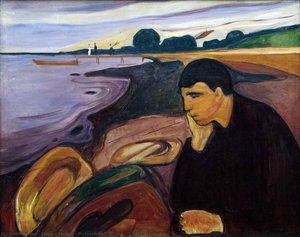
In Edvard Munch’s Melancholy , the light doesn't just illuminate; it weighs down. There is no bright sun here, only a diffused, atmospheric gloom that bleeds through deep blues and bruised purples. This mastery of shadow—a haunting, muted chiaroscuro—is exactly what cemented this piece as a cornerstone of the Expressionism movement. Munch uses light to strip away reality, leaving only the raw, heavy texture of isolation.
The way the dim light catches the thick, energetic brushstrokes creates a visceral sense of psychological tension. When you bring a high-quality reproduction of this masterpiece into your space, that interplay of shadow and somber color does more than just decorate; it adds an intense, cinematic depth to your walls. Whether it’s anchoring a minimalist studio or adding a moody edge to a contemporary lounge, the heavy, textured shadows of Munch’s vision provide a sophisticated, high-impact focal point that commands attention through pure emotional resonance.
Composition VII - Wassily Wassilyevich Kandinsky
 Composition VII - Wassily Wassilyevich Kandinsky
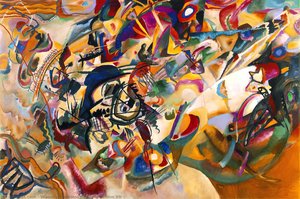
Observe the surface of Kandinsky’s Composition VII , where thick, energetic layers of oil paint collide in a rhythmic, swirling dance. The brushwork is visceral, creating an impasto texture that feels less like a flat image and more like a living, breathing organism of color. This masterpiece stands at the pinnacle of the Expressionism movement because it successfully liberated form from reality; by channeling "inner necessity" through a chaotic yet balanced vortex of primary hues, Kandinsky redefined the boundaries of visual language.
To truly experience this revolution, one must feel the weight and movement of the pigment. Our high-end reproductions are meticulously crafted to preserve this exact tactile, three-dimensional quality , ensuring that the physical depth and emotional intensity of Kandinsky’s original vision are brought vividly into your space, far beyond the limits of a standard print.
Madonna - Edvard Munch
 Madonna - Edvard Munch
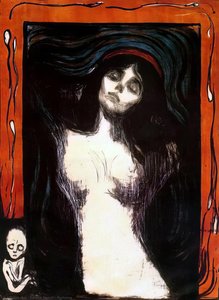
What if I told you that “Madonna” by Edvard Munch was born from a moment of rebellion—a stroke of defiance against the ordinary? This is not just art; it’s a manifesto . Its place in the Top 10 of Expressionism is not just earned; it’s demanded by history.
Munch shatters the polished veneer of classical beauty, replacing it with a swirling, orange-and-black vortex of raw emotion and existential dread. Through jagged lines and a jarring, high-contrast palette, he captures a psychological intensity that feels as urgent today as it did in 1894. Now, imagine this rebellion hanging above your desk or in your urban loft, turning every glance into a reminder: your space is not just a room. It’s a statement.
At OriginalUniqueArt.com , we curate high-impact pieces that transform interiors into personal sanctuaries of bold identity. We bring the visceral energy of the masters to your walls, making legendary intensity accessible for the modern, design-conscious collector.
Woman in a Green Jacket - August Macke
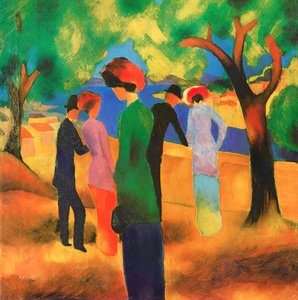 Woman in a Green Jacket - August Macke
August Macke’s Woman in a Green Jacket serves as a vibrant pulse from 1913, capturing the electric energy of a world on the brink of transformation. As a cornerstone of the Der Blaue Reiter movement, this masterpiece earns its place among the definitive works of Expressionism through its masterful synthesis of Orphic Cubism and Fauvist color. Macke moves beyond mere representation, using bold, non-naturalistic hues and geometric silhouettes to evoke the rhythmic spirit of modern social life.
The painting invites a profound reflection on human connection; the anonymous figures, strolling through a sun-drenched landscape, allow us to project our own narratives onto their colorful forms. It is a study in both vitality and mystery. For the contemporary curator, the work’s high-impact palette and rhythmic composition offer an unparalleled way to inject movement into a modern space. Its legacy remains a striking dialogue between historical depth and the bold, graphic aesthetic required for today’s most sophisticated, design-conscious interiors.
The Self-Seers II (Death and Man) - Egon Schiele
 The Self-Seers II (Death and Man) - Egon Schiele
Egon Schiele’s 1911 masterpiece, The Self-Seers II (Death and Man) , is a visceral punch to the psyche. This isn't just Expressionism; it’s a raw, jagged confrontation with mortality. Through thick, heavy impasto and distorted, angular lines, Schiele captures an unsettling energy that feels strikingly modern. The skeletal hand reaching from the shadows against a backdrop of earthy ochres and bruised browns creates a claustrophobic tension you can practically feel on the canvas.
Owning this piece isn’t just a purchase; it’s an inheritance . Its spot in the Top 10 is a legacy, a handshake across centuries. It represents a lineage of taste that moves beyond the museum and onto your walls—where every glance is a nod to the masters. This work doesn't just sit in a room; it commands it, offering a sophisticated, dramatic focal point for any curated collection.
Self-portrait of a 'Degenerate Artist' - Oskar Kokoschka
 Self-portrait of a 'Degenerate Artist' - Oskar Kokoschka
What story does the fractured, atmospheric background of Self-portrait of a 'Degenerate Artist' by Oskar Kokoschka tell? Beyond the swirling blues and bruised purples lies a narrative of profound resistance. Emerging from the political shadows of 1937, this masterpiece stands as a cornerstone of the Expressionism movement, capturing the raw psychological tension of an artist branded "degenerate" by the Nazi regime. Through heavy impasto textures and a hauntingly direct gaze, Kokoschka rejects naturalism to reveal a soul in turmoil. The visible, energetic brushstrokes create a sense of movement that feels both alive and deeply unsettling. For the modern collector, integrating such a high-impact piece into a contemporary space offers a curated escape—a way to infuse your home with historical gravity and a bold, emotional resonance that transcends mere decoration. It is an invitation to confront history through the lens of pure, unadulterated feeling.
Great Scene of Agony - Max Beckmann
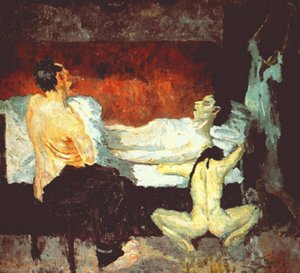 Great Scene of Agony - Max Beckmann
Imagine a space where the air feels heavy with unspoken grief and the shadows hold secrets of human fragility. This is the raw, visceral energy found in Great Scene of Agony by Max Beckmann. Painted in 1906, this work serves as a haunting precursor to the Expressionism art movement , capturing the psychological tremors and existential anxieties that would soon define the 20th century.
Beckmann utilizes a heavy, thick impasto technique, where visible, gestural brushstrokes create a tactile surface of profound unease. The palette—a somber arrangement of muddy browns, deep ochres, and bruised greens—wraps the figures in an atmosphere of isolation and mortality. Through distorted forms and an unbalanced composition, the painting forces us to confront the raw vulnerability of the human condition. Even today, such powerful masterpieces continue to transform modern spaces, inviting a deep, introspective connection through their timeless emotional depth.
Reclining Nude with Blue Cushion - Amedeo Clemente Modigliani
 Reclining Nude with Blue Cushion - Amedeo Clemente Modigliani
Amedeo Clemente Modigliani’s Reclining Nude with Blue Cushion stands as a profound testament to the emotional volatility of the Expressionist era. More than just a study of form, this masterpiece captures the hauntingly beautiful melancholy that defined early 20th-century Paris, bridging the gap between Cubist structure and raw, human vulnerability.
Securing its place among the top masterpieces of the movement, the work utilizes signature elongated limbs and almond-shaped eyes to transcend mere representation. The visual tension is breathtaking: a vibrant, fiery red background clashes against the tranquil, cool blue of the cushion, mirroring the internal struggle between passion and isolation. This striking use of color and heavy, expressive brushstrokes invites us to contemplate the complexities of beauty and the fragility of the human spirit.
In a contemporary setting, the painting’s bold, graphic silhouette and intense color palette offer an unparalleled way to anchor a modern collection, injecting a sense of timeless, sophisticated drama into any curated interior.
Three Studies for Figures at the Base of a Crucifixion - Francis Bacon
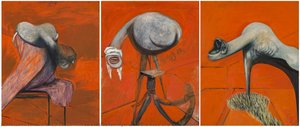 Three Studies for Figures at the Base of a Crucifixion - Francis Bacon
To encounter Three Studies for Figures at the Base of a Crucifixion by Francis Bacon is to witness the raw, visceral pulse of modern history. This 1944 triptych isn't merely a painting; it is a monumental breakthrough that solidified Bacon’s role as a titan of the Expressionism movement. By subverting the traditional religious altarpiece, Bacon presents a haunting vision of human fragility through distorted, amorphous figures set against a searing, claustrophobic orange backdrop.
The work's power lies in its tactile intensity—the heavy, gestural brushstrokes and thick impasto textures create an atmosphere of profound psychological tension. For the discerning collector, this masterpiece offers more than just visual impact; it brings a sense of historical gravity and existential depth to a contemporary space. It is a high-impact, essential piece for those who seek art that transcends decoration to become a powerful, enduring conversation about the human condition.
Conclusion
As the lights dim on our journey through these visceral landscapes and distorted portraits, we realize that Expressionism is far more than a chapter in an art history textbook; it is a raw, pulsing heartbeat that refuses to be silenced by time. These works do not merely exist as relics of a captured era, but as living presences that continue to move hearts and shape the very atmosphere of our modern lives. To bring one of these masterpieces into your personal space is to invite a profound dialogue between the canvas and your daily existence—to let the bold, textured brushstrokes and intense, clashing hues serve as mirrors for your own deepest emotions. Whether through a haunting shadow or an electric burst of color, each piece transforms a room from a mere architectural space into a sanctuary of human experience and creative grace. We invite you to find your own connection within our full collection , and let the enduring power of these works serve as a daily reminder of the beauty found in vulnerability and the infinite depth of the human spirit.