
 Переглянути в інтер'єрі
 Надіслати як листівку
 Поділитися
 Деталі витвору
 Посібник

 Завантажити
 Схожі екземпляри
 Рентгенівське дослідження
 Слайд-шоу
 Питання та відповіді
 Статистика
Вклонение Дитяти


 Розгорнути текст
Гікле / Художній принт
Друк جيкле або на полотні музейної якості з оперативним виготовленням та різноманітними варіантами фінішної обробки. ( Замовити картину ручної роботи Перейти до цифрових зображень)




P118B ₴10

P118H ₴10

P118W ₴10

P438Z ₴10

P508JH ₴12

P508YH ₴12

P805H ₴10

P805Z ₴10

P919BZ ₴10

P919G ₴10

P919XJ ₴10

P959ZH ₴10

P968JZ ₴12

W106C ₴8

W218G ₴10

W218JH ₴8

W218Y ₴10

W307PJ ₴10

W316G ₴10

W316PJ ₴8

W316Y ₴10

W398PJ ₴8

W4111J ₴10

W500HY ₴15

W500JH ₴15

W692G ₴12

W849H ₴8

W940BG ₴15

W953PJ ₴8




Обирайте з наших стандартних розмірів, що відповідають оригінальним пропорціям твору мистецтва.

Введіть необхідну ширину та висоту, щоб принт ідеально підійшов до вашої рами або стіни. Принт можна лише обрізати, але не можна зробити більшим за оригінал, тому при зміні пропорцій частина зображення буде втрачена. Перед друком ми надсилаємо вам цифровий макет для затвердження. Зображення на цій сторінці не відображає реальну обрізку — її можна побачити лише на макеті.
Доставка по всьому світу () за 2 тижні замість стандартних 4/5 тижнів. (4 Листопад)

Безкоштовна експрес-доставка по всьому світу

Високоякісне лляне полотно

Повне страхове покриття доставки

Гарантія повернення митних зборів

Гарантія точного відтворення кольорів

Політика повернення протягом 100 днів (лише у разі виявлення дефектів)

Гарантія повернення 100% коштів

Пропозиція на оптові замовлення
 Скляний варіант доступний лише для розмірів до 110 см

Вклонение Дитяти
Гікле / Художній принт
Розмір репродукції
-


Підсумкова вартість
₴ 3651
Паоло Учелло та Його Відома Робота «Поклоніння Діти Ісуса»
Відомий художник Паоло Учелло, народжений у 1397 році в околицях Флоренції, залишив після себе дивовижний слід в історії мистецтва Раннього Відродження. Його прізвисько «Учелло», що перекладається як «маленький птах», вже сам по собі натякає на особливу увагу до світу птахів та художню тягу до зображення пернатих істот, але водночас він приховує глибоке занурення в інтелектуальні течії свого часу. Він був не просто живописцем; він був піонером, математиком полотна, прагнучи розшифрувати секрети візуального простору та перетворити їх на захоплюючі шедеври мистецтва. Його батько, Дона Паоло ді Джено, займався двома професіями – барбером-хірургом, а мати Антонія походила з флорентійської знатного роду – лінія роду могла й інституатувати в молодого Паоло як практичну сприйнятливість, так і смак витонченої естетики. З 1412 по 1416 рік його юні роки були проведені під керівництвом Лоренцо Гіберті, майстра якого майстерня вражала розмахом та інноваціями. Саме в цей період Учелло отримав знання та досвід, що стали основою для створення його найвідоміших творів.- Стиль: Раннє Відродження – час великих змін у мистецтві та культурі Європи, коли художники повернулися до античних традицій і почали експериментувати з новими техніками та перспективою.
- Техніка: Учелло використовував метод лінійного перспективи – революційний для свого часу підхід до створення зображень реального світу, що дозволив йому досягти неймовірної точності та глибини втілення простору.
- Матеріали: Фреска виконана на кам’яній стіні базиліки Санта-Марія-дель-Фьорі у Флоренції, що додає їй особливої міцності та довговічності.
Історія Роботи та Символізм
«Поклоніння Діти Ісуса» було написане Учелло в 1463 році і стало одним із найзначніших творів Раннього Відродження. Картина зображує поклоніння юного Ісуса Христового Марією та Йосипом – сцену, що має глибоке духовне значення та відсилається до міфологічних традицій Старого Завіту. Ангели, що кружляють над родиною, символізують небесну благодать та Божу любов до людини. Розкішний одяг фігур та деталі декоративного оформлення підкреслюють розмахом та пишнотою епохи Відродження. Важливо зазначити, що Учелло був одним із перших художників, хто застосував лінійну перспективу у фресках – це дозволило йому створити вражаючу реалістичну картину, яка захоплює погляди глядачів і досі.Емоційний Відгук та Візуальна Краса
«Поклоніння Діти Ісуса» викликає в глядача відчуття благоговіння перед Божественною красою та милосердям. Яскрава колірна гамма, ретельно продумана композиція та майстерне виконання деталей створюють атмосферу тишини та гармонії, що сприяє роздумів над духовними питаннями. Картина є безсумнівним шедевром мистецтва Раннього Відродження і продовжує вражати глядачів своєю візуальною красою та глибиною символізму.Питання та відповіді
Наскільки популярним є твір «Вклонение Дитяти» у межах Early Renaissance?
«Вклонение Дитяти» має рівень популярності Визнаний серед творів у стилі Early Renaissance, представлених у каталозі.
Який це вид твору мистецтва: «Вклонение Дитяти» роботи Паоло Учелло?
«Вклонение Дитяти» роботи Паоло Учелло класифікується як Настінний декор. Ця категорія визначає вид художнього твору, яким є оригінал.
Для якого призначення та в якому інтер'єрі рекомендується розміщувати «Вклонение Дитяти» роботи Паоло Учелло?
«Вклонение Дитяти» роботи Паоло Учелло рекомендується для Акцент, ідеально — у Вітальня. Поєднання способу використання та простору допоможе визначити, де саме пасуватиме репродукція.
Біографія митця
A Florentine Visionary: The Life and Art of Paolo Uccello
Paolo Uccello, born Paolo di Dono in 1397 amidst the rolling hills near Florence, remains one of the most captivatingly enigmatic figures of the Early Renaissance. His very nickname, “Uccello” – little bird – hints at a whimsical nature and an artistic inclination towards depicting the avian world, yet it belies a mind deeply engaged with the burgeoning intellectual currents of his time. He wasn’t merely a painter; he was a pioneer, a mathematician of the canvas, striving to unlock the secrets of visual space and translate them into breathtaking works of art. His father, Dono di Paolo, practiced the dual profession of barber-surgeon, while his mother, Antonia, hailed from a Florentine noble family – a lineage that perhaps instilled in young Paolo both a practical sensibility and an appreciation for refined aesthetics. From 1412 to 1416, Uccello’s formative years were spent under the tutelage of Lorenzo Ghiberti, whose workshop was a crucible of artistic innovation, focused on the creation of the magnificent bronze doors for Florence's Baptistery. This early exposure steeped him in the prevailing Gothic style, with its emphasis on decorative elegance and narrative clarity, yet also ignited within him a desire to push beyond established boundaries.The Pursuit of Perspective: A Mathematical Mind at Play
Uccello’s artistic development wasn’t simply about mastering technique; it was driven by an insatiable curiosity regarding the underlying principles governing perception. He became consumed with mathematics, particularly geometry and perspective, not as abstract disciplines but as tools to unlock a more truthful representation of reality. While Filippo Brunelleschi is often credited with discovering linear perspective, Uccello was among the first to systematically apply it to painting, meticulously calculating vanishing points and orthogonal lines to create an illusion of depth that had previously been largely absent from art. This wasn’t merely about technical accuracy; for Uccello, perspective became a means of structuring narrative, enhancing drama, and imbuing his compositions with a sense of order and intellectual rigor. His fascination bordered on obsession, as recounted by Giorgio Vasari, who described Uccello staying up late into the night, lost in contemplation of vanishing points and spatial relationships. This dedication, while sometimes perceived as eccentric, ultimately revolutionized painting and paved the way for future generations of artists. He sought to understand how the eye perceives distance and form, translating these observations into a visual language that defied traditional artistic conventions.Masterpieces of Illusion: Key Works and Stylistic Traits
Uccello’s oeuvre, though relatively small, is marked by a distinctive style that blends Gothic elegance with Renaissance innovation. The Battle of San Romano, a series of three panels commissioned to commemorate a Florentine victory, stands as perhaps his most celebrated achievement. These paintings are not simply depictions of warfare; they are dynamic compositions filled with swirling figures, fragmented armor, and dramatically foreshortened lances – all rendered in vibrant colors and arranged according to meticulously calculated perspective. The sheer ambition and technical complexity of this project showcased Uccello’s mastery of linear perspective and his ability to create a sense of overwhelming scale within a relatively small canvas. The Birth of the Virgin, showcases Uccello’s skill at creating an illusion of depth within a shallow space, while his St George and the Dragon presents a striking depiction of the legendary saint, characterized by bold colors and stylized forms. Even in works like *The Flood and the Ark*, part of the San Miniato al Monte frescoes, Uccello’s fascination with architectural detail and complex compositions is readily apparent. His style consistently reveals:- A vibrant palette and a bold use of color.
- An emphasis on linear perspective, often pushed to its limits for dramatic effect.
- Stylized figures and decorative patterns reminiscent of Gothic art.
- A profound fascination with geometric forms and spatial relationships.
Influences and Connections
Uccello’s artistic journey was shaped by a confluence of influences. His early training under Lorenzo Ghiberti exposed him to the rich traditions of Florentine Gothic painting, while his association with Donatello fostered an appreciation for sculptural form and dynamism. He also benefited from contact with other leading artists of the time, including Masaccio and Piero della Francesca, whose innovative use of perspective influenced his own work. Notably, Uccello’s interest in mathematics and optics was fueled by the intellectual ferment of Florence during the Renaissance, a period marked by renewed interest in classical learning and scientific inquiry. His meticulous approach to composition reflects this broader cultural context, demonstrating a desire to understand and represent the world according to rational principles.Legacy and Influence: A Lasting Impact on Art History
Paolo Uccello’s contribution to the Renaissance extends far beyond his individual paintings. His pioneering exploration of perspective fundamentally altered the course of art history, influencing countless artists who followed in his wake. Albrecht Dürer, the renowned German printmaker and painter, was deeply inspired by Uccello's work, dedicating himself to the study of perspective and incorporating its principles into his own artistic practice. While Uccello’s style remained somewhat idiosyncratic throughout his career – a unique blend of Gothic refinement and Renaissance innovation – his groundbreaking approach to space and form secured his place as a pivotal figure in the development of Western art. He died in Florence in 1475, leaving behind a legacy not only of beautiful paintings but also of intellectual curiosity and artistic daring. His work continues to inspire awe and admiration, reminding us that true artistry lies not just in what is seen, but in the understanding of how we see it.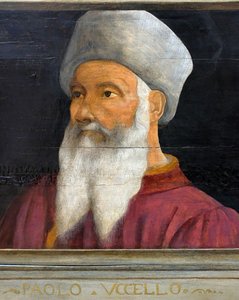
Паоло Учелло
1397 - 1475 , Італія
Короткі факти
- Artistic Movement Or Style: Ранній Ренесанс
- Artists Or Movements Influenced By This Artist: ['Альбрехт Дюрер']
- Artists Who Influenced This Artist:
- Лоренцо Гіберті
- Донателло
- Date Of Birth: 1397
- Date Of Death: 1475
- Full Name: Паоло ді Дона
- Nationality: Італійський
- Notable Artworks:
- Битва при Сан-Романо
- Народження Діви
- Святий Георгій та дракон
- Place Of Birth: Пратоветтіо, Італія
Пов'язані статті
Divine Grace: A Journey Through the Most Iconic Depictions of the Virgin Mary in Art History
Embark on a profound journey through art history with our exploration of the most iconic depictions of the Virgin Mary. Discover the divine grace, symbolism, and masterful techniques found in Renaissance masterpieces and sacred iconography.

Джотто ді Бондоне: Топ-25 шедеврів епохи Відродження для вашого дому | OriginalUniqueArt
Відкрийте для себе 25 шедеврів Джотто ді Бондоне! Італійське Відродження, фрески та розписи великого художника. Купіть репродукції картин Джотто на OriginalUniqueArt – музейна якість для вашого дому. Дослідіть повну колекцію онлайн!

Топ-25 шедеврів Уффіці: Відродження в мистецтві для вашого дому | OriginalUniqueArt
Відкрийте для себе 25 шедеврів Уффіці, Флоренція! Історія Леонардо да Вінчі, Боттічеллі та Рафаеля. Репродукції картин онлайн – натхнення для вашого дому від OriginalUniqueArt.com.

Топ-25 шедеврів Фра Анджеліко: італійське Відродження для вашого дому | OriginalUniqueArt
Відкрийте для себе 25 шедеврів Фра Анджеліко – італійського майстра Відродження! Дізнайтесь історію кожної фрески та картини, їхній духовний зміст та техніку виконання. Репродукції картин високої якості для вашого дому на OriginalUniqueArt.com.
Sacred Narratives Embodied: A Comprehensive Exploration of Religious Iconography in Art History
Explore the rich history of religious iconography in art! Discover symbolism, movements & masterpieces from Byzantine to Renaissance periods. Expert insights for collectors and enthusiasts at OriginalUniqueArt.


