

 Переглянути в інтер'єрі
 Надіслати як листівку
 Поділитися
 Детальніше

 Завантажити
 Схожі експонати
 Рентгенівське дослідження
 Слайд-шоу
Карусель
 Олія на полотні
- Настінний декор
- Rococo
 1767
1767- — Ранній модерн
 81.0 x 64.0 cm
 Воллес Колледжія
 Читати далі
Гікле / Художній принт
Музейна якість друку جيкле або на полотні з оперативним виготовленням та різноманітними варіантами фінішної обробки. ( Замовити репродукцію ручної роботи Купити цифрове зображення)




P118B $10

P118H $10

P118W $10

P438Z $10

P508JH $12

P508YH $12

P805H $10

P805Z $10

P919BZ $10

P919G $10

P919XJ $10

P959ZH $10

P968JZ $12

W106C $8

W218G $10

W218JH $8

W218Y $10

W307PJ $10

W316G $10

W316PJ $8

W316Y $10

W398PJ $8

W4111J $10

W500HY $15

W500JH $15

W692G $12

W849H $8

W940BG $15

W953PJ $8




Обирайте з наших стандартних розмірів, що відповідають оригінальним пропорціям твору мистецтва.

Ви можете вказати власні розміри, щоб репродукція ідеально підійшла до конкретної рами або інтер'єру. Якщо обраний вами розмір не відповідає пропорціям оригіналу, ми або обріжемо полотно, або розширимо зображення за допомогою дзеркального відображення чи суцільної заливки країв. Перед початком виробництва вам буде надіслано цифровий макет для затвердження.
Будь ласка, зверніть увагу, що попередній перегляд на екрані не відображає фактичне обрізання або розширення. Тільки макет точно покаже фінальну композицію.
Хоча можливість замовлення індивідуальних розмірів доступна, ми рекомендуємо обирати формат із попередньо визначеного списку, щоб зберегти оригінальні пропорції.
Доставка по всьому світу () за 2 тижні замість стандартних 4/5 тижнів. (22 Серпень)

Безкоштовна експрес-доставка по всьому світу

Високоякісне лляне полотно

Повне страхове покриття доставки

Гарантія відшкодування митних зборів

Гарантія точного відтворення кольорів

Політика повернення протягом 60 днів (лише у разі виявлення дефектів)

Гарантія повернення 100% коштів

Пропозиція на оптові замовлення
 Скляний варіант доступний лише для розмірів до 110 см

Карусель
Гікле / Художній принт
Розмір репродукції
-


Підсумкова вартість
$ 80
Опис експоната
"Маятник часу": Захоплива краса "Свини" Жана Онора Фрагонар
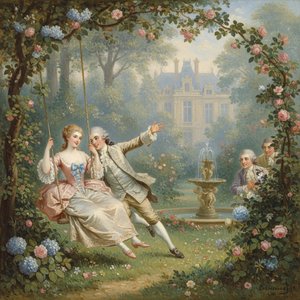
Картина «Маятник» («The Swing») Жана Онора Фрагонара, створена у 1767 році, – це не просто зображення відпочинку; це квінтесенція епохи Рококо, втілення легкості, грайливості та прихованого бажання. Ця олійня, що зараз зберігається у Wallace Collection у Лондоні, стала іконою XVIII століття, відображаючи аристократичне життя Франції напередодні революції – час розкоші, інтриг та безтурботності.
Сцена картини проста, але сповнена символізму. Молода жінка, одягнена у ніжне рожеве вбрання, грайливо гойдається на маятнику, підвішеному між гілками пишного саду. Її сукня розвівається навколо неї, а одна туфелька легко зривається з ноги, падаючи вниз – жест, який традиційно символізує втрату невинності або готовність до пригод. У заростях, прихований від очей, спостерігає закоханий, його погляд повний захоплення та бажання. Інша фігура непомітно штовхає маятник, додаючи сцені елемент таємниці та інтриги. Навіть маленький собачка, що грається біля підніжжя дерева, вносить у композицію нотку домашнього затишку та безтурботності.
Рококо: Стиль, що дихає легкістю та грацією
Фрагонар – майстер Рококо, стилю, який відрізняється від більш формального бароко прагненням до інтимності, легкості та декоративності. На відміну від драматизму та пафосу попередньої епохи, Рококо віддає перевагу грайливим темам, ніжним кольорам та витонченим деталям. Фрагонар використовує вільний та плинний мазок, створюючи відчуття руху та повітряності. Пастельні рожеві, зелені та блакитні тони переливаються на полотні, додаючи картині світла та сяйва. М'яке, розсіяне освітлення підкреслює романтичну атмосферу, проникаючи крізь густу рослинність, як солодкий сон.
Історичний контекст: Епоха розкоші та соціальних змін
«Маятник» був створений за часів правління Людовика XV, коли аристократичне суспільство Франції віддавало перевагу гедонізму та вишуканості. Картина відображає цей спосіб життя – світ розваг, інтриг та прихованих бажань. Однак за фасадом ідилічної романтики ховалася зростаюча соціальна напруга, яка зрештою призвела до Французької революції. Стиль Рококо, з його акцентом на легкодушності та розвагах, незабаром втратить свою популярність, поступившись місцем більш серйозним і патріотичним темам.
Символізм та емоційний вплив: Запрошення у світ прихованих бажань
«Маятник» – це не просто красиве зображення; це запрошення у світ прихованих бажань, інтриг та романтичних фантазій. Кожен елемент картини має символічне значення: маятник – символ безтурботного задоволення, туфелька, що падає – втрата невинності, погляд закоханого – прагнення до кохання. Картина викликає широкий спектр емоцій – від захоплення та грайливості до меланхолії та ностальгії. Вона змушує нас задуматися про швидкоплинність часу, про силу пристрасті та про красу миттєвих моментів.
Біографія митця
A Life Bathed in Light: The World of Jean-Honoré Fragonard
Born amidst the fragrant fields of Grasse, France, in 1732, Jean-Honoré Fragonard’s artistic journey began not with grand ambition but a quiet relocation to Paris with his family. It was there, under the initial guidance of Jean Siméon Chardin – a master of everyday life and subtle observation – that young Fragonard first encountered the possibilities of paint and canvas. However, it was within the atelier of François Boucher, the celebrated painter to the court of Louis XV, that his true stylistic foundations were laid. Boucher’s influence instilled in Fragonard a love for graceful forms, delicate colors, and the playful spirit that would come to define his oeuvre. Winning the prestigious Prix de Rome in 1752 marked a pivotal moment, affording him the opportunity to immerse himself in the classical world of Italy for several years. This period wasn’t merely about copying ancient masters; it was an awakening – a chance to absorb the vibrancy and sensuality that would later infuse his own unique vision.The Rococo Master: A Celebration of Pleasure and Intrigue
Upon returning to Paris, Fragonard swiftly established himself as a leading figure in the burgeoning Rococo movement. This wasn’t simply about adopting a style; it was about embodying an entire worldview – one that celebrated pleasure, intimacy, and the fleeting beauty of life. His paintings weren't intended for grand public display but rather for the private salons of aristocrats seeking works that whispered secrets and hinted at hidden desires. The Swing, perhaps his most iconic creation, perfectly encapsulates this spirit. A young woman playfully kicks off her shoe as a bishop pushes her swing, while a hidden lover gazes up from below – it’s a scene brimming with mischievous energy and veiled eroticism. Other works like The Bolt and Love Vow continue this exploration of clandestine encounters and the delicate dance between attraction and restraint. Fragonard didn't merely depict scenes of love; he created an atmosphere, a mood – one that was both alluring and slightly dangerous. His brushwork became increasingly fluid and spontaneous, capturing not just appearances but also the very essence of fleeting moments. He skillfully blended light and shadow, creating a sense of movement and drama within his compositions. The pastel hues of his palette—soft pinks, blues, and greens—further enhanced the dreamlike quality of his paintings, evoking a feeling of romance and indulgence.Beyond the Salon: Experimentation and Evolving Styles
While Fragonard achieved considerable success within the established art world, he wasn’t one to remain confined by its conventions. He experimented with different genres and techniques throughout his career, demonstrating a remarkable versatility. His early attempts at history painting, though initially praised, didn't fully satisfy him; he found greater freedom in exploring more intimate and personal subjects. A brief flirtation with Neoclassicism – evident in portraits like that of Denis Diderot – showcased his willingness to engage with contemporary artistic trends, but it was the Rococo sensibility that ultimately defined his legacy. He also excelled as a draftsman, producing countless sketches and drawings that reveal his masterful command of line and form. These weren’t merely preparatory studies; they were often works of art in their own right, capturing fleeting impressions and intimate moments with remarkable sensitivity. His drawings are characterized by a loose, expressive style, reflecting the spontaneity and fluidity of his paintings.Influences and Artistic Connections
Fragonard's artistic development was shaped by a number of key influences. The meticulous observation and subtle realism of Jean Siméon Chardin provided him with a foundation in depicting everyday life. However, it was François Boucher who truly molded his style, introducing him to the principles of Rococo painting—graceful forms, delicate colors, and an emphasis on sensuality. The Italian masters, particularly those of the Baroque period, also played a significant role in his artistic education. He spent several years studying their works in Rome, absorbing their techniques and embracing their dramatic use of light and shadow. Furthermore, Fragonard’s close association with Boucher allowed him to learn from one of the most influential artists of his time, shaping his approach to composition, color, and subject matter.A Legacy Enduring Through Time
The French Revolution brought a dramatic shift in artistic tastes, and Fragonard's lighthearted, aristocratic style fell out of favor. He retreated to his hometown of Grasse for a time, returning to Paris only after the political turmoil subsided. Though he held administrative positions at the Louvre during this period, his creative output diminished. However, his influence continued to resonate through subsequent generations of artists. His emphasis on color, light, and sensuality paved the way for Impressionism, while his playful spirit and rejection of academic constraints inspired a more liberated approach to artmaking. Today, Fragonard’s works are celebrated in museums around the world – from the Louvre in Paris to the National Gallery of Art in Washington D.C. His paintings continue to captivate audiences with their beauty, wit, and enduring appeal, reminding us of a time when life was meant to be savored, and pleasure was considered an art form itself.Notable Works & Collections
- The Swing (L'Escarpolette): Wallace Collection, London – A quintessential example of Rococo exuberance.
- The Bolt: View on OriginalUniqueArt - A captivating scene of domestic intrigue and playful tension.
- Love Vow: Discover more about Fragonard’s works on OriginalUniqueArt – A tender depiction of romantic commitment.
- Young Girl Reading: Featured in artworks databases, showcasing his mastery of portraiture and light.
- Works are also prominently displayed at the Musée du Louvre, Grasse Cathedral, The Metropolitan Museum of Art, and The Frick Collection.

Жан-Онуар Фрагонар
1732 - 1806 , Франція
Короткі факти
- Artistic Movement Or Style: Рококо
- Artists Or Movements Influenced By This Artist: ['Неокласицизм']
- Artists Who Influenced This Artist:
- Бшерон
- Шардан
- Date Of Birth: 5 квітня 1732
- Date Of Death: 22 серпня 1806
- Full Name: Jean-Honoré Fragonard
- Nationality: Француз
- Notable Artworks:
- Карусель
- Юна дівчина
- Рінальдо
- Place Of Birth: Гrasse, Франція
Пов'язані статті

Топ-10 шедеврів рококо: мистецтво для вашого інтер'єру від OriginalUniqueArt.com
Відкрийте для себе 10 шедеврів рококо від Буше, Фрагонара та Ватто! Історія мистецтва, вишукані техніки та натхнення для декору вашого дому. Репродукції картин високої якості – OriginalUniqueArt.com.
The Rococo Reverie of Fragonard: Love, Leisure & Pleasure in 18th-Century France
Explore the captivating world of Jean-Honoré Fragonard! Discover his Rococo masterpieces, intimate portraits & the allure of 18th-century French art. Learn about 'The Progress of Love' and more at OriginalUniqueArt.

The Rococo Aesthetic: Opulence, Rebellion & the Pursuit of Pleasure in 18th-Century Art
Explore the opulent world of Rococo art! Discover its origins, key artists like Watteau & Boucher, and lasting influence on design. Expert insights for collectors & enthusiasts.

Illuminating the Enlightenment: A Comprehensive Exploration of 18th-Century Painting
Explore the captivating world of 18th-century painting! Discover Rococo's playful elegance & Neoclassicism’s Enlightenment ideals with expert insights into Fragonard, David, and more. A comprehensive guide for art enthusiasts.

The Subdued Radiance of Pastel: Exploring Nuance & Emotion in Art
Explore the nuanced world of pastel art! Discover its history, techniques & emotional power with expert insights from OriginalUniqueArt.com. Find museum-quality reproductions and learn about collecting this delicate medium.



