 Переглянути в інтер'єрі
 Надіслати як листівку
 Поділитися
 Деталі витвору
 Посібник

 Завантажити
 Схожі екземпляри
 Рентгенівське дослідження
 Слайд-шоу
 Питання та відповіді
 Статистика
Геккате


 Розгорнути текст
Гікле / Художній принт
Друк جيкле або на полотні музейної якості з оперативним виготовленням та різноманітними варіантами фінішної обробки. ( Замовити картину ручної роботи Перейти до цифрових зображень)




P118B ₴10

P118H ₴10

P118W ₴10

P438Z ₴10

P508JH ₴12

P508YH ₴12

P805H ₴10

P805Z ₴10

P919BZ ₴10

P919G ₴10

P919XJ ₴10

P959ZH ₴10

P968JZ ₴12

W106C ₴8

W218G ₴10

W218JH ₴8

W218Y ₴10

W307PJ ₴10

W316G ₴10

W316PJ ₴8

W316Y ₴10

W398PJ ₴8

W4111J ₴10

W500HY ₴15

W500JH ₴15

W692G ₴12

W849H ₴8

W940BG ₴15

W953PJ ₴8




Обирайте з наших стандартних розмірів, що відповідають оригінальним пропорціям твору мистецтва.

Введіть необхідну ширину та висоту, щоб принт ідеально підійшов до вашої рами або стіни. Принт можна лише обрізати, але не можна зробити більшим за оригінал, тому при зміні пропорцій частина зображення буде втрачена. Перед друком ми надсилаємо вам цифровий макет для затвердження. Зображення на цій сторінці не відображає реальну обрізку — її можна побачити лише на макеті.
Доставка по всьому світу () за 2 тижні замість стандартних 4/5 тижнів. (4 Листопад)

Безкоштовна експрес-доставка по всьому світу

Високоякісне лляне полотно

Повне страхове покриття доставки

Гарантія повернення митних зборів

Гарантія точного відтворення кольорів

Політика повернення протягом 100 днів (лише у разі виявлення дефектів)

Гарантія повернення 100% коштів

Пропозиція на оптові замовлення
 Скляний варіант доступний лише для розмірів до 110 см

Геккате
Гікле / Художній принт
Розмір репродукції
-


Підсумкова вартість
₴ 3644
William Blake’s “Hecate”: A Vision of the Mystical
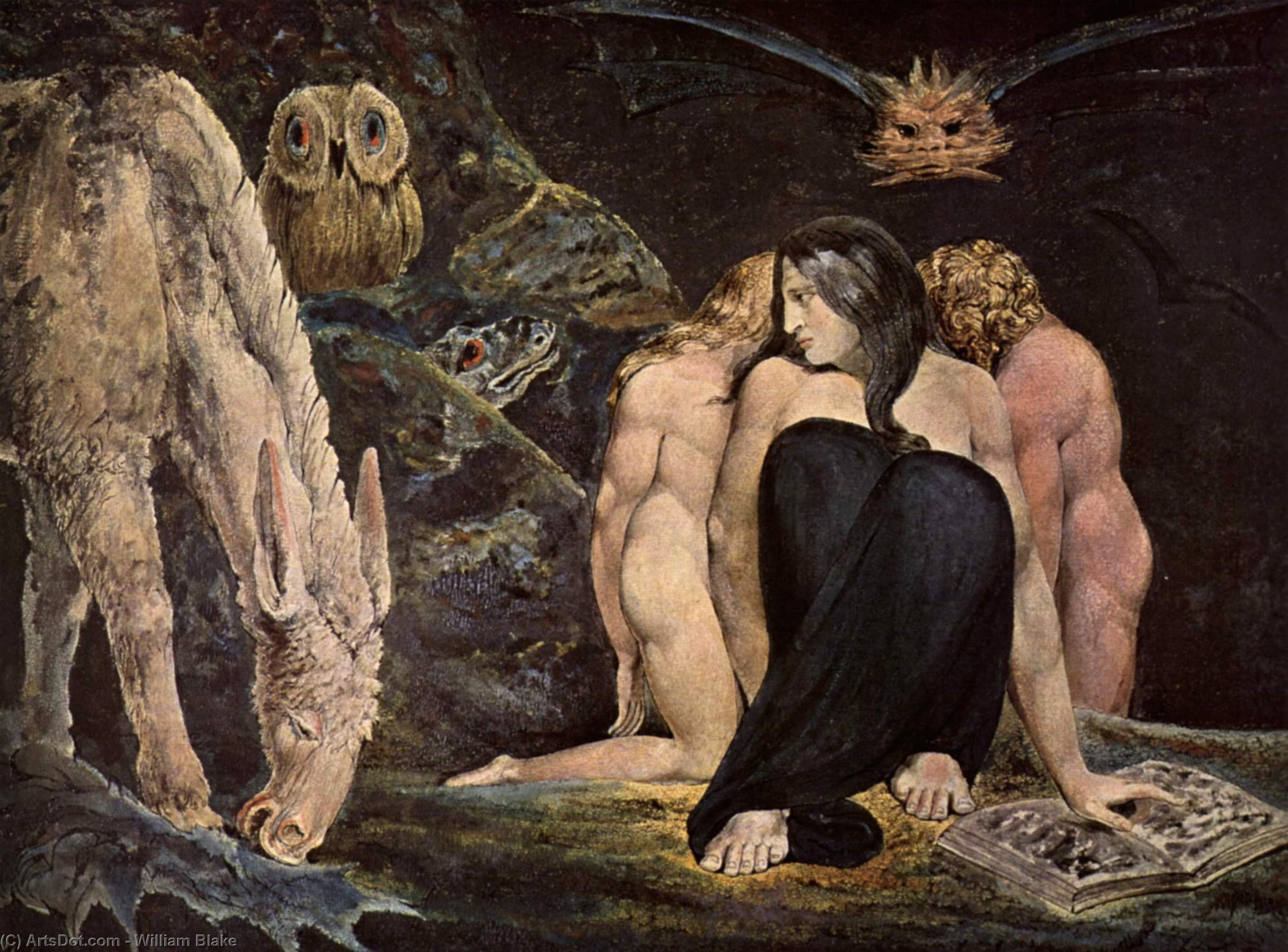
The watercolor painting "Hecate," created between 1823 and 1825 by William Blake, is far more than a simple depiction of the Greek goddess; it's a profound exploration of her essence—a visual poem brimming with symbolism, spiritual depth, and the raw energy of Romanticism. Blake, a visionary artist and poet who defied the conventions of his time, doesn’t offer a literal portrait but rather an intensely personal interpretation of Hecate’s multifaceted nature, capturing her dominion over transitions, secrets, and the unseen world.
At first glance, the image is arresting: a powerful female figure dominates the composition, framed by a complex interplay of creatures—a watchful white wolf, an owl perched with quiet wisdom, and serpentine forms hinting at primal forces. The central figure, draped in black, holds a book open, suggesting access to esoteric knowledge and perhaps even the ability to foretell the future. But beneath this initial impression lies a wealth of layered meaning, reflecting Blake’s unique blend of classical mythology, Christian beliefs, Gnostic philosophy, and Kabbalistic thought.
Decoding the Goddess: Subject & Symbolism
Hecate, in Greek mythology, is often associated with crossroads, magic, witchcraft, and the lunar cycle. She represents the liminal spaces—the thresholds between worlds, the moments of transformation, and the hidden realms beyond human perception. Blake’s portrayal amplifies these associations, presenting Hecate as a tri-faced entity embodying the waxing, full, and waning phases of the moon. This isn't merely a descriptive detail; it speaks to her role as a guardian of transitions and cycles—a symbol of constant change and renewal. The wolf, frequently linked to guardianship and wildness, stands guard over this powerful figure, while the owl, a traditional emblem of wisdom and prophecy, observes with quiet contemplation.
The serpentine form that winds around Hecate is particularly significant. Serpents often represent temptation, primordial energy, or even the shadow self—the darker aspects of human nature. Blake doesn’t shy away from these complexities, acknowledging the potential dangers inherent in knowledge and power. The open book held by Hecate further reinforces this theme, suggesting a connection to esoteric learning and the pursuit of hidden truths.
Romanticism & Spiritual Depth: Historical Context
“Hecate” was created during a period of intense artistic and intellectual ferment—the height of the Romantic movement. This era witnessed a shift away from the rigid formalism of Neoclassicism, embracing instead an emphasis on emotion, imagination, and the sublime. Blake wholeheartedly embraced this spirit, rejecting conventional artistic norms in favor of a deeply personal and symbolic approach to art. He drew inspiration from classical mythology but filtered it through his own unique spiritual beliefs, creating a work that is both profoundly rooted in tradition and utterly original.
Blake’s interest in Gnosticism and Kabbalah—ancient esoteric traditions—informed his understanding of the universe and his artistic vision. These philosophies emphasized the existence of hidden realms beyond the material world, suggesting that true knowledge could only be attained through intuition and spiritual insight. “Hecate” embodies this worldview, inviting viewers to contemplate the mysteries of existence and the potential for transformation.
Watercolor Mastery: Technique & Style
Despite the painting’s complex subject matter and symbolic richness, Blake's technical skill is remarkably evident in the delicate handling of watercolor. He achieves luminous color transitions and intricate details with a remarkable degree of precision—a testament to his mastery of this challenging medium. The fluid brushstrokes create a sense of movement and energy, while the vibrant hues contribute to the painting’s otherworldly atmosphere. Blake's style is characterized by strong outlines, flattened perspective, and an emphasis on linear patterns, all contributing to its dreamlike quality.
The texture appears rich and layered, suggesting a palpable depth despite the watercolor medium. The use of washes creates subtle gradations of color, while carefully applied lines define the forms with clarity and precision. This combination of delicate handling and bold design results in a painting that is both visually stunning and emotionally resonant.
Emotional Resonance & Interior Impact
"Hecate" is not a comforting image; it’s unsettling, provocative, and deeply evocative. It invites contemplation on themes of power, knowledge, transformation, and the darker aspects of the human condition. Its dramatic composition and symbolic richness make it a compelling focal point for any interior space—a conversation starter that sparks curiosity and introspection. The painting's intensity would lend itself well to a study, library, or gallery wall, sparking discussion and inspiring contemplation. A meticulously crafted hand-made oil painting reproduction of this iconic work offers a unique opportunity to bring the power of Blake’s vision into your own home.
Owning a Legacy: Reproductions & Appreciation
- Experience the power of Blake’s vision in your own home with a meticulously crafted hand-made oil painting reproduction.
- Our skilled artists capture every nuance of the original, ensuring exceptional quality and lasting beauty.
- Investing in a reproduction allows you to connect with art history and support artistic craftsmanship.
Питання та відповіді
Де я можу знайти твори мистецтва, схожі на «Геккате» роботи Вільям Блейк?
Схожі роботи до «Геккате» можна знайти на сторінці Схожі твори цього твору.
До якого художнього напряму та якої епохи належить «Геккате» роботи Вільям Блейк?
У «Геккате» роботи Вільям Блейк стилістика Romanticism поєднується з епохою — Ранньомодерна епоха.
Як я можу придбати цифровий файл «Геккате» роботи Вільям Блейк?
Цифрове зображення твору «Геккате» роботи Вільям Блейк можна придбати на його сторінці за посиланням Цифрове зображення високої якості: завантаження цифрового зображення високої роздільної здатності.
Біографія митця
William Blake (1757–1827): A Visionary’s Journey
William Blake, born in London on November 28, 1757, was a figure perpetually out of step with his time, yet destined to become one of the most celebrated artists and poets of the Romantic Age. His life unfolded against the backdrop of a rapidly changing England—a world grappling with industrialization, political upheaval, and shifting spiritual beliefs. From humble beginnings as the son of a hosier, Blake’s early years were marked by an intensely vivid imagination and a propensity for visionary experiences that would profoundly shape his artistic trajectory. Though largely self-taught in formal academics, he received drawing instruction at a young age, quickly revealing a talent that hinted at the extraordinary path ahead. His apprenticeship with engraver James Basire proved pivotal, providing him not only with technical mastery but also an understanding of printmaking techniques he would later revolutionize. These early influences—the Gothic grandeur of Westminster Abbey, the classical forms of Raphael and Michelangelo—served as foundational elements in his developing aesthetic, though Blake was never one to remain bound by convention.Early Life and Artistic Training
Blake’s formative years instilled within him a deep fascination with mythology and folklore, shaping his worldview and informing his artistic vision. Despite lacking formal schooling, he possessed an innate aptitude for drawing—a skill honed through diligent self-study and observation—and quickly demonstrated an exceptional ability to capture the essence of his subjects. His apprenticeship under James Basire, a respected engraver, provided invaluable experience in printmaking, equipping him with essential techniques that would underpin his groundbreaking illuminated printing process. This method, born from a profound spiritual awakening following his brother’s death, represented a radical departure from established practices—a deliberate rejection of mechanistic reproduction in favor of artistic expression and symbolic representation. Blake's meticulous attention to detail and his unwavering commitment to capturing the emotional depth of his subjects foreshadowed the stylistic innovations that would characterize his mature oeuvre.Illuminated Printing: A Revolutionary Technique
Blake’s artistic innovation wasn’t merely about subject matter; it resided fundamentally in *how* he created. Dissatisfied with conventional engraving methods, he developed a unique process known as “illuminated printing.” This involved etching both text and illustrations onto copper plates—a painstaking undertaking that demanded considerable skill and patience—then painstakingly hand-coloring the resulting prints using vibrant pigments applied directly to the plate surface. This wasn’t simply illustration accompanying poetry; it was an integrated art form where image and verse were inextricably linked, each amplifying the meaning of the other. Blake's mastery of relief etching—a technique he claimed originated from a prophetic vision—allowed him to achieve unparalleled textural richness and expressive nuance, surpassing the limitations imposed by traditional printmaking methods. This innovative approach cemented his reputation as a visionary artist who dared to challenge artistic conventions and forge new paths toward creative expression.Major Works and Artistic Style
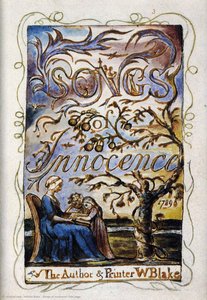
Blake’s artistic output encompassed a diverse range of genres—poetry, engravings, watercolors, and illuminated books—each reflecting his profound engagement with spiritual and philosophical ideas. Among his most celebrated works are *Songs of Innocence & Experience* (1794), a masterful exploration of duality and moral contemplation; *The Marriage of Heaven & Hell* (1793), a provocative prose poem that celebrates rebellious energy and defies conventional dogma; and *Jerusalem*, an ambitious epic poem depicting a reimagined vision of Albion—ancient name for Britain—as a beacon of spiritual renewal. His engravings, particularly those inspired by Dante’s *Divine Comedy*, demonstrate his extraordinary ability to translate complex narratives into powerful visual imagery—characterized by flattened perspectives, symbolic motifs, and a deliberate rejection of realistic representation. Blake's distinctive style—marked by bold lines, vibrant colors, and an unwavering commitment to conveying emotional intensity—became influential in shaping the aesthetic sensibilities of subsequent generations of artists.Legacy and Influence
Despite facing considerable obscurity during his lifetime, William Blake’s artistic legacy endured beyond his death on August 12, 1827. The Pre-Raphaelites, captivated by his visionary style and symbolic imagery—particularly *Songs of Innocence & Experience*—embraced him as a kindred spirit and championed his uncompromising aesthetic principles. Later movements—Symbolism and Modernism—found resonance in Blake’s exploration of subjective experience and spiritual contemplation, recognizing him as a precursor to avant-garde artistic endeavors. Today, William Blake is revered as a pivotal figure in the Romantic movement—an artist whose work continues to inspire poets, painters, and thinkers across disciplines. His unwavering commitment to creative freedom—a testament to the enduring power of imagination—remains profoundly relevant, urging us to question established norms and embrace visions that transcend conventional boundaries. Blake’s influence extends far beyond the realm of art, shaping conceptions of spirituality, mythology, and the role of imagination in human consciousness.
Вільям Блейк
1757 - 1827 , Великобритания
Короткі факти
- Artistic Movement Or Style: Романтизм
- Artists Who Influenced This Artist:
- Рафаель
- Мікеланджело
- Date Of Birth: 1757 рік
- Date Of Death: 1827 рік
- Full Name: William Blake
- Nationality: Британський
- Notable Artworks:
- Пісні про бездоганність і досвід
- Весілля неба й пекла
- Тигр
- Place Of Birth: Лондон, Великобританія
Пов'язані статті

Акварель: Історія, Техніки та Сучасна Практика
Дізнайтеся все про акварель: історію, техніки живопису, вибір матеріалів та сучасні тенденції. Корисні поради для початківців та професіоналів від експертів.

William Blake: Romantic Visionary & Mystical Genius of the Imagination
Explore the mystical art & poetic genius of William Blake (1757-1827). Discover his revolutionary illuminated printing, rich symbolism, and lasting influence on Romanticism. Find handmade reproductions at OriginalUniqueArt.

Ephemeral Visions: Exploring the History & Emotional Resonance of Watercolor Painting
Explore the captivating history of watercolor painting, from ancient techniques to modern masters like Kandinsky & Blake. Discover essential artists, collecting tips & the emotional power of this luminous medium. Expert insights for art enthusiasts.

Ephemeral Visions: Exploring the Artistic Legacy & Contemporary Practice of Watercolor Painting
Explore the captivating world of watercolor painting! Discover its rich history, essential techniques, influential artists & collecting tips. A comprehensive guide for art enthusiasts from OriginalUniqueArt.

Топ-10 легендарних акварелей, що змінили світ мистецтва | OriginalUniqueArt
Відкрийте для себе 10 легендарних акварелей від Turner, Monet та інших майстрів! Історія мистецтва, техніки живопису та натхнення для декору вашого дому. Купуйте репродукції картин аквареллю преміум-якості на OriginalUniqueArt.com.