

 Переглянути в інтер'єрі
 Надіслати як листівку
 Поділитися
 Детальніше

 Завантажити
 Схожі експонати
 Рентгенівське дослідження
 Слайд-шоу
 Статистика
Свята Беседа
 Акрил на полотні
- Настінне мистецтво
- High Renaissance
 1505
1505 92.0 x 126.0 cm
 Musée du Petit Palais
 Читати далі
Олійная репродукція ручної роботи
Написана вручну олією на полотні у вашому розмірі та рамі, виготовлена на замовлення нашими художниками. ( Перейти до друку Перейти до цифрових зображень)




P118B $10

P118H $10

P118W $10

P438Z $10

P508JH $12

P508YH $12

P805H $10

P805Z $10

P919BZ $10

P919G $10

P919XJ $10

P959ZH $10

P968JZ $12

W106C $8

W218G $10

W218JH $8

W218Y $10

W307PJ $10

W316G $10

W316PJ $8

W316Y $10

W398PJ $8

W4111J $10

W500HY $15

W500JH $15

W692G $12

W849H $8

W940BG $15

W953PJ $8




Обирайте з наших стандартних розмірів, що відповідають оригінальним пропорціям твору мистецтва.

Ви можете вказати власні розміри, щоб репродукція ідеально підійшла до конкретної рами або інтер'єру. Якщо вибраний вами розмір не відповідає пропорціям оригіналу, ми або обріжемо полотно, або доповнимо картину додатковими елементами, промальованими вручну. Цифровий макет буде надіслано вам на затвердження перед початком виробництва.
Зверніть увагу, що попередній перегляд на екрані не відображає фактичне обрізання або розширення зображення. Тільки макет точно покаже остаточну композицію.
Хоча ми можемо виготовити виріб у нестандартному розмірі, для збереження оригінальних пропорцій рекомендуємо обирати варіанти зі встановленого списку.
Після оформлення замовлення команда OriginalUniqueArt.com зв'яжеться з клієнтом електронною поштою для отримання інструкцій та надасть попередній макет
Доставка по всьому світу () за 3–4 тижні замість стандартних 5 тижнів. (12 Вересень). Без жодних компромісів у якості.

Безкоштовна експрес-доставка по всьому світу

Високоякісне лляне полотно

Повне страхове покриття доставки

Гарантія відшкодування митних зборів

Гарантія точного відтворення кольорів

Політика повернення протягом 100 днів (тільки у разі виявлення дефектів)

Гарантія повернення 100% коштів

Пропозиція на оптові замовлення
 Скляний варіант доступний лише для розмірів до 110 см

Свята Беседа
Матеріал репродукції
Розмір репродукції
-


Підсумкова вартість
$ 300
Holy Conversation by Vittore Carpaccio
Vittore Carpaccio’s “Holy Conversation,” completed around 1505 in Venice, stands as a testament to the enduring influence of early Netherlandish art blended seamlessly with Venetian Renaissance sensibilities. More than just a depiction of religious iconography—it's an immersive experience into the spiritual landscape of its time.
Style and Technique: Carpaccio’s approach diverges markedly from the humanist fervor sweeping across Italy during his lifetime, prioritizing meticulous detail and atmospheric perspective over grand narratives. He eschewed the bold color palettes favored by contemporaries like Bellini, opting instead for muted hues that convey a profound sense of serenity and contemplation. The painting utilizes tempera on canvas—a technique known for its luminosity and durability—allowing Carpaccio to achieve remarkable realism in capturing textures and nuances of light.
Historical Context: Created during the High Renaissance, “Holy Conversation” reflects the prevailing piety and artistic ambition of Venice’s cultural elite. The painting commemorates Saint Ursula's Legend, a popular medieval pilgrimage tale recounting the miraculous protection afforded to Saint Ursula and her companions by the Virgin Mary and Saint Benedict—a narrative deeply rooted in Christian tradition.
Symbolism: Carpaccio skillfully employs symbolism to elevate the scene beyond mere representation. The central figures of Jesus and Mary Magdalene are positioned within a meticulously rendered Venetian landscape, mirroring the theological concept of God’s omnipresence and divine grace permeating all creation. The bench in the background serves as a visual anchor, symbolizing humility and contemplation—essential virtues for spiritual seekers.
Emotional Impact: “Holy Conversation” transcends its formal elements to evoke a palpable sense of reverence and tranquility. Carpaccio’s masterful use of light and shadow creates an ethereal atmosphere that draws viewers into the contemplative gaze of the saints, inviting them to contemplate themes of faith, compassion, and divine love. The painting's enduring appeal lies in its ability to capture the essence of spiritual contemplation—a timeless pursuit resonating across centuries.
Additional Research: This artwork is housed in Musée du Petit Palais, Avignon. You can find more information about Vittore Carpaccio and his artistic legacy on WikiArt and The Web Gallery of Art.
Explore Vittore Carpaccio’s masterful depiction of Saint Ursula's legend in ‘Holy Conversation,’ showcasing Venetian realism and capturing the serene beauty of Gothic architecture within a detailed medieval landscape. See Detail
Vittore Carpaccio (1465–1526) was born in Venice and studied under Gentile Bellini, establishing a foundation for his distinctive artistic style. His work blended early Netherlandish influences with Venetian traditions, resulting in a unique aesthetic characterized by meticulous detail and atmospheric perspective.
Notable works include “The Legend of Saint Ursula,” a cycle of nine paintings now residing in the Gallerie dell’Accademia, demonstrating Carpaccio's mastery of narrative painting. Also noteworthy is “Glory of St. Ursula Altarpiece” (1491), reflecting Bellini’s influence and showcasing Carpaccio’s skill in capturing light and color.
“Holy Conversation” exemplifies Carpaccio’s commitment to portraying biblical narratives with profound psychological insight—a hallmark of Venetian Renaissance art that continues to inspire admiration today.
Біографія митця
Early Life and Training
Vittore Carpaccio, a prominent Italian painter of the Venetian school, was born in Venice around 1465. He descended from a family of fishermen and boat builders—a heritage that would subtly permeate his artistic vision. His formative years were spent under the tutelage of Gentile Bellini, arguably Venice’s most celebrated artist during his time. This apprenticeship proved pivotal, establishing Carpaccio's future success as a master craftsman and storyteller. Bellini instilled in him a disciplined approach to observation and composition—principles that would define Carpaccio’s distinctive style.Artistic Style and Influences
Carpaccio’s artistic style stood apart from the burgeoning humanist fervor sweeping across Italy during his lifetime. Unlike many of his contemporaries who embraced intellectual discourse and idealized beauty, Carpaccio remained steadfastly conservative in his technique. His work bore a discernible imprint from Antonello da Messina's innovative use of oil paint—a bold departure from tempera—and crucially, from early Netherlandish art. This unusual confluence resulted in a singular Venetian aesthetic characterized by meticulous detail, subdued color palettes, and an unwavering focus on narrative clarity. He eschewed grand gestures or dramatic expressions, prioritizing instead the careful depiction of human emotion and spiritual contemplation.Notable Works
Carpaccio’s artistic output spanned from 1490 to 1519, cementing his position as one of Venice's earliest masters of the Renaissance. His most enduring legacy resides in *The Legend of Saint Ursula*, a monumental cycle comprising nine paintings housed within the Gallerie dell’Accademia. This ambitious undertaking exemplifies Carpaccio’s mastery of narrative painting—a genre he elevated to new heights through painstaking observation and masterful execution. The altarpiece *Glory of St. Ursula* similarly showcases his exceptional skill in capturing light and color, mirroring Bellini's luminous style and demonstrating a profound understanding of Venetian artistic tradition. Furthermore, *Miracle of the Relic of the Cross at the Ponte di Rialto*, completed in 1494, exemplifies Carpaccio’s ability to synthesize complex visual information into harmonious compositions—a hallmark of his oeuvre.Career Highlights and Legacy
Carpaccio's commissions primarily stemmed from Venetian scuole apostoliche—religious confraternities dedicated to honoring saints and fostering piety within the city. These scuole served as vital patrons of the arts, commissioning elaborate paintings and sculptures to adorn their chapels and inspire devotion among their members. Carpaccio’s involvement with these institutions not only provided him with financial support but also exposed him to a vibrant intellectual milieu—one that championed humanist ideals while simultaneously upholding Venetian artistic conventions. Despite being somewhat overshadowed by luminaries like Bellini and Giorgione, Carpaccio's contribution to Venetian art remains significant—a testament to his unwavering commitment to craftmanship and narrative storytelling. His work continues to captivate viewers today with its serene beauty and profound spiritual depth.References and Further Reading
Discover more about Vittore Carpaccio and the Venetian School on OriginalUniqueArt.
Віttore Карпаччо
1465 - 1526 , Італія
Короткі факти
- Artistic Movement Or Style: Ранній венеційський ренесанс
- Artists Who Influenced This Artist:
- Дженте Белліні
- Антенолло да Мессина
- Date Of Birth: Венеція, Італія (бл. 1465)
- Date Of Death: 1526
- Full Name: Витторе Карпаччо
- Nationality: Італійський
- Notable Artworks:
- Легенда святої Юлії
- Слава святої Юлії Альтарний образ
- Чудо реліквій Хреста на Понті Ріальто
- Place Of Birth: Венеція
Пов'язані статті
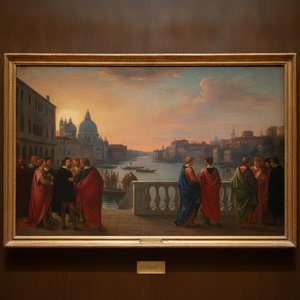
The Venetian Renaissance: A Masterclass in Colorito, Light, and the Birth of Atmospheric Brilliance
Explore the breathtaking mastery of the Venetian Renaissance. Discover how legends like Titian revolutionized art through Colorito, capturing the luminous light and vibrant pigments of the Venetian lagoon in a visual journey of unparalleled color and texture.
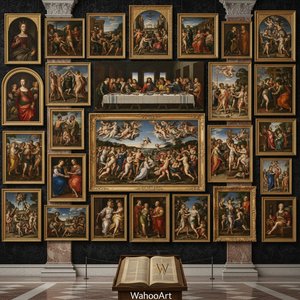
Якопо Тінторетто: 25 шедеврів венесенського майстра | OriginalUniqueArt
Відкрийте 25 захопливих шедеврів Якопо Тінторетто! Венесенський ренесанс, бароко, емоційні композиції та світлотінь. Купуйте високоякісні репродукції картин на OriginalUniqueArt.com – мистецтво для вашого дому.
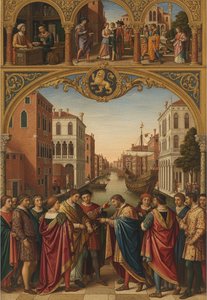
Vittore Carpaccio: Venetian Renaissance Narrative & the Poetics of Detail
Explore the captivating world of Vittore Carpaccio, a master storyteller of the Venetian Renaissance. Discover his intricate details, narrative cycles like 'The Legend of St. Ursula,' and unique artistic style.
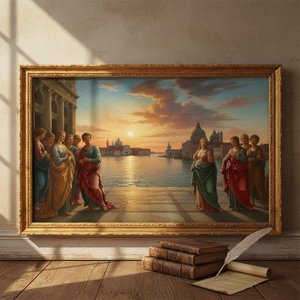
Venetian Renaissance: The Golden Age of Color, Light, and Luminous Artistry
Embark on a journey through the Venetian Renaissance. Discover how masters like Giorgione and Titian revolutionized art through luminous color and light. Explore the profound legacy of the Venetian School and its enduring influence on the world of fine art.

Venetian Renaissance: The Mastery of Color, Light, and the Art of Colorito
Explore the luminous mastery of the Venetian Renaissance. Discover how masters like Titian and Giorgione revolutionized art through colorito, light, and atmosphere. An expert guide to the golden age of Italian painting for collectors and enthusiasts.


