
 Переглянути в інтер'єрі
 Надіслати як листівку
 Поділитися
 Детальніше

 Завантажити
 Схожі експонати
 Рентгенівське дослідження
 Слайд-шоу
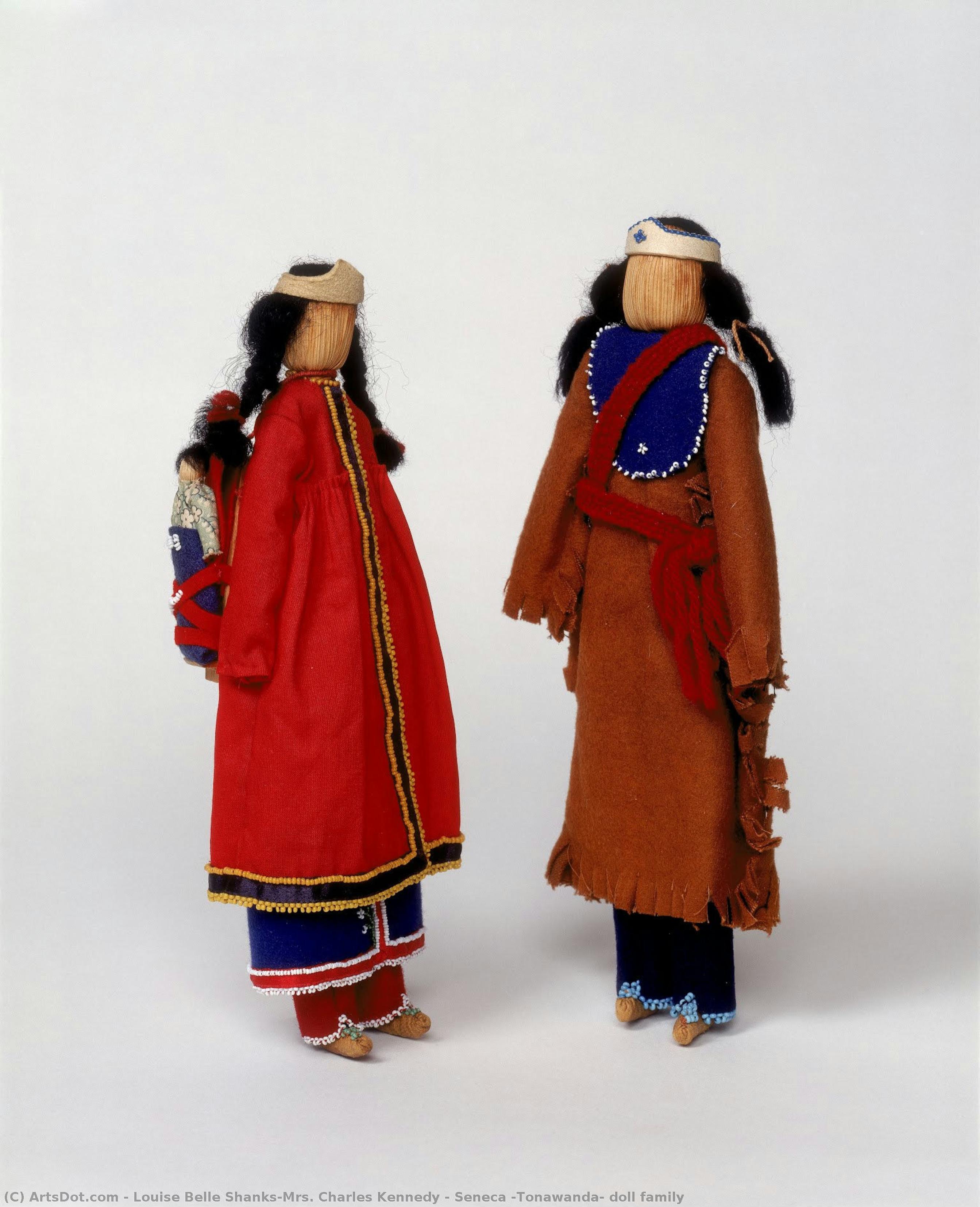
Сі Seneca (Тонгава) сім'я ляльок
 Акрил на полотні
- Настінне мистецтво
- Modern Abstract Expressionism
 1930
1930 24.0 x 11.0 cm
 Національний музей американських індіанців
 Читати далі
Олійная репродукція ручної роботи
Написана вручну олією на полотні у вашому розмірі та рамі, виготовлена на замовлення нашими художниками. ( Замовити принт Купити цифрове зображення)




P118B $10

P118H $10

P118W $10

P438Z $10

P508JH $12

P508YH $12

P805H $10

P805Z $10

P919BZ $10

P919G $10

P919XJ $10

P959ZH $10

P968JZ $12

W106C $8

W218G $10

W218JH $8

W218Y $10

W307PJ $10

W316G $10

W316PJ $8

W316Y $10

W398PJ $8

W4111J $10

W500HY $15

W500JH $15

W692G $12

W849H $8

W940BG $15

W953PJ $8




Обирайте з наших стандартних розмірів, що відповідають оригінальним пропорціям твору мистецтва.

Ви можете вказати власні розміри, щоб репродукція ідеально підійшла до конкретної рами або інтер'єру. Якщо вибраний вами розмір не відповідає пропорціям оригіналу, ми або обріжемо полотно, або доповнимо картину додатковими елементами, промальованими вручну. Цифровий макет буде надіслано вам на затвердження перед початком виробництва.
Зверніть увагу, що попередній перегляд на екрані не відображає фактичне обрізання або розширення зображення. Тільки макет точно покаже остаточну композицію.
Хоча ми можемо виготовити виріб у нестандартному розмірі, для збереження оригінальних пропорцій рекомендуємо обирати варіанти зі встановленого списку.
Після оформлення замовлення команда OriginalUniqueArt.com зв'яжеться з клієнтом електронною поштою для отримання інструкцій та надасть попередній макет
Доставка по всьому світу () за 3–4 тижні замість стандартних 5 тижнів. (14 Серпень). Без жодних компромісів у якості.

Безкоштовна експрес-доставка по всьому світу

Високоякісне лляне полотно

Повне страхове покриття доставки

Гарантія відшкодування митних зборів

Гарантія точного відтворення кольорів

Політика повернення протягом 60 днів (лише у разі виявлення дефектів)

Гарантія повернення 100% коштів

Пропозиція на оптові замовлення
 Скляний варіант доступний лише для розмірів до 110 см

Сі Seneca (Тонгава) сім'я ляльок
Матеріал репродукції
Розмір репродукції
-


Підсумкова вартість
$ 300
Опис твору
Сенeca (Тонawanda) лялька родинна – Унікальна Документальна Мистецька Робота Луїзи Беллі Шанкс
Луїза Беллі Шанкс, американська художниця та дослідниця культури Сенеків Тонawanda Резервації, створила дивовижний фотографічний об’єкт – лялькову родину Сенеків 1930 року. Ця робота є безцінним свідченням традиційного мистецтва племені та майстерності художників того часу. Фотографія була знята у рамках досліджень культури та історії Сенеків, що дозволило зафіксувати реалістичний портрет повсякденного життя та об’єктів матеріальної культури племені.- Тема: Лялька родини Сенеків – символ культурної спадщини та традиційного мистецтва американських індейців.
- Стиль: Документальна фотографія, що віддає перевагу об’єктивному зображенню реальності без художніх інтерпретацій.
- Техніка: Використання макрооб’єктива забезпечує високу деталізацію та передає текстури матеріалів – дерева та тканин, що робить ляльку справжнім артефактом історії.
- Художник: Луїза Беллі Шанкс (Луїза Прінтюп Кеннеді), талановита художниця, яка прагнула зафіксувати культурну спадщину Сенеків у своїй творчості.
- Дата створення: 1930 рік – період активних досліджень та фіксації традиційного мистецтва американських індейців.
- Ціна: Репродукція ляльки родини Сенеків доступна у високій якості та забезпечує чудовий візуальний досвід.
- Розмір: 24 см х 11 см – оптимальний розмір для декоративного використання в будинку або офісі.
Біографія митця
Piet Mondrian: Architect of Abstraction
Piet Mondrian, a name synonymous with modern art’s radical shift towards abstraction, was far more than simply a painter; he was a theorist, an architect of visual language, and a fervent believer in the power of art to transcend the mundane. Born Pieter Cornelis Mondriaan on March 7, 1872, in Amersfoort, Netherlands, his artistic journey began within a family steeped in tradition – his father, a schoolmaster, and uncle, an artist associated with the Hague School’s landscape movement. This grounding in both practical education and artistic heritage would profoundly shape his later approach to art. Initially pursuing a career in teaching, Mondrian's passion for painting ultimately led him to Amsterdam’s Rijksakademie, where he honed his skills and began experimenting with various styles before arriving at the revolutionary aesthetic that would define his legacy. His life, tragically cut short by illness on February 1, 1944, in New York City, remains a testament to an artist relentlessly pursuing a vision of universal harmony through pure form.Early Influences and the Transition to Abstraction
Mondrian’s early artistic development was marked by a fascination with landscape painting, mirroring his family's connection to the Hague School. However, around 1908, he began to explore new avenues, influenced by movements like Pointillism and Symbolism. A pivotal moment arrived in 1911 when he encountered Cubism – particularly the work of Picasso and Braque – at an exhibition in Amsterdam. This encounter proved transformative, challenging his understanding of representation and laying the groundwork for his eventual embrace of abstraction. He recognized that Cubism’s fragmentation of form offered a pathway to stripping away superfluous detail and revealing the underlying structure of objects. Crucially, Mondrian didn't simply adopt Cubist techniques; he pushed them further, moving beyond mere imitation towards a purely abstract language. This shift wasn’t arbitrary; it was driven by a deeply held belief that art should transcend the limitations of the physical world and express universal truths.The Development of Neo-Plasticism
Following his relocation to Paris in 1914, Mondrian embarked on a period of intense experimentation and refinement. The outbreak of World War I disrupted his life, forcing him to settle in Domburg, where he spent five years developing what he termed “Neo-Plasticism” (Neoplasticisme). This wasn’t merely a style but a philosophy – a systematic reduction of artistic elements to their most essential components. Mondrian distilled his visual vocabulary to the absolute minimum: straight lines, right angles, primary colors (red, blue, and yellow), and black, white, and gray. He believed that these simple forms could represent the underlying structure of reality, offering a pathway to spiritual enlightenment. His paintings during this period – works like *Composition with Red, Blue and Yellow* – are characterized by their stark geometric arrangements and intense color contrasts. This rigorous approach was further solidified through his involvement in *De Stijl*, an international art movement founded with Theo van Doesburg that championed these principles of abstraction and universal harmony.Key Works and Lasting Legacy
Mondrian’s most iconic works, including *Broadway Boogie Woogie* (1942-43) and *Composition with Red, Blue and Yellow* (1920-21), are instantly recognizable for their dynamic yet balanced compositions. *Broadway Boogie Woogie*, painted during his time in New York, reflects the energy of the city while simultaneously adhering to the principles of Neo-Plasticism. The painting’s fragmented lines and vibrant colors create a sense of movement and rhythm, suggesting an exploration of urban space and its underlying structure. Similarly, *Composition with Red, Blue and Yellow* exemplifies his belief in the power of color to evoke universal emotions and spiritual truths. Throughout his career, Mondrian produced a significant body of work that profoundly influenced generations of artists. His emphasis on abstraction paved the way for movements like Constructivism and Minimalism, while his theoretical writings provided a framework for understanding abstract art as a means of achieving a higher level of aesthetic experience. His legacy extends beyond painting, impacting architecture, design, and even fashion, demonstrating the enduring influence of his radical vision.A Universalist’s Vision
Piet Mondrian's artistic journey wasn't simply about creating beautiful images; it was a quest for universal harmony and spiritual truth. He believed that art should be independent of reality, offering a direct path to the “spiritual” realm. His relentless pursuit of this ideal led him to systematically reduce his visual vocabulary, ultimately arriving at the austere geometric forms that define his most celebrated works. He famously declared in 1914: "Art is higher than reality and has no direct relation to reality. To approach the spiritual in art, one will make as little use as possible of reality, because reality is opposed to the spiritual." This conviction fueled his lifelong dedication to abstraction, solidifying his place as a pivotal figure in the history of modern art – an architect who designed a visual language for a more harmonious world.
louise belle shanks/mrs. charles kennedy
1872 - 1952 , United States of America
Короткі факти
- Artistic Movement Or Style:
- Neo-Plasticism
- De Stijl
- Abstract art
- Artists Or Movements Influenced By This Artist:
- Vasily Kandinsky
- Kazimir Malevich
- Artists Who Influenced This Artist:
- Simon Mans
- Abraham Kuyper
- Date Of Birth: March 7, 1872
- Date Of Death: February 1, 1944
- Full Name: Pieter Cornelis Mondriaan
- Nationality: Dutch
- Notable Artworks:
- Composition with Red Blue and Yellow
- Broadway Boogie Woogie
- Victory Boogie Woogie
- Place Of Birth: Amersfoort, Netherlands
Пов'язані статті

Gordon Parks: A Poetic Lens on American Life – Photography, Social Justice & Storytelling
Explore the profound work of Gordon Parks, a groundbreaking photographer who documented American life with unparalleled empathy and artistry. Discover his iconic images & lasting impact on social justice through Life magazine & beyond.

Beyond the Lens: Photography's Enduring Influence on Modern & Contemporary Art
Explore photography's pivotal role in shaping modern & contemporary art. Discover key movements, influential artists like Stieglitz, and expert collecting advice from OriginalUniqueArt.

Grant Wood & American Regionalism: Identity, Myth & the Rural Landscape
Explore the world of Grant Wood & American Regionalism with OriginalUniqueArt. Discover the symbolism behind 'American Gothic', recurring themes, and the movement's lasting impact on art history. High-quality reproductions available.

Shadow Catcher: Edward S. Curtis & the Ethnographic Portraiture of a Vanishing West
Explore the life & work of Edward S. Curtis, the 'Shadow Catcher,' and his groundbreaking photographic documentation of Native American cultures. Discover iconic images from *The North American Indian* and a critical look at his lasting legacy.

Monochrome Visions: Exploring the Aesthetic & Historical Significance of Black & White Photography
Explore the rich history & artistic power of black and white photography. From early techniques to iconic masters like Ansel Adams, discover why monochrome continues to captivate art lovers today. Expert insights for collectors.


