

 Переглянути в інтер'єрі
 Надіслати
 Поділитися
 Деталі
 Посібник

 Завантажити
 Схожі предмети колекціонування
 Рентгенівське дослідження
 Слайд-шоу
 Статистика переглядів
Пейзаж
 Акрил на полотні
- Настінне мистецтво
- Catalonian Landscape Painting
 1875
1875 143.0 x 107.0 cm
 Вілла Касальс-Музей Пау Касальса
 Читати далі
Гікле / Художній принт
Музейна якість друку جيкле або на полотні з оперативним виготовленням та різноманітними варіантами фінішної обробки. ( Купити картину ручної роботи Перейти до цифрових зображень)




P118B $10

P118H $10

P118W $10

P438Z $10

P508JH $12

P508YH $12

P805H $10

P805Z $10

P919BZ $10

P919G $10

P919XJ $10

P959ZH $10

P968JZ $12

W106C $8

W218G $10

W218JH $8

W218Y $10

W307PJ $10

W316G $10

W316PJ $8

W316Y $10

W398PJ $8

W4111J $10

W500HY $15

W500JH $15

W692G $12

W849H $8

W940BG $15

W953PJ $8




Обирайте з наших стандартних розмірів, що відповідають оригінальним пропорціям твору мистецтва.

Ви можете вказати власні розміри, щоб репродукція ідеально підійшла до конкретної рами або інтер'єру. Якщо обраний вами розмір не відповідає пропорціям оригіналу, ми або обріжемо полотно, або розширимо зображення за допомогою дзеркального відображення чи суцільної заливки країв. Перед початком виробництва вам буде надіслано цифровий макет для затвердження.
Будь ласка, зверніть увагу, що попередній перегляд на екрані не відображає фактичне обрізання або розширення. Тільки макет точно покаже фінальну композицію.
Хоча можливість замовлення індивідуальних розмірів доступна, ми рекомендуємо обирати формат із попередньо визначеного списку, щоб зберегти оригінальні пропорції.
Доставка по всьому світу () за 2 тижні замість стандартних 4/5 тижнів. (25 Вересень)

Безкоштовна експрес-доставка по всьому світу

Високоякісне лляне полотно

Повне страхове покриття доставки

Гарантія повернення митних зборів

Гарантія точного відтворення кольорів

Політика повернення протягом 100 днів (лише у разі виявлення дефектів)

Гарантія повернення 100% коштів

Знижка на оптові замовлення
 Скляний варіант доступний лише для розмірів до 110 см

Пейзаж
Гікле / Художній принт
Розмір репродукції
-


Загальна вартість
$ 80
Landscape by Ramón Martí Alsina: A Vision of Catalan Identity
Рамон Марти Альсина, каталонський реалістський художник початку XIX століття, був одним із найвидатніших представників каталонського мистецтва свого часу. Його творчість тісно пов’язана з рухом Мачхіяолі та прагненням до національної єдності Каталонії, що особливо відчувається у його пейзажних полотнах. Марти Альсина був активним учасником каталонського культурного життя та інтелектуального дискурсу епохи, що вплинуло на формування його художнього стилю та світогляду. Його роботи відзначаються особливою увагою до деталей та передачею атмосфери каталонської природи, а також використанням новаторських технічних методів для досягнення максимальної реалістичності та емоційної глибини.Техніка та Стиль: Плейен-Аир Реалізм і Вплив Позитивізму
Марти Альсина був одним із перших каталонських художників, який активно застосовував техніку *плейєн-аир* – живописний метод безпосередньої роботи над полотном з використанням свіжого повітря та без попереднього створення ескізу. Цей підхід дозволив йому досягти максимальної точності передачі природних форм та кольорів, а також створити вражаючу перспективу та динамічну композицію. Його стиль характеризується лінійною чіткістю та яскравими барвами, що були особливо впливовими для каталонського мистецтва того часу. Марти Альсина був глибоко зацікавлений філософією позитивізму – науковому напрямку, який віддавав перевагу спостереженню та об’єктивному дослідженню світу. Цей вплив проявився у його прагненні до максимальної реалістичної передачі природних явищ та емоційного стану людини в пейзажі.Історичний Контекст: Каталонський Національний Дух Епохи Уніфікації
Роботи Марти Альсини були створені у період каталонської національної боротьби за незалежність від Іспанії та завершення процесу об’єднання Італії. Ці події мали значний вплив на художників Каталонії, які прагнули виразити свою любов до рідної землі та підкреслити її культурну самобутність. Марти Альсина був активним членом каталонського національного руху та використовував свій творчий талант для пропаганди національної ідеї та підтримки каталонської культури. Його пейзажі стали символом каталонської душі та традицій епохи, що відзначаються оптимізмом та вірою у світле майбутнє Каталонії.Символізм та Емоційний Відбиток: Відображення Природи та Людського Духу
У своїх пейзажах Марти Альсина використовував широкий спектр символів та образів, що відображають каталонську культуру та філософію епохи. Особливо важливим є використання світлих та темних тонів для передачі контрасту між природою та містом, а також зображення людей у повсякденній діяльності, що підкреслюють зв’язок людини з навколишнім світом. Марти Альсина прагнув викликати у глядача емоції радості та благодаті за красу каталонської природи та її гармонію з людським духом. Його полотна залишаються актуальними й сьогодні, спонукаючи до роздумів про значення національної ідентичності та цінність збереження природного ландшафту.Висновок: Наслідок Мачхіяолі та Вічне Дзеркало Каталонської Душі
Рамон Марти Альсина був одним із найвидатніших художників каталонського Мачхіяолі руху, який став символом каталонського національного духу та культурної самобуттності епохи уніфікації Італії. Його пейзажі продовжують вражати своєю красою та реалістичністю, а також передавати глибинний філософський сенс – віру у силу природи та гармонію між людиною та світом. Його творчість є безцінним скарбом каталонської культури та мистецтва, що заслуговує уваги дослідників та шанувальників прекрасного.Біографія митця
Giovanni Costa (Nino Costa): A Pioneer of Italian Landscape and Patriotic Vision
Giovanni Costa, often known as Nino Costa, was a pivotal figure in 19th-century Italian art, particularly recognized for his evocative landscapes and fervent commitment to national unity. Born in Rome in 1826, he navigated the tumultuous political landscape of Italy’s unification while simultaneously developing a distinctive artistic voice rooted in observation and a deep connection to the Italian countryside. His life was inextricably linked with the burgeoning Macchiaioli movement, and his work served as both an inspiration and a reflection of the era's spirit of reform and patriotic fervor. Costa’s early artistic education laid the foundation for his future success. Introduced to Baron Vincenzo Camuccini at the tender age of twelve, he was encouraged to embrace *vedute* – views of urban landscapes – and to capture nature directly from observation. This emphasis on direct experience would become a hallmark of his style. Following Camuccini’s guidance, Costa spent time at the Jesuit college in Montefiascone, honing his drawing skills before returning to Rome and enrolling in the prestigious Accademia di San Luca. There, he studied under masters like Francesco Coghetti, Francesco Podesti, and Filippo Agricola, absorbing the classical techniques and compositional principles of the time. However, it was during the 1848 revolutions that Costa truly found his purpose – not merely as an artist, but as a participant in Italy’s struggle for independence. He enthusiastically joined Garibaldi's volunteer army, demonstrating his unwavering patriotism through direct action, famously leading the assault on the Porta Pia during Rome’s liberation in 1870. Costa’s artistic style evolved significantly throughout his career. Initially influenced by Neoclassicism, particularly through Camuccini’s teachings, he gradually embraced a more expressive and spontaneous approach. He became deeply involved with the Macchiaioli movement, a group of Florentine artists who rejected academic conventions in favor of capturing the fleeting effects of light and color on canvas. The Macchiaioli's technique of using *macchie* – dabs or strokes of pure pigment – to create an impressionistic effect resonated strongly with Costa’s own desire to convey immediacy and emotional resonance. His landscapes, often depicting rural scenes of shepherds and cattle grazing in the rolling hills of Tuscany and Umbria, are characterized by a remarkable sensitivity to light and atmosphere. He wasn't interested in idealized beauty; instead, he sought to capture the authentic essence of the Italian countryside, imbued with its history, traditions, and the spirit of its people. Works like *Donne sulla spiaggia di Porto d’Anzio* (1862) exemplify this shift – a seemingly simple depiction of women on a beach becomes a powerful meditation on light, color, and the beauty of everyday life. Costa's international recognition grew throughout the latter half of his career. He cultivated relationships with artists from England and America, including Elihu Vedder and Matthew Ridley Corbet, who were captivated by his unique approach to landscape painting. These connections exposed his work to a wider European audience and further solidified his reputation as a leading figure in Italian art. His paintings weren’t merely representations of scenery; they were imbued with a strong sense of national identity and a passionate belief in the potential of Italy. His dedication extended beyond the canvas, actively promoting artistic independence from outdated traditions and championing a return to direct observation of nature – principles that profoundly influenced subsequent generations of Italian artists. Costa’s legacy extends far beyond his individual paintings. He served as an important mentor and inspiration for many younger artists, particularly those associated with the Macchiaioli movement. His commitment to patriotic ideals and his willingness to engage in political action alongside his artistic pursuits cemented his place as a symbol of Italian unification and national pride. Giovanni Costa (Nino Costa) died in Rome in 1903, leaving behind a body of work that continues to captivate viewers with its beauty, sincerity, and profound connection to the heart of Italy.Costa’s Artistic Techniques and Influences
Costa's artistic development reveals a fascinating interplay between traditional training and innovative influences. His early exposure to Camuccini instilled in him a solid understanding of classical composition and *vedute*, but it was his engagement with the Macchiaioli that truly shaped his style. The Macchiaioli’s emphasis on capturing fleeting moments, using pure colors applied in small dabs or strokes (the *macchie*), profoundly impacted Costa's approach to landscape painting. He adopted this technique, not as a mere stylistic choice, but as a means of conveying the immediacy and emotional intensity of his observations. Furthermore, Costa’s time at the Accademia di San Luca exposed him to the works of masters like Coghetti, Podesti, and Agricola, who instilled in him a deep appreciation for anatomical accuracy and classical principles. However, he skillfully integrated these influences with his own unique vision, creating landscapes that were both technically proficient and emotionally resonant. His use of light and color was particularly noteworthy – he masterfully captured the subtle shifts of atmosphere and the interplay of shadows, imbuing his paintings with a sense of depth and realism. Beyond the Macchiaioli, Costa’s work also reflects the influence of Romanticism, particularly in its emphasis on dramatic landscapes and emotional intensity. However, unlike many Romantic painters, he avoided sentimentalizing nature or imposing moralistic narratives onto his scenes. Instead, he focused on capturing the beauty and power of the Italian countryside with a sense of detached observation and quiet reverence. His paintings are not simply depictions of scenery; they are invitations to contemplate the relationship between humanity and the natural world.- Neoclassicism: Early influence from Baron Vincenzo Camuccini.
- Macchiaioli Movement: Adoption of *macchie* technique for capturing fleeting light and color.
- Romanticism: Evident in dramatic landscapes and emotional intensity, but without sentimentality.
Costa’s Patriotic Engagement
Giovanni Costa's artistic career was inextricably linked to Italy’s struggle for unification. His fervent patriotism manifested not only through his subject matter – depicting scenes of rural life and the Italian landscape – but also through his active participation in political events. He joined Garibaldi’s volunteer army during the 1848 revolutions, demonstrating his commitment to national independence. His most significant act of patriotic engagement occurred during the assault on the Porta Pia in Rome in 1870, where he famously led the charge, symbolizing the triumph of Italian unity and the end of papal rule. This willingness to put himself at risk for the cause of Italy cemented his status as a national hero. His paintings became powerful symbols of patriotic fervor, inspiring others to embrace the ideals of unification and self-determination. Costa’s commitment extended beyond the battlefield; he actively promoted artistic independence from outdated traditions, advocating for a return to direct observation of nature – principles that aligned perfectly with Italy's burgeoning sense of national identity. His life serves as a testament to the intersection of art and politics in 19th-century Italy, demonstrating how artistic expression can be used to shape public opinion and advance political goals.
ramon marti alsina
1826 - 1894
Довідкова інформація
- Artistic Movement Or Style: Landscape painting
- Artists Or Movements Influenced By This Artist: ['Macchiaioli']
- Artists Who Influenced This Artist: ['Vincenzo Camuccini']
- Date Of Birth: 15 Oct 1826
- Date Of Death: 31 Jan 1903
- Full Name: Giovanni Costa (Nino Costa)
- Nationality: Italian
- Notable Artworks: ["Donne sulla spiaggia di Porto d'Anzio"]
- Place Of Birth: Rome, Italy
Схожі статті
The Allure of Open Airs: Exploring Representations of Outdoors in Art History
Explore the rich history of outdoor painting! From Romantic landscapes to Impressionism's revolution, discover key artists, techniques & the enduring legacy of capturing light and nature in art. Learn more at OriginalUniqueArt.
Concrete Narratives: Exploring Urban Life in Modern & Contemporary Art
Explore the evolution of cityscape painting with OriginalUniqueArt. Discover key artists from Realism to contemporary movements & invest in timeless urban visions. Expert guidance, museum-quality reproductions.
Capturing Ephemeral Light: A Comprehensive Exploration of Plein Air Painting's History & Enduring Legacy
Explore the rich history of plein air painting, from its origins to Impressionism & beyond. Discover key artists, techniques, and the enduring legacy of capturing light in landscape art. Find museum-quality reproductions at OriginalUniqueArt.
Capturing Ephemeral Light: A Comprehensive Exploration of Plein Air Painting's History & Enduring Legacy
Explore the rich history of plein air painting, from its origins with Constable & Corot to Impressionism's revolution. Discover techniques, key artists, and the enduring legacy of capturing light outdoors. Learn more at OriginalUniqueArt.
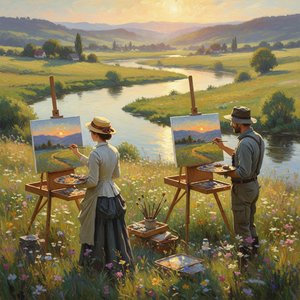
Capturing Ephemeral Light: Plein Air Painting from Impressionism to Today
Explore the history of plein air painting, from its origins with the Barbizon school to Impressionism's revolution & contemporary practice. Discover techniques, artists like Monet & Renoir, and find museum-quality reproductions at OriginalUniqueArt.
