

 Переглянути в інтер'єрі
 Надіслати як листівку
 Поділитися
 Детальніше

 Завантажити
 Схожі експонати
 Рентгенівське дослідження
 Слайд-шоу
 Статистика
Праця


 Читати далі
Гікле / Художній принт
Музейна якість друку جيкле або на полотні з оперативним виготовленням та різноманітними варіантами фінішної обробки. ( Замовити репродукцію ручної роботи Перейти до цифрових зображень)




P118B $10

P118H $10

P118W $10

P438Z $10

P508JH $12

P508YH $12

P805H $10

P805Z $10

P919BZ $10

P919G $10

P919XJ $10

P959ZH $10

P968JZ $12

W106C $8

W218G $10

W218JH $8

W218Y $10

W307PJ $10

W316G $10

W316PJ $8

W316Y $10

W398PJ $8

W4111J $10

W500HY $15

W500JH $15

W692G $12

W849H $8

W940BG $15

W953PJ $8




Обирайте з наших стандартних розмірів, що відповідають оригінальним пропорціям твору мистецтва.

Ви можете вказати власні розміри, щоб репродукція ідеально підійшла до конкретної рами або інтер'єру. Якщо обраний вами розмір не відповідає пропорціям оригіналу, ми або обріжемо полотно, або розширимо зображення за допомогою дзеркального відображення чи суцільної заливки країв. Перед початком виробництва вам буде надіслано цифровий макет для затвердження.
Будь ласка, зверніть увагу, що попередній перегляд на екрані не відображає фактичне обрізання або розширення. Тільки макет точно покаже фінальну композицію.
Хоча можливість замовлення індивідуальних розмірів доступна, ми рекомендуємо обирати формат із попередньо визначеного списку, щоб зберегти оригінальні пропорції.
Доставка по всьому світу () за 2 тижні замість стандартних 4/5 тижнів. (18 Вересень)

Безкоштовна експрес-доставка по всьому світу

Високоякісне лляне полотно

Повне страхове покриття доставки

Гарантія відшкодування митних зборів

Гарантія точного відтворення кольорів

Політика повернення протягом 100 днів (тільки у разі виявлення дефектів)

Гарантія повернення 100% коштів

Пропозиція на оптові замовлення
 Скляний варіант доступний лише для розмірів до 110 см

Праця
Гікле / Художній принт
Розмір репродукції
-


Підсумкова вартість
$ 80
Ле Травіль: Символ Праці та Візуальне Вираження Національних Ідеалів
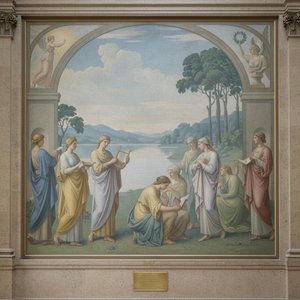
“Le Travail” (Праця) – це масштабний полотно французького художника П’єра Сеціля Пувіса де Шаванна, створене у 1863 році та щойно представлене в Музеї Пікардії. Це не просто декоративна картина; вона є потужним символом праці та національної самоідентифікації епохи Відродження Франції, часів бурхливих політичних змін і пошуків нових художніх шляхів.
- Художник: П’єр Сеціль Пувіс де Шаванн (1824 – 1898)
- Дата створення: 1863 рік
- Розмір: Невідомий
- Матеріал: Олія на полотні
- Музей: Музей Пікардії, Елкінс Парк, Пенсільванія (США)
Картина зображує групу обнажених чоловіків, що разом рубають дерева у лісах. Сцена розгортається біля водоймища, на задньому плані видніються гори – пейзаж, який віддалено нагадує про романтизм та любов до природи. Ілюстрація містить понад тридцять чоловік, кожен з яких займається різними завданнями пов’язаними з лісорубством і транспортуванням деревини. Чоловіки розставлені по сцені, деякі ближче до переднього плану, інші – далі вдалину. Вони працюють як команда, підтримуючи один одного інструментами лісоруба – соковими та кинджалами. Дерева, що рубаються, розкидані по всій картині, деякі ближче до води, інші ж у фоновому плані.
Пувіс де Шаванн був одним із найвидатніших художників свого часу, який вирішив віддатись великим масштабним проектам. Його творчість була тісно пов’язана з філософією національного духу та прагненням до ідеальної краси – характерних рис символізму та мистецтва Нового Відродження.
Стиль полотна є яскравим прикладом романтичного пейзажу, але водночас він має глибокий символічний зміст. Лісоруби у “Le Travail” стали метафорою праці як засобу національного розвитку та соціальної гармонії. Художник використовував техніку лінійного мазка та тісне перекриття шарів олії, щоб передати силу та енергію природних сил і водночас створити відчуття єдності та співпраці між людьми.
Картина викликає сильні емоції у глядача – почуття гордості за національну культуру та історію, а також віру в силу праці як фактора прогресу та благородства. “Le Travail” продовжує бути актуальним і сьогодні, спонукаючи нас задуматись про цінність людської праці та важливість збереження природного ландшафту.
Біографія митця
A Life Dedicated to Monumental Visions
Pierre Cécile Puvis de Chavannes, a name often simply rendered as Puvis de Chavannes, occupies a unique and pivotal position in 19th-century French art. Born in Lyon in 1824, he rose to become known as “the painter for France,” a testament to his profound impact on public art during the early years of the Third Republic. His legacy extends far beyond mere decoration; Puvis de Chavannes crafted visual narratives that embodied national ideals and resonated with a generation grappling with political and social transformation. He wasn’t merely illustrating history, but actively shaping its visual memory for the future. His influence on subsequent artists, particularly those aligned with Symbolism and Art Nouveau, is undeniable, and his collaborative spirit extended to working alongside medallists, offering designs and insightful suggestions.From Engineering Aspirations to Artistic Devotion
The early life of Pierre-Cécile Puvis was marked by a trajectory that initially diverged from the world of art. Born into a family of modest means – his father an engineer descended from Burgundy nobility – he received an education at Amiens College and Lycée Henri IV in Paris, preparing him for a career following in his father’s footsteps. However, a serious illness proved to be a turning point, forcing a period of convalescence that allowed space for introspection and the burgeoning of artistic inclinations. A transformative journey to Italy ignited within him a passion for painting, prompting a decisive shift away from engineering and towards a life dedicated to creative expression. He embraced his ancestral heritage by incorporating “de Chavannes” into his name, a subtle assertion of identity and lineage. His formal training included brief mentorships under luminaries like Eugène Delacroix, Henri Scheffer, and Thomas Couture, yet he ultimately favored independent study, establishing a spacious studio near the Gare de Lyon that became a hub for artistic exploration. He diligently honed his understanding of anatomy through classes at the Académie des Beaux Arts, laying a solid foundation for his later monumental works.The Genesis of a Symbolist Style
Puvis de Chavannes’s artistic style is generally categorized as Symbolist, though it evolved from roots in Romanticism. His work is instantly recognizable by its simplified forms, rhythmic linear compositions, and a distinctive, muted palette reminiscent of fresco painting. He wasn't interested in photographic realism; instead, he sought to distill essence, to capture the underlying spirit of his subjects. He frequently drew inspiration from classical antiquity and idealized landscapes, weaving allegorical themes into grand narratives. His early commissions, beginning in the 1860s at the Musée de Picardie in Amiens – including *Concordia*, *Bellum*, *Le Travail* (Work), and *Le Repos* (Rest) – established his reputation for large-scale mural paintings. These weren’t simply decorative elements; they were carefully considered statements about civic virtue, labor, and the pursuit of harmony. Later, a significant series of murals commissioned for the Museum of Fine Arts in Lyon further cemented his position as a leading figure in public art. Notable works like *The Woodcutters* (1873), currently housed at the San Antonio Museum of Art, demonstrate his ability to imbue everyday scenes with symbolic weight and poetic grace. Paintings such as *Massilia, Greek Colony*, and *Sacred Grove* exemplify his characteristic style and thematic interests, showcasing nude figures within evocative landscapes that invite contemplation.Themes and Symbolism in His Work
Puvis de Chavannes’s paintings are rich in symbolism, often conveying complex ideas through carefully chosen imagery and color palettes. He frequently depicted scenes from mythology, history, and everyday life, imbuing them with allegorical meaning. His works explore themes of labor, leisure, virtue, and the relationship between humanity and nature. The recurring motif of the nude figure—often representing idealized beauty or spiritual purity—is a hallmark of his style. He avoided overt narratives, preferring to suggest rather than explicitly state, allowing viewers to interpret the symbolism for themselves. His murals, in particular, were designed to evoke specific emotions and inspire civic pride, reflecting the values of the French Republic. The deliberate use of muted colors and simplified forms contributed to a sense of timelessness and universality, transcending the limitations of individual historical contexts.Major Achievements and Historical Significance
The impact of Puvis de Chavannes on the artistic landscape of France – and beyond – was profound. He is credited with influencing an entire generation of painters and sculptors, particularly those associated with Modernism. His emphasis on simplified forms, decorative patterns, and allegorical themes resonated deeply with artists seeking to break away from traditional academic constraints. Georges de Feure was among his notable protégés, benefiting directly from his guidance and mentorship. Beyond painting, Puvis actively collaborated with medallists, providing designs and suggestions that enriched their work. Émile Zola eloquently lauded his art as “an art made of reason, passion, and will,” capturing the intellectual and emotional depth inherent in his creations. His most celebrated achievement lies in his contribution to the development of public art during a period of significant political and social change in France. His murals weren’t merely aesthetic enhancements; they were intended to embody national ideals and provide visual narratives for civic spaces, fostering a sense of collective identity and shared values. The monumental murals at the Panthéon in Paris, illustrating the life of St. Geneviève, stand as enduring testaments to his skill and vision. Puvis de Chavannes remains an important figure in 19th-century French art, bridging the gap between Romanticism and Symbolism and paving the way for the artistic innovations of the modern era. His work continues to inspire awe and admiration, reminding us of the power of art to shape our understanding of history, culture, and the human condition.
Пувіз де Шаванн
1824 - 1898 , Франція
Короткі факти
- Artistic Movement Or Style: Символізм
- Artists Or Movements Influenced By This Artist:
- Zola
- Modernism
- Artists Who Influenced This Artist:
- Delacroix
- Scheffer
- Couture
- Date Of Birth: 14 груд., 1824
- Date Of Death: 1898
- Full Name: Pierre Cécile Puvis de Chavannes
- Nationality: Француз
- Notable Artworks:
- La Fortune
- Sacred Grove
- Peace
- Work
- Place Of Birth: Лион, Франція
Пов'язані статті

Про нас
Відкрийте для себе нашу історію! Ми привносимо мистецтво світового класу у ваше життя завдяки експертному відбору, індивідуальним творам та безкоштовним попереднім переглядам. Затверджено приватними особами та компаніями з 2000 року.

25 шедеврів Поля Сезанна: подорож у світ імпресіонізму та натюрморту | OriginalUniqueArt
Відкрийте 25 найвідоміших картин Поля Сезанна! Дослідіть імпресіонізм, натюрморти та пейзажі художника. Купіть високоякісні репродукції та знайдіть ідеальний декор для вашого дому на OriginalUniqueArt.com.

Топ-10 шедеврів імпресіонізму: мистецтво миттєвості для вашого дому
Пориньте у світ імпресіонізму! Відкрийте 10 культових картин Моне, Ренуара та Дега. Історія мистецтва, кольори та техніка – все для натхнення вашого дому. Репродукції музейної якості на OriginalUniqueArt.com.

Топ-25 шедеврів Гойї: історія мистецтва для вашого дому | OriginalUniqueArt
Відкрийте 25 шедеврів Франсіско Гойї! Історія мистецтва, глибокі портрети та темні офорти іспанського романтизму. Купіть репродукції картин Гойї для вашого дому на OriginalUniqueArt.com – музейна якість та бездоганний декор.
Pierre Puvis de Chavannes: Symbolism, Mural Painting, and the Pursuit of Ideal Beauty
Explore the life & work of Pierre Puvis de Chavannes, a pivotal Symbolist painter renowned for his monumental murals. Discover his aesthetic principles, key artworks like 'Hope,' and lasting influence on modern art. A deep dive into 19th-century French painting.
