Перейти до друку
 Розгорнути текст







































 Для творів мистецтва або репродукцій, розмір яких перевищує 105 см (приблизно 41 дюйм) з будь-якого боку, рама доставляється у вигляді розібраного комплекту. Такий метод гарантує безпечну доставку та запобігає пошкодженням під час транспортування.


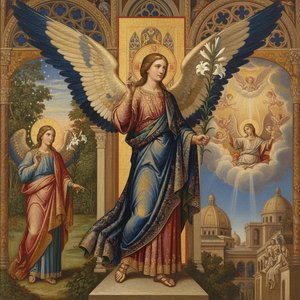
Annunciation by Paris Bordone: A Renaissance Reverie
Paris Bordone’s “Annunciation” stands as a testament to the artistic fervor of the Italian Renaissance, capturing not merely an iconic biblical narrative but also the meticulous craftsmanship and humanist ideals that defined the era. Executed in 1555, this oil on canvas masterpiece—measuring 99 x 134 cm—currently resides within the Pinacoteca Nazionale di Siena, Italy, offering visitors a rare glimpse into the artistic sensibilities of its time.
- Composition & Perspective: Bordone skillfully employs linear perspective to create a dramatic spatial illusion, anchoring the viewer’s gaze within the grandeur of a richly decorated chamber. The arched windows and columns contribute to this sense of solemnity, mirroring architectural trends prevalent during the Renaissance—a deliberate choice reflecting the humanist preoccupation with order and rationality.
- Symbolism & Detail: Beyond its visual splendor, “Annunciation” is laden with symbolic significance. Gabriel’s lily – a traditional emblem of purity – underscores Mary's sanctity, while the open book symbolizes her devotion to prayer and scholarly contemplation. The luminous stained glass window filtering natural light into the scene reinforces this theme of divine grace.
- Artist & Style: Bordone belonged to the Mannerist movement, characterized by its stylized forms and heightened emotional intensity. However, he tempered Mannerist exuberance with a grounding in classical ideals, resulting in a harmonious blend of stylistic elements. His muted earth tones – ochre, umber, Sienna – evoke a contemplative mood, inviting viewers to contemplate the profound spiritual message conveyed.
- Historical Context: Painted during the Counter-Reformation, “Annunciation” reflects the Catholic Church’s renewed emphasis on religious iconography and didactic art. Bordone's work served as inspiration for countless subsequent depictions of the Annunciation, cementing its place within the artistic canon of the period.
More than just a beautiful painting, “Annunciation” embodies the Renaissance spirit—a belief in human reason combined with reverence for divine grace. Its meticulous detail and masterful composition continue to captivate audiences today, reminding us of the enduring power of art to communicate profound spiritual truths.
Technical Considerations
Bordone’s technique demonstrates a mastery of oil painting—a medium favored by Renaissance artists for its ability to achieve luminous colors and subtle tonal gradations. The artist meticulously layered thin glazes upon thicker underpaintings, creating depth and texture that enhance the visual impact of the scene. Careful attention was paid to capturing the nuances of light and shadow, contributing to the overall atmospheric realism.
Exploring Further
- Related Artists: Consider examining the works of Luigi Carboni—another prominent Florentine painter who similarly embraced classical influences within his artistic practice.
- Museum Resources: Visit the Museo Santa Prassede in Rome, Italy, to immerse yourself in a collection showcasing exceptional Renaissance artworks and architectural grandeur.
Reproductions Available
High-quality reproductions of “Annunciation” by Paris Bordone are available on OriginalUniqueArt.com, allowing art enthusiasts to experience the beauty and artistry of this iconic masterpiece firsthand. Own a piece of Renaissance history!
Питання та відповіді
Яка кольорова палітра використана в «Проголошення» роботи Паріс Бордоне?
Кольори твору "Проголошення" утворюють Землисті відтінки палітру. Ця класифікація описує домінантні колірні групи.
До якого художнього напряму та якої епохи належить «Проголошення» роботи Паріс Бордоне?
«Проголошення» роботи Паріс Бордоне належить до течії Renaissance Mannerism, що була створена в епоху — Відродження свого автора.
Чи доступна робота "Проголошення" у вигляді художнього принта?
«Проголошення» доступний як художній принт на бавовняному полотні або архівному канвас-папері. Замовити його у будь-якому обраному вами розмірі можна на сторінці Художній принт.
 Переглянути в інтер'єрі
 Надіслати як листівку
 Поділитися
 Деталі витвору
 Посібник

 Завантажити
 Схожі екземпляри
 Рентгенівське дослідження
 Слайд-шоу
 Питання та відповіді
 Статистика