

 Переглянути в інтер'єрі
 Надіслати як листівку
 Поділитися
 Деталі витвору
 Посібник

 Завантажити
 Схожі екземпляри
 Рентгенівське дослідження
 Слайд-шоу
 Q&A
Q&A Статистика
Фруктівник


 Розгорнути текст
Гікле / Художній принт
Друк جيкле або на полотні музейної якості з оперативним виготовленням та різноманітними варіантами фінішної обробки. ( Замовити картину ручної роботи Перейти до цифрових зображень)




P118B ₴10

P118H ₴10

P118W ₴10

P438Z ₴10

P508JH ₴12

P508YH ₴12

P805H ₴10

P805Z ₴10

P919BZ ₴10

P919G ₴10

P919XJ ₴10

P959ZH ₴10

P968JZ ₴12

W106C ₴8

W218G ₴10

W218JH ₴8

W218Y ₴10

W307PJ ₴10

W316G ₴10

W316PJ ₴8

W316Y ₴10

W398PJ ₴8

W4111J ₴10

W500HY ₴15

W500JH ₴15

W692G ₴12

W849H ₴8

W940BG ₴15

W953PJ ₴8




Обирайте з наших стандартних розмірів, що відповідають оригінальним пропорціям твору мистецтва.

Введіть необхідну ширину та висоту, щоб принт ідеально підійшов до вашої рами або стіни. Принт можна лише обрізати, але не можна зробити більшим за оригінал, тому при зміні пропорцій частина зображення буде втрачена. Перед друком ми надсилаємо вам цифровий макет для затвердження. Зображення на цій сторінці не відображає реальну обрізку — її можна побачити лише на макеті.
Доставка по всьому світу () за 2 тижні замість стандартних 4/5 тижнів. (30 Жовтень)

Безкоштовна експрес-доставка по всьому світу

Високоякісне лляне полотно

Повне страхове покриття доставки

Гарантія повернення митних зборів

Гарантія точного відтворення кольорів

Політика повернення протягом 100 днів (лише у разі виявлення дефектів)

Гарантія повернення 100% коштів

Пропозиція на оптові замовлення
 Скляний варіант доступний лише для розмірів до 110 см

Фруктівник
Гікле / Художній принт
Розмір репродукції
-


Підсумкова вартість
₴ 3586
Фрукт Вендор - Жерме Мейерс: Портрет Устойчивости и Городской Реальности
Жерме Мейерс (1867–1940) занимает особое место в истории американского искусства, особенно в рамках движения школы Ашкан. Рожденный в Петербурге, Вирджиния, его жизнь – это история борьбы и постоянных перемещений из-за отсутствия отца – глубоко сформировала художественное видение художника. Эта кочевая воспитание внушила ему исключительную чувствительность к судьбам тех, кто живет на периферии общества – тему, которая станет центральной в его творческом наследии.
Мейерс начал свой художественный путь с различных занятий – актерская деятельность и живопись декораций научили его рассказыванию историй визуально и драматической композиции. Эти практические навыки оказались особенно полезными при формальном изучении искусства в Кооперативном Институте и последующих восьми годах в Художественной Академии Студентов под руководством Джорджа де Форэста Брюша.
Школа Ашкан: Отказ от Идеализированных Образов
Художники школы Ашкан отвергали идеализированные пейзажи и академические традиции, стремясь запечатлеть грубые текстуры и эмоциональную сложность американских городов – особенно в эпоху Прогресса. Мейерс был одним из самых ярких представителей этого направления, который использовал широкий мазок для передачи движения и динамики, создавая сцену, которая говорит о социальном взаимодействии и экономической нужде.
Композиция картины сосредоточена вокруг женщины рядом с фруктовым телегой, заполненным яблоками – это сознательный выбор художника, отражающий его интерес к иммигрантским сообществам и их повседневной борьбе. Окружающие ее фигуры заняты разговором и торговлей, создавая полотно, которое открывает окно в мир социальной жизни и экономической реальности.
Техника и Символизм Черно-Белой Живописи
"Фрукт Вендор", написанный около 1920 года, является ярким примером художественной техники школы Ашкан. Использование монохромной палитры – характерная черта художников этого направления – подчеркивает форму и текстуру поверхности холста, отражая суровость городской жизни.
Мейерс использовал широкий мазок для передачи движения и динамики, создавая сцену, которая говорит о социальном взаимодействии и экономической нужде. Главный учитель Мейерса был Джордж де Форэст Брюш, который оказал значительное влияние на развитие школы Ашкан.
Исторический Контекст и Эмоциональное Воздействие
Работа Мейерса была создана в эпоху глубоких социальных перемен – после Первой мировой войны и перед началом эпохи реформ. Художник стремился запечатлеть реальность жизни простых людей, передавая их опыт и чувства с искренней сочувствием.
"Фрукт Вендор" остается одним из самых важных произведений искусства школы Ашкан благодаря своей способности выражать сложные эмоции и отражать дух устойчивости – качества, которые были особенно актуальны в эпоху перемен. Этот черно-белый портрет является свидетельством художественного гения Мейерса и его влияния на развитие американской живописи начала XX века.
Питання та відповіді
Чому статус авторського права на "Фруктівник" саме такий?
Статус авторського права на твір "Фруктівник" — є суспільним надбанням — термін дії авторського права закінчився — визначається датою смерті митця у 1940.
Чи має "Фруктівник" виражений світлотіньовий контраст?
У творі «Фруктівник» роботи Джером Майерс спостерігається Спокійний контраст між світлими та темними ділянками.
Де рекомендується розміщувати роботу у форматі Портретна орієнтація під назвою "Фруктівник"?
Завдяки своїй формі Портретна орієнтація, репродукція «Фруктівник» чудово підійде для Вітальня.
Біографія митця
A Life Etched in Urban Reality
Jerome Myers, born in Petersburg, Virginia, in 1867, was far more than simply a painter; he was a keen observer and chronicler of the American urban experience at a pivotal moment in its history. His life story, shaped by early hardship and constant relocation due to his father’s absences, profoundly influenced his artistic vision. This itinerant upbringing instilled within him an acute sensitivity to the struggles and resilience of those living on the margins – a theme that would become a cornerstone of his work. His brother, Gustavus Myers, forged a distinguished path as a journalist and activist, further cementing a family commitment to social observation and reform. Before dedicating himself fully to art, Jerome experimented with acting and scene painting, experiences which undoubtedly honed his understanding of visual storytelling and the dramatic power of composition. This practical foundation proved invaluable when he formally pursued artistic training at Cooper Union for a year, followed by eight years of intensive study at the Art Students League under the tutelage of George de Forest Brush, the renowned academic painter known for his idealized depictions of Native Americans. However, it wasn’t the established art centers of Europe that truly captured Myers' imagination; rather, it was the teeming streets and vibrant life of New York City’s Lower East Side – a melting pot of cultures and experiences – that became his enduring muse. A brief but formative visit to Paris in 1896 paled in comparison to the raw energy and compelling narratives unfolding within his own city.The Ashcan School and a Distinct Artistic Voice
Myers quickly emerged as a key figure associated with the Ashcan School, a group of artists who bravely shifted their focus away from traditional academic subjects and towards the gritty realities of urban life. This wasn’t merely imitation; it was a deliberate choice to interpret the world through a deeply empathetic lens. Myers meticulously documented the everyday lives of new immigrants – not as objects of pity or sociological study, but as individuals possessing inherent dignity and beauty. Over a thousand drawings, paintings, etchings, and watercolors bear testament to his dedication, capturing their routines, struggles, and moments of joy amidst the often-challenging conditions of tenement life. He famously articulated his artistic philosophy by stating that where others saw ugliness and degradation, he perceived “poetry and beauty.” This wasn’t a superficial romanticization; it was a profound belief in the inherent worth of every human experience, regardless of circumstance. His work distinguished itself within the Ashcan School not for its shock value – though it certainly challenged conventional artistic norms – but for its quiet compassion and unwavering focus on the humanity of his subjects. He wasn’t interested in grand narratives or sweeping statements; he was captivated by the small moments that revealed the essence of a life lived fully, even amidst hardship. Myers' early work, such as “Backyard” (1888), already demonstrated this raw, unidealized view of New York City, anticipating the productions of the Ashcan School and establishing him as a pioneer in capturing the authentic spirit of the era.A Catalyst for Modernism: The 1913 Armory Show
Beyond his artistic contributions, Jerome Myers played a crucial role in shaping the trajectory of American art through his involvement in organizing the groundbreaking 1913 Armory Show. This exhibition served as a vital bridge between European modern movements – Cubism, Fauvism, and Expressionism – and an American public largely unfamiliar with these radical departures from tradition. Myers’ commitment to showcasing these new artistic voices demonstrated a willingness to challenge established norms and embrace innovation. While his own work didn't fully align with the abstract tendencies of some of the European artists on display, his participation signaled a broader openness to experimentation and a rejection of conservative aesthetic values. The Armory Show irrevocably altered the landscape of American art, paving the way for future generations of modernist painters and sculptors. His painting “Backyard” (1888) is considered one of the earliest examples of Ashcan School subject matter in America, solidifying his place within this influential movement and foreshadowing the artistic revolution that was about to unfold.Capturing the Soul of New York: Key Themes and Techniques
Myers’ art is characterized by a remarkable ability to capture the essence of urban life – particularly the experiences of immigrants – with both honesty and empathy. He frequently depicted scenes of street celebrations, bustling markets, crowded tenements, and the quiet moments of everyday existence in New York City. His technique was often loose and expressive, utilizing bold brushstrokes and vibrant colors to convey a sense of immediacy and energy. He wasn’t afraid to depict poverty and hardship, but he always did so with respect for his subjects, avoiding sentimentality or exploitation. Myers' use of light and shadow created a dramatic effect, highlighting the contrasts between wealth and poverty, hope and despair. His compositions were often dynamic and asymmetrical, reflecting the chaotic energy of the city streets. He skillfully employed techniques such as *alla prima* painting – working directly on the canvas without underdrawing – to achieve a sense of spontaneity and immediacy in his work.Legacy and Lasting Influence
Throughout his career, Jerome Myers continued to explore themes of urban life, capturing scenes of street celebrations, immigrant communities, and fleeting moments of everyday existence in New York City. He received early support from art dealer William Macbeth, which helped launch his career and secure exhibitions that solidified his reputation. However, as the city rapidly changed in later years, he expressed a growing concern about the erosion of human connection and warmth, lamenting the decline of open-air social interaction and observing how modern life seemed to isolate individuals. This sense of loss is subtly woven into his later works, adding another layer of complexity to his already nuanced portrayals of urban existence. Jerome Myers’ legacy rests on his unwavering commitment to portraying the lives of ordinary people with dignity and compassion. He didn't seek to sensationalize or exploit; he sought to understand and represent their experiences with honesty and empathy. His work continues to resonate today, reminding us of the importance of seeing – and valuing – the humanity in everyone, regardless of their background or circumstances. He remains a pivotal figure in American realism and the Ashcan School, an artist whose vision continues to inspire those who seek to capture the truth and beauty of the human condition.
Джером Майерс
1867 - 1940 , США
Короткі факти
- Artistic Movement Or Style: Ashcan School, Реалізм
- Artists Or Movements Influenced By This Artist: ['Impressionism']
- Artists Who Influenced This Artist: ['George de Forest Brush']
- Date Of Birth: 1867
- Date Of Death: 1940
- Full Name: Jerome Myers
- Nationality: Американський
- Notable Artworks:
- Recreation Pier
- Street Shrine
- Italian Procession
- Place Of Birth: Петербург, США
Пов'язані статті
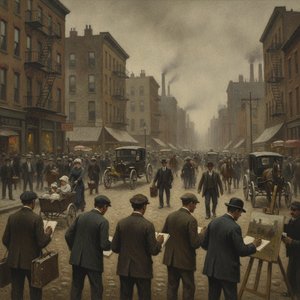
The Ashcan School: Capturing the Raw, Unfiltered Soul of Urban Life through American Realism
Discover the raw beauty of the Ashcan School. Explore how masters like Bellows and Henri captured the gritty, vibrant soul of early 20th-century New York through profound American Realism and evocative urban landscapes.

Топ-10 шедеврів американського реалізму: мистецтво правдивого відображення життя | OriginalUniqueArt
Відкрийте для себе 10 шедеврів американського реалізму! Дослідіть історії Ендрю Уайєта, Хопера та інших видатних художників. Купіть репродукції картин преміум-якості для вашого дому на OriginalUniqueArt.com.
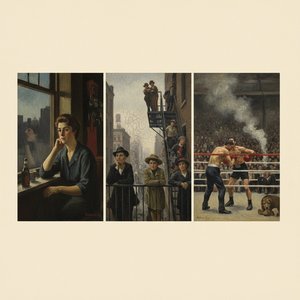
American Realism: Social Commentary & Artistic Representation in Early 20th-Century Painting
Explore the powerful social commentary & artistic representation of American Realism. Discover key artists like Bellows & Sloan, and understand the movement's lasting impact on 20th-century art history.
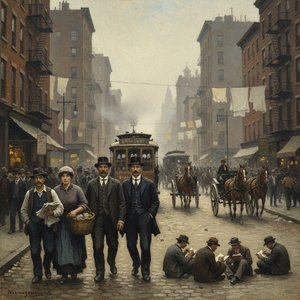
The Ashcan School: Realism, Urban Life & the Democratization of American Art
Explore the revolutionary Ashcan School! Discover how artists like Henri & Sloan challenged tradition with gritty realism, capturing urban life in early 20th-century America. Learn about their impact on American art history.

The Unvarnished Truth: A Cultural Journey Through the Soul of American Realism
Explore the profound beauty of American Realism. From the Ashcan School's urban grit to intimate portraits, discover how artists captured the authentic soul of a nation through unvarnished truth and masterful observation.
