Italian Renaissance · 1550
Pietà (Джорджо Джуліо Кловіо, 1550)
Джорджо Джуліо Кловіо (1498–1578) створив Pietà. Дата створення — 1550. Він належить до напряму Italian Renaissance. Виконано в Manuscript. Екземпляр зберігається в Галерея Уффіці у Флоренція, Італія. Розмір: 368 × 257 cm
- 1550
- Manuscript
- 368 × 257 cm
- Галерея Уффіці, Флоренція

 Переглянути в інтер'єрі

 Картина олією ручної роботи
 Надіслати як листівку
 Поділитися
 Інформаційна картка


 Завантажити
 Схожі екземпляри
 Рентгенівське дослідження
 Слайд-шоу
 Питання та відповіді

 Статистика
Pietà коротко
- Назва
- Pietà
- Художник
- Джорджо Джуліо Кловіо (1498–1578)
- Рік народження митця
- Грижани-Белград, Хорватія
- Дата
- 1550
- Матеріал
- Manuscript
- Розміри
- 368 × 257 cm
- Де подивитися
- Галерея Уффіці, Флоренція, Італія
- Період
- Renaissance
- Сюжет
- virgin mary, jesus christ, religious iconography, renaissance art, classical composition, emotional depth
Що зображено на Pietà?
A Testament to Sorrow and Divine Grace
In the quiet, hallowed corridors of art history, few images resonate with the profound emotional gravity found in Giulio Clovio’s Pietà. Created around 1550, this masterpiece serves as a breathtaking bridge between the fading echoes of the Gothic tradition and the luminous dawn of the High Renaissance. The scene captures the quintessential moment of Christian sorrow: the Virgin Mary cradling the lifeless body of Jesus Christ following his crucifixion. It is not merely a depiction of death, but a profound meditation on compassion—the very meaning of the word Pietà. Through Clovio’s masterful hand, the heavy weight of mortality is balanced by an ethereal sense of divine grace, inviting the viewer into a space of deep, contemplative mourning.
The composition is a masterclass in Renaissance balance and narrative depth. At the heart of the work, Mary sits as a pillar of strength and grief, her blue cloak—a color traditionally symbolizing her heavenly connection—draped with a weight that mirrors her sorrow. The figure of Christ, depicted with a serene, almost peaceful countenance despite his recent agony, rests heavily in her lap, creating a poignant focal point that draws the eye through its sheer vulnerability. Surrounding this central tragedy, celestial beings and saints emerge from the shadows; angels with active, reaching gestures and observers in prayerful poses create a sense of a cosmic event unfolding. This layering of figures ensures that the viewer’s gaze wanders through a complex web of devotion, from the intimate touch of a mother to the collective mourning of the heavens.
Technique and the Radiance of Light
What truly distinguishes Clovio’s work is his unparalleled ability to manipulate light and color, a skill honed during his time as one of history's greatest manuscript illuminators. Though this piece possesses the scale and grandeur of a monumental painting, it retains the meticulous, jewel-like precision of a miniature. Clovio employed a sophisticated technique of layering translucent glazes over gold leaf, a method that allows light to penetrate the surface and reflect back, creating an inner luminosity that seems to emanate from within the figures themselves. The use of ultramarine blue, derived from the precious stone lapis lazuli, provides a depth of color that is both regal and somber, anchoring the composition in a palette of earth tones and celestial blues.
The interplay of light and shadow—chiaroscuro—is used here not just for anatomical realism, but to direct the emotional narrative. Light strikes Mary’s face from the side, carving her features out of the darkness and highlighting the subtle lines of grief and devotion. This dramatic contrast creates a sculptural quality, giving the figures a tangible presence that commands the room. For the discerning collector or interior designer, such a work offers more than mere decoration; it provides a focal point of immense character. A high-quality reproduction of this Pietà brings with it an atmosphere of timelessness and intellectual depth, making it an exquisite addition to a curated space that values historical resonance and the profound beauty of the human spirit.
У якому музеї зберігається Pietà?
Галерея Уффіці
Флоренція, Італія
Історія та витоки Галереї Уффіці Галерея Уффіці розташована у Флоренції, Італія. Цей визначний заклад бере свій початок у 1560 році — у епоху, коли будівля була спочатку задумана Джорджо Вазарі для флорентійських магістратів. Будівництво споруди тривало між 1560 та 1580 роками.


Зображення високої роздільної здатності Pietà

Суспільне надбання: художник помер у 1578 році.
Інші розміри, кадри та цитування →Джорджо Джуліо Кловіо, Pietà (1550), Галерея Уффіці. Суспільне надбання
Відповіді на запитання про Pietà
У якому музеї зберігається оригінал «Pietà»?
«Pietà» роботи Джорджо Джуліо Кловіо експонується в Галерея Уффіці, Флоренція, Італія. У описі музею йдеться про оригінальний твір, а не про репродукції.
У якому році було створено «Pietà» роботи Джорджо Джуліо Кловіо?
«Pietà» датована 1550 роком. Ця дата дозволяє визначити місце твору в творчому шляху Джорджо Джуліо Кловіо та відповідну епоху.
Яка техніка виконання у «Pietà» роботи Джорджо Джуліо Кловіо?
Техніка виконання «Pietà» роботи Джорджо Джуліо Кловіо — Manuscript. Репродукції мають на меті відтворити вигляд цієї техніки.
Які розміри оригіналу "Pietà"?
Розмір оригіналу «Pietà» роботи Джорджо Джуліо Кловіо становить 368 x 257 cm.
Що зображено на творі "Pietà"?
«Pietà» роботи Джорджо Джуліо Кловіо зображує: virgin mary, jesus christ, religious iconography, renaissance art, classical composition, emotional depth, medieval influence.
Чи не захищений твір "Pietà" авторським правом?
Статус авторського права для «Pietà» роботи Джорджо Джуліо Кловіо: цей твір є є суспільним надбанням — термін дії авторського права закінчився. Це визначає, чи можна вільно створювати репродукції зображення.
Якому художнику приписують роботу "Pietà"?
Автором твору «Pietà» є Джорджо Джуліо Кловіо. Робота внесена до каталогу під іменем Джорджо Джуліо Кловіо.
До якого художнього напряму належить «Pietà» роботи Джорджо Джуліо Кловіо?
Мистецький напрям, до якого належить «Pietà» роботи Джорджо Джуліо Кловіо, — це Italian Renaissance. Така класифікація дозволяє розмістити цей твір у контексті суміжних митців та творів мистецтва.
Який етап творчого розвитку Джорджо Джуліо Кловіо представляє твір "Pietà"?
«Pietà» належить до Mature Period Джорджо Джуліо Кловіо.
Про художника Джорджо Джуліо Кловіо

1498–1578, Хорватія
Джорджо Джуліо Кловіо
Хорватська зірка італійського Відродження Джуліо Кловіо, народився як Юрай Юліє Klović у 1498 році серед хвилястих пагорбів Гріжане, Хорватія, постає як ключова постать, що поєднала пізньоготську традицію манускриптної ілюмінації з розквітом Високого Відродження. Хоча його коріння сягало Королівства Хорватія, саме в Італії художній геній Кловіо справді розквітнув, принісши йому славу, безперечно, найвидатнішого ілюмінатора своєї епохи та останнього значного майстра ліній, що тягнулася століттями. Його історія — це розповідь про надзвичайний талант, мудре покровительство та непохитну відданість перетворенню мініатюри на захопливу, витончену форму мистецтва. Перші роки життя Кловіо залишаються оповитими певною таємничістю.
Про Джорджо Джуліо Кловіо Видатні твори Джорджо Джуліо Кловіо
Також за участю Джорджо Джуліо Кловіо
 The Rape of Ganymede
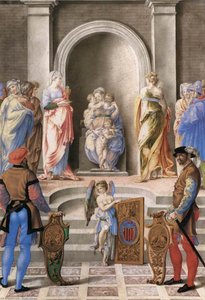 The Three Theological Virtues
 Holy Family with Santa Isabel and San Juanito1556
 Pages from the Farnese Hours1538
Есе до твору Pietà
 Masterpieces of Giotto: The Top 25 Essential Artworks of the Renaissance PioneerExplore Giotto's greatest masterpieces and his role in the Renaissance. Discover the full collection online at OriginalUniqueArt.com.
 Mastering Color and Light: The Timeless Brilliance of Titian's Venetian MasterpiecesExplore the luminous mastery of Titian. Discover how the Venetian master revolutionized color and light through breathtaking Renaissance te…
 Michelangelo Buonarroti: A Renaissance Titan – Life, Works & Enduring LegacyExplore the life, works & enduring legacy of Michelangelo Buonarroti, a Renaissance titan. Discover his iconic sculptures, frescoes, and ar…