Baroque · 1611
Still Life with Nuts, Candy and Flowers (Клара Петерс, 1611)
Клара Петерс (1587–1657) створив Still Life with Nuts, Candy and Flowers. Дата створення — 1611. Він належить до напряму Baroque. Виконано в Oil On Panel. Екземпляр зберігається в Музей Прадо у Мадрид, Іспанія. Розмір: 52 × 73 cm
- 1611
- Oil On Panel
- 52 × 73 cm
- Музей Прадо, Мадрид

 Переглянути в інтер'єрі

 Картина олією ручної роботи
 Надіслати як листівку
 Поділитися
 Інформаційна картка


 Завантажити
 Схожі екземпляри
 Рентгенівське дослідження
 Слайд-шоу
 Питання та відповіді

 Статистика
Still Life with Nuts, Candy and Flowers коротко
- Назва
- Still Life with Nuts, Candy and Flowers
- Художник
- Клара Петерс (1587–1657)
- Рік народження митця
- Антверпен, Бельгія
- Дата
- 1611
- Матеріал
- Oil On Panel
- Розміри
- 52 × 73 cm
- Де подивитися
- Музей Прадо, Мадрид, Іспанія
- Рух
- Baroque
- Період
- Early Modern
- Сюжет
- food, flowers, fruit, bowl, candlelight, luxury
Що зображено на Still Life with Nuts, Candy and Flowers?
A Sensory Feast: The Opulence of Clara Peeters
In the quiet intimacy of a seventeenth-century tabletop, Clara Peeters invites us into a world where the mundane is elevated to the magnificent. Still Life with Nuts, Candy and Flowers is not merely a depiction of food; it is a masterclass in sensory storytelling. As one gazes upon this 1611 masterpiece, the eye is immediately drawn to the lush, tactile abundance of the arrangement. Polished bowls overflow with an assortment of nuts, while delicate candies and vibrant fruits—apples and oranges—rest alongside elegant glassware. There is a profound sense of weight and texture here; one can almost feel the rough shell of a walnut against the smooth, cool surface of a silver platter or the delicate, ephemeral softness of a flower petal. Peeters captures a moment of suspended animation, where the sweetness of life is presented in all its colorful, decadent glory.
The painting serves as a breathtaking window into the Baroque era, a period defined by its dramatic flair and intense realism. Moving away from the rigid, geometric constraints of earlier Mannerist traditions, Peeters embraces an asymmetrical composition that feels organic and alive. This deliberate lack of strict symmetry creates a dynamic energy, guiding the viewer’s gaze in a wandering, exploratory path across the table. The interplay of light and shadow—the hallmark of the Baroque style—is utilized with surgical precision. Light dances across the sheen of polished metal and the translucent skin of fruit, while deep, velvety shadows provide a sense of depth and mystery, grounding the vibrant colors in a space that feels both tangible and atmospheric.
Technique and the Art of Observation
To behold this work is to witness the extraordinary technical prowess of a true pioneer. Executed with oil on panel, Peeters employed sophisticated glazing techniques to build layers of luminous color, allowing light to penetrate the paint and reflect from within, much like the natural glow of ripe fruit. Her ability to render different materials—the glint of a wine glass, the matte surface of a nut, the organic texture of a potted plant—demonstrates an obsessive devotion to verisimilitude. Every brushstroke is subservient to the goal of absolute realism, making this piece a triumph of observational skill. For the collector or interior designer, such a work offers more than just decoration; it provides a focal point of profound complexity that rewards prolonged contemplation.
Beyond its physical beauty, the painting whispers of deeper, more contemplative themes. In the tradition of the Dutch ontbijtjes (breakfast pieces), such arrangements often functioned as subtle meditations on the fleeting nature of pleasure and the passage of time. The abundance of the feast stands in a delicate balance with the inherent fragility of the flowers and the perishable nature of the food. This tension between abundance and decay creates an emotional resonance that transcends the centuries, offering a poignant reminder to cherish the sensory richness of the present moment. It is this marriage of exquisite craftsmanship and soulful depth that makes Peeters’ vision an enduring inspiration for those seeking to bring a sense of history, elegance, and narrative weight into a contemporary space.
У якому музеї зберігається Still Life with Nuts, Candy and Flowers?
Музей Прадо
Мадрид, Іспанія
Історія Музею Прадо Витоки Музею Прадо нерозривно пов'язані з Королівською колекцією Іспанії, історія якої бере свій початок ще у XVIII столітті. Те, що починалося як амбітне бачення створення кабінету природничих наук за правління Фердинанда VII, з часом перетворилося на справжнє святилище живопису та скульптури. Ця трансформація перетворила науковий проєкт на сокровищницю найважливіших скарбів іспанської корони.


Зображення високої роздільної здатності Still Life with Nuts, Candy and Flowers

Суспільне надбання: художник помер у 1657 році.
Інші розміри, кадри та цитування →Клара Петерс, Still Life with Nuts, Candy and Flowers (1611).
Клара Петерс (1587–1657), Still Life with Nuts, Candy and Flowers, 1611, oil on panel, Музей Прадо, Мадрид, Іспанія. Суспільне надбання Зображення: OriginalUniqueArt.com.
Відповіді на запитання про Still Life with Nuts, Candy and Flowers
У якому музеї зберігається оригінал «Still Life with Nuts, Candy and Flowers»?
«Still Life with Nuts, Candy and Flowers» роботи Клара Петерс експонується в Музей Прадо, Мадрид, Іспанія. У описі музею йдеться про оригінальний твір, а не про репродукції.
У якому році було створено "Still Life with Nuts, Candy and Flowers"?
«Still Life with Nuts, Candy and Flowers» роботи Клара Петерс було створено у 1611 році.
Яка техніка виконання у «Still Life with Nuts, Candy and Flowers» роботи Клара Петерс?
Техніка виконання «Still Life with Nuts, Candy and Flowers» роботи Клара Петерс — Oil On Panel. Репродукції мають на меті відтворити вигляд цієї техніки.
Які реальні розміри має «Still Life with Nuts, Candy and Flowers» роботи Клара Петерс?
«Still Life with Nuts, Candy and Flowers» має розмір 52 x 73 cm в оригіналі. Оригінальні розміри є корисним орієнтиром під час вибору розміру репродукції.
Що зображено на творі «Still Life with Nuts, Candy and Flowers» роботи Клара Петерс?
Тематика, представлена у «Still Life with Nuts, Candy and Flowers» роботи Клара Петерс, включає food, flowers, fruit, bowl, candlelight, luxury, texture, composition. Разом вони підсумовують зміст твору.
Чи не захищений твір "Still Life with Nuts, Candy and Flowers" авторським правом?
Статус авторського права для «Still Life with Nuts, Candy and Flowers» роботи Клара Петерс: цей твір є є суспільним надбанням — термін дії авторського права закінчився. Це визначає, чи можна вільно створювати репродукції зображення.
Якому художнику приписують роботу "Still Life with Nuts, Candy and Flowers"?
Автором твору «Still Life with Nuts, Candy and Flowers» є Клара Петерс. Робота внесена до каталогу під іменем Клара Петерс.
До якого стилю належить "Still Life with Nuts, Candy and Flowers"?
Мистецький напрям, до якого належить «Still Life with Nuts, Candy and Flowers» роботи Клара Петерс, — це Baroque. Така класифікація дозволяє розмістити цей твір у контексті суміжних митців та творів мистецтва.
Яке місце посідає «Still Life with Nuts, Candy and Flowers» у творчому шляху Клара Петерс?
«Still Life with Nuts, Candy and Flowers» належить до Mature Period Клара Петерс.
Про художника Клара Петерс

1587–1657, Бельгія
Клара Петерс
Клара Пітерс: Першовідкрива голландського натюрморту Клара Пітерс (1594–після 1657) постає як унікальна постать у фламандському мистецтві сімнадцятого століття — одна з найперших визнаних художниць, що творила в епоху розквіту Голландського золотого віку. Попри соціальні обмеження, які суттєво обмежували доступ жінок до мистецького навчання та членства в цехах, Пітерс викарбувала для себе вражаючу кар’єру. Вона залишила по собі творче надбання, що характеризується ретельною деталізацією, інноваційними композиційними стратегіями та захопленням закарбовуванням текстур і нюансів повсякденного життя — особливо їжі. Її спадок продовжує надихати дослідників та митців, які намагаються розгадати таємниці її ідентичності, навчання та загадкової природи її творчого виходу.
Також за участю Клара Петерс
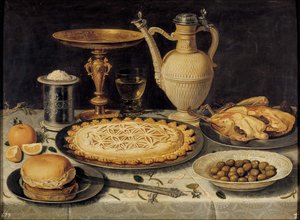 Table with Orange, Olives and Pie1611
 Still Life with Cheeses, Artichoke, and Cherries1625
 Madonna And Child Within A Floral Wreath1621
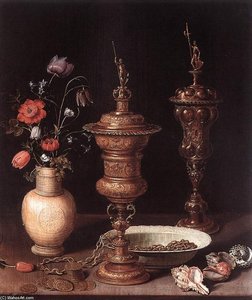 Still-Life with Flowers and Goblets1612

Есе до твору Still Life with Nuts, Candy and Flowers
 Luminous Vessels: The Transcendent Art of the Bottle in Impressionist Still LifeExplore how Impressionist masters captured light through glass and bottles. Discover the magic of light and texture today.
 18th century Dutch paintersJan van Huysum completed Flowers and Fruit in 1723. Compare his botanical precision with the maritime works of Willem van de Velde the Youn…
 Master of Abundance: The Top 25 Essential Artworks by Frans SnydersBorn in 1579, Snyders trained under Pieter Brueghel the Younger. Count the twenty-five works that define his Baroque mastery of texture and…