Symbolist Painting · 1879
Spring Evening (Арнольд Бёклін, 1879)
Арнольд Бёклін (1827–1901) створив Spring Evening. Дата створення — 1879. Він належить до напряму Symbolist Painting. Виконано в Oil On Panel. Екземпляр зберігається в Музей мистецтв Будапешта у Будапешт, Угорщина. Розмір: 67 × 129 cm
- 1879
- Oil On Panel
- 67 × 129 cm
- Музей мистецтв Будапешта

 Переглянути в інтер'єрі

 Картина олією ручної роботи
 Надіслати як листівку
 Поділитися
 Інформаційна картка


 Завантажити
 Схожі екземпляри
 Рентгенівське дослідження
 Слайд-шоу
 Питання та відповіді

 Статистика
Spring Evening коротко
- Назва
- Spring Evening
- Художник
- Арнольд Бёклін (1827–1901)
- Рік народження митця
- Базель, Швейцарія
- Дата
- 1879
- Матеріал
- Oil On Panel
- Розміри
- 67 × 129 cm
- Де подивитися
- Музей мистецтв Будапешта, Будапешт, Угорщина
- Сюжет
- mythology, nymphs, pan, forest, evening, landscape
Що зображено на Spring Evening?
The Ethereal Embrace of Spring Evening
Arnold Böcklin’s “Spring Evening,” painted in 1879, isn't merely a depiction of a woodland scene; it’s an immersion into a realm of melancholic beauty and profound symbolism. Created during his time in Florence – a city that profoundly shaped his artistic vision – the painting captures a fleeting moment of enchantment, steeped in the atmosphere of late Romanticism and foreshadowing the rise of Symbolism. The canvas breathes with a quiet intensity, dominated by muted greens, blues, and browns, creating an almost dreamlike quality that immediately draws the viewer into its hushed world.
At the heart of the composition stands a woman, her posture suggesting both contemplation and vulnerability. Her hand gently resting on her head is a gesture simultaneously of yielding and quiet strength – she’s not passively observing but actively engaged with the scene unfolding before her. Beside her sits a man, seemingly lost in thought as he peruses a book, his presence offering a grounding element to the ethereal atmosphere. A bear, rendered with surprising tenderness, interacts playfully with both figures, blurring the lines between human and animal, nature and civilization. This carefully orchestrated tableau speaks of harmony, connection, and the delicate balance of the natural world.
A Symphony of Symbolism
Böcklin’s work is deeply rooted in mythology and folklore, drawing heavily on ancient Greek and Roman traditions. The central figure, often interpreted as Pan – the god of nature, shepherds, and wild music – plays his pipes, summoning a chorus of unseen nymphs from the surrounding forest. These dryads, with their flowing hair and graceful movements, represent the spirit of the woods, embodying both beauty and danger. The bear itself is a potent symbol, frequently associated with strength, wisdom, and primal instincts—a reminder of humanity’s connection to the earth.
The painting's muted palette contributes significantly to its symbolic weight. The cool blues and greens evoke a sense of melancholy and introspection, while the browns ground the scene in the tangible reality of the forest floor. The lighting is soft and diffused, creating an atmosphere of twilight—a liminal space between day and night, representing transition, mystery, and perhaps even mortality. Böcklin masterfully uses color not to simply depict a landscape but to convey complex emotions and ideas.
Technique and Artistic Influences
“Spring Evening” exemplifies Böcklin’s distinctive artistic style, characterized by meticulous detail, rich textures, and an almost obsessive attention to the natural world. He employed a technique of layering thin glazes of oil paint, building up color gradually to achieve remarkable depth and luminosity. The brushwork is subtle yet expressive, conveying both the smoothness of the forest floor and the intricate details of the foliage.
Böcklin’s artistic journey was profoundly influenced by his time in Düsseldorf, where he studied under Schirmer and became associated with the Düsseldorf School of Painting. However, it was in Florence that he truly developed his unique Symbolist vision, drawing inspiration from the city's rich cultural heritage and its connection to antiquity. The painting also reflects the influence of Romanticism, particularly the emphasis on emotion, imagination, and the sublime beauty of nature—themes central to the movement.
A Timeless Resonance
“Spring Evening” continues to resonate with viewers today because it taps into universal themes of longing, connection, and the search for meaning. Its evocative atmosphere and symbolic richness invite contemplation and offer a glimpse into the artist’s deeply personal vision. The painting's enduring appeal lies in its ability to transport us to another time and place—a world where myth and reality intertwine, and where the beauty of nature is inextricably linked to the mysteries of the human soul.
У якому музеї зберігається Spring Evening?
Музей мистецтв Будапешта
Будапешт, Угорщина
Origins and History of Szépművészeti Múzeum The establishment of the Szépművészeti Múzeum was formalized by the Millennium Law of 1896. This legislative decision sought to create a dedicated institution for fine arts within Budapest, Hungary. The chosen site for this purpose was the location previously occupied by the Rotunda pavilion, a structure built to display the Feszty-körkép.


Зображення високої роздільної здатності Spring Evening

Суспільне надбання: художник помер у 1901 році.
Інші розміри, кадри та цитування →Арнольд Бёклін, Spring Evening (1879), Музей мистецтв Будапешта. Суспільне надбання
Відповіді на запитання про Spring Evening
Де можна побачити оригінал «Spring Evening» роботи Арнольд Бёклін?
Оригінал «Spring Evening» роботи Арнольд Бёклін зберігається в Музей мистецтв Будапешта, Будапешт, Угорщина. Репродукція дозволяє прикрасити цим твором ваш дім.
У якому році було створено «Spring Evening» роботи Арнольд Бёклін?
«Spring Evening» датована 1879 роком. Ця дата дозволяє визначити місце твору в творчому шляху Арнольд Бёклін та відповідну епоху.
Яка техніка використана у творі "Spring Evening"?
«Spring Evening» виконано в техніці Oil On Panel.
Які розміри оригіналу "Spring Evening"?
Розмір оригіналу «Spring Evening» роботи Арнольд Бёклін становить 67 x 129 cm.
Що зображено на творі «Spring Evening» роботи Арнольд Бёклін?
Сюжетами твору "Spring Evening" є mythology, nymphs, pan, forest, evening, landscape, symbolism, böcklin.
Чи можна вільно відтворювати зображення «Spring Evening» роботи Арнольд Бёклін?
Статус авторського права для «Spring Evening» роботи Арнольд Бёклін: цей твір є є суспільним надбанням — термін дії авторського права закінчився. Це визначає, чи можна вільно створювати репродукції зображення.
Якому художнику приписують роботу "Spring Evening"?
«Spring Evening» приписують Арнольд Бёклін.
До якого художнього напряму належить «Spring Evening» роботи Арнольд Бёклін?
Мистецький напрям, до якого належить «Spring Evening» роботи Арнольд Бёклін, — це Symbolist Painting. Така класифікація дозволяє розмістити цей твір у контексті суміжних митців та творів мистецтва.
Яке місце посідає «Spring Evening» у творчому шляху Арнольд Бёклін?
У межах творчого шляху Арнольд Бёклін твір "Spring Evening" належить до періоду Late Period. Ця фаза дозволяє порівняти його з іншими роботами митця.
Про художника Арнольд Бёклін
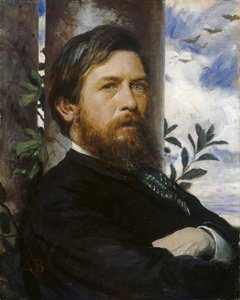
1827–1901, Швейцарія
Арнольд Бёклін
Тінь острова Базель, Швейцарія, стає відправною точкою для життя, визначеного напругою між матеріальним і примарним. Народившись 16 жовтня 1827 року в родині Крістіана Фредеріка Бёкліна та Урсули Ліппе, цей юнак згодом вийде за межі торгової справи свого батька, присвятивши себе суворим залам Дюссельдорфської академії. Під керівництвом Шірмера він почав вбирати мову пейзажу — навичку, яка згодом допоможе йому картографувати географію людської душі. Він не просто малював краєвиди; він створював світи, де стикаються класика та макабризм.
Також за участю Арнольд Бёклін
 Острів мертвих (Перша версія)1880
 Автопортрет зі смертю, що грає на скрипці
 Війна1896
 The Isle of the Dead (Version 2)1880

Есе до твору Spring Evening
 French artworks of the 1880sFrench Impressionist masterpieces by Claude Monet, Pierre-Auguste Renoir, and Georges Seurat. Find museum-quality reproductions on Original…
 Symphony of Sunlight: The Luminous Legacy of Pine Tree Landscapes in Art HistoryExplore the luminous history of pine landscapes through Sorolla and Shishkin. Discover the magic of forest art today.
 En Plein Air Serenity: Exploring the Luminous Beauty of Impressionist Garden ArtExplore the luminous history of Impressionist garden art through Monet and Van Gogh. Discover the magic of plein air painting today.