

 Переглянути в інтер'єрі
 Надіслати як листівку
 Поділитися
 Деталі витвору
 Посібник

 Завантажити
 Схожі екземпляри
 Рентгенівське дослідження
 Слайд-шоу
 Q&A
Q&A Статистика
Етажерь


 Розгорнути текст
Гікле / Художній принт
Друк جيкле або на полотні музейної якості з оперативним виготовленням та різноманітними варіантами фінішної обробки. ( Замовити картину ручної роботи Перейти до цифрових зображень)




P118B ₴10

P118H ₴10

P118W ₴10

P438Z ₴10

P508JH ₴12

P508YH ₴12

P805H ₴10

P805Z ₴10

P919BZ ₴10

P919G ₴10

P919XJ ₴10

P959ZH ₴10

P968JZ ₴12

W106C ₴8

W218G ₴10

W218JH ₴8

W218Y ₴10

W307PJ ₴10

W316G ₴10

W316PJ ₴8

W316Y ₴10

W398PJ ₴8

W4111J ₴10

W500HY ₴15

W500JH ₴15

W692G ₴12

W849H ₴8

W940BG ₴15

W953PJ ₴8




Обирайте з наших стандартних розмірів, що відповідають оригінальним пропорціям твору мистецтва.

Введіть необхідну ширину та висоту, щоб принт ідеально підійшов до вашої рами або стіни. Принт можна лише обрізати, але не можна зробити більшим за оригінал, тому при зміні пропорцій частина зображення буде втрачена. Перед друком ми надсилаємо вам цифровий макет для затвердження. Зображення на цій сторінці не відображає реальну обрізку — її можна побачити лише на макеті.
Доставка по всьому світу () за 2 тижні замість стандартних 4/5 тижнів. (28 Жовтень)

Безкоштовна експрес-доставка по всьому світу

Високоякісне лляне полотно

Повне страхове покриття доставки

Гарантія повернення митних зборів

Гарантія точного відтворення кольорів

Політика повернення протягом 100 днів (лише у разі виявлення дефектів)

Гарантія повернення 100% коштів

Пропозиція на оптові замовлення
 Скляний варіант доступний лише для розмірів до 110 см

Етажерь
Гікле / Художній принт
Розмір репродукції
-


Підсумкова вартість
₴ 3589
Елегантність Рококо та Вікторіанський Стиль: Розповідь про Етажерю Александра Рукса
Етажер Александр Рукса – це більше ніж просто предмет інтер'єру; це вікно в епоху розкіші та витонченої культури XIX століття. Ця скульптура дерева, створена французьким майстром у Нью-Йорку близько 1850 року, стала символом статусу та смака елітних домів американської Вікторіанської доби.
- Історія Рококо та Вікторіанського Відродження: Етажер Рукса є яскравим прикладом впливу Рококо на архітектуру та дизайн інтер'єру. Рококо, що процвітав у Франції до початку XIX століття, характеризувався плавними лініями, декоративними орнаментами та об’ємними формами – елементи яких були повернуті в більш масштабному вигляді Вікторіанським Відродженням.
- Майстерність Александра Рукса: Александр Рукс був одним із найвидатніших художників епохи Вікторіанського Відродження у США. Його майстерність полягала в ретельності виконання та увазі до деталей, що особливо помітно у витонченому різьбленні дерева та використання глазурних технік для створення глибини та сяйва.
- Символізм Етажері: Форма етажері сама по собі є символом стабільності та гармонії, а розкішні декоративні елементи – вираженням багатства та смаку власника. Червиці та квіти, що прикрашали меблі того часу, були повторені в цьому екземплярі етажері, підкреслюючи естетику епохи.
- Техніка Виконання: Етажер Рукса виконана з червоного дерева, чорного дерева та білого дуба. Майстер використовував традиційні методи різьблення та обробки деревини, що забезпечує довговічність та збереження естетичної форми предмета.
Етажер Александра Рукса – це не просто елемент інтер'єру; це шедевр мистецтва, який продовжує захоплювати глядачів своєю красою та витонченістю. Його відсутність у Музеї Міста Нью-Йорка та особлива увага до деталей робить його справжньою перлиною колекції американського мистецтва.
Джерело інформації: Музей Міста Нью-ЙоркаПитання та відповіді
Яке відчуття передає «Етажерь» роботи Alexandre Roux?
У творі "Етажерь" Елегантність настрій супроводжується Спокій емоцією.
Чи можу я побачити «Етажерь» роботи Alexandre Roux на власній стіні перед покупкою?
Ви можете приміряти «Етажерь» роботи Alexandre Roux на власну стіну за допомогою сторінки Перегляд в AR з використанням технології доповненої реальності на сумісному пристрої.
Звідки приходять відвідувачі «Етажерь» роботи Alexandre Roux?
Сторінка Статистика переглядів для роботи «Етажерь» роботи Alexandre Roux містить статистику публічних переглядів: кількість щомісячних відвідувань цього твору, порівняння з найбільш популярними роботами митця та географію відвідувачів.
Біографія митця
Alexandre Roux: The Parisian Cabinetmaker Who Shaped American Style
Born in the heart of Paris in 1813, Alexandre Roux’s journey from a skilled craftsman to a celebrated furniture maker in New York City is a testament to ambition, talent, and an astute understanding of evolving aesthetic tastes. Initially trained within the traditional workshops of his native France, Roux’s career took a pivotal turn when he immigrated to America in 1844, establishing himself as a prominent figure in the burgeoning world of American furniture design. His legacy isn't defined by grand, revolutionary movements but rather by a consistent dedication to exquisite detail and a masterful command of the Rococo Revival style – a style that profoundly influenced the interiors of wealthy homes across the United States during the mid-19th century.
Roux’s early life instilled in him a deep appreciation for craftsmanship. While specific details about his family are scarce, it's clear he was raised within a lineage of artisans, absorbing techniques and an inherent understanding of materials. This foundation proved invaluable as he navigated the challenges of establishing a business in a new country. New York City, with its rapid growth and influx of European immigrants, presented both opportunities and competition. Roux quickly distinguished himself through his commitment to quality, utilizing premium materials like black walnut and incorporating intricate carvings that echoed the elegance of 18th-century France. His workshops became renowned for producing furniture that was not merely functional but also a statement of refined taste – a direct reflection of the Rococo Revival’s emphasis on ornamentation, curves, and luxurious finishes.
Notable Works and Artistic Style
Roux's work is characterized by an almost obsessive attention to detail. He wasn’t simply replicating historical styles; he was interpreting them with a distinctly American sensibility. His pieces often featured elaborate motifs – shells, scrolls, floral patterns – meticulously carved into the wood and finished with lustrous varnish. The “Parlor Cabinet,” perhaps his most celebrated creation, exemplifies this perfectly. This stunning piece showcases Roux's ability to seamlessly blend intricate designs with exquisite materials, creating a work that is both visually arresting and remarkably tactile. The inclusion of a bowl on one side and a mirror on the other adds an element of surprise and sophistication, demonstrating Roux’s understanding of how furniture could function as a sculptural object within a room.
Beyond the Parlor Cabinet, works like “Still Life Fish” offer further insight into Roux's artistic approach. While categorized as an oil painting, this piece reveals his keen eye for texture and light – qualities he undoubtedly translated to his furniture designs. The meticulous rendering of scales and reflections suggests a desire to capture not just the appearance but also the essence of the subject matter. This attention to realism, combined with a subtle impressionistic touch, sets Roux apart from purely academic painters.
Influence and Historical Context
Alexandre Roux’s rise coincided with a significant shift in American interior design. Following the War of 1812, there was a renewed interest in European styles, particularly those of the French monarchy. The Rococo Revival, characterized by its ornate detailing and emphasis on luxury, became immensely popular among wealthy Americans seeking to emulate the elegance of European aristocracy. Roux’s furniture played a crucial role in shaping this trend, providing a tangible link to the past while simultaneously reflecting the aspirations of the burgeoning American elite.
His work was showcased at the 1853 New York Crystal Palace Exhibition, a pivotal event that brought together innovations from across the globe. This exposure undoubtedly solidified Roux’s reputation and contributed to the growing demand for his furniture. The commission from the Astor family—a testament to his skill—further elevated his status within the American design community.
Legacy and Recognition
While Alexandre Roux may not be as widely recognized as some of his contemporaries, his contributions to American furniture design are undeniable. His pieces can be found in prestigious collections such as the Musée Baron Gérard in Bayeux, France, a testament to their enduring quality and artistic merit. The Metropolitan Museum of Art also holds an example of his work – a sideboard that provides valuable insight into his craftsmanship and stylistic choices. His influence extends beyond individual pieces; Roux helped establish a precedent for American furniture makers who sought to blend European tradition with local sensibilities, ultimately shaping the evolution of American design.
Alexandre Roux’s story is one of transatlantic ambition, artistic dedication, and a profound understanding of the power of beauty. His legacy lives on in the exquisite furniture he created – pieces that continue to inspire admiration for their craftsmanship, elegance, and enduring appeal.

Alexandre Roux
1813 - 1886 , France
Короткі факти
- Full Name: Alexandre Roux
- Nationality: French
- Date Of Birth: 1813
- Date Of Death: 1886
- Place Of Birth: Paris, France
- Notable Artworks:
- Parlor Cabinet
- Still life fish
- Artistic Movement Or Style: Rococo Revival, Victorian Furniture
Пов'язані статті

The Elegance of Rococo: A Journey Through Pastel Dreams and Ornate Splendor
Embark on an elegant journey through the Rococo era. Discover the delicate beauty of pastel masterpieces, the intricate artistry of 18th-century French masters, and how this era of ornate splendor continues to inspire timeless luxury in fine art collecting.

The Rococo Aesthetic: Opulence, Rebellion & the Pursuit of Pleasure in 18th-Century Art
Explore the opulent world of Rococo art! Discover its origins, key artists like Watteau & Boucher, and lasting influence on design. Expert insights for collectors & enthusiasts.
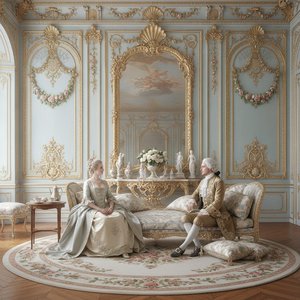
Rococo Art Guide: Elegance, Ornamentation, and the Era of Luxury
Explore the elegance of Rococo art. From Watteau to Fragonard, discover the history, aesthetics, and masters of 18th-century luxury in this expert guide for art lovers and collectors.

Rococo Art Guide: Integrating Elegant Curves and Pastel Opulence into Luxury Hotel Design
Master the Rococo aesthetic for luxury hospitality. Our expert guide explores integrating pastel palettes, ornate curves, and large-scale fine art reproductions into high-end hotel design through professional procurement and custom canvas solutions.

Топ-10 шедеврів рококо: мистецтво для вашого інтер'єру від OriginalUniqueArt.com
Відкрийте для себе 10 шедеврів рококо від Буше, Фрагонара та Ватто! Історія мистецтва, вишукані техніки та натхнення для декору вашого дому. Репродукції картин високої якості – OriginalUniqueArt.com.
