

 Переглянути в інтер'єрі
 Надіслати
 Поділитися
 Деталі
 Посібник

 Завантажити
 Схожі предмети колекціонування
 Рентгенівське дослідження
 Слайд-шоу
 Статистика переглядів
Червоне Сон


 Читати далі
Мистецький твір, представлений на цій сторінці, захищений законом про авторське право, що унеможливлює легальне створення або продаж його ідентичної репродукції. Цей захист забезпечується відповідно до міжнародних угод, таких як Бернська конвенція та національним законодавством, зокрема положеннями, що викладені в Законодавство США про авторське право — Розділ 17. Всі права захищені. Будь-яке використання без дозволу заборонено.
Цей метод повністю відповідає нормам авторського права, оскільки він не передбачає копіювання чи дублювання захищеного твору мистецтва. Натомість це творче переосмислення — створення нового малюнка під впливом оригіналу, який не є його точним відтворенням.
Гікле / Художній принт
Музейна якість друку جيкле або на полотні з оперативним виготовленням та різноманітними варіантами фінішної обробки. ( Купити картину ручної роботи Перейти до цифрових зображень)




P118B ₴10

P118H ₴10

P118W ₴10

P438Z ₴10

P508JH ₴12

P508YH ₴12

P805H ₴10

P805Z ₴10

P919BZ ₴10

P919G ₴10

P919XJ ₴10

P959ZH ₴10

P968JZ ₴12

W106C ₴8

W218G ₴10

W218JH ₴8

W218Y ₴10

W307PJ ₴10

W316G ₴10

W316PJ ₴8

W316Y ₴10

W398PJ ₴8

W4111J ₴10

W500HY ₴15

W500JH ₴15

W692G ₴12

W849H ₴8

W940BG ₴15

W953PJ ₴8




Обирайте з наших стандартних розмірів, що відповідають оригінальним пропорціям твору мистецтва.

Введіть необхідну ширину та висоту, щоб принт ідеально підійшов до вашої рами або стіни. Принт можна лише обрізати, але не можна зробити більшим за оригінал, тому при зміні пропорцій частина зображення буде втрачена. Перед друком ми надсилаємо вам цифровий макет для затвердження. Зображення на цій сторінці не відображає реальну обрізку — її можна побачити лише на макеті.
Доставка по всьому світу () за 2 тижні замість стандартних 4/5 тижнів. (22 Жовтень)

Безкоштовна експрес-доставка по всьому світу

Високоякісне лляне полотно

Повне страхове покриття доставки

Гарантія повернення митних зборів

Гарантія точного відтворення кольорів

Політика повернення протягом 100 днів (лише у разі виявлення дефектів)

Гарантія повернення 100% коштів

Знижка на оптові замовлення
 Скляний варіант доступний лише для розмірів до 110 см

Червоне Сон
Гікле / Художній принт
Розмір репродукції
-


Загальна вартість
₴ 3589
Red Sun: A Bold Statement of Geometric Simplicity
Alexander Milne Calder’s “Red Sun” stands as a testament to the power of reductive art – a deceptively simple black and white linocut print that encapsulates the spirit of Pop Art while simultaneously delving into profound symbolic considerations. Created in 1968, this artwork immediately grabs attention with its striking visual impact: a stylized sun figure dominates the composition, rendered in stark monochrome against a rectangular frame, embodying the core tenets of Calder’s artistic vision.
- Subject Matter & Composition: The central motif is an anthropomorphic sun – not merely a celestial body but imbued with human features. This deliberate juxtaposition elevates the image beyond mere representation, prompting contemplation on themes of vitality and perhaps even vulnerability. Geometric shapes—circles, triangles, and radiating lines—are skillfully employed to construct the sun’s form and its surrounding rays, generating dynamism and visual excitement.
- Style & Technique: Calder's approach aligns perfectly with Pop Art’s aesthetic principles. The bold outlines and flattened perspective contribute to a sense of immediacy and clarity, prioritizing formal elements over narrative content. The printmaking technique—likely linocut—is evident in the crisp edges and solid black areas, demonstrating precision and control.
- Historical Context: Produced during the mid-1960s, “Red Sun” reflects the broader artistic landscape of its time. Pop Art emerged as a reaction against Abstract Expressionism, favoring everyday subjects and vibrant colors (though here absent), yet retaining an intellectual rigor rooted in geometric abstraction.
- Symbolism: The sun has long held significance across cultures—representing life, illumination, divinity, and rebirth. Calder’s simplification of this universal symbol invites viewers to consider its essence, stripping away extraneous detail to focus on core concepts of energy and presence.
More than just a visually arresting image, “Red Sun” communicates an emotional resonance rooted in Calder's exploration of chance and spontaneity. The deliberate flatness of the composition underscores the artwork’s two-dimensional nature, while the red circle positioned at the bottom left corner serves as a subtle focal point—a vibrant counterpoint to the monochrome palette that reinforces the piece’s contemplative mood.
This reproduction offers an exceptional opportunity to appreciate Calder's masterful craftsmanship and his enduring contribution to modern art. Its clarity and tonal accuracy faithfully capture the essence of the original print, making it ideal for enhancing any interior space or serving as a captivating conversation starter.
Запитання та відповіді
Як поєднуються контраст і гармонія у творі "Червоне Сон"?
У творі "Червоне Сон" Опис контраст поєднується з Цілісна палітра гармонією.
Який загальний настрій має «Червоне Сон» Александр Мильне Кадер?
Загальний настрій «Червоне Сон» Александр Мильне Кадер — Енергійний. Цей настрій описує загальну атмосферу твору.
Де я можу переглянути попередній перегляд "Червоне Сон"?
Попередній перегляд «Червоне Сон» Александр Мильне Кадер доступний на сторінці Попередній перегляд твору.
Біографія митця
Introduction to Alexander Milne Calder
Alexander Milne Calder (MILL-nee) was a Scottish-American sculptor whose groundbreaking approach to art revolutionized the visual landscape of the 20th century. Born in Aberdeen, Scotland, on August 23, 1846, Calder’s artistic journey began amidst the burgeoning Arts and Crafts Movement, profoundly shaped by his father's influence as a stonemason—a craft he himself diligently honed early in life. He attended the Royal Academy in Edinburgh, immersing himself in classical sculpture traditions before embarking on a transformative relocation to London where he studied at the South Kensington School and collaborated closely with Thomas Eakins at the Pennsylvania Academy of Fine Arts. This formative period instilled within him an appreciation for both meticulous technique and expressive experimentation.- Early Life & Education: Calder’s childhood was marked by a fascination with art, nurtured by his parents' dedication to creative pursuits. Notably, he posed nude for his father’s sculpture *Man Cub*, demonstrating an early inclination towards artistic representation.
- Parisian Influences: Calder’s travels to Paris exposed him to the avant-garde currents of Surrealism and Kinetic Art—movements that would irrevocably alter his artistic vision.
- Philadelphia & Collaboration: He established himself in Philadelphia, where he partnered with John McArthur Jr., to realize monumental sculptures for City Hall—a project that demanded unparalleled precision and innovation.
Notable Works & Artistic Style
Calder’s oeuvre is characterized by two distinct yet interconnected styles: architectural sculpture and kinetic mobiles. His magnum opus, Philadelphia City Hall, stands as a testament to his mastery of marble and bronze, embodying the grandeur and ambition of Beaux-Arts architecture. The statue of William Penn atop the tower—a colossal undertaking—further cemented Calder’s reputation as a visionary sculptor capable of tackling ambitious projects. However, it was Calder's mobiles – delicately balanced assemblages of metal rods and hanging weights – that truly captivated audiences and established him as a pioneer in Kinetic Art. These sculptures harnessed the principles of chance and movement, reflecting Calder’s belief that “theories may be all very well for the artist himself, but they shouldn’t be broadcast to other people.”- Philadelphia City Hall: Calder's architectural sculpture showcased his meticulous attention to detail and technical prowess.
- William Penn Statue: This monumental sculpture demonstrated Calder’s ability to execute large-scale projects with exceptional artistry.
- Mobiles: Calder’s mobiles—characterized by their balanced movement—became iconic representations of Kinetic Art, embodying the spirit of improvisation and serendipity.
Legacy & Influence
Alexander Milne Calder's influence extended far beyond his own creations, shaping the artistic landscape of subsequent generations. His son, Alexander Stirling Calder, and grandson, Alexander ‘Sandy’ Calder—both accomplished sculptors—carried forward his legacy, perpetuating his innovative spirit and furthering the exploration of kinetic sculpture. Calder’s contributions to art history are recognized globally, with his sculptures housed in prestigious museums worldwide, including the Smithsonian American Art Museum and the Galleria Civica di Arte Moderna e Contemporanea Torino. His unwavering conviction that “art should be a surprise” continues to inspire artists today—a testament to the enduring power of his artistic vision.- Son’s Artistic Contribution: Alexander Stirling Calder, Calder's son, followed in his father's footsteps as a sculptor, furthering the family tradition of artistic excellence.
- Grandson’s Artistic Legacy: Alexander ‘Sandy’ Calder—Calder’s grandson—maintained his grandfather’s pioneering spirit and expanded upon his explorations of Kinetic Art.

Александр Мильне Кадер
1898 - 1976 , Шотландія
Довідкова інформація
- Artistic Movement Or Style: Architectural sculpture
- Artists Or Movements Influenced By This Artist:
- Kinetic art
- Surrealism
- Artists Who Influenced This Artist: ['John Rhind']
- Date Of Birth: August 23, 1846
- Date Of Death: June 14, 1923
- Full Name: Alexander Milne Calder
- Nationality: Scottish-American
- Notable Artworks:
- Philadelphia City Hall
- William Penn statue
- Place Of Birth: Aberdeen, Scotland
Схожі статті

The Enduring Form: Sculpture Across History, Technique & Emotional Resonance
Explore the rich history of sculpture with OriginalUniqueArt. Discover key techniques, influential artists & investment potential for discerning collectors. Expert insights into valuing and collecting timeless masterpieces.

Топ-10 шедеврів живопису в чорних тонах: історія, мистецтво та декор від OriginalUniqueArt
Відкрийте для себе 10 найвідоміших картин у чорних тонах! Історія, техніка та емоції від OriginalUniqueArt. Романтизм, готика, експресіонізм – шедеври живопису онлайн. Купіть репродукцію мрії на OriginalUniqueArt.com!

10 легендарних бронзових скульптур, що змінили мистецтво | OriginalUniqueArt
Відкрийте 10 легендарних бронзових скульптур, що змінили хід мистецтва! Дізнайтесь історії Мікеланджело, Родена та інших геніїв. Репродукції картин преміум-класу для вашого дому – на OriginalUniqueArt.com

The Enduring Form: Exploring Themes & Techniques in Sculpture Across Historical Periods
Explore the rich history of sculpture from ancient masterpieces to contemporary innovations. Discover key techniques, influential artists & investment potential for discerning art collectors.
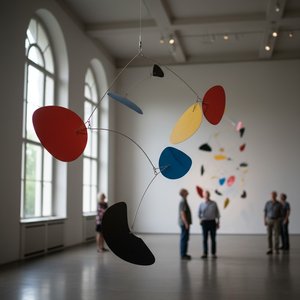
Alexander Calder: Kinetic Sculpture, Mobile Art & the Poetics of Chance
Explore the revolutionary world of Alexander Calder's kinetic sculptures & mobiles. Discover insights for collectors, acquisition advice, and the enduring legacy of this modern master. Expert analysis & art valuation.
