Portrait of Tsukioka Yoshitoshi

The 100 Most Famous Tsukioka Yoshitoshi Paintings, Each One of a Kind

Updated Ekim 2026 · ranked by our popularity score (searches, visits and orders for each work) · 1.344 works by Tsukioka Yoshitoshi in our catalogue

In short

Kingio Hideaki From Kaidai Hyaku Senso is the Tsukioka Yoshitoshi painting that draws the most eyes. After it, the eye goes to Asakusa and Tokugawa Iemitsu Derebeyleri Kabul Ediyor (1875). Among the 1,344 works of Tsukioka Yoshitoshi in our catalog, these 100 are the most famous, each a unique original presented with its year, its museum and the reason it endures.

1839 – 1892, Edo Late edo period Most works: Minneapolis Institute of Art

Top 10 paintings by Tsukioka Yoshitoshi, through the gallery's eye

2
Asakusa by Tsukioka Yoshitoshi

Asakusa

Ağaç Baskı

Tsukioka Yoshitoshi’nin *Asakusa*’sı: Edo Döneminin Ruhunu Yakalayan Bir Pencere Tsukioka Yoshitoshi'nin 1882 tarihli *Asakusa* eseri, sadece bir sokak manzarası olmanın ötesinde, dönemin en çalkantılı dönemlerinden geçmekte olan Japonya’nın içten ve güçlü bir yansımasıdır. Ukiyo-e sanatının özünü taşıyan bu ahşap baskı, Asakusa semtinin fiziksel görünümünün yanı sıra, hızla gelen modernizasyonun getirdiği kaygıları, umutları ve nihayetinde, değişimin melankolik güzelliğini de yakalar. Ukiyo-e geleneğinin son büyük ustası olarak kabul edilen Yoshitoshi, eserine olağanüstü…

3
Tokugawa Iemitsu Derebeyleri Kabul Ediyor (1875) by Tsukioka Yoshitoshi

Tokugawa Iemitsu Derebeyleri Kabul Ediyor

1875 · Ağaç Baskı Sanatı · Los Angeles County Museum of Art, Los Angeles

1875 yılında yaratılan Tsukioka Yoshitoshi imzalı "Tokugawa Iemitsu Derebeylerini Kabul Ediyor", salt bir görsel sunumun çok ötesine geçer; Japonya'nın feodal yönetimin alacakaranlığı ile modernleşmenin şafağına adım attığı o kritik dönemeçteki kaygılarını ve özlemlerini bünyesinde barındırır. Renkli bir ahşap baskı (ukiyo-e) olarak icra edilen bu sanat eseri, eşsiz detayları ve resmiyet ile ağırbaşlı bir tefekkürle harmanlanmış atmosferiyle ukiyo-e sanatının zirvesini temsil eder. Bu eser sadece kraliyet töreninin bir tasviri değil, aynı…

4
Okuko Hikozaemon Protects The Tokugawa Shogun From The Spear Of Goro Matabei Mototsugu by Tsukioka Yoshitoshi

Okuko Hikozaemon Protects The Tokugawa Shogun From The Spear Of Goro Matabei Mototsugu

Acrylic On Canvas

Dynamic Depiction of Heroism and Mythology This captivating artwork vividly captures a dramatic moment of heroism and mythic confrontation, set against a dark, nocturnal backdrop illuminated by a crescent moon. The scene is filled with intense action, depicting legendary warriors engaged in a fierce battle that embodies themes of bravery, conflict, and divine justice. The central figures, clad in detailed armor and traditional garments, evoke a sense of movement and…

5
Moon Over The Waters At Daimotsu Bay by Tsukioka Yoshitoshi

Moon Over The Waters At Daimotsu Bay

Woodblock Print

Moon Over The Waters At Daimotsu Bay is a significant woodblock print by the Japanese artist Yoshitoshi. This work belongs to his celebrated series, One Hundred Aspects of the Moon, also known as Tsuki hyakkei. Published between 1885 and 1892, the series represents a profound period in the artist's career, capturing a unique intersection of traditional aesthetics and the shifting social landscape of the Meiji era.

6
Uesugi Kenshin Nyudo Terutora Savaşta At Sürerken (1883) by Tsukioka Yoshitoshi

Uesugi Kenshin Nyudo Terutora Savaşta At Sürerken

1883 · Akrilik · Los Angeles County Museum of Art, Los Angeles

1883 yılında yaratılan Tsukioka Yoshitoshi imzalı “Uesugi Kenshin Nyudo Terutora Savaş Yolunda”, basit bir tasvirin çok ötesine geçer; Japonya'nın feodal yönetimden modernleşmeye geçtiği o kritik dönüşüm sürecindeki kaygılarını ve özlemlerini bünyesinde barındırır. Bu anıtsal ahşap baskı, yalnızca askeri bir maharetin kaydı değil, aynı zamanda dönemin psikolojik manzarasını derinle eş anlamlı sembollerle anlatan, titizlikle işlenmiş bir tablodur.

7
Komori No Godan by Tsukioka Yoshitoshi

Komori No Godan

Woodblock Print

Tsukioka Yoshitoshi’s “Komori No Godan” – literally “Six Bats Under the Umbrella” – is more than just a captivating image; it's a poignant meditation on mortality, protection, and the enduring spirit of Japanese folklore. Executed in stark monochrome with the meticulous precision characteristic of Ukiyo-e woodblock prints, this artwork transports the viewer to a world steeped in layered meaning and evocative atmosphere. Created during a period of immense social change…

8
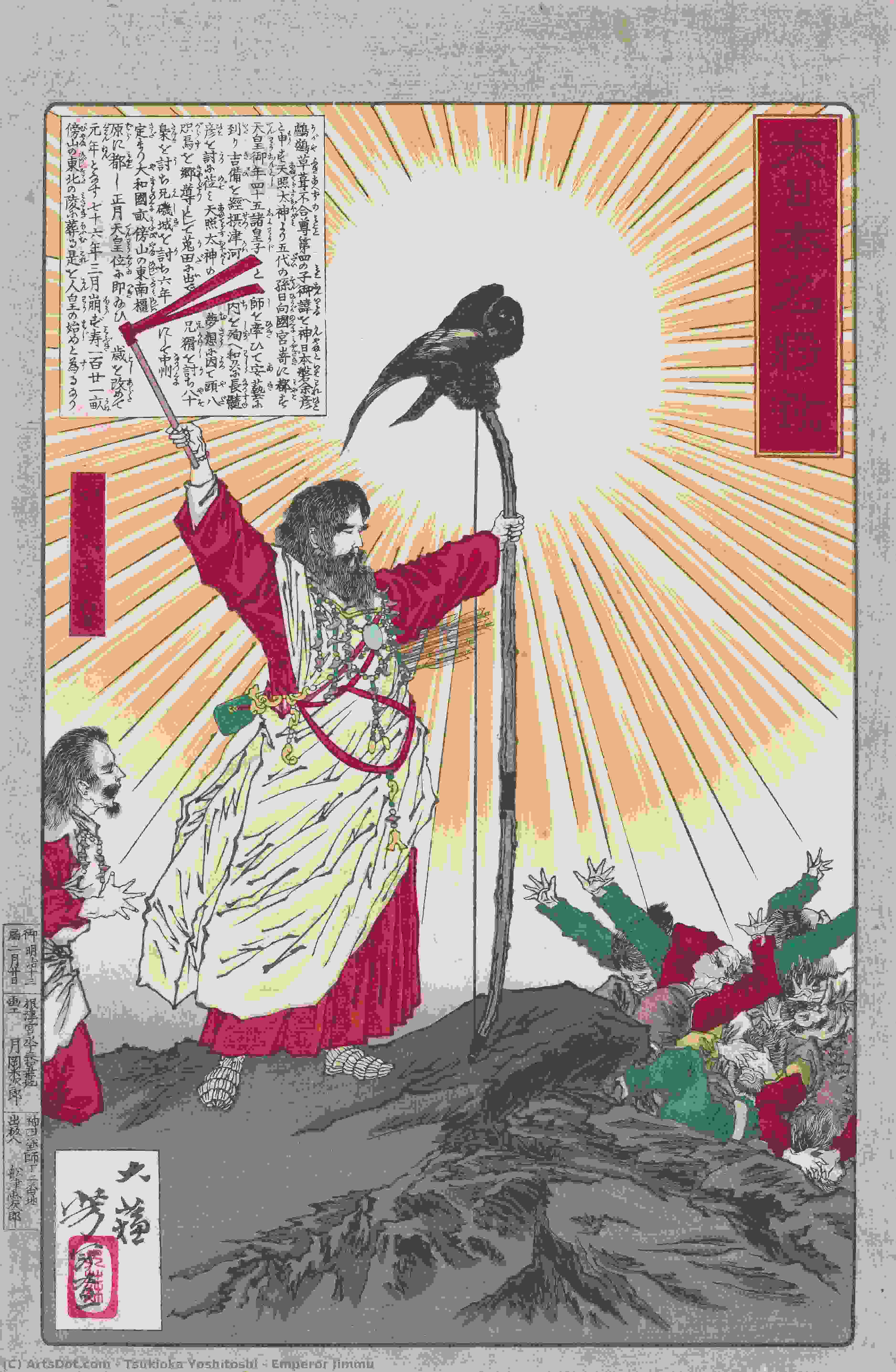
إمبراطور جيممو by Tsukioka Yoshitoshi

إمبراطور جيممو

Tuval Üzerine Akrilik Boya

Tsukioka Yoshitoshi: Emperor Jimmu – A Vision of Mythic Leadership Yoshitoshi’s *Emperor Jimmu*, created in 1880, stands as a cornerstone of Ukiyo-e art and a poignant reflection of Japan's turbulent transition from feudal rule to modernity. This monumental woodblock print captures the essence of Japanese mythology—specifically, the legendary founding myth—transforming it into a powerfully emotive visual experience for its audience. Published by Tsunashima Kamekichi during the Meiji Restoration, this artwork…

9
Sadanobu Demonlara Karşı Palacıkta Gece by Tsukioka Yoshitoshi

Sadanobu Demonlara Karşı Palacıkta Gece

Tuval Üzerine Akrilik Boya

Sadanobu Threatening A Demon In The Palace At Night: A Dramatic Echo of Meiji Japan This striking black and white woodblock print, “Sadanobu Threatening A Demon in the Palace at Night,” is a cornerstone of late 19th-century *ukiyo-e* art by Tsukioka Yoshitoshi. More than just a depiction of an event—the confrontation between warrior Sadanobu and a fearsome demon within a lavish palace chamber—it’s a window into the anxieties and aspirations…

10
Restoran by Tsukioka Yoshitoshi

Restoran

Tuval Üzerine Akrilik Boya

A Moment of Urban Life: Tsukioka Yoshitoshi’s “Restaurant” Tsukioka Yoshitoshi's "Restaurant" offers a captivating glimpse into 19th-century Japan, showcasing the artist’s mastery of ukiyo-e, or “pictures of the floating world.” This woodblock print depicts two elegantly dressed women pausing before a bustling restaurant. The scene isn’t grand or heroic; instead, it captures an everyday moment – a stroll through town, perhaps a planned meal, or simply observing the vibrant energy…

Tsukioka Yoshitoshi's famous paintings, numbers 11 to 100

11Woman With Iris by Tsukioka YoshitoshiWoman With Iris 12The Moon And The Abandoned Old Woman by Tsukioka YoshitoshiThe Moon And The Abandoned Old Woman 13Miyamoto Musashi by Tsukioka YoshitoshiMiyamoto Musashi 14Great Generals of the East and West (1874) by Tsukioka YoshitoshiGreat Generals of the East and West1874 · Minneapolis Institute of Art 15Great Generals of the East and West (1874) by Tsukioka YoshitoshiGreat Generals of the East and West1874 · Minneapolis Institute of Art 16January: Celebrating the New Year (1860) by Tsukioka YoshitoshiJanuary: Celebrating the New Year1860 · Los Angeles County Museum of Art 17Ghost (1883) by Tsukioka YoshitoshiGhost1883 · Minneapolis Institute of Art 18Kiyohime changing into a serpent at Hidaka River, from the series New Forms of Thirty-six Ghosts (1890) by Tsukioka YoshitoshiKiyohime changing into a serpent at Hidaka River, from the series New Forms of Thirty-six Ghosts1890 · The Smithsonian’s National Museum of Asian Art 19The Spirit of the Deceased Yūgao Entwined in Moonflower Vines, based on the print “The Lady of the Evening Faces,” from the series One Hundred Aspects of the Moon (Tsuki hyakushi: Genji Yūgao no maki) (1892) by Tsukioka YoshitoshiThe Spirit of the Deceased Yūgao Entwined in Moonflower Vines, based on the print “The Lady of the Evening Faces,” from the series One Hundred Aspects of the Moon (Tsuki hyakushi: Genji Yūgao no maki)1892 · Metropolitan Sanat Müzesi 20Murasaki Shikibu at Ishiyamadera Temple, based on the print “The Moon at Ishiyama,” from the series One Hundred Aspects of the Moon (Tsuki hyakushi: Ishiyama no tsuki) (1892) by Tsukioka YoshitoshiMurasaki Shikibu at Ishiyamadera Temple, based on the print “The Moon at Ishiyama,” from the series One Hundred Aspects of the Moon (Tsuki hyakushi: Ishiyama no tsuki)1892 · Metropolitan Sanat Müzesi 21Sumidagawa- Koji Of Umewaka by Tsukioka YoshitoshiSumidagawa- Koji Of Umewaka 22Comic Picture by Tsukioka YoshitoshiComic Picture 23Hikoshichi Carries A Demon by Tsukioka YoshitoshiHikoshichi Carries A Demon 24The Great Thieves Of Japan Compared by Tsukioka YoshitoshiThe Great Thieves Of Japan Compared 25A young woman from Kansei period playing with her cat (1888) by Tsukioka YoshitoshiA young woman from Kansei period playing with her cat1888 26Murasaki Shikibu at Ishiyamadera Temple, based on the print “The Moon at Ishiyama,” from the series One Hundred Aspects of the Moon (Tsuki hyakushi: Ishiyama no tsuki) (1892) by Tsukioka YoshitoshiMurasaki Shikibu at Ishiyamadera Temple, based on the print “The Moon at Ishiyama,” from the series One Hundred Aspects of the Moon (Tsuki hyakushi: Ishiyama no tsuki)1892 27Inaba Mountain Moon by Tsukioka YoshitoshiInaba Mountain Moon 28Moon Above The Sea At Daimotsu Bay by Tsukioka YoshitoshiMoon Above The Sea At Daimotsu Bay 29Mt. Yoshino At Midnight by Tsukioka YoshitoshiMt. Yoshino At Midnight 30Susanoo No Mikoto by Tsukioka YoshitoshiSusanoo No Mikoto 31The Takisoba Restaurant At Otowa by Tsukioka YoshitoshiThe Takisoba Restaurant At Otowa 32Oda... Nobunaga by Tsukioka YoshitoshiOda... Nobunaga 33Coast Of Kiyomi by Tsukioka YoshitoshiCoast Of Kiyomi 34Mirror Of The Famous Generals by Tsukioka YoshitoshiMirror Of The Famous Generals 35Sanada Saemon-no-jô Yukimura by Tsukioka YoshitoshiSanada Saemon-no-jô Yukimura 36Female Warrior Hangaku Gozen by Tsukioka YoshitoshiFemale Warrior Hangaku Gozen 37Moon At Kuruwa by Tsukioka YoshitoshiMoon At Kuruwa 38The Underwater Fight by Tsukioka YoshitoshiThe Underwater Fight 39Koi Swimming Beneath Wisteria by Tsukioka YoshitoshiKoi Swimming Beneath Wisteria 40Demon Triptych by Tsukioka YoshitoshiDemon Triptych 41Konkai by Tsukioka YoshitoshiKonkai 42Death Stone Of Nasu Moor by Tsukioka YoshitoshiDeath Stone Of Nasu Moor 43Ôishi Kuranosuke Yoshio by Tsukioka YoshitoshiÔishi Kuranosuke Yoshio 44Yoshitsune And Benkei by Tsukioka YoshitoshiYoshitsune And Benkei 45Shizu Peak Moon by Tsukioka YoshitoshiShizu Peak Moon 46The Great Battle At Okehazama by Tsukioka YoshitoshiThe Great Battle At Okehazama 47Akashi Gidayu And Tiger by Tsukioka YoshitoshiAkashi Gidayu And Tiger 48Taira no Kiyomori sees the skulls of his victims by Tsukioka YoshitoshiTaira no Kiyomori sees the skulls of his victims 49Princess Kaguya by Tsukioka YoshitoshiPrincess Kaguya 50Inamura Promontory Moon by Tsukioka YoshitoshiInamura Promontory Moon 51Ariwara no Yukihira by Tsukioka YoshitoshiAriwara no Yukihira 52Maisaka (1863) by Tsukioka YoshitoshiMaisaka1863 53A scene of Journey to the West (1864) by Tsukioka YoshitoshiA scene of Journey to the West1864 54Onogawa (1865) by Tsukioka YoshitoshiOnogawa1865 55Japanese war in Kagoshima (1879) by Tsukioka YoshitoshiJapanese war in Kagoshima1879 56Warrior (General Yamanaka Shikanasake) (1884) by Tsukioka YoshitoshiWarrior (General Yamanaka Shikanasake)1884 57Looking refined - a court lady of the Kyowa era (1888) by Tsukioka YoshitoshiLooking refined - a court lady of the Kyowa era1888 58Benkei ve Dalga by Tsukioka YoshitoshiBenkei ve Dalga 59Clam Digging by Tsukioka YoshitoshiClam DiggingMinneapolis Institute of Art 60Sagami Jirô And Taira No Masakado by Tsukioka YoshitoshiSagami Jirô And Taira No Masakado 61Taira No Kiyomori Holding Back The Sun by Tsukioka YoshitoshiTaira No Kiyomori Holding Back The Sun 62Tze Lu by Tsukioka YoshitoshiTze Lu 63Looking Indecisive by Tsukioka YoshitoshiLooking Indecisive 64Katada Bay Moon by Tsukioka YoshitoshiKatada Bay Moon 65Takatoki Tengu by Tsukioka YoshitoshiTakatoki Tengu 66Poem By Hitotose by Tsukioka YoshitoshiPoem By Hitotose 67Tsuki No Monogurui by Tsukioka YoshitoshiTsuki No Monogurui 68The Moon's Four Strings by Tsukioka YoshitoshiThe Moon's Four Strings 69Yugao From The Tale Of Genji by Tsukioka YoshitoshiYugao From The Tale Of Genji 70Hitotose by Tsukioka YoshitoshiHitotose 71The Hag by Tsukioka YoshitoshiThe Hag 7236 Ghosts by Tsukioka Yoshitoshi36 Ghosts 73The Moon And The Helm Of A Boat by Tsukioka YoshitoshiThe Moon And The Helm Of A Boat 74Kinoshita Tokichiro by Tsukioka YoshitoshiKinoshita Tokichiro 75Kabuki Actor - by Tsukioka YoshitoshiKabuki Actor - 76Gojo Bridge Moon by Tsukioka YoshitoshiGojo Bridge Moon 77Yukugawa Sanpei Munenori by Tsukioka YoshitoshiYukugawa Sanpei Munenori 78Moon At Mt Chi-ming by Tsukioka YoshitoshiMoon At Mt Chi-ming 79Uesugi Kenshin by Tsukioka YoshitoshiUesugi Kenshin 80Waiting Since The Crescent Moon by Tsukioka YoshitoshiWaiting Since The Crescent Moon 81Relaxed by Tsukioka YoshitoshiRelaxed 82The Moon At Takakura by Tsukioka YoshitoshiThe Moon At Takakura 83Dawn Moon At Mt. Tobisu by Tsukioka YoshitoshiDawn Moon At Mt. Tobisu 84Near Komakata A Cuckoo Calls by Tsukioka YoshitoshiNear Komakata A Cuckoo Calls 85Matsuo Basho by Tsukioka YoshitoshiMatsuo Basho 86Mountain Moon After Rain - Tokimune by Tsukioka YoshitoshiMountain Moon After Rain - Tokimune 87Moon And The Heavenly River by Tsukioka YoshitoshiMoon And The Heavenly River 88Kityama Moon by Tsukioka YoshitoshiKityama Moon 89Moonlight On The Snow by Tsukioka YoshitoshiMoonlight On The Snow 90The Chapter From The Tale Of Genji by Tsukioka YoshitoshiThe Chapter From The Tale Of Genji 91Taira No Tomomori by Tsukioka YoshitoshiTaira No Tomomori 92Namauo Chojiro by Tsukioka YoshitoshiNamauo Chojiro 93Hirade Iki by Tsukioka YoshitoshiHirade Iki 94Hara by Tsukioka YoshitoshiHara 95Chinese Beauty In The Moonlight by Tsukioka YoshitoshiChinese Beauty In The Moonlight 96Chinzai Hachiro Minamoto No Tametomo by Tsukioka YoshitoshiChinzai Hachiro Minamoto No Tametomo 97The Wife Of Tokugawa Keiki by Tsukioka YoshitoshiThe Wife Of Tokugawa Keiki 98Hyoshit Rinchu Kills The Officer Riku Neat The Temple Of The Mountain by Tsukioka YoshitoshiHyoshit Rinchu Kills The Officer Riku Neat The Temple Of The Mountain 99House Wife Of The Bunsei Era by Tsukioka YoshitoshiHouse Wife Of The Bunsei Era 100Moon And Helm Of A Boat by Tsukioka YoshitoshiMoon And Helm Of A Boat

Tsukioka Yoshitoshi's famous paintings, period by period

The subjects that held Tsukioka Yoshitoshi's eye

The four subjects that come back most often in these originals, each with its finest example.

The museums that keep Tsukioka Yoshitoshi's originals

The 4 museums that hold the most of the paintings on this page.

Museum City Works by Tsukioka Yoshitoshi Paintings from this list
Minneapolis Institute of Art, MinneapolisMinneapolis Institute of Art Minneapolis 4 Great Generals of the East and West, Great Generals of the East and West, Ghost
Los Angeles County Museum of Art, Los AngelesLos Angeles County Museum of Art Los Angeles 3 Tokugawa Iemitsu Derebeyleri Kabul Ediyor, Uesugi Kenshin Nyudo Terutora Savaşta At Sürerken, January: Celebrating the New Year
Metropolitan Sanat Müzesi, New YorkMetropolitan Sanat Müzesi New York 2 The Spirit of the Deceased Yūgao Entwined in Moonflower Vines, based on the print “The Lady of the Evening Faces,” from the series One Hundred Aspects of the Moon (Tsuki hyakushi: Genji Yūgao no maki), Murasaki Shikibu at Ishiyamadera Temple, based on the print “The Moon at Ishiyama,” from the series One Hundred Aspects of the Moon (Tsuki hyakushi: Ishiyama no tsuki)
The Smithsonian’s National Museum of Asian Art, Washington, D.C.The Smithsonian’s National Museum of Asian Art Washington, D.C. 1 Kiyohime changing into a serpent at Hidaka River, from the series New Forms of Thirty-six Ghosts

Tsukioka Yoshitoshi across the decades: one unique original for each

Works per decade

Pick a decade to see the original that defines it.

Tsukioka Yoshitoshi's paintings: questions for the gallery

What is the single most famous work of Tsukioka Yoshitoshi?Reveal the answer

Kingio Hideaki From Kaidai Hyaku Senso. Asakusa and Tokugawa Iemitsu Derebeyleri Kabul Ediyor (1875) come next.

Which ten paintings by Tsukioka Yoshitoshi are the most famous?Reveal the answer

Kingio Hideaki From Kaidai Hyaku Senso, Asakusa, Tokugawa Iemitsu Derebeyleri Kabul Ediyor, Okuko Hikozaemon Protects The Tokugawa Shogun From The Spear Of Goro Matabei Mototsugu, Moon Over The Waters At Daimotsu Bay, Uesugi Kenshin Nyudo Terutora Savaşta At Sürerken, Komori No Godan, إمبراطور جيممو, Sadanobu Demonlara Karşı Palacıkta Gece and Restoran. The ranking above gives each one's year and museum.

How many works by Tsukioka Yoshitoshi are known?Reveal the answer

Our catalog holds 1,344 works by Tsukioka Yoshitoshi, dated from 1860 to 1892.

Where can the most famous Tsukioka Yoshitoshi originals be seen?Reveal the answer

Mostly in Minneapolis Institute of Art (Minneapolis), Los Angeles County Museum of Art (Los Angeles) and Metropolitan Sanat Müzesi (New York). The museum table above lists them all.

During which period did Tsukioka Yoshitoshi create the best-known paintings?Reveal the answer

In 1880s: 5 of the 100 works on this page were made then, Uesugi Kenshin Nyudo Terutora Savaşta At Sürerken among them.

Which famous Tsukioka Yoshitoshi painting is the earliest, and which the latest?Reveal the answer

On this page, the earliest is January: Celebrating the New Year (1860) and the latest The Spirit of the Deceased Yūgao Entwined in Moonflower Vines, based on the print “The Lady of the Evening Faces,” from the series One Hundred Aspects of the Moon (Tsuki hyakushi: Genji Yūgao no maki) (1892).

What subjects did Tsukioka Yoshitoshi favour?Reveal the answer

Japanese art (18), Traditional japan (16) and Woodblock print (12), across the 100 works on this page.

What materials did Tsukioka Yoshitoshi paint with most?Reveal the answer

Woodblock Print, for 9 of the 100 works on this page.

Which movement does the work of Tsukioka Yoshitoshi belong to?Reveal the answer

Late edo period, judging by the originals on this page.

What Tsukioka Yoshitoshi originals can I see at the Minneapolis Institute of Art?Reveal the answer

Great Generals of the East and West, Great Generals of the East and West and Ghost: the Minneapolis Institute of Art, Minneapolis holds 4 of the works on this page.

Where can I order a hand-painted Tsukioka Yoshitoshi reproduction?Reveal the answer

Yes, as a reproduction: the original stays in its museum, but any painting on this page can be painted by hand for you, made to order one at a time, from the painting's own page.

Tsukioka Yoshitoshi: a portrait of the artist

Tsukioka Yoshitoshi'nin Hayatı ve Kimliği

30 Nisan 1839 tarihinde Owariya Yonejiro adıyla dünyaya gelen ve ileride Tsukioka Yoshitoshi olarak tanınacak olan adam, büyük bir dönüşümün eşiğindeki bir dünyaya adım attı. Bugün Tokyo olarak bilinen eski Edo'nun Shimbashi bölgesinde büyüyen sanatçı, aynı zamanda Taiso Yoshitoshi ismini de kullanarak kimliğinde bir geçiş süreci yaşadı. Hayatı, Japon toplumunun dokusunun hızlı modernleşme ve Batı etkisiyle yeniden dokunduğu bir dönem olan Edo döneminin sonu ile Meiji döneminin başlangıcına tanıklık ederek şekillendi.

Japon baskı sanatçısı olarak kariyeri, çevresindeki dünya fotoğrafçılık gibi yeni teknolojilere doğru hızla ilerlerken, zanaatının geleneklerini koruma yönündeki amansız bir mücadeleyle tanımlandı. İşini derin bir amaç duygusuyla yürüten sanatçı, genellikle eski yöntemler ile yeniler arasındaki gerilime odaklandı. Bu çalkantılı dönem, onun sanatı için yalnızca bir arka plan değil; aksine, derin toplumsal değişimlerin yaşandığı bir zamanda bakış açısını ve insanlık durumunu yakalama yeteneğini şekillendiren asıl ortamdı.

Hayatının sonu, 53 yaşındayken beklenmedik bir şekilde geldi. 9 Haziran 1892'de bir beyin kanaması sonucu hayata gözlerini yuman sanatçı, geride ülkesinin değişen çehresini belgeleyen, hem günlük yaşamın sessiz anlarını hem de tarihi efsanelerin yoğun dramını yakalayan çok önemli bir eser külliyatı bıraktı.

Erken Yaşam, Aile ve Eğitim

Eski Edo'nun Shimbashi semtinde Owariya Yonejiro adıyla dünyaya gelen ve ileride Yoshitoshi olarak tanınacak olan bu çocuk, toplumsal hırsların şekillendirdiği bir evde büyüdü. Babası, satın aldığı imtiyazlarla samuray statüsüne yükselmiş varlıklı bir tüccardı ve bu durum aileye nispeten istikrarlı bir yaşam sunuyordu. Ancak aile yapısı çok erken yaşlarda değişime uğradı. Henüz üç yaşındayken, kendi oğlu olmayan bir eczacı olan amcasının yanına, evinden ayrılarak yaşamaya başladı. Çevresindeki bu köklü değişim, onun kişisel gelişimi için temel bir dönüm noktası olacaktı.

Beş yaşına geldiğinde, sanata karşı belirgin bir ilgi göstermeye başlamıştı. Çocukluğunu amcasından dersler alarak geçiren genç sanatçı, yaratma eyleminin içinde derin bir yaşam amacı buldu. Bu erken dönem eğitimleri, geleneksel sanatlar alanında izleyeceği resmi yolun temellerini attı. 1850 yılında, henüz 11 yaşındayken, usta Utagawa Kuniyoshi'nin yanında disiplinli bir çıraklık dönemine adım attı. İşte bu süreçte mentoru ona Yoshitoshi adını verdi ve bu isim, onun Utagawa Okulu'na resmi girişinin bir nişanesi oldu.

Teknik ve Sanatsal Üslup

Tsukioka Yoshitoshi’nin eli, değişen Japonya’nın özünü yakalayan bir hassasiyetle hareket ederdi. Yeni baskı tekniklerini kullanma konusunda bir öncü olan sanatçı, daha ince detaylere ve daha yoğun renklere ulaşmanın yollarını sürekli olarak aradı. Eserleri, geleneksel Japon estetiğini Meiji döneminde gelen Batılı etkilerle sık sık harmanlıyordu. Bu füzyon, onun hem tarihin köklerine sadık kalan hem de çarpıcı biçimde modern hissettiren karmaşık kompozisyonlar yaratmasına olanak sağladı. Hareket tasvir etme konusunda ise kendine has bir yeteneğe sahipti; statik bir ahşap baskıyı, sanki aksiyonun tek ve uçucu bir anında yakalanmış gibi hissettirmeyi başarırdı.

Konu seçimleri genellikle tarihsel ile mitolojik arasında gidip gelirdi. Efsanevi bir savaşçıyı psikolojik bir derinlikle betimleyebilir ya da doğaüstü bir yaratığı şaşırtıcı bir gerçekçilikle resmedebilirdi. Bu derin duyguları aktarabilme yeteneği, onun üslubunun merkezinde yer alıyordu. İster sessiz bir tefekkür anını, ister yoğun bir mücadeleyi tasvir etsin, baskıları izleyicisiyle yankı bulan bir duygu ağırlığı taşırdı. Sadece dekoratif unsurlara bel bağlamak yerine, izleyiciyi baskının anlatısına çekmek için canlı renkler ve keskin hatlar kullandı.

  • Saito Oniwakamaru bir Sazan Üzerinde (1839–1892)
  • Okehazama Savaşı (1866)
  • Kiyomori'nin Ölümü (1883)

Başlıca Eserleri ve Ünlü Serileri

Yoshitoshi’nin sanatsal üretimi, çoğu zaman içinde yaşadığı dönemin o ağır ve huzursuz atmosferini bir ayna gibi yansıtıyordu. 1866 yılında, sıklıkla "kanlı baskılar" olarak anılan ve Muzan-e olarak bilinen bir seri baskı hazırladı. Grafiksel bir şiddet ve ölüm temalarına odaklanan bu eserler, sanatçının hayatına damga vuran toplumsal kargaşayı ve kişisel trajedileri gözler önüne seriyordu. Yoshitoshi, bu karanlık temalar ile Tsūzoku saiyūki (Modern Batıya Yolculuk olarak da bilinir) gibi daha anlatı odaklı konular arasında mekik dokuyordu. Ayrıca Wakan hyaku monogatari, yani Çin ve Japonya'dan Yüz Hikaye adlı çalışmasında halk inanışlarına ve efsanelere derin bir bakış sundu.

Yıllar geçtikçe sanatçının odağı, daha düşünsel ve çeşitli konulara doğru evrildi. 1885 ile 1892 yılları arasında, ayın farklı perspektiflerden keşfedildiği Ayın Yüz Hali serisi üzerinde çalıştı. Sanatçının son yılları, 1889-1892 yılları arasında 36 Ruhun Yeni Biçimleri ve 1888 yılında Kadınların 32 Hali gibi eserlerin yaratılmasına tanıklık etti. Bu seriler, Yoshitoshi'nin hem doğaüstü varlıkları hem de insan formunu psikolojik bir derinlikle işleme yeteneğini kanıtlar niteliktedir.

Miras ve Kalıcı Etki

Yoshitoshi’nin kariyeri, Edo döneminin son yılları ile Meiji döneminin şafağı arasında uzanan, iki çağ arasında kurulmuş bir köprü vazifesi görmüştür. Eski toplumsal yapıların çözüldüğü ve Batı etkilerinin Japon yaşamını yeniden şekillendirmeye başladığı bir dönemin tanığı olarak yaşamıştır. Birçok sanatçı bu hızlı değişim rüzgarları karşısında yönünü bulmakta zorlanırken, o bu sanat formunun en büyük yenilikçilerinden biri olarak kabul edilmiştir. Zanaatını değişen bir dünyaya uyarlama yeteneği, geleneksel ahşap baskı sanatının fotoğraf ve litografi gibi yeni tekniklerle rekabet ettiği bir dönemde bile güncelliğini korumasını sağlamıştır.

Sanat dünyasındaki konumu, hem teknik becerisi hem de köklü sanat soyuyla perçinlenmiştir. Ustası Kuniyoshi’den aldığı dersleri alıp onları yepyeni yönlere taşıyan Yoshitoshi, bugün onun en önemli öğrencisi olarak anılmaktadır. 1885 yılına gelindiğinde, Tokyo'nun bir numaralı ukiyo-e sanatçısı olarak seçilmesiyle yükselişi yadsınamaz bir hal almıştır. O, sadece Utagawa Okulu'nun geleneklerini takip etmekle kalmamış; bu gelenekleri genişleterek, ukiyo-e türünün alacakaranlık dönemini tanımlamaya yardımcı olan derin bir psikolojik derinliği konularına aşılamıştır.


Musha Burui
Ayın Yüz Hali
Otuz Altı Ruhun Yeni Biçimleri

All 1344 works by Tsukioka Yoshitoshi →