Utagawa Kuniyoshi portresi

Utagawa Kuniyoshi Tabloları: Bir Galerinin Gözünden En Ünlü 100 Eser

Kasım 2026 tarihinde güncellendi · popülerlik puanımıza göre sıralanmıştır (her bir eser için aramalar, ziyaretler ve siparişler) · 329 eser Utagawa Kuniyoshi kataloğumuzda

Özetle

Galerinin gözünde, Utagawa Kuniyoshi'in en ünlü tablosu Musashi on the back of a whale'tir. Shikamatsu Kanroku Yukishige (1847) ve Hatakeyama sitting next to a Go board (1845), her gözün hemen fark edeceği o üçlüyü tamamlıyor. Katalogumuzdaki Utagawa Kuniyoshi imzalı 329 eser arasından galerimiz, her biri yapıldığı yıl, sergilendiği müze ve onu eşsiz kılan özellikleriyle birlikte en ünlü 100 eseri aşağıda sunmaktadır.

1798 – 1861, Tokyo Ukiyo-e En çok eser: Keio University Library

Galerinin en iyi 10 Utagawa Kuniyoshi tablosu

1
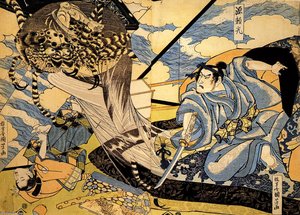
Musashi on the back of a whale tarafından Utagawa Kuniyoshi

Musashi on the back of a whale

Woodblock Print

This arresting image, a masterful execution of Ukiyo-e by the legendary artist Utagawa Kuniyoshi, transports us to 19th century Japan. Kuniyoshi, born Yoshisaburō in 1798 and tragically passing in 1861, was a pivotal figure at the close of the *ukiyo-e* movement – a vibrant artistic tradition that captured the essence of everyday life during the Edo period. This particular scene, depicting Musashi, the famed swordsman, astride a colossal whale, is…

2
Shikamatsu Kanroku Yukishige (1847) tarafından Utagawa Kuniyoshi

Shikamatsu Kanroku Yukishige

1847 · Woodblock Print

Utagawa Kuniyoshi’s “Shikamatsu Kanroku Yukishige” (circa 1847) is more than a depiction of a samurai; it’s a potent distillation of Japanese heroism, loyalty, and the fleeting beauty of a moment captured in woodblock form. This iconic image, part of Kuniyoshi's celebrated series “Stories of the True Loyalty of the Faithful Samurai,” transports us to a pivotal scene from the classic tale of Suikoden – a story of betrayal, redemption, and…

3
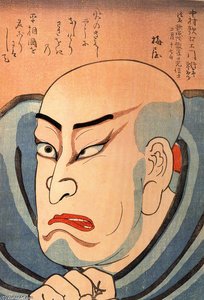
Hatakeyama sitting next to a Go board (1845) tarafından Utagawa Kuniyoshi

Hatakeyama sitting next to a Go board

1845 · Acrylic On Canvas

Utagawa Kuniyoshi’s “Hatakeyama Sitting Next to a Go Board” is more than just a depiction of a solitary figure; it's a window into the heart of 19th-century Japan. Painted in 1845, during a period of immense social and artistic change, this ukiyo-e masterpiece captures a quiet moment of contemplation – a scene imbued with layers of meaning reflecting the values and aesthetics of the Edo period. Kuniyoshi, one of the…

4
Yukukawa Sanpei Munenori (1848) tarafından Utagawa Kuniyoshi

Yukukawa Sanpei Munenori

1848 · Acrylic

This exceptional ukiyo-e print, created in 1848 by the master artist Utagawa Kuniyoshi, offers a captivating glimpse into the world of Edo-period Japan. Depicting Yukukawa Sanpei Munenori, a figure likely rooted in historical or legendary lore, the artwork is far more than a simple portrait; it’s a dynamic tableau brimming with action, symbolism, and the raw energy of a warrior's spirit. Kuniyoshi’s skill lies not just in his technical prowess…

5
The Twenty-four Paragons of Filial Piety in China , Script by Tanekazu : Min Ziqian (Bin Shiken) (1852) tarafından Utagawa Kuniyoshi

The Twenty-four Paragons of Filial Piety in China , Script by Tanekazu : Min Ziqian (Bin Shiken)

1852 · Woodblock Print · Keio University Library, Tokyo

Utagawa Kuniyoshi’s “The Twenty-Four Paragons of Filial Piety,” created circa 1848/50, stands as a pinnacle achievement of *ukiyo-e*, the Japanese woodblock print tradition that flourished during the Edo period. More than just a visually arresting spectacle—a sprawling landscape dominated by towering mountains rendered in subtle shades of azure—this monumental print delves into profound philosophical concepts rooted in Buddhism and Confucianism, offering a timeless meditation on reverence for ancestors and the…

6
Ôtaka Gengo Tadao (1848) tarafından Utagawa Kuniyoshi

Ôtaka Gengo Tadao

1848 · Woodblock Print

Within the vibrant tapestry of Ukiyo-e prints, few images capture the raw power and stoic determination of a warrior quite like Utagawa Kuniyoshi's "Otaka Gengo Tadao," created in 1848. This remarkable woodblock print isn’t merely a depiction of a samurai; it’s a window into the heart of Edo-period Japan, brimming with tales of loyalty, honor, and the enduring spirit of martial prowess. Kuniyoshi, one of the last masters of this…

7
Oki no Jiro Hiroari killing a monstrous tengu tarafından Utagawa Kuniyoshi

Oki no Jiro Hiroari killing a monstrous tengu

Woodblock Print

In the vibrant world of Ukiyo-e, few scenes command the eye with as much visceral intensity as Utagawa Kuniyoshi’s masterpiece, Oki no Jiro Hiroari killing a monstrous tengu. This dynamic mythological painting serves as a window into a moment of profound struggle, where the boundaries between the human and the supernatural blur amidst a backdrop of dark, foreboding shadows. The composition is anchored by the figure of Oki no Jiro…

8
Battle of Uji River. Uji kawa kassen no zu tarafından Utagawa Kuniyoshi

Battle of Uji River. Uji kawa kassen no zu

Acrylic On Canvas · Hammer Museum, Los Angeles

Utagawa Kuniyoshi’s “Battle of Uji River,” painted between 1848 and 1850, stands as a quintessential example of *nishiki-e*, or polychrome woodblock printing, capturing the fervor and grandeur of samurai warfare against a backdrop of breathtaking natural beauty. This monumental print transcends mere depiction; it’s an immersive experience designed to evoke emotion and convey profound themes of courage, resilience, and the ephemeral nature of glory.

11. sıradan 100. sıraya kadar Utagawa Kuniyoshi tabloları

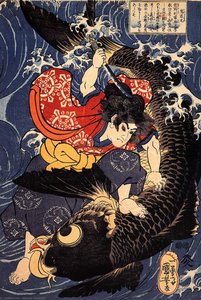
11The Twenty-four Paragons of Filial Piety in China , Script by Tanekazu : Ding Lan (Tei Ran) (1852) tarafından Utagawa KuniyoshiThe Twenty-four Paragons of Filial Piety in China , Script by Tanekazu : Ding Lan (Tei Ran)1852 · Keio University Library 12Thirty-six Famous Battles (1848) tarafından Utagawa KuniyoshiThirty-six Famous Battles1848 13Kiura Okaemon Sadayuki (1848) tarafından Utagawa KuniyoshiKiura Okaemon Sadayuki1848 14The Heavenly Weaver and the Heardsman (1842) tarafından Utagawa KuniyoshiThe Heavenly Weaver and the Heardsman1842 · Bristol Museum - Art Gallery 15Yata Gorôemon Suketake (1848) tarafından Utagawa KuniyoshiYata Gorôemon Suketake1848 16Oniwakamaru and the Giant Carp Fighting Underwater (1835) tarafından Utagawa KuniyoshiOniwakamaru and the Giant Carp Fighting Underwater1835 17A Votive Tablet with Masks of Kabuki Actors at Face Value tarafından Utagawa KuniyoshiA Votive Tablet with Masks of Kabuki Actors at Face ValueFukuoka City Museum 18The actor (12) tarafından Utagawa KuniyoshiThe actor (12) 19The Sixth Month (Right) (1849) tarafından Utagawa KuniyoshiThe Sixth Month (Right)1849 · British Museum 20Bon-bon Uta,Children tarafından Utagawa KuniyoshiBon-bon Uta,ChildrenFukuoka City Museum 21Scene from the play “The Life of Onoe Kikugorō III”\n\nScene from the play “The Life of Onoe Kikugorō III” (1847) tarafından Utagawa KuniyoshiScene from the play “The Life of Onoe Kikugorō III”\n\nScene from the play “The Life of Onoe Kikugorō III”1847 · Art Museum Riga Bourse 22Minamoto Yorimitsu also known as Raiko tarafından Utagawa KuniyoshiMinamoto Yorimitsu also known as Raiko 23Mount Fuji from the Sumida River embankment (1842) tarafından Utagawa KuniyoshiMount Fuji from the Sumida River embankment1842 24A record of origins of the great country of Japan tarafından Utagawa KuniyoshiA record of origins of the great country of Japan 25The actor (16) tarafından Utagawa KuniyoshiThe actor (16) 26Seaweed Gatherers at Omari (1833) tarafından Utagawa KuniyoshiSeaweed Gatherers at Omari1833 27The ghost of Taira Tomomori tarafından Utagawa KuniyoshiThe ghost of Taira Tomomori 28Thaishun with elephants tarafından Utagawa KuniyoshiThaishun with elephants 29Raiko tormented by the earth spider tarafından Utagawa KuniyoshiRaiko tormented by the earth spider 30Benkei holdin a halberd tarafından Utagawa KuniyoshiBenkei holdin a halberd 31A samurai overwhelming a giant serpent tarafından Utagawa KuniyoshiA samurai overwhelming a giant serpent 32The Famous Unrivalled Hidari Jingoro tarafından Utagawa KuniyoshiThe Famous Unrivalled Hidari Jingoro 33Samurai and the conquered tarafından Utagawa KuniyoshiSamurai and the conquered 34Kamigashihime stabbing a giant spider tarafından Utagawa KuniyoshiKamigashihime stabbing a giant spider 35Vesper bell at Todaiji tarafından Utagawa KuniyoshiVesper bell at Todaiji 36Oniwakamaru about to kill the giant carp tarafından Utagawa KuniyoshiOniwakamaru about to kill the giant carp 37Uneme is exorcising the monstrous serpent from the lake tarafından Utagawa KuniyoshiUneme is exorcising the monstrous serpent from the lake 38Shoki and Demon, Edo period (1850) tarafından Utagawa KuniyoshiShoki and Demon, Edo period1850 · Arthur M. Sackler Gallery 39Nichiren going into exile on the island of Sado tarafından Utagawa KuniyoshiNichiren going into exile on the island of Sado 40Uchiwakamaru fighting Benkei on Gojo bridge tarafından Utagawa KuniyoshiUchiwakamaru fighting Benkei on Gojo bridge 41The young Benkei holding a pole tarafından Utagawa KuniyoshiThe young Benkei holding a pole 42New edition of the life of a hundred generals tarafından Utagawa KuniyoshiNew edition of the life of a hundred generals 43Sharks tarafından Utagawa KuniyoshiSharks 44Koga Saburo, suspendeding a basket, watching a dragon tarafından Utagawa KuniyoshiKoga Saburo, suspendeding a basket, watching a dragon 45Kamei Rokuro and the Black Bear in the Snow (1849) tarafından Utagawa KuniyoshiKamei Rokuro and the Black Bear in the Snow1849 46Hattara Sonja with his white tiger tarafından Utagawa KuniyoshiHattara Sonja with his white tiger 47Ishi-jo, wife of Oboshi Yoshio, one of the loyal ronin (1848) tarafından Utagawa KuniyoshiIshi-jo, wife of Oboshi Yoshio, one of the loyal ronin1848 48Untitled (D2X8SB) (801) tarafından Utagawa KuniyoshiUntitled (D2X8SB)801 · Metropolitan Sanat Müzesi 49Yoshida Sadaemon Kanesada (1848) tarafından Utagawa KuniyoshiYoshida Sadaemon Kanesada1848 50Hara Gôemon Mototoki (1848) tarafından Utagawa KuniyoshiHara Gôemon Mototoki1848 51Woodcut (1852) tarafından Utagawa KuniyoshiWoodcut1852 · Museum of Far Eastern Antiquities 52Woodcut (1852) tarafından Utagawa KuniyoshiWoodcut1852 · Museum of Far Eastern Antiquities 53Island Enoshima. The Fuji can be seen far away tarafından Utagawa KuniyoshiIsland Enoshima. The Fuji can be seen far away 54Hayano Kanpei Tsuneyo (1848) tarafından Utagawa KuniyoshiHayano Kanpei Tsuneyo1848 · Cleveland Museum of Art 55In the Waves at Kakuda enroute to Sado Island, Edo period (1835) tarafından Utagawa KuniyoshiIn the Waves at Kakuda enroute to Sado Island, Edo period1835 · Arthur M. Sackler Gallery 56Woman selling decorative bowls tarafından Utagawa KuniyoshiWoman selling decorative bowls 57A fierce depiction of Uesugi Kenshin seated (1844) tarafından Utagawa KuniyoshiA fierce depiction of Uesugi Kenshin seated1844 58The Twenty-four Paragons of Filial Piety in China, Script by Tanekazu : Emperor Wen of Han (Kan no Buntei) (1852) tarafından Utagawa KuniyoshiThe Twenty-four Paragons of Filial Piety in China, Script by Tanekazu : Emperor Wen of Han (Kan no Buntei)1852 · Keio University Library 59The Twenty-four Paragons of Filial Piety in China , Script by Tanekazu : Cai Shun (Sai Jun) (1852) tarafından Utagawa KuniyoshiThe Twenty-four Paragons of Filial Piety in China , Script by Tanekazu : Cai Shun (Sai Jun)1852 · Keio University Library 60Isoai Jûroemon Masahisa (1848) tarafından Utagawa KuniyoshiIsoai Jûroemon Masahisa1848 61Tokuda Sadaemon Yukitaka (1848) tarafından Utagawa KuniyoshiTokuda Sadaemon Yukitaka1848 62Tamakatzura Tamatori attacked by the octopus tarafından Utagawa KuniyoshiTamakatzura Tamatori attacked by the octopus 63Bijin with a dog in the snow (1845) tarafından Utagawa KuniyoshiBijin with a dog in the snow1845 64From Suikoden of Japanese Heroes tarafından Utagawa KuniyoshiFrom Suikoden of Japanese Heroes 65Hatakeyama Shigetada tarafından Utagawa KuniyoshiHatakeyama Shigetada 66The sailor Tokuso and the sea monster tarafından Utagawa KuniyoshiThe sailor Tokuso and the sea monster 67Tokiwa Gozen in the snow tarafından Utagawa KuniyoshiTokiwa Gozen in the snow 68Mongaku doing penace at the Nachi waterfall tarafından Utagawa KuniyoshiMongaku doing penace at the Nachi waterfall 69Eight Hundred Heroes of Our Country tarafından Utagawa KuniyoshiEight Hundred Heroes of Our Country 70The suicide of morozumi Masakiyo tarafından Utagawa KuniyoshiThe suicide of morozumi Masakiyo 71Tametomo rescued from the sea monster by tengu tarafından Utagawa KuniyoshiTametomo rescued from the sea monster by tengu 72Miyamoto Musashi killing a giant tarafından Utagawa KuniyoshiMiyamoto Musashi killing a giant 73The Twenty-four Paragons of Filial Piety in China , Script by Tanekazu : Tanzi (Enshi) (1852) tarafından Utagawa KuniyoshiThe Twenty-four Paragons of Filial Piety in China , Script by Tanekazu : Tanzi (Enshi)1852 · Keio University Library 74The Twenty-four Paragons of Filial Piety in China , Script by Tanekazu : Jiang Shi (Kyo Shi) (1852) tarafından Utagawa KuniyoshiThe Twenty-four Paragons of Filial Piety in China , Script by Tanekazu : Jiang Shi (Kyo Shi)1852 · Keio University Library 75Hawk tarafından Utagawa KuniyoshiHawk 76Tengu tarafından Utagawa KuniyoshiTengu 77Otsu-e Paintings Coming Alive Triptych (1847) tarafından Utagawa KuniyoshiOtsu-e Paintings Coming Alive Triptych1847 78Lady-in-Waiting at Edo Castle (1854) tarafından Utagawa KuniyoshiLady-in-Waiting at Edo Castle1854 79Bando Shuka I as the courtesan Shiraito of Hashimoto-ya (1852) tarafından Utagawa KuniyoshiBando Shuka I as the courtesan Shiraito of Hashimoto-ya1852 · Art Gallery of New South Wales 80Self-portrait of the Shunga album tarafından Utagawa KuniyoshiSelf-portrait of the Shunga album 81Saitogo Kunitake, Japanese actor (1816) tarafından Utagawa KuniyoshiSaitogo Kunitake, Japanese actor1816 82Kuroda Ukinaga, Japanese actor (1816) tarafından Utagawa KuniyoshiKuroda Ukinaga, Japanese actor1816 83Sosan returning to his mother (1840) tarafından Utagawa KuniyoshiSosan returning to his mother1840 84Strings for night firing tarafından Utagawa KuniyoshiStrings for night firing 85Woman catching firefly by a stream tarafından Utagawa KuniyoshiWoman catching firefly by a stream 86Nakamura Kansuke Tadatoki (1848) tarafından Utagawa KuniyoshiNakamura Kansuke Tadatoki1848 87Yazama Shinroku Mitsukaze (1848) tarafından Utagawa KuniyoshiYazama Shinroku Mitsukaze1848 88Oribe Yasubei Taketsune (1848) tarafından Utagawa KuniyoshiOribe Yasubei Taketsune1848 89Katsuta Shin'emon Taketaka (1848) tarafından Utagawa KuniyoshiKatsuta Shin'emon Taketaka1848 90Senzaki Yagorô Noriyasu (1848) tarafından Utagawa KuniyoshiSenzaki Yagorô Noriyasu1848 91Ôboshi Rikiya Yoshikane (1848) tarafından Utagawa KuniyoshiÔboshi Rikiya Yoshikane1848 92Hayano Wasuke Tsunenari (1848) tarafından Utagawa KuniyoshiHayano Wasuke Tsunenari1848 93Writing a Label for Chrysanthemums (1844) tarafından Utagawa KuniyoshiWriting a Label for Chrysanthemums1844 94Shikamatsu Kanroku’s Manservant, Jinzaburô (1848) tarafından Utagawa KuniyoshiShikamatsu Kanroku’s Manservant, Jinzaburô1848 95Tokiwa-Gozen with her three children in the snow (1840) tarafından Utagawa KuniyoshiTokiwa-Gozen with her three children in the snow1840 96Neve, the moon is chilling (1845) tarafından Utagawa KuniyoshiNeve, the moon is chilling1845 97Shoriko kaei shooting a wild goose tarafından Utagawa KuniyoshiShoriko kaei shooting a wild goose 98One Hundred and Eight Heroes from the Chinese Tale, The Water Margin- Zhang Shun, alias White Stripe... tarafından Utagawa KuniyoshiOne Hundred and Eight Heroes from the Chinese Tale, The Water Margin- Zhang Shun, alias White Stripe...Tokyo Ulusal Müzesi 99Head of a Courtesan tarafından Utagawa KuniyoshiHead of a CourtesanHarvard Art Museums 100Ishiyakushi tarafından Utagawa KuniyoshiIshiyakushi

Utagawa Kuniyoshi'in dönemlere göre ünlü tabloları

Utagawa Kuniyoshi'ın ilgisini çeken konular

Bu orijinal eserlerde en sık karşılaşılan ve her biri en seçkin örneğine sahip olan dört konu.

Utagawa Kuniyoshi'in orijinal eserlerinin sergilendiği müzeler

Bu sayfadaki tabloların çoğuna ev sahipliği yapan 8 müze.

Müze Şehir Utagawa Kuniyoshi Eserleri Bu listedeki tablolar
Keio University Library, TokyoKeio University Library Tokyo 8 The Twenty-four Paragons of Filial Piety in China , Script by Tanekazu : Min Ziqian (Bin Shiken), The Twenty-four Paragons of Filial Piety in China , Script by Tanekazu : Guo Ju (Kaku Kyo), The Twenty-four Paragons of Filial Piety in China , Script by Tanekazu : Lu Ji (Riku Seki)
Fukuoka City Museum, FukuokaFukuoka City Museum Fukuoka 4 A Votive Tablet with Masks of Kabuki Actors at Face Value, Bon-bon Uta,Children
Arthur M. Sackler Gallery, Washington, D.C.Arthur M. Sackler Gallery Washington, D.C. 2 Shoki and Demon, Edo period, In the Waves at Kakuda enroute to Sado Island, Edo period
Museum of Far Eastern Antiquities, StockholmMuseum of Far Eastern Antiquities Stockholm 2 Woodcut, Woodcut
Hammer Museum, Los AngelesHammer Museum Los Angeles 2 Battle of Uji River. Uji kawa kassen no zu
Tokyo Ulusal Müzesi, TokyoTokyo Ulusal Müzesi Tokyo 2 One Hundred and Eight Heroes from the Chinese Tale, The Water Margin- Zhang Shun, alias White Stripe...
Bristol Museum - Art Gallery, BristolBristol Museum - Art Gallery Bristol 1 The Heavenly Weaver and the Heardsman
British Museum, LondraBritish Museum Londra 1 The Sixth Month (Right)

Utagawa Kuniyoshi, her on yıldan bir imza tablo

On yıllara göre eserler

O dönemi tanımlayan orijinal eseri görmek için bir on yıl seçin.

Utagawa Kuniyoshi'in tabloları: galeri yanıtları

Tüm Utagawa Kuniyoshi tabloları arasında en ünlüsü hangisidir?Cevabı göster

Musashi on the back of a whale. Ardından Shikamatsu Kanroku Yukishige (1847) ve Hatakeyama sitting next to a Go board (1845) geliyor.

Utagawa Kuniyoshi sanatçısının en iyi 10 tablosu hangileridir?Cevabı göster

Musashi on the back of a whale, Shikamatsu Kanroku Yukishige, Hatakeyama sitting next to a Go board, Yukukawa Sanpei Munenori, The Twenty-four Paragons of Filial Piety in China , Script by Tanekazu : Min Ziqian (Bin Shiken), Ôtaka Gengo Tadao, Oki no Jiro Hiroari killing a monstrous tengu, Battle of Uji River. Uji kawa kassen no zu, The Twenty-four Paragons of Filial Piety in China , Script by Tanekazu : Guo Ju (Kaku Kyo) ve The Twenty-four Paragons of Filial Piety in China , Script by Tanekazu : Lu Ji (Riku Seki). Yukarıdaki sıralama, her birinin yapım yılını ve bulunduğu müzeyi göstermektedir.

Utagawa Kuniyoshi kaç eser yarattı?Cevabı göster

Kataloğumuzda Utagawa Kuniyoshi tarafından 1816 ile 1854 tarihleri arasında üretilmiş 329 eser bulunmaktadır.

Utagawa Kuniyoshi'in en ünlü orijinal eserleri nerede sergileniyor?Cevabı göster

Çoğunlukla Keio University Library (Tokyo), Fukuoka City Museum (Fukuoka) ve Arthur M. Sackler Gallery (Washington, D.C.) bünyesinde yer almaktadır. Yukarıdaki müze tablosu tümünü listelemektedir.

Utagawa Kuniyoshi en ünlü tablolarını ne zaman yaptı?Cevabı göster

1840s döneminde: Bu sayfadaki 100 eserin 33 tanesi o dönemde yapılmıştır, bunların Shikamatsu Kanroku Yukishige tanesi ise Shikamatsu Kanroku Yukishige arasındadır.

Utagawa Kuniyoshi'in en erken ve en geç dönemlerine ait ünlü eserleri hangileridir?Cevabı göster

Bu sayfadaki en eski eser Saitogo Kunitake, Japanese actor (1816), en yeni eser ise Lady-in-Waiting at Edo Castle (1854)'dir.

Utagawa Kuniyoshi en çok hangi konulara geri döndü?Cevabı göster

Japanese art (15), Warrior (14) ve Samurai (14), bu sayfadaki 100 eser genelinde.

Utagawa Kuniyoshi en çok hangi teknikle çalıştı?Cevabı göster

Bu sayfadaki 100 eserin 56 tanesi Woodblock Print türündedir.

Utagawa Kuniyoshi hangi akımla ilişkilendiriliyor?Cevabı göster

bu sayfadaki orijinallerine bakılırsa Ukiyo-e,

Keio University Library bünyesinde hangi Utagawa Kuniyoshi orijinalleri bulunuyor?Cevabı göster

The Twenty-four Paragons of Filial Piety in China , Script by Tanekazu : Min Ziqian (Bin Shiken), The Twenty-four Paragons of Filial Piety in China , Script by Tanekazu : Guo Ju (Kaku Kyo) ve The Twenty-four Paragons of Filial Piety in China , Script by Tanekazu : Lu Ji (Riku Seki): Keio University Library, Tokyo, bu sayfadaki eserlerden 8 tanesine ev sahipliği yapmaktadır.

Utagawa Kuniyoshi: sanatçı

Ukiyo-e Dünyasına Dalmış Bir Yaşam

Utagawa Kuniyoshi, 1 Ocak 1798’de Edo (günümüz Tokyo'su) şehrinde Yoshisaburō adıyla doğmuş ve Edo döneminin canlı yaşamını yansıtan “kayan dünyanın resimleri” olarak bilinen *ukiyo-e* geleneğinin son dönemlerinin en önemli figürlerinden biri olarak öne çıkar. Onun yolculuğu, sanatsal çevrelerde değil, babasının ipek boyama işiyle uğraştığı pratik bir alanda başlamıştı. Bu erken dönemde renk ve desenle kurduğu bağ, daha sonraki eserlerine ince bir canlılık katacaktır. Ancak küçük yaşta bile Kuniyoshi, popüler baskılarda yer alan savaşçıların ve zanaatkârların dramatik dünyasıyla büyülenmişti. Bu biçimlendirici izlenimler, hayatının amacını belirleyen bir tutkuyu ateşlemiştir. 1811 yılında Utagawa Toyokuni I’in atölyesine girerek Kuniyoshi adını benimsemiş ve becerilerini geliştirdiği, Utagawa okulunun gelenekleriyle tanıştığı zorlu bir çıraklık sürecine başlamıştır.

Mütevazı Başlangıçlardan Ustalıklı Yeniliklere

Kuniyoshi’nin kariyerinin başları nispeten belirsiz bir dönemle karakterizedir. Yerleşik stillerde yetenekli olmasına rağmen, Edo baskı sanatının kalabalık ortamında kendine özgü sesini bulmakta zorlanmıştır. İlk eserleri büyük ölçüde öğretmenin çalışmalarını yansıtmış ve onu çağdaşlarından ayıracak pek bir şey sunmamıştır. Ancak bu keşif dönemi çok önemli olmuştur. Çeşitli türleri ve teknikleri deneyerek, dinamik kompozisyonlar, cesur renkler ve giderek daha sofistike bir anlatı yeteneği ile karakterize edilen kendine özgü bir yaklaşım geliştirmiştir. 1827’de yayınlanan *Popüler Suikoden'in Yüz Sekiz Kahramanı* adlı eseriyle bir dönüm noktasına ulaşmıştır. Bu eser, Kuniyoshi’yi şöhrete taşımış ve onu *musha-e* – savaşçı baskıları ustası olarak kabul ettirmiştir. Seri sadece kahramanlık hikayelerinin bir illüstrasyonu değildi; aynı zamanda Kuniyoshi'nin gelişen dramatik kompozisyon ve karakterizasyon yeteneğinin bir vitriniydi. Savaşçıları sadece tasvir etmekle kalmamış, onları etkileyici duygu ve ayrıntılı detaylarla hayata geçirmiştir.

Gelenek ve Batı Etkisinin Sentezi

Kuniyoshi’yi farklı kılan şey, geleneklere bağlı kalırken yenilikleri benimseme isteğidir. Edo dönemi sona yaklaşırken Japonya ile Batı arasındaki temas artmış ve Kuniyoshi, *ukiyo-e* sanatçılarından biri olarak eserlerine Batı perspektifi ve gölgelendirme unsurlarını dahil etmiştir. Bu sadece taklit değildi; bu teknikleri derinliği, gerçekçiliği ve dramatik etkiyi artırmak için ustalıkla entegre etmiştir. Özellikle manzaraları, atmosferik efektler ve mekânsal ilişkiler konusunda ustalık sergilemiş ve genellikle büyüklük ve hayranlık duygusu uyandırmıştır. Tekniklerin ötesinde Kuniyoshi, *ukiyo-e* konusunu genişletmiştir. Güzeller ve Kabuki oyuncuları gibi geleneksel temalar popülerliğini korurken, tarihi sahneler, mitolojik yaratıklar ve hatta çağdaş topluma yönelik hicivli yorumlar gibi yeni alanlara girmiştir. 1843 tarihli *Minamoto'nun Evinde Toprak Örümceği Bir Canavar Olarak Görünür* adlı üçlü eseri bu cesur yaklaşımın mükemmel bir örneğidir ve siyasi eleştiriyi fantastik bir anlatı içinde ustalıkla gizlemektedir.

Vizyoner Bir Sanatçının Mirası

Kuniyoshi’nin sonraki nesiller üzerindeki etkisi yadsınamazdır. Günümüzde hayranlık uyandıran 5000'den fazla tasarımdan oluşan geniş ve çeşitli bir eser mirası bırakmıştır. Geleneksel Japon estetiğini Batı teknikleriyle yenilikçi bir şekilde harmanlaması, yeni sanatsal olanaklar yaratmış ve geleneklere meydan okuma isteği *ukiyo-e*’nin kapsamını genişletmiştir. Meiji döneminde mirasını devam ettirecek Yoshitoshi gibi birçok öğrenci yetiştirmiştir.
  • Önemli seriler: Savaşçı baskı sanatında bir dönüm noktası olan *Popüler Suikoden'in Yüz Sekiz Kahramanı*.
  • Usta kompozisyonlar: Dinamik, görsel olarak çarpıcı sahneler yaratma yeteneği eşsizdir.
  • Yenilikçi teknikler: Batı perspektifinin ve gölgelendirmenin entegrasyonu *ukiyo-e* manzara resmini devrimleştirmiştir.
  • Genişletilmiş konu yelpazesi: *Ukiyo-e*’nin sınırlarını genişleterek yeni temaları ve anlatıları keşfetmiştir.
Kuniyoshi'nin sanatı sadece güzel görüntülerden ibaret değildir; büyüleyici bir döneme açılan bir pencere, sanatsal yeniliğin gücünün bir kanıtı ve Japon ruhunun kalıcı kutlamasıdır. O, Japon sanat tarihinde, eseri dünyanın dört bir yanındaki izleyicilerle yankılanmaya devam eden son büyük *ukiyo-e* ustalarından biri olarak sağlam bir yer edinmiştir. 14 Nisan 1861’de vefat etmiş ve geride bıraktığı mirasla adını ölümsüzleştirmiştir.