Utagawa Hiroshige portresi

Utagawa Hiroshige Tabloları: Bir Galerinin Gözünden En Ünlü 100 Eser

Kasım 2026 tarihinde güncellendi · popülerlik puanımıza göre sıralanmıştır (her bir eser için aramalar, ziyaretler ve siparişler) · 353 eser Utagawa Hiroshige kataloğumuzda

Özetle

Galerinin gözünde, Utagawa Hiroshige'in en ünlü tablosu, aslı Nagasaki, Nakagawa-machi Bato Hiroshige Müzesi içinde sergilenen Early Department from a Daimyo'dir. The maple leaves of Mama, Tekona shrine and Tsugi bridge (1857) ve Hakone (1834), her gözün hemen fark edeceği o üçlüyü tamamlıyor. Katalogumuzdaki Utagawa Hiroshige imzalı 353 eser arasından galerimiz, her biri yapıldığı yıl, sergilendiği müze ve onu eşsiz kılan özellikleriyle birlikte en ünlü 100 eseri aşağıda sunmaktadır.

1797 – 1858, Edo Japanese landscape painting En çok eser: Nakagawa-machi Bato Hiroshige Müzesi

Galerinin en iyi 10 Utagawa Hiroshige tablosu

1
Early Department from a Daimyo tarafından Utagawa Hiroshige

Early Department from a Daimyo

Woodblock Print · Nakagawa-machi Bato Hiroshige Müzesi, Nagasaki

In the delicate dance of lines and muted pigments, Utagawa Hiroshige’s Early Department from a Daimyo invites us to step through a portal into the heart of Edo-period Japan. This exquisite woodblock print captures a moment of vibrant communal life along a bustling riverside, where the rigid structures of social hierarchy melt into the shared leisure of a sunny afternoon. As we gaze upon the scene, we are not merely…

2
The maple leaves of Mama, Tekona shrine and Tsugi bridge (1857) tarafından Utagawa Hiroshige

The maple leaves of Mama, Tekona shrine and Tsugi bridge

1857 · Woodblock Print · Van Gogh Müzesi, Amsterdam

Utagawa Hiroshige (1797-1858), arguably the last titan of *ukiyo-e*, didn't merely depict landscapes; he crafted them into meditations on beauty and impermanence. “The Maple Leaves of Mama, Tekona Shrine and Tsugi Bridge,” created in 1857 during a period of significant societal transformation—the waning influence of feudal Japan as Western ideas crept in—stands as a testament to his enduring artistic legacy. More than just a visual record, it’s an embodiment of…

3
Hakone (1834) tarafından Utagawa Hiroshige

Hakone

1834 · Woodblock Print · Indianapolis Sanat Müzesi, Indianapolis

Utagawa Hiroshige’s “Hakone,” created in 1834, is more than just a landscape; it's a poetic meditation on the beauty and transience of nature within Edo-period Japan. This woodblock print, part of his renowned series "The Fifty-three Stations of the Tōkaidō," captures a specific moment along the vital trade route connecting Tokyo (then Edo) with Kyoto. However, Hiroshige elevates this seemingly simple depiction of a mountain pass into something profoundly evocative,…

4
Station 36, Goyu; Kyoka Tokaido Series (1855) tarafından Utagawa Hiroshige

Station 36, Goyu; Kyoka Tokaido Series

1855 · Woodblock Print · Indianapolis Sanat Müzesi, Indianapolis

In the delicate interplay of ink and paper, Utagawa Hiroshige’s "Station 36, Goyu; Kyoka Tokaido Series" offers much more than a mere topographical record of a journey. Completed in 1855, this exquisite woodblock print serves as a profound distillation of Edo-period sensibilities, capturing a yearning for tranquility amidst the burgeoning dynamism of a Japan in transition. As the nation stood at a pivotal crossroads between ancient feudal traditions and the…

5
Fushimi İstasyonu No. 51 (1842) tarafından Utagawa Hiroshige

Fushimi İstasyonu No. 51

1842 · Ağaç Baskı · Indianapolis Sanat Müzesi, Indianapolis

Fushimi Station #51: A Moment Frozen in Edo’s Tranquil Beauty Utagawa Hiroshige's "Fushimi Station #51," created in 1842, isn’t merely a depiction of a railway station; it’s a masterful distillation of Edo period Japan—a testament to Hiroshige’s unparalleled ability to capture the spirit of his time and convey profound emotion through meticulously crafted woodblock prints. This stunning horizontal *ōban* exemplifies Hiroshige's signature style, characterized by atmospheric perspective and an unwavering…

6
Ichikoku Bridge in the Eastern Capital (Tōto: Ichikoku bashi) (1858) tarafından Utagawa Hiroshige

Ichikoku Bridge in the Eastern Capital (Tōto: Ichikoku bashi)

1858 · Woodblock Print · Indianapolis Sanat Müzesi, Indianapolis

The Ichikoku Bridge spans a quiet stretch of water in the Eastern Capital. Beneath its wooden arch, two boats drift through the current. People move across the structure, some carrying backpacks and others clutching small handbags. A mountain rises in the distance, watching over the scene. Trees frame the edges of the view, their leaves casting shadows near the water's edge.

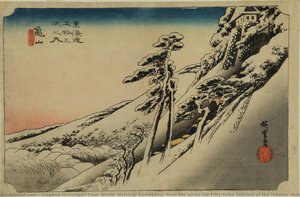
7
Shinagawa Sunrise from the series Fifty-three Stations on the Tokaido Road (1834) tarafından Utagawa Hiroshige

Shinagawa Sunrise from the series Fifty-three Stations on the Tokaido Road

1834 · Woodblock Print · Hill-Stead Museum, Farmington

In the soft, burgeoning light of a nineteenth-century morning, Utagawa Hiroshige invites us to witness a moment of profound stillness along the Tōkaidō road. Shinagawa Sunrise is not merely a depiction of a coastal village; it is a masterclass in the art of atmosphere. As the sun begins its ascent, the boundary between the heavens and the earth dissolves into a luminous haze. The water of the bay reflects a…

8
The Rokugo River Ferry, Kawasaki, from the series the Fifty-three Stations of the Tokaido (Hoeido edition ) tarafından Utagawa Hiroshige

The Rokugo River Ferry, Kawasaki, from the series the Fifty-three Stations of the Tokaido (Hoeido edition )

Woodblock Print · Nakagawa-machi Bato Hiroshige Müzesi, Nagasaki

In the delicate dance of woodblock printing, few masters captured the ephemeral beauty of Japanese life as profoundly as Utagawa Hiroshige. His masterpiece, The Rokugo River Ferry, Kawasaki, serves as a breathtaking window into the Edo period, inviting the viewer to step onto the bustling banks of one of the most vital crossings on the Tokaido road. This evocative scene from his legendary series, The Fifty-three Stations of the Tokaido,…

9
Itsukushima in Aki Province (1858) tarafından Utagawa Hiroshige

Itsukushima in Aki Province

1858 · Woodblock Print · Brooklyn Museum, Brooklyn

In the delicate interplay of mist and water, Itsukushima in Aki Province offers more than a mere glimpse of a Japanese landmark; it provides a profound meditation on the ephemeral nature of existence. Created by the legendary ukiyo-e master Ando Hiroshige in 1858, this woodcut print captures the spiritual essence of the Itsukushima shrine area with a poetic sensitivity that remains unparalleled. As one gazes upon the composition, the eye…

10
Tenryu River Ferry Crossing, Mitsuke, from the series The Fifty-three Stations of the Tokaido (Gyosho Edition) tarafından Utagawa Hiroshige

Tenryu River Ferry Crossing, Mitsuke, from the series The Fifty-three Stations of the Tokaido (Gyosho Edition)

Woodblock Print · Nakagawa-machi Bato Hiroshige Müzesi, Nagasaki

The woodblock print depicts a section of the Tenryu River near the station of Mitsuke. In the center of the composition, a large sandbank divides the water into two distinct currents. Several small wooden boats occupy the river, with figures positioned within them to manage the crossing. Some vessels are moored directly against the central sandbank, while others navigate the moving water. The far shore is visible in the distance,…

11. sıradan 100. sıraya kadar Utagawa Hiroshige tabloları

11Papağız ve Üzümlü Bağlar (1800) tarafından Utagawa HiroshigePapağız ve Üzümlü Bağlar1800 · Indianapolis Sanat Müzesi 12The Pine Woods of Miho in Suruga Province (Suruga Miho no matsubara) (1858) tarafından Utagawa HiroshigeThe Pine Woods of Miho in Suruga Province (Suruga Miho no matsubara)1858 · Indianapolis Sanat Müzesi 1362 (55) Komakata Hall and Azuma Bridge (1857) tarafından Utagawa Hiroshige62 (55) Komakata Hall and Azuma Bridge1857 · Brooklyn Museum 14Evening Snow at Kanbara (1834) tarafından Utagawa HiroshigeEvening Snow at Kanbara1834 · Los Angeles County Museum of Art 15Dawn in the licensed quarters (1857) tarafından Utagawa HiroshigeDawn in the licensed quarters1857 · Art Gallery of New South Wales 16Night View of Saruwakacho tarafından Utagawa HiroshigeNight View of Saruwakacho 17Station 28, Fukuroi (1855) tarafından Utagawa HiroshigeStation 28, Fukuroi1855 · Indianapolis Sanat Müzesi 18Evening Snow at Asakusa or Woman with Umbrella from the series Eight Views of the Environs of Edo (1800) tarafından Utagawa HiroshigeEvening Snow at Asakusa or Woman with Umbrella from the series Eight Views of the Environs of Edo1800 · Hill-Stead Museum 19Keishi (Kyoto), Capital (1834) tarafından Utagawa HiroshigeKeishi (Kyoto), Capital1834 · Indianapolis Sanat Müzesi 20Hara: View of Ashitakayama and Fuji (1855) tarafından Utagawa HiroshigeHara: View of Ashitakayama and Fuji1855 · Indianapolis Sanat Müzesi 21Yokkaichi (Station #44) (1834) tarafından Utagawa HiroshigeYokkaichi (Station #44)1834 · Indianapolis Sanat Müzesi 22Desolate Wintry Scene, Hamamatsu, from the series the Fifty-three Stations of the Tokaido (Hoeido edition) tarafından Utagawa HiroshigeDesolate Wintry Scene, Hamamatsu, from the series the Fifty-three Stations of the Tokaido (Hoeido edition)Nakagawa-machi Bato Hiroshige Müzesi 23Noge and Yokohama in Musashi Province (Musashi, Noge, Yokohama) (1858) tarafından Utagawa HiroshigeNoge and Yokohama in Musashi Province (Musashi, Noge, Yokohama)1858 · Indianapolis Sanat Müzesi 24Wild sea breaking on the rocks (1856) tarafından Utagawa HiroshigeWild sea breaking on the rocks1856 25Şima Sırağı (Shiomi Sırağı) (1833) tarafından Utagawa HiroshigeŞima Sırağı (Shiomi Sırağı)1833 · Indianapolis Sanat Müzesi 26Mt.Fuji on the Left, Yoshiwara, from the series the Fifty-three Stations of the Tokaido (Hoeido edition) tarafından Utagawa HiroshigeMt.Fuji on the Left, Yoshiwara, from the series the Fifty-three Stations of the Tokaido (Hoeido edition)Nakagawa-machi Bato Hiroshige Müzesi 27Tsukuda Offing in the Eastern Capital (Tōto: Tsukuda oki) (1858) tarafından Utagawa HiroshigeTsukuda Offing in the Eastern Capital (Tōto: Tsukuda oki)1858 · Indianapolis Sanat Müzesi 28Kawachi (1853) tarafından Utagawa HiroshigeKawachi1853 · Indianapolis Sanat Müzesi 29The Dye Craft Shops of Arimatsu, Narumi, from the series The Fifty-three Stations of the Tokaido (Gyosho edition) tarafından Utagawa HiroshigeThe Dye Craft Shops of Arimatsu, Narumi, from the series The Fifty-three Stations of the Tokaido (Gyosho edition)Nakagawa-machi Bato Hiroshige Müzesi 30View of Shiomi Slope, Shirasuka, from the series The Fifty-three Stations of the Tokaido (Gyosho edition) tarafından Utagawa HiroshigeView of Shiomi Slope, Shirasuka, from the series The Fifty-three Stations of the Tokaido (Gyosho edition)Nakagawa-machi Bato Hiroshige Müzesi 31Entrance to Enoshima in Sagami Province (Sagami Enoshima iriguchi) (1858) tarafından Utagawa HiroshigeEntrance to Enoshima in Sagami Province (Sagami Enoshima iriguchi)1858 · Indianapolis Sanat Müzesi 32Morning Mist, Mishima, from the series the Fifty-three Stations of the Tokaido (Hoeido edition ) tarafından Utagawa HiroshigeMorning Mist, Mishima, from the series the Fifty-three Stations of the Tokaido (Hoeido edition )Nakagawa-machi Bato Hiroshige Müzesi 33The Imagire Sea Ferry, Maisaka, from the series The Fifty-three Stations of the Tokaido (Gyosho edition) tarafından Utagawa HiroshigeThe Imagire Sea Ferry, Maisaka, from the series The Fifty-three Stations of the Tokaido (Gyosho edition)Nakagawa-machi Bato Hiroshige Müzesi 34Sukiya Riverbank in the Eastern Capital (Tōto sukiya kaigan) (1858) tarafından Utagawa HiroshigeSukiya Riverbank in the Eastern Capital (Tōto sukiya kaigan)1858 · Indianapolis Sanat Müzesi 35Satta Pass, Yui, from the series the Fifty-three Stations of the Tokaido (Hoeido edition) tarafından Utagawa HiroshigeSatta Pass, Yui, from the series the Fifty-three Stations of the Tokaido (Hoeido edition)Nakagawa-machi Bato Hiroshige Müzesi 36True View of Imagire, Maisaka, from the series the Fifty-three Stations of the Tokaido (Hoeido edition) tarafından Utagawa HiroshigeTrue View of Imagire, Maisaka, from the series the Fifty-three Stations of the Tokaido (Hoeido edition)Nakagawa-machi Bato Hiroshige Müzesi 37Clear Winter Morning, Kameyama, from the series the Fifty-three Stations of the Tokaido (Hoeido edition) tarafından Utagawa HiroshigeClear Winter Morning, Kameyama, from the series the Fifty-three Stations of the Tokaido (Hoeido edition)Nakagawa-machi Bato Hiroshige Müzesi 38The Tenryu River, Mitsuke, from the series the Fifty-three Stations of the Tokaido (Hoeido edition) tarafından Utagawa HiroshigeThe Tenryu River, Mitsuke, from the series the Fifty-three Stations of the Tokaido (Hoeido edition)Nakagawa-machi Bato Hiroshige Müzesi 39The Seven-ri Ferry Crossing, Kuwana, from the series the Fifty-three Stations of the Tokaido (Hoeido edition) tarafından Utagawa HiroshigeThe Seven-ri Ferry Crossing, Kuwana, from the series the Fifty-three Stations of the Tokaido (Hoeido edition)Nakagawa-machi Bato Hiroshige Müzesi 40Aronia and Bullfinch tarafından Utagawa HiroshigeAronia and Bullfinch 41Katata'da Kuşların Dönüşü (1834) tarafından Utagawa HiroshigeKatata'da Kuşların Dönüşü1834 · Indianapolis Sanat Müzesi 42Yugyoji Temple, Fujisawa, from the series the Fifty-three Stations of the Tokaido (Hoeido edition) tarafından Utagawa HiroshigeYugyoji Temple, Fujisawa, from the series the Fifty-three Stations of the Tokaido (Hoeido edition)Nakagawa-machi Bato Hiroshige Müzesi 43Travellers and Soliciting Women, Goyu, from the series the Fifty-three Stations of the Tokaido (Hoeido edition) tarafından Utagawa HiroshigeTravellers and Soliciting Women, Goyu, from the series the Fifty-three Stations of the Tokaido (Hoeido edition)Nakagawa-machi Bato Hiroshige Müzesi 44The Totoumi Bank of the Oi River, Kanaya, from the series the Fifty-three Stations of the Tokaido (Hoeido edition) tarafından Utagawa HiroshigeThe Totoumi Bank of the Oi River, Kanaya, from the series the Fifty-three Stations of the Tokaido (Hoeido edition)Nakagawa-machi Bato Hiroshige Müzesi 45The Suruga Bank of the Oi River, Shimada, from the series the Fifty-three Stations of the Tokaido (Hoeido edition) tarafından Utagawa HiroshigeThe Suruga Bank of the Oi River, Shimada, from the series the Fifty-three Stations of the Tokaido (Hoeido edition)Nakagawa-machi Bato Hiroshige Müzesi 46Kyoka Tokaido Series, Kanagawa (Yokohama) tarafından Utagawa HiroshigeKyoka Tokaido Series, Kanagawa (Yokohama)Indianapolis Sanat Müzesi 47Distant View of Miho, Ejiri, from the series the Fifty-three Stations of the Tokaido (Hoeido edition) tarafından Utagawa HiroshigeDistant View of Miho, Ejiri, from the series the Fifty-three Stations of the Tokaido (Hoeido edition)Nakagawa-machi Bato Hiroshige Müzesi 48Mt. Fuji in the Morning, Hara, from the series the Fifty-three Stations of the Tokaido (Hoeido edition) tarafından Utagawa HiroshigeMt. Fuji in the Morning, Hara, from the series the Fifty-three Stations of the Tokaido (Hoeido edition)Nakagawa-machi Bato Hiroshige Müzesi 49A Horse Fair, Chiriu, from the series the Fifty-three Stations of the Tokaido (Hoeido edition) tarafından Utagawa HiroshigeA Horse Fair, Chiriu, from the series the Fifty-three Stations of the Tokaido (Hoeido edition)Nakagawa-machi Bato Hiroshige Müzesi 50Wakasa (1853) tarafından Utagawa HiroshigeWakasa1853 · Indianapolis Sanat Müzesi 51Distant View of Mt.Akiba, Kakegawa, from the series the Fifty-three Stations of the Tokaido (Hoeido edition) tarafından Utagawa HiroshigeDistant View of Mt.Akiba, Kakegawa, from the series the Fifty-three Stations of the Tokaido (Hoeido edition)Nakagawa-machi Bato Hiroshige Müzesi 52The Ichiri-Han Sea Ferry, Arai, from the series The Fifty-three Stations of the Tokaido (Gyosho edition) tarafından Utagawa HiroshigeThe Ichiri-Han Sea Ferry, Arai, from the series The Fifty-three Stations of the Tokaido (Gyosho edition)Nakagawa-machi Bato Hiroshige Müzesi 53Gateway Entrance to the Atsuta Shrine on the Beach, Miya, from the series The Fifty-three Stations of the Tokaido (Gyosho edition) tarafından Utagawa HiroshigeGateway Entrance to the Atsuta Shrine on the Beach, Miya, from the series The Fifty-three Stations of the Tokaido (Gyosho edition)Nakagawa-machi Bato Hiroshige Müzesi 54Akasaka, from the series The Fifty-three Stations of the Tokaido (Gyosho edition) tarafından Utagawa HiroshigeAkasaka, from the series The Fifty-three Stations of the Tokaido (Gyosho edition)Nakagawa-machi Bato Hiroshige Müzesi 55The Sakawa River, Odawara, from the series the Fifty-three Stations of the Tokaido (Hoeido edition) tarafından Utagawa HiroshigeThe Sakawa River, Odawara, from the series the Fifty-three Stations of the Tokaido (Hoeido edition)Nakagawa-machi Bato Hiroshige Müzesi 56A Footpath between Ricefield, Hiratsuka, from the series the Fifty-three Stations of the Tokaido (Hoeido edition) tarafından Utagawa HiroshigeA Footpath between Ricefield, Hiratsuka, from the series the Fifty-three Stations of the Tokaido (Hoeido edition)Nakagawa-machi Bato Hiroshige Müzesi 57Awa Province: Whirlpool at Naruto (1853) tarafından Utagawa HiroshigeAwa Province: Whirlpool at Naruto1853 5873 The City Flourishing, the Tanabata Festival (1857) tarafından Utagawa Hiroshige73 The City Flourishing, the Tanabata Festival1857 59Sarugababa Plain, Futagawa, from the series the Fifty-three Stations of the Tokaido (Hoeido edition) tarafından Utagawa HiroshigeSarugababa Plain, Futagawa, from the series the Fifty-three Stations of the Tokaido (Hoeido edition)Nakagawa-machi Bato Hiroshige Müzesi 60Local Specialty Teahouse, Mariko, from the series the Fifty-three Stations of the Tokaido (Hoeido edition) tarafından Utagawa HiroshigeLocal Specialty Teahouse, Mariko, from the series the Fifty-three Stations of the Tokaido (Hoeido edition)Nakagawa-machi Bato Hiroshige Müzesi 61Sakanoshita tarafından Utagawa HiroshigeSakanoshitaIndianapolis Sanat Müzesi 62Station 23, Fujieda tarafından Utagawa HiroshigeStation 23, FujiedaIndianapolis Sanat Müzesi 63Marsh Grasses and Mandarin Ducks tarafından Utagawa HiroshigeMarsh Grasses and Mandarin Ducks 6450th station, Minakuchi tarafından Utagawa Hiroshige50th station, Minakuchi 65Sakanoshita: the Throwing Away the Brush Peak (1834) tarafından Utagawa HiroshigeSakanoshita: the Throwing Away the Brush Peak1834 · Brooklyn Museum 66Shibaura Bay of Musashi Province (801) tarafından Utagawa HiroshigeShibaura Bay of Musashi Province801 · Metropolitan Sanat Müzesi 67Koyurugi Beach of Sagami Province (801) tarafından Utagawa HiroshigeKoyurugi Beach of Sagami Province801 · Metropolitan Sanat Müzesi 68Honmoku Bay of Musashi Province (801) tarafından Utagawa HiroshigeHonmoku Bay of Musashi Province801 · Metropolitan Sanat Müzesi 69Untitled (Two Rabbits, Pampas Grass, and Full Moon) (1851) tarafından Utagawa HiroshigeUntitled (Two Rabbits, Pampas Grass, and Full Moon)1851 7011. Kiyomizu Hall and Shinobazu Pond at Ueno (1857) tarafından Utagawa Hiroshige11. Kiyomizu Hall and Shinobazu Pond at Ueno1857 7185. Kinokuni Hill and Distant View of Akasaka and the Tameike Pond (1857) tarafından Utagawa Hiroshige85. Kinokuni Hill and Distant View of Akasaka and the Tameike Pond1857 7276 Bamboo Quay by Kyōbashi Bridge (1857) tarafından Utagawa Hiroshige76 Bamboo Quay by Kyōbashi Bridge1857 7358 (52) Sudden Shower over Shin-Ōhashi bridge and Atake (1857) tarafından Utagawa Hiroshige58 (52) Sudden Shower over Shin-Ōhashi bridge and Atake1857 · Tokyo Fuji Art Museum 74103. Senju Great Bridge (1857) tarafından Utagawa Hiroshige103. Senju Great Bridge1857 7518. The Ōji Inari Shrine (1857) tarafından Utagawa Hiroshige18. The Ōji Inari Shrine1857 76113. Aoi Slope Outside Toranomon Gate (1857) tarafından Utagawa Hiroshige113. Aoi Slope Outside Toranomon Gate1857 77114. Bikuni Bridge in Snow (1857) tarafından Utagawa Hiroshige114. Bikuni Bridge in Snow1857 7870 (60) The Mouth of the Nakagawa River (1857) tarafından Utagawa Hiroshige70 (60) The Mouth of the Nakagawa River1857 792. Kasumigaseki (1857) tarafından Utagawa Hiroshige2. Kasumigaseki1857 8015. Suwa Bluff in Nippori (1857) tarafından Utagawa Hiroshige15. Suwa Bluff in Nippori1857 8163 (69) The Ayase River and Kanegafuchi (1857) tarafından Utagawa Hiroshige63 (69) The Ayase River and Kanegafuchi1857 82115. The Takata Riding Grounds (1857) tarafından Utagawa Hiroshige115. The Takata Riding Grounds1857 8386. Naitō Shinjuku in Yotsuya (1857) tarafından Utagawa Hiroshige86. Naitō Shinjuku in Yotsuya1857 8416. Flower Park and Dangozaka Slope in Sendagi (1857) tarafından Utagawa Hiroshige16. Flower Park and Dangozaka Slope in Sendagi1857 8568 (59) Open Garden at the Hachiman Shrine in Fukagawa (1857) tarafından Utagawa Hiroshige68 (59) Open Garden at the Hachiman Shrine in Fukagawa1857 8610. Sunrise at Kanda Myōjin Shrine (1857) tarafından Utagawa Hiroshige10. Sunrise at Kanda Myōjin Shrine1857 87Peach and Long-tailed Bird tarafından Utagawa HiroshigePeach and Long-tailed Bird 88Golden Pheasant in Bracken tarafından Utagawa HiroshigeGolden Pheasant in Bracken 89The Imado Bridge at the Foot of Mount Matsuchi (801) tarafından Utagawa HiroshigeThe Imado Bridge at the Foot of Mount Matsuchi801 · Metropolitan Sanat Müzesi 90Dog (1858) tarafından Utagawa HiroshigeDog1858 · Indianapolis Sanat Müzesi 91118. Kitsunebi on New Year's Night Under the Enoki Tree near Ōji (1857) tarafından Utagawa Hiroshige118. Kitsunebi on New Year's Night Under the Enoki Tree near Ōji1857 92109. Minami Shinagawa and Samezu Coast (1857) tarafından Utagawa Hiroshige109. Minami Shinagawa and Samezu Coast1857 93Night View of Matsuchiyama and the San (1857) tarafından Utagawa HiroshigeNight View of Matsuchiyama and the San1857 · Los Angeles County Museum of Art 94阿佐賀、三十七号 tarafından Utagawa Hiroshige阿佐賀、三十七号Indianapolis Sanat Müzesi 95Shiojiri Pass in Shinano Province (Shinano Shiojiritōge) (1858) tarafından Utagawa HiroshigeShiojiri Pass in Shinano Province (Shinano Shiojiritōge)1858 · Indianapolis Sanat Müzesi 96Yoshiwara tarafından Utagawa HiroshigeYoshiwaraIndianapolis Sanat Müzesi 97Fuchu, No. 20 tarafından Utagawa HiroshigeFuchu, No. 20Indianapolis Sanat Müzesi 98Woman Walking in the Snow (1850) tarafından Utagawa HiroshigeWoman Walking in the Snow1850 · Metropolitan Sanat Müzesi 9982. Moon Viewing (1857) tarafından Utagawa Hiroshige82. Moon Viewing1857 100Station 27, Kakegawa (1855) tarafından Utagawa HiroshigeStation 27, Kakegawa1855 · Indianapolis Sanat Müzesi

Utagawa Hiroshige'in dönemlere göre ünlü tabloları

Utagawa Hiroshige'ın ilgisini çeken konular

Bu orijinal eserlerde en sık karşılaşılan ve her biri en seçkin örneğine sahip olan dört konu.

Utagawa Hiroshige'in orijinal eserlerinin sergilendiği müzeler

Bu sayfadaki tabloların çoğuna ev sahipliği yapan 8 müze.

Müze Şehir Utagawa Hiroshige Eserleri Bu listedeki tablolar
Nakagawa-machi Bato Hiroshige Müzesi, NagasakiNakagawa-machi Bato Hiroshige Müzesi Nagasaki 30 Early Department from a Daimyo, The Rokugo River Ferry, Kawasaki, from the series the Fifty-three Stations of the Tokaido (Hoeido edition ), Tenryu River Ferry Crossing, Mitsuke, from the series The Fifty-three Stations of the Tokaido (Gyosho Edition)
Indianapolis Sanat Müzesi, IndianapolisIndianapolis Sanat Müzesi Indianapolis 35 Hakone, Station 36, Goyu; Kyoka Tokaido Series, Fushimi İstasyonu No. 51
Metropolitan Sanat Müzesi, New YorkMetropolitan Sanat Müzesi New York 8 Shibaura Bay of Musashi Province, Koyurugi Beach of Sagami Province, Honmoku Bay of Musashi Province
Brooklyn Museum, BrooklynBrooklyn Museum Brooklyn 4 Itsukushima in Aki Province, 62 (55) Komakata Hall and Azuma Bridge, Sakanoshita: the Throwing Away the Brush Peak
Hill-Stead Museum, FarmingtonHill-Stead Museum Farmington 3 Shinagawa Sunrise from the series Fifty-three Stations on the Tokaido Road, Evening Snow at Asakusa or Woman with Umbrella from the series Eight Views of the Environs of Edo
Los Angeles County Museum of Art, Los AngelesLos Angeles County Museum of Art Los Angeles 2 Evening Snow at Kanbara, Night View of Matsuchiyama and the San
Van Gogh Müzesi, AmsterdamVan Gogh Müzesi Amsterdam 1 The maple leaves of Mama, Tekona shrine and Tsugi bridge
Art Gallery of New South Wales, SidneyArt Gallery of New South Wales Sidney 1 Dawn in the licensed quarters

Utagawa Hiroshige, her on yıldan bir imza tablo

On yıllara göre eserler

O dönemi tanımlayan orijinal eseri görmek için bir on yıl seçin.

Utagawa Hiroshige'in tabloları: galeri yanıtları

Tüm Utagawa Hiroshige tabloları arasında en ünlüsü hangisidir?Cevabı göster

Early Department from a Daimyo, Nakagawa-machi Bato Hiroshige Müzesi, Nagasaki. Ardından The maple leaves of Mama, Tekona shrine and Tsugi bridge (1857) ve Hakone (1834) geliyor.

Utagawa Hiroshige sanatçısının en iyi 10 tablosu hangileridir?Cevabı göster

Early Department from a Daimyo, The maple leaves of Mama, Tekona shrine and Tsugi bridge, Hakone, Station 36, Goyu; Kyoka Tokaido Series, Fushimi İstasyonu No. 51, Ichikoku Bridge in the Eastern Capital (Tōto: Ichikoku bashi), Shinagawa Sunrise from the series Fifty-three Stations on the Tokaido Road, The Rokugo River Ferry, Kawasaki, from the series the Fifty-three Stations of the Tokaido (Hoeido edition ), Itsukushima in Aki Province ve Tenryu River Ferry Crossing, Mitsuke, from the series The Fifty-three Stations of the Tokaido (Gyosho Edition). Yukarıdaki sıralama, her birinin yapım yılını ve bulunduğu müzeyi göstermektedir.

Utagawa Hiroshige kaç eser yarattı?Cevabı göster

Kataloğumuzda Utagawa Hiroshige tarafından 1833 ile 1858 tarihleri arasında üretilmiş 353 eser bulunmaktadır.

Utagawa Hiroshige'in en ünlü orijinal eserleri nerede sergileniyor?Cevabı göster

Çoğunlukla Nakagawa-machi Bato Hiroshige Müzesi (Nagasaki), Indianapolis Sanat Müzesi (Indianapolis) ve Metropolitan Sanat Müzesi (New York) bünyesinde yer almaktadır. Yukarıdaki müze tablosu tümünü listelemektedir.

Utagawa Hiroshige en ünlü tablolarını ne zaman yaptı?Cevabı göster

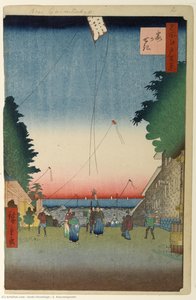
1850s döneminde: Bu sayfadaki 100 eserin 44 tanesi o dönemde yapılmıştır, bunların The maple leaves of Mama, Tekona shrine and Tsugi bridge tanesi ise The maple leaves of Mama, Tekona shrine and Tsugi bridge arasındadır.

Utagawa Hiroshige'in en erken ve en geç dönemlerine ait ünlü eserleri hangileridir?Cevabı göster

Bu sayfadaki en eski eser Şima Sırağı (Shiomi Sırağı) (1833), en yeni eser ise Ichikoku Bridge in the Eastern Capital (Tōto: Ichikoku bashi) (1858)'dir.

Utagawa Hiroshige en çok hangi konulara geri döndü?Cevabı göster

Edo period (31), Ukiyo-e (22) ve Woodblock print (20), bu sayfadaki 100 eser genelinde.

Utagawa Hiroshige en çok hangi teknikle çalıştı?Cevabı göster

Bu sayfadaki 100 eserin 88 tanesi Woodblock Print türündedir.

Utagawa Hiroshige hangi akımla ilişkilendiriliyor?Cevabı göster

bu sayfadaki orijinallerine bakılırsa Japanese landscape painting,

Nakagawa-machi Bato Hiroshige Müzesi bünyesinde hangi Utagawa Hiroshige orijinalleri bulunuyor?Cevabı göster

Early Department from a Daimyo, The Rokugo River Ferry, Kawasaki, from the series the Fifty-three Stations of the Tokaido (Hoeido edition ) ve Tenryu River Ferry Crossing, Mitsuke, from the series The Fifty-three Stations of the Tokaido (Gyosho Edition): Nakagawa-machi Bato Hiroshige Müzesi, Nagasaki, bu sayfadaki eserlerden 29 tanesine ev sahipliği yapmaktadır.

Utagawa Hiroshige: sanatçı

Edo Japonya'sının Şiirsel Bir Vizyonu: Utagawa Hiroshige'nin Yaşamı ve Sanatı

1797 yılında Edo'nun (modern Tokyo) hareketli sokaklarında Andō Tokutarō adıyla dünyaya gelen Utagawa Hiroshige, ukiyo-e, yani "yüzen dünyanın resimleri" dünyasının en kilit figürlerinden biri olarak durmaktadır. Japon ahşap baskı geleneklerine derinden kök salmış olsa da Hiroshige, basit bir kopyalamanın ötesine geçerek manzaralarını hem Japonya'da hem de daha sonra Batı sanat dünyasında derin yankı uyandıran şiirsel bir duyarlılıkla donatmıştır. Hayatı, Tokugawa şogunluğu dönemindeki göreceli barış ve refah içinde şekillenirken, aynı zamanda artan sosyal değişimler ve nihayetinde gelen Batılılaşma ile damgalanmış bir süreçte geçmiştir; bu güçler, Hiroshagie'nin kalıcı mirasını yüceltirken ukiyo-e geleneğinin gerilemesine de katkıda bulunmuştur. Başlangıçta bir samuray ailesinin içinde, babasının bir itfaiye denetçisi olarak görev yaptığı daha geleneksel bir yola mahkum edilmiş olsa da Hiroshige'nin sanatsal eğilimleri onu Utagawa okulunun ustası Utagawa Toyohiro'nun yanına çırak olarak yönlendirmiştir. Bu durum, onu birçok ukiyo-e sanatçısının tercih ettiği popüler kurtizan ve aktör tasvirlerinden uzaklaştırarak, nihayetinde yeniden tanımlayacağı bir tür olan manzara resmine odaklanmasını sağlayan çok önemli bir dönüm noktası olmuştur.

Tür Sahnelerinden Etkileyici Manzaralara

Hiroshige'nin ilk çalışmaları, portreler ve günlük yaşamdan sahneler içeren okulunun geleneklerine bağlı kalıyordu. Ancak onu asıl farklı kılan, manzarayı kucaklamasıydı. Fuji Dağı'nın Otuz Altı Görünümü ile izleyicileri zaten büyülemiş olan Hokusai gibi önceki ustaların etkisinde kalan Hiroshige; atmosferik perspektif, ince renk paletleri ve değişen mevsimlere karşı derin bir hassasiyetle karakterize edilen eşsiz bir stil geliştirdi. O, sadece yerleri tasvir etmiyordu; zamanın belirli bir anının özünü yakalayarak o mekanların ruhunu çağrıştırıyordu. Belki de en ünlü başarısı olan Tōkaidō'nun Elli Üç İstasyonu serisi (1833–1834), bu yaklaşımın en güzel örneğidir. Bu anıtsal eser, Edo'yu Kyoto'ya bağlayan ana güzergah olan Tōkaidō yolu boyunca yapılan yolculuğu düz bir gezi günlüğü olarak değil, etkileyici birer kesit olarak belgeledi: Shono'da ani bir sağanak yağmur, Kanaya'dan Fuji Dağı'nın uzak manzarası, Odawara'daki hareketli yaşam. Her bir baskı, izleyiciyi gezginlerle birlikte yolculuğu deneyimlemeye davet eden bir geçicilik duygusu ve sessiz bir güzellik ile doludur. Renklerde ince geçişler yaratarak kompozisyonlarına derinlik ve atmosfer katan bokashi tekniğini ustalıkla kullanmıştır.

Atmosfer ve Tekniğin Ustası

Hiroshige'nin teknik becerisi, sanatsal vizyonu kadar olağanüstüydü. O, sadece doğru bir temsil ile ilgilenmiyordu; bir yerin hissini yakalamayı amaçlıyordu. Renk kullanımı, çağdaşlarının bazılarına kıyasla genellikle ölçülü olsa da bu etkiyi elde etmede hayati bir rol oynuyordu. Tek bir renk için sık sık birden fazla blok kullanarak, taklit edilmesi inanılmaz derecede zor olan nüanslı tonlar ve atmosferik etkiler yaratabiliyordu. Yağmur veya sis tasvirlerindeki narin mavi yıkamalar, sonbahar yapraklarının sıcak tonları; bunlar tesadüf değildi; belirli duyguları ve duyumları uyandırmak için dikkatle düşünülmüş unsurlardı. Bokashi'nin ötesinde Hiroshige, Japon estetiğinin merkezinde yer alan boşluk kullanımı – ma – konusunda da yetenekliydi; bu sayede baskının belirli alanlarının "nefes almasına" izin veriyor ve genel huzur duygusunu artırıyordu. Edo'nun Yüz Ünlü Manzarası serisi (1856–1858), sevdiği şehrin yaşamına ve manzaralarına dair samimi bakışlar sunarak ustalığını bir kez daha kanıtladı.

Kalıcı Miras: Japonizm ve Ötesi

Hiroshige'nin 1858'deki ölümünden sonra ukiyo-e geleneği zayıflamaya başlasa da – Meiji Restorasyonu ve ardından gelen Batı kültürü akınıyla hızlanan bir gerileme olsa da – sanat dünyası üzerindeki etkisi inanılmaz derecede kalıcı oldu. 19 yüzyılın sonlarında Japon baskıları Avrupa'yı istila ederek Japonizm olarak bilinen bir fenomeni tetikledi. Édouard Manet, Claude Monet ve Edgar Degas gibi sanatçılar ukiku-e'nin cesur kompozisyonlarından, düzleştirilmiş perspektiflerinden ve alışılmadık renk şemalarından büyülenerek bu unsurları kendi çalışmalarına dahil ettiler. Vincent van Gogh, Hiroshige'nin baskılarına özellikle hayran kalmış; "Kameido'da Erik Parkı" da dahil olmaklı birkaçının kopyalarını oluşturarak Japon ustanın renk ve kompozisyon kullanımına duyduğu derin hayranlığı göstermiştir. Hiroshige'nin etkisi resmin ötesine geçti; mimaride, tasarımda ve hatta edebiyatta görülebilir. Bugün Utagawa Hiroshige, sadece parlak bir sanatçı olarak değil, aynı zamanda Doğu ile Batı arasındaki boşluğu doldurmaya yardımcı olan ve sanat tarihine silinmez bir iz bırakan bir kültürel elçi olarak hatırlanmaktadır. Onun dingin manzaraları, bize doğal dünyanın güzelliğini ve geçiciliğini hatırlatarak hayranlık ve tefekkür uyandırmaya devam ediyor.

Önemli Eserler

  • Tōkaidō'nun Elli Üç İstasyonu: Hiroshige'nin en ünlü serisi, Edo ile Kyoto arasındaki ana yol boyunca yapılan yolculuğu tasvir eder.
  • Edo'nun Yüz Ünlü Manzarası: Sevdiği şehirdeki yaşamın ve manzaraların büyüleyici bir portresi.
  • <Vincent van Gogh'un Japonizm Serisi Üzerindeki Etkisi: "Hiroshige'den Sonra Çiçek Açan Erik Ağacı" da dahil olmak üzere, Van Gogh'un Japon ustaya duyduğu derin hayranlığı gösteren eserler.