1


Ekim 2026 tarihinde güncellendi · popülerlik puanımıza göre sıralanmıştır (her bir eser için aramalar, ziyaretler ve siparişler) · 18 eser Konrad Klapheck kataloğumuzda
Özetle
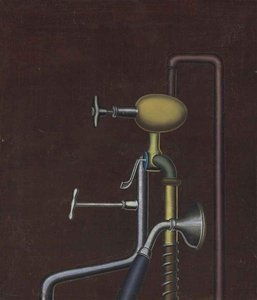
Galerinin gözünde, Konrad Klapheck'in en ünlü tablosu, aslı Kudüs, İsrail Müzesi içinde sergilenen The Night Beauties (Die Schönen der Nacht) (1961)'dir. Cruel Night / Bitter Night (Nuit cruelle) (1959) ve The Horoscope (1966), her gözün hemen fark edeceği o üçlüyü tamamlıyor. Katalogumuzdaki Konrad Klapheck imzalı 18 eser arasından galerimiz, her biri yapıldığı yıl, sergilendiği müze ve onu eşsiz kılan özellikleriyle birlikte en ünlü 18 eseri aşağıda sunmaktadır.


Bu sayfadaki tabloların çoğuna ev sahipliği yapan 4 müze.
| Müze | Şehir | Konrad Klapheck Eserleri | Bu listedeki tablolar |
|---|---|---|---|
 İsrail Müzesi |
Kudüs | 3 | The Night Beauties (Die Schönen der Nacht), Cruel Night / Bitter Night (Nuit cruelle), The Female Terrorist (Die Terroristin) |
 Bavarian State Painting Collections |
Münih | 2 | The Horoscope, The Show-off |
 Staatliche Kunsthalle Karlsruhe |
Karlsruhe | 1 | Life in Society |
 Städel Müzesi |
Frankfurt | 1 | Der Gesetzgeber |
O dönemi tanımlayan orijinal eseri görmek için bir on yıl seçin.
The Night Beauties (Die Schönen der Nacht) (1961), İsrail Müzesi, Kudüs. Ardından Cruel Night / Bitter Night (Nuit cruelle) (1959) ve The Horoscope (1966) geliyor.
26 yaşında: The Night Beauties (Die Schönen der Nacht) 1961 yılına aittir ve Konrad Klapheck 1935 yılında doğmuştur.
The Night Beauties (Die Schönen der Nacht), Cruel Night / Bitter Night (Nuit cruelle), The Horoscope, The Female Terrorist (Die Terroristin), The Show-off, Life in Society, Der Gesetzgeber, The mistress, The swagger ve The fanatic. Yukarıdaki sıralama, her birinin yapım yılını ve bulunduğu müzeyi göstermektedir.
Kataloğumuzda Konrad Klapheck tarafından 1959 ile 1971 tarihleri arasında üretilmiş 18 eser bulunmaktadır.
Çoğunlukla İsrail Müzesi (Kudüs), Bavarian State Painting Collections (Münih) ve Staatliche Kunsthalle Karlsruhe (Karlsruhe) bünyesinde yer almaktadır. Yukarıdaki müze tablosu tümünü listelemektedir.
1960s döneminde: Bu sayfadaki 18 eserin 5 tanesi o dönemde yapılmıştır, bunların The Night Beauties (Die Schönen der Nacht) tanesi ise The Night Beauties (Die Schönen der Nacht) arasındadır.
Bu sayfadaki en eski eser Cruel Night / Bitter Night (Nuit cruelle) (1959), en yeni eser ise The Female Terrorist (Die Terroristin) (1971)'dir.
bu sayfadaki orijinallerine bakılırsa Pop art,
The Night Beauties (Die Schönen der Nacht), Cruel Night / Bitter Night (Nuit cruelle) ve The Female Terrorist (Die Terroristin): İsrail Müzesi, Kudüs, bu sayfadaki eserlerden 3 tanesine ev sahipliği yapmaktadır.
In the quiet intersection where the precision of industrial machinery meets the irrationality of a dream, lies the singular world of Konrad Klapheck. Born in Düsseldorf on February 10, 1935, to a lineage of esteemed art historians, Klapheck was destined for a life steeped in aesthetic contemplation. His early years at the Kunstakademie Düsseldorf, studying under the guidance of Bruno Goller, provided him with a rigorous foundation in craftsmanship. Yet, beneath this disciplined training, a more subversive spirit was brewing—one that would eventually reject the purely abstract in favor of a hauntingly realistic yet profoundly distorted vision of the everyday.
Klapheck’s artistic evolution is a fascinating journey from magic realism to a highly idiosyncratic blend of Surrealism and Pop Art. While his mid-1950s works adhered to more traditional modes, a transformative shift occurred when he first turned his gaze toward the typewriter. This was not merely a change in subject matter, but a revolution in perception. By isolating these mechanical objects and presenting them with an almost obsessive clarity, he stripped them of their utility and imbued them with a psychological weight. These machines became characters in a silent, surreal drama, bathed in vibrant, often unsettling hues that challenged the viewer's sense of reality.
To look upon a Klapheck painting is to experience a strange sense of alienation within the familiar. He possessed a remarkable ability to take the most utilitarian items—objects we touch and use without thought—and transform them into monumental icons of mystery. His repertoire of subjects expanded from his iconic typewriters to include a parade of mechanical and domestic artifacts:
This technique was never merely about photographic accuracy. Instead, Klapheck utilized a masterful manipulation of color and scale to inject an element of the absurd. His work often carries a subtle, biting wit, layered with political commentary and even sexual innuendo. By enlarging these small, domestic objects to a monumental scale, he forced a confrontation between the viewer and the inanimate, making the mechanical feel alive, and the living feel strangely mechanical.
The historical significance of Konrad Klapheck lies in his ability to bridge the gap between the conceptual provocations of Marcel Duchamp and the vibrant, consumer-driven energy of Pop Art. He drew deep inspiration from the avant-garde masters—Man Ray, Max Ernst, and René Magritte—yet he applied their surrealist logic to a much more modern, industrial landscape. His work mirrors the tension of the mid-20th century: the fascination with technological progress clashing with the underlying anxiety of an increasingly automated world.
Through his precise lines and dreamlike compositions, Klapheck achieved a rare feat in contemporary art: he made the inanimate speak. He left behind a body of work that serves as a profound meditation on alienation, fascination, and the hidden life of objects. Even decades after his passing, his paintings continue to haunt the galleries of the world, reminding us that within the most ordinary machine, there may lie an extraordinary, unsettling truth.