Portrait of Jean Clouet

The 37 Most Famous Jean Clouet Paintings, a Gallery Selection

Updated Ekim 2026 · ranked by our popularity score (searches, visits and orders for each work) · 37 works by Jean Clouet in our catalogue

In short

Of all the originals Jean Clouet left, the most famous is Francis I of France (1494-1547), king of France (1515), in the collection of the Condé Müzesi, Chantilly. Close behind it come Unknown Lady (1525) and Unknown Lady (1530). Our catalog holds 37 works by Jean Clouet; the gallery has kept the 37 the world admires most, each shown with its date, its museum and its story.

1480 – 1541, Brüksel Şehri Renaissance portraiture Most works: Château de Chantilly

Jean Clouet's top 10 paintings: the gallery's choice

1
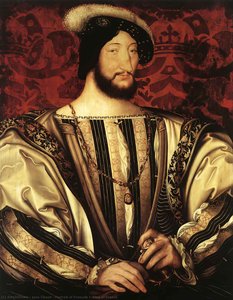
Francis I of France (1494-1547), king of France (1515) by Jean Clouet

Francis I of France (1494-1547), king of France

1515 · Oil On Panel · Condé Müzesi, Chantilly

The subject is positioned in a bust-length composition, facing toward the right of the frame while his gaze remains directed forward. He wears a black hat and a cloak that covers his shoulders. A cream-colored collar with a ribbed texture sits at his neck, contrasting with the dark fabric of his attire. The skin on his face appears smooth, with light coming from the upper left to define the bridge…

2
Unknown Lady (1525) by Jean Clouet

Unknown Lady

1525 · Oil On Canvas · Château de Chantilly, Chantilly

The painting "Unknown Lady," attributed to the masterful French Renaissance artist Jean Clouet, is not merely a portrait; it's an invitation into a world of subtle observation and carefully constructed mystery. Completed around 1525, this captivating drawing—a testament to Clouet’s meticulous technique and psychological acuity—holds within its delicate lines a profound sense of contained emotion. It resides in the heart of the WahooArt collection, offering a glimpse into the courtly…

3
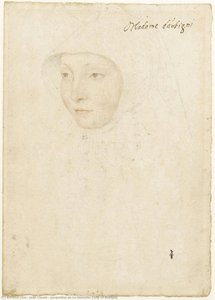
Unknown Lady (1530) by Jean Clouet

Unknown Lady

1530 · Acrylic On Canvas · Château de Chantilly, Chantilly

The world of 16th-century French portraiture is often associated with opulent courts and meticulously rendered depictions of royalty, yet within this grand tradition lies a captivating vein of quiet introspection—exemplified perfectly by Jean Clouet’s “Unknown Lady.” Painted around 1525, this drawing, now housed in a stunning reproduction, offers far more than a simple likeness; it's an invitation to contemplate the veiled emotions and subtle power dynamics inherent in Renaissance society.…

4
Portrait of Francis I (1525) by Jean Clouet

Portrait of Francis I

1525 · Oil On Panel · Louvre Müzesi, Paris

Jean Clouet's 1525-30 “Portrait of Francis I” is more than just a royal likeness; it’s a meticulously crafted embodiment of the French Renaissance at its zenith. Housed within the hallowed halls of the Louvre, this oil on panel painting transcends mere portraiture, offering a profound glimpse into the character and ambitions of King Francis I himself. Clouet, a master of courtly art, doesn't simply depict a monarch; he constructs an…

5
Guillaume Budé (1536) by Jean Clouet

Guillaume Budé

1536 · Oil On Panel · Metropolitan Sanat Müzesi, New York

Jean Clouet’s depiction of Guillaume Budé, completed around 1536, stands as a quintessential emblem of the Florentine Renaissance's fascination with intellectual pursuits and humanist ideals. More than just a likeness of a prominent scholar—Budé being the librarian to King Francis I—the painting embodies a carefully constructed visual narrative that speaks volumes about the era’s preoccupation with reason, virtue, and classical learning.

6
Portrait of Beatrix Pacheco, Countess of Montbel und Entremonts (1550) by Jean Clouet

Portrait of Beatrix Pacheco, Countess of Montbel und Entremonts

1550 · Oil On Panel · Städel Müzesi, Frankfurt

The Countess Beatrix Pacheco sits in a quiet, poised stillness, her presence filling the space with a sense of noble composure. She turns her head slightly toward the left, her eyes meeting the viewer with a steady, penetrating look that bridges the centuries. A soft, gentle smile rests upon her lips, suggesting a woman of profound character and inner life. The light, descending from the upper left, brushes against the…

8
Portrait of a Banker (1522) by Jean Clouet

Portrait of a Banker

1522 · Oil On Panel · Saint Louis Sanat Müzesi, Saint Louis

The portrait presents a middle-aged man in a half-length composition, positioned slightly off-center. He gazes toward the left of the frame with a steady, calm expression. The subject is dressed in dark, somber clothing, featuring a black hat with sharp folds and sleeves of a warm pinkish-red hue. His pale skin tones contrast against the deep navy and black of his attire and the dark background. In his hands, he…

9
Portrait of Louis de Cleves (1530) by Jean Clouet

Portrait of Louis de Cleves

1530 · Oil On Panel · Accademia Carrara, Bergamo

In the Portrait of Louis de Cleves by Jean Clouet, a single male figure emerges from a dark forest green background. The composition is a medium close-up, capturing the man from the chest up. He is positioned slightly off-center, his gaze directed toward the left of the frame. This orientation creates a sense of quiet gravity within the space. The subject's presence is anchored by a palette of deep, saturated…

10
Madame de Canaples (Marie d'Assigny, 1502 - 58) (1525) by Jean Clouet

Madame de Canaples (Marie d'Assigny, 1502 - 58)

1525 · Oil On Panel · Scottish National Gallery, Edinburgh

The artwork titled Madame de Canaples (Marie d'Assigny, 1502 - 58) is a portrait executed by the artist Jean Clouet. This oil on panel work depicts Marie d’Acigné, who is also identified as Madame de Canaples. The sitter was a lady of the court, specifically serving as a maid of honour to Queen Claude of France. The portrait was likely produced in 1525, coinciding with the year Marie d’Acigné married…

The Jean Clouet selection continues, 11 to 37

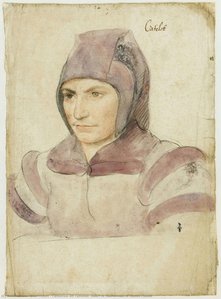
11Portrait of an unknown man (1515) by Jean ClouetPortrait of an unknown man1515 · Bavarian State Painting Collections 12Francis I (1494-1547), King of France. (1525) by Jean ClouetFrancis I (1494-1547), King of France.1525 13Portrait of Madeleine of France (1520–1537), 3rd Daughter of François I (1494–1537) and Claude of France (1499–1524) (1522) by Jean ClouetPortrait of Madeleine of France (1520–1537), 3rd Daughter of François I (1494–1537) and Claude of France (1499–1524)1522 14Bemberg Fondation Toulouse - Jean Bertrand, archevêque et cardinal de Sens - Capitoul - Jean CLOUET (1520) by Jean ClouetBemberg Fondation Toulouse - Jean Bertrand, archevêque et cardinal de Sens - Capitoul - Jean CLOUET1520 · Collection Bemberg 15Charles de Cossé (1506–1563), Count of Brissac (1535) by Jean ClouetCharles de Cossé (1506–1563), Count of Brissac1535 · Metropolitan Sanat Müzesi 16Portrait of a Lady (1530) by Jean ClouetPortrait of a Lady1530 · Yale Center for British Art 17Doña Leonor Zapata (1531) by Jean ClouetDoña Leonor Zapata1531 · Château de Chantilly 18Portrait of Jean de Dinteville, Seigneur de Polisy (1533) by Jean ClouetPortrait of Jean de Dinteville, Seigneur de Polisy1533 · Condé Müzesi 19Renée de France, Duchess of Ferrara and Chartres (1519) by Jean ClouetRenée de France, Duchess of Ferrara and Chartres1519 · Château de Chantilly 20Jacqueline de La Queuille, Lady of Aubigny (1535) by Jean ClouetJacqueline de La Queuille, Lady of Aubigny1535 · Château de Chantilly 21Catherine dit Cathelot, dwarf or madwoman of Queen Claude (1540) by Jean ClouetCatherine dit Cathelot, dwarf or madwoman of Queen Claude1540 · Château de Chantilly 22Unknown Lady (1525) by Jean ClouetUnknown Lady1525 · Château de Chantilly 23Marguerite of France, Duchess of Berry and Savoy (1527) by Jean ClouetMarguerite of France, Duchess of Berry and Savoy1527 · Château de Chantilly 24Madeleine of France, Queen of Scotland (1524) by Jean ClouetMadeleine of France, Queen of Scotland1524 · Château de Chantilly 25Portrait of Claude of Lorraine, Duke of Guise (1528) by Jean ClouetPortrait of Claude of Lorraine, Duke of Guise1528 · Galleria Palatina 26Portrait of Marguerite of Navarre (1527) by Jean ClouetPortrait of Marguerite of Navarre1527 · Walker Art Gallery 27Gabrielle d'Estrées (1620) by Jean ClouetGabrielle d'Estrées1620 · National Trust 28Beatrice Pacheco de Silva, Countess of Entremont (1531) by Jean ClouetBeatrice Pacheco de Silva, Countess of Entremont1531 · Château de Chantilly 29Guillame Gouffier by Jean ClouetGuillame GouffierSaint Louis Sanat Müzesi 30Portrait of a Man Holding a Volume of Petrarch by Jean ClouetPortrait of a Man Holding a Volume of PetrarchRoyal Collection 31Portrait of an Unknown Man by Jean ClouetPortrait of an Unknown ManCondé Müzesi 32The Dauphin François, Son of François I by Jean ClouetThe Dauphin François, Son of François IKoninklijk Museum voor Schone Kunsten 33Jean de la Barre (1520) by Jean ClouetJean de la Barre1520 · Condé Müzesi 34Elisabeth of Austria in hunting costume by Jean ClouetElisabeth of Austria in hunting costume 35Marie d (1525) by Jean ClouetMarie d1525 · Château de Chantilly 36Portrait of François I, King of France (1525) by Jean ClouetPortrait of François I, King of France1525 · Louvre Müzesi 37Portrait of François I as St John the Baptist (1518) by Jean ClouetPortrait of François I as St John the Baptist1518

Jean Clouet's famous paintings, period by period

The subjects that held Jean Clouet's eye

The four subjects that come back most often in these originals, each with its finest example.

The museums that keep Jean Clouet's originals

The 8 museums that hold the most of the paintings on this page.

Museum City Works by Jean Clouet Paintings from this list
Château de Chantilly, ChantillyChâteau de Chantilly Chantilly 11 Unknown Lady, Unknown Lady, Doña Leonor Zapata
Condé Müzesi, ChantillyCondé Müzesi Chantilly 4 Francis I of France (1494-1547), king of France, Portrait of Jean de Dinteville, Seigneur de Polisy, Portrait of an Unknown Man
Louvre Müzesi, ParisLouvre Müzesi Paris 2 Portrait of Francis I, Portrait of François I, King of France
Metropolitan Sanat Müzesi, New YorkMetropolitan Sanat Müzesi New York 2 Guillaume Budé, Charles de Cossé (1506–1563), Count of Brissac
Saint Louis Sanat Müzesi, Saint LouisSaint Louis Sanat Müzesi Saint Louis 2 Portrait of a Banker, Guillame Gouffier
Städel Müzesi, FrankfurtStädel Müzesi Frankfurt 1 Portrait of Beatrix Pacheco, Countess of Montbel und Entremonts
Minneapolis Institute of Art, MinneapolisMinneapolis Institute of Art Minneapolis 1 Portrait of Charlotte of France
Accademia Carrara, BergamoAccademia Carrara Bergamo 1 Portrait of Louis de Cleves

Jean Clouet decade by decade: the original that defines each

Works per decade

Pick a decade to see the original that defines it.

Collectors' questions about Jean Clouet's paintings

Which work is Jean Clouet most famous for?Reveal the answer

Francis I of France (1494-1547), king of France (1515), Condé Müzesi, Chantilly. Unknown Lady (1525) and Unknown Lady (1530) come next.

What age was Jean Clouet when Francis I of France (1494-1547), king of France was made?Reveal the answer

35 years old: Francis I of France (1494-1547), king of France dates from 1515, and Jean Clouet was born in 1480.

What are the ten most famous Jean Clouet paintings?Reveal the answer

Francis I of France (1494-1547), king of France, Unknown Lady, Unknown Lady, Portrait of Francis I, Guillaume Budé, Portrait of Beatrix Pacheco, Countess of Montbel und Entremonts, Portrait of Charlotte of France, Portrait of a Banker, Portrait of Louis de Cleves and Madame de Canaples (Marie d'Assigny, 1502 - 58). The ranking above gives each one's year and museum.

How many paintings did Jean Clouet leave?Reveal the answer

Our catalog holds 37 works by Jean Clouet, dated from 1515 to 1540.

In which museums do Jean Clouet's masterpieces hang?Reveal the answer

Mostly in Château de Chantilly (Chantilly), Condé Müzesi (Chantilly) and Louvre Müzesi (Paris). The museum table above lists them all.

In which years did Jean Clouet paint the most famous works?Reveal the answer

In 1520s: 16 of the 37 works on this page were made then, Unknown Lady among them.

What are the first and the last famous originals of Jean Clouet?Reveal the answer

On this page, the earliest is Francis I of France (1494-1547), king of France (1515) and the latest Catherine dit Cathelot, dwarf or madwoman of Queen Claude (1540).

Which subjects did Jean Clouet choose most often?Reveal the answer

Portrait (9), Woman (9) and Detail (7), across the 37 works on this page.

Which technique did Jean Clouet use most?Reveal the answer

Oil On Panel, for 9 of the 37 works on this page.

To which art movement does Jean Clouet belong?Reveal the answer

Renaissance portraiture and Renaissance, judging by the originals on this page.

Which Jean Clouet works hang at the Château de Chantilly?Reveal the answer

Unknown Lady, Unknown Lady and Doña Leonor Zapata: the Château de Chantilly, Chantilly holds 11 of the works on this page.

Can I commission a reproduction of a Jean Clouet painting?Reveal the answer

Yes, as a reproduction: the original stays in its museum, but any painting on this page can be painted by hand for you, made to order one at a time, from the painting's own page.

Jean Clouet: life and work

Bir Saray Eli: Jean Clouet'nin Yaşamı ve Sanatı

Fransız Rönesansı'nın uzmanları arasında saygı ile fısıldanan bir isim olan Jean Clouet, portre sanatı üzerindeki derin etkisi görmesine rağmen gizemli bir figür olarak kalmıştır. Yaklaşık 1480 civarında, muhtemelen Düşük Topraklar'daki Brüksel'de doğan Clouet'nin sanatsal yolculuğu onu I. Francis'in sarayındaki en çok aranan ressamlardan biri haline getirdi. Kökenleri bir gizemle örtülüdür; "Clouet" doğum adı olmasa da, zarafet ve filizlenen hümanizm ile tanımlanan bir çağın özünü yakalayan kendine özgü bir stil ile eş anlamlı hale gelmiştir. Clouet'nin sanatsal vizyonunu şekillendiren erken etkiler biraz spekülatif kalsa da, Flaman eğitiminin alametifarikaları—titiz detaylara dikkat, ince modelleme ve rafine bir gerçekçilik duygusu—eserlerinde şüphesiz mevcuttur. Brüksel'de zaten yerleşik olan bir sanatçı ailesiyle bağlantılı olduğu düşünülmektedir, bu da teknik becerisinin temellerini daha da sağlamlaştırmıştır.

Fransız Sarayındaki Yükseliş

Clouet'nin 1516 civarında Fransız sarayına gelişi, sadece kariyerinde değil, aynı zamanda kraliyet portre sanatının evriminde de bir dönüm noktası oldu. Sanatın tutkulu bir hamisi ve İtalyan Rönesans saraylarını taklit etmeye kararlı bir hükümdar olan I. Francis, Clouet'nin olağanüstü yeteneğini hemen fark etti. Genellikle görkemli tarihi anlatılara veya dini sahnelere odaklanan önceki saray ressamlarının aksine, Clouet kralın yakın çevresindeki—soylular, saray mensupları ve kraliyet ailesi üyeleri—insanların benzerliklerini yakalamaya özelleşti. Sadece yüz hatlarını kaydetmiyordu; karakterin derinliklerine iniyor, ifade ve duruşun ince nüansları aracılığıyla kişiliği aktarıyordu. Bu psikolojik içgörüye yöneliş, onun eserini farklı kıldı. Ressam ve gardırop hizmetçisi olarak görevlendirildikten sonra daha prestijli pozisyonlara yükselen Clouet, o dönemde sanatçılara nadiren tanınan bir himaye düzeyinden yararlandı; saygın cerrahlarla karşılaştırılabilir bir maaş alması, I. Francis'in yeteneklerine olan yüksek takdirinin bir kanıtıydı. Başlangıçta Tours'da yerleşerek daha sonra saray ile Fontainebleau'ye taşındı ve kralın teşvik ettiği canlı sanatsal atmosferin ayrılmaz bir parçası oldu.

Benzerlik Sanatı: Teknik ve Stil

Jean Clouet'nin ustalığı, gösterişli renk patlamalarında veya dramatik kompozisyonlarda değil, sessiz, mütevazı bir zarafette yatıyordu. Birincil ortamı olarak çizimi tercih ediyor, özellikle kağıt üzerinde siyah ve kırmızı kireç kullanıyordu. Bu çizimler ön taslaklar değildi; genellikle kendi başlarına tamamlanmış eserlerdi ve narin çizgileri, ince gölgelendirmeleri ve modelin bireysel karakterini yakalama olağanüstü yetenekleri nedeniyle değer verilirdi. Tekniği, inanılmaz bir hassasiyetle formu inşa eden titiz bir fırça darbesi katmanlamasını içeriyordu. Boya ile çalışırken—genellikle panel üzerine yağlı boya kullanıyordu—bu aynı düzeyde inceliği koruyarak hem gerçekçi hem de idealize edilmiş portreler yaratıyordu. Dokuyu aktarma konusunda doğaüstü bir yeteneğe sahipti; ipeğin parlaklığını, kadifenin ağırlığını, tenin narin yumuşaklığını vererek eserine başka bir gerçekçilik katmanı ekliyordu. I. Francis'in büyük bir istekle topladığı İtalyan Rönesans ustalarından etkilenmiş olsa da, Clouet'nin stili belirgin şekilde Fransız kaldı; dış görkemden ziyade iç yaşamı yakalama vurgusu ve belirli bir ölçülülükle karakterizeydi.

Miras ve Kalıcı Etki

Jean Clouet yaklaşık 1541 yılında Paris'te vefat etse de, sanatsal mirası ömrünün çok ötesine uzandı. Oğlu François Clouet, aile geleneğini sürdürerek hem babasının becerisini hem de saraydaki yerini miras aldı. Birlikte, Fransız Rönesansı'nın görsel imajını nesiller boyu şekillendiren bir portre sanatçısı hanedanı kurdular. 19. yüzyılda Clouet'nin geniş çizim koleksiyonunun yeniden keşfedilmesi—birçoğu Chantilly'deki Musée Condé koleksiyonlarında bulunuyordu—eserlerine olan ilgiyi canlandırdı ve onu sanat tarihinde kilit bir figür olarak sağlamlaştırdı. Etkisi, sadece fiziksel benzerliği değil, aynı zamanda konuştan iç özü yakalama becerisini taklit etmeye çalışan sonraki portre sanatçılarının eserlerinde görülebilir. Clouet'ye atfedilen portreler, Fransız sarayının dünyasına eşsiz bir pencere açarak o dönemin kişilikleri ve güç dinamikleri hakkında paha biçilmez bilgiler sunmaktadır. Çizimleri, dünya çapındaki müzelerde değerli mülkler olarak kalmaya devam etmekte, güzellikleri, incelikleri ve kalıcı psikolojik derinlikleriyle izleyicileri büyülümektedir. Jean Clouet'nin sanatı; gözlem gücünün, çizim becerisinin ve insan ruhunu kağıt ve tuval üzerine yakalama zamansız çekiciliğinin bir kanıtıdır.

All 37 works by Jean Clouet →