Portrait of Cosimo Rosselli

The 25 Most Famous Cosimo Rosselli Paintings, Each One of a Kind

Updated Ekim 2026 · ranked by our popularity score (searches, visits and orders for each work) · 25 works by Cosimo Rosselli in our catalogue

In short

The Last Supper (detail) (8) (1481) is the Cosimo Rosselli painting that draws the most eyes; the original belongs to the Sistina Şapeli, Vatikan Şehri. After it, the eye goes to The Last Supper (1481) and The Last Supper (detail) (1481). Among the 25 works of Cosimo Rosselli in our catalog, these 25 are the most famous, each a unique original presented with its year, its museum and the reason it endures.

1439 – 1507, Firenze Renaissance Most works: Sistina Şapeli

Top 10 paintings by Cosimo Rosselli, through the gallery's eye

1
The Last Supper (detail) (8) (1481) by Cosimo Rosselli

The Last Supper (detail) (8)

1481 · Fresco · Sistina Şapeli, Vatikan Şehri

Cosimo Rosselli's “The Last Supper,” completed in 1481-82 during the High Renaissance, stands as one of the most iconic depictions of Christianity. More than just a painting; it’s a testament to artistic innovation and spiritual contemplation—a scene meticulously rendered by Rosselli and his collaborators within the grandeur of Michelangelo's Sistine Chapel.

2
The Last Supper (1481) by Cosimo Rosselli

The Last Supper

1481 · Acrylic On Canvas · Sistina Şapeli, Vatikan Şehri

Cosimo Rosselli’s “The Last Supper,” painted in 1481–82 for the Sistine Chapel in Rome, isn't merely a depiction of a biblical meal; it’s a profound meditation on faith, betrayal, and the human condition. Commissioned during a period of immense artistic innovation—a time when Leonardo da Vinci was laying the groundwork for modern painting—Rosselli’s fresco stands as a testament to the Florentine Renaissance’s vibrant spirit and its masterful command of perspective…

3
The Last Supper (detail) (1481) by Cosimo Rosselli

The Last Supper (detail)

1481 · Fresco · Sistina Şapeli, Vatikan Şehri

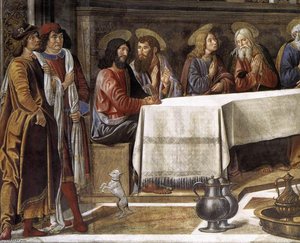
To gaze upon this detail from Cosimo Rosselli's rendition of The Last Supper is to be transported across the centuries, into a moment suspended between profound intimacy and monumental destiny. This scene, painted in 1481 within the sacred confines of the Cappella Sistina, transcends mere depiction; it captures the very breath of human drama set against the backdrop of divine revelation. Rosselli masterfully frames the final meal shared by Jesus…

4
The Last Supper (detail) (1481) by Cosimo Rosselli

The Last Supper (detail)

1481 · Acrylic · Sistina Şapeli, Vatikan Şehri

Cosimo Rosselli’s “The Last Supper,” a breathtaking detail from his monumental fresco cycle within the Cappella Sistina, offers an unparalleled glimpse into the heart of the late 15th century. Completed in 1481-82 amidst a complex political reconciliation between Florence and Rome, this work transcends mere biblical narrative; it’s a profound meditation on faith, betrayal, and the human condition. More than just a depiction of Christ's final meal with his disciples,…

5
The Last Supper (detail) (1481) by Cosimo Rosselli

The Last Supper (detail)

1481 · Fresco · Sistina Şapeli, Vatikan Şehri

Cosimo Rosselli’s “The Last Supper (Detail),” painted in 1481 as part of the monumental fresco cycle adorning the Sistine Chapel, is more than just a depiction of a biblical event; it's a vibrant testament to the burgeoning artistic spirit of the High Renaissance. This intimate detail captures a pivotal moment – the announcement of betrayal – with an intensity and emotional resonance that continues to captivate viewers centuries later. Commissioned…

6
Portrait of a Man (1481) by Cosimo Rosselli

Portrait of a Man

1481 · Acrylic On Canvas · Metropolitan Sanat Müzesi, New York

Cosimo Rosselli’s “Portrait of a Man,” painted around 1481 in Florence, is far more than a simple likeness; it's a carefully constructed tableau of status, ambition, and the burgeoning artistic currents of the High Renaissance. This remarkably preserved panel painting offers a rare window into the world of Florentine nobility, capturing not just a man’s appearance but also his projected persona – a testament to the era’s fascination with portraiture…

7
The Last Supper (after restauration) (1481) by Cosimo Rosselli

The Last Supper (after restauration)

1481 · Acrylic On Canvas · Sistina Şapeli, Vatikan Şehri

Artist and Title Cosimo Rosselli was an Italian Renaissance painter born in Florence in 1439. He is best known for his frescoes, including the one we will discuss here: The Last Supper. Size and Media This masterpiece measures 349 cm x 570 cm and was created using the fresco technique. Fresco is a painting method in which pigments are applied to wet plaster, allowing them to become part of the…

8
Saint Catherine of Siena as Spiritual Mother of the Second and Third Orders of Saint Dominic (1499) by Cosimo Rosselli

Saint Catherine of Siena as Spiritual Mother of the Second and Third Orders of Saint Dominic

1499 · Tempera On Panel · Scottish National Gallery, Edinburgh

In this formal altarpiece from 1499, we find ourselves within a highly structured sacred space. The composition is centered upon Saint Catherine of Siena, who sits enthroned with a quiet, commanding presence. She is flanked by standing saints and surrounded by kneeling nuns, arranged in a pyramidal formation that directs the eye upward toward her figure. The scene is one of profound solemnity, a moment of communal devotion captured through…

9
Madonna and Child with the Young Saint John the Baptist (1490) by Cosimo Rosselli

Madonna and Child with the Young Saint John the Baptist

1490 · Tempera On Panel · Metropolitan Sanat Müzesi, New York

The composition centers on a tender, vertical arrangement of three figures: the Madonna, the Christ Child, and a young Saint John the Baptist. Set against a split background of ornate gold patterning and a distant, atmospheric landscape, the scene focuses on the intimate act of nursing. The Virgin wears a deep crimson tunic beneath a mantle of rich ultramarine blue, her features rendered with soft, fluid lines that define the…

10
The Adoration of the Christ Child (1500) by Cosimo Rosselli

The Adoration of the Christ Child

1500 · Oil On Panel · Rijksmuseum, Amsterdam

The world settles into a quiet, circular hush within this tondo painting. At the very heart of the composition, the Virgin Mary kneels in prayer, her form anchored by the deep ultramarine blue of her mantle. Before her, the infant Jesus rests upon the earth, a small and precious focal point that draws every gaze toward the ground. Around them, the air feels soft and diffused, as if an overcast…

Cosimo Rosselli's famous paintings, numbers 11 to 25

Cosimo Rosselli's famous paintings, period by period

The subjects that held Cosimo Rosselli's eye

The four subjects that come back most often in these originals, each with its finest example.

The museums that keep Cosimo Rosselli's originals

The 8 museums that hold the most of the paintings on this page.

Museum City Works by Cosimo Rosselli Paintings from this list
Sistina Şapeli, Vatikan ŞehriSistina Şapeli Vatikan Şehri 10 The Last Supper (detail) (8), The Last Supper, The Last Supper (detail)
Metropolitan Sanat Müzesi, New YorkMetropolitan Sanat Müzesi New York 3 Portrait of a Man, Madonna and Child with the Young Saint John the Baptist, Madonna and Child with Angels
Gemäldegalerie, BerlinGemäldegalerie Berlin 3 The Virgin and Blessing Child Enthroned with Sts. John, Augustine, Dominic, Peter and Victims of the bethemitic Child Murder, The Virgin with the Blessing Child in Glory, adored by Angels, Saints, Prayers and a Donor, The Domination of Christ
Museum of Fine Arts, BostonMuseum of Fine Arts Boston 2 Virgin and Child with an Angel, The Descent From the Cross
Scottish National Gallery, EdinburghScottish National Gallery Edinburgh 1 Saint Catherine of Siena as Spiritual Mother of the Second and Third Orders of Saint Dominic
Rijksmuseum, AmsterdamRijksmuseum Amsterdam 1 The Adoration of the Christ Child
Musée de Tessé, Le MansMusée de Tessé Le Mans 1 Portrait of Bartolomeo di Giovanni Berzichelli
Musée du Petit Palais, AvignonMusée du Petit Palais Avignon 1 The Annunciation between Four Saints

Cosimo Rosselli across the decades: one unique original for each

Works per decade

Pick a decade to see the original that defines it.

Cosimo Rosselli's paintings: questions for the gallery

What is the single most famous work of Cosimo Rosselli?Reveal the answer

The Last Supper (detail) (8) (1481), Sistina Şapeli, Vatikan Şehri. The Last Supper (1481) and The Last Supper (detail) (1481) come next.

At what age did Cosimo Rosselli create The Last Supper (detail) (8)?Reveal the answer

42 years old: The Last Supper (detail) (8) dates from 1481, and Cosimo Rosselli was born in 1439.

Which ten paintings by Cosimo Rosselli are the most famous?Reveal the answer

The Last Supper (detail) (8), The Last Supper, The Last Supper (detail), The Last Supper (detail), The Last Supper (detail), Portrait of a Man, The Last Supper (after restauration), Saint Catherine of Siena as Spiritual Mother of the Second and Third Orders of Saint Dominic, Madonna and Child with the Young Saint John the Baptist and The Adoration of the Christ Child. The ranking above gives each one's year and museum.

How many works by Cosimo Rosselli are known?Reveal the answer

Our catalog holds 25 works by Cosimo Rosselli, dated from 1450 to 1500.

Where can the most famous Cosimo Rosselli originals be seen?Reveal the answer

Mostly in Sistina Şapeli (Vatikan Şehri), Metropolitan Sanat Müzesi (New York) and Gemäldegalerie (Berlin). The museum table above lists them all.

During which period did Cosimo Rosselli create the best-known paintings?Reveal the answer

In 1480s: 12 of the 25 works on this page were made then, The Last Supper (detail) (8) among them.

Which famous Cosimo Rosselli painting is the earliest, and which the latest?Reveal the answer

On this page, the earliest is Portrait of Bartolomeo di Giovanni Berzichelli (1450) and the latest The Adoration of the Christ Child (1500).

What subjects did Cosimo Rosselli favour?Reveal the answer

Last supper (5), Apostles (4) and Religious art (3), across the 25 works on this page.

What materials did Cosimo Rosselli paint with most?Reveal the answer

Fresco, for 6 of the 25 works on this page.

Which movement does the work of Cosimo Rosselli belong to?Reveal the answer

Renaissance, judging by the originals on this page.

What Cosimo Rosselli originals can I see at the Sistina Şapeli?Reveal the answer

The Last Supper (detail) (8), The Last Supper and The Last Supper (detail): the Sistina Şapeli, Vatikan Şehri holds 10 of the works on this page.

Where can I order a hand-painted Cosimo Rosselli reproduction?Reveal the answer

Yes, as a reproduction: the original stays in its museum, but any painting on this page can be painted by hand for you, made to order one at a time, from the painting's own page.

Cosimo Rosselli: a portrait of the artist

Roma'da Bir Floransa Eli: Cosimo Rosselli'nin Yaşamı ve Sanatı

Yaklaşık 1439 yılında Floransa'nın canlı kalbinde doğan Cosimo Rosselli, köklü bir tüccar ailesinden geliyordu; bu geçmiş ona istikrarlı bir yetiştirilme tarzı ve Rönesans'ın filizlenen kültürel yaşamına erişim imkanı sağladı. Eğitimlerine çocuk yaşta başlayan pek çok sanatçının aksine, Rosselli'nin sanatsal yolculuğu nispeten geç, yirmi yaşlarında başladı. Dönemin Floransa resminin önde gelen isimlerinden, ustaca freskleri ve büyüleyici detaylara sahip sunak tablolarıyla tanınan Domenico Ghirlandaio'nun atölyesine girdi. Bu ortam sadece bir çıraklık dönemi değil, aynı zamanda sayısız asistanın sürekli bir sipariş akışına katkıda bulunduğu, yaratıcılığın hareketli bir merkeziyle iç içe geçmek demekti. Burada Rosselli; çizim, kompozisyon ve erken dönem üslubunu tanımlayacak olan titiz tekniklerin temellerini özümsedi. Ghirlandaio'nun etkisi derindi; ona eserlerinin çoğuna karakter kazandıran çizgisel bir hassasiyet, canlı bir palet ve anlatısal bir netlik kazandırdı. Yine de bu biçimlendirici dönemde bile Rosselli, Masaccio ve Fra Angelico gibi resimde mekan, ışık ve duygu tasvirinde devrim yaratmış daha eski ustaların unsurlarını incelikle bünyesine katarak bireysel bir duyarlılık sergilemeye başladı.

Sistine Şapeli ve Bir Papalık Lütfu Anı

1481 yılında Rosselli'nin Roma'daki Sistine Şapeli'nin duvarlarını süsleyen anıtsal fresk döngüsüne katılmak üzere bir davet almasıyla hayatında dönüm noktası niteliğinde bir an yaşandı. Pietro Perugino ve Sandro Botticelli gibi isimlerle birlikte yürütülen bu görev, kariyerinde önemli bir dönüm noktası oldu ve onu uluslararası bir sahneye taşıdı. Bu fresklerin ana teması, papalığın otoritesini meşrulaştırmak ve ilahi yasaların sürekliliğini vurgulamak amacıyla kurgulanmış, Musa ile İsa'nın hikayeleri arasında titizlikle inşa edilmiş bir paralellikti. Rosselli'nin katkıları İsa'nın Yaşamı'ndan sahneler üzerine yoğunlaştı ve karmaşık anlatıları görsel olarak etkileyici kompozisyonlara dönüştürme yeteneğini sergiledi. Her ne olsa da, özellikle Giorgio Vasari tarafından kaleme alınan sonraki anlatılar, onu projede yer alan daha az yetenekli sanatçılardan biri olarak tasvir etse ve hatta meslektaşlarının alay konusu olmasına neden olsa da; renkleri cesur kullanımı ve altın varakları cömertçe uygulaması Papa XIV. Sixtus'un bizzat hoşuna gitmiştir. Bu papalık lütfu, dekoratif etkiyi kavrama konusundaki keskin anlayışını ve hami olanın zevkine hitap edebilme yeteneğini göstermektedir ki bunlar Rönesans sanatının rekabetçi dünyasında başarı için elzem niteliklerdir. Şapelin içindeki *Son Akşam Yemeği* eseri, artan ustalığını ortaya koyan dinamik kompozisyonu ve detaylara gösterdiği özenle bu dönemin bir kanıtı olarak kalmaya devam etmektedir.

Floransa Siparişleri ve Gelişen Bir Üslup

Roma'dan Floransa'ya döndüğünde Rosselli, sunak tabloları, freskler ve panel resimler için düzenli bir sipariş akışı almaya devam etti. Olgun üslubu bu dönemde; rafine kompozisyonlar, zarif figürler ve giderek detaylanan manzaralarla çiçek açtı. Ghirlandaio'dan öğrendiği çizgisel hassasiyeti ve canlı renkleri korurken, Perugino'nun daha zarif ve uyumlu estetiğinin unsurlarını da eserlerine dahil etmeye başladı. Bu dönemin dikkate değer eserleri arasında, gelişen üslubunu büyük bir ölçekte sergilemesine olanak tanıyan Santissima Annunziata kilisesi freskleri ve Floransa genelindeki şapelleri süsleyen çok sayıda sunak tablosu yer almaktadır. Rosselli, dini sahneleri tasvir ederken saygı ve dindarlık atmosferini korurken, insani duyguları ve etkileşimleri vurgulayan özgün bir yaklaşım geliştirdi. Figürlerinin psikolojik durumlarını betimleme yeteneğine sahipti; onlara çağdaş izleyicilerde yankı uyandıran bir içsel yaşam duygusu katıyordu. İncil anlatılarının içine dönemin portrelerini dahil etmesi, kutsal hikayeleri onları izleyenlerin günlük yaşamlarıyla bağlayarak gerçekçilik ve etkileşim katmanı da ekledi.

Miras ve Tarihsel Önem

Cosimo Rosselli, 16. yüzyılın başlarında önemli Floransa ailelerinden ve dini kurumlardan siparişler alarak titizlikle çalışmaya devam etti. Ancak, Raphael ve Michelangelo başta olmakla birlikte yeni sanat yıldızları yükseldikçe, onun önemi kademeli olarak azaldı. Yaklaşık 1520 yılında Floransa'da hayata gözlerini yumdu; geride bir ressam olarak becerisini ve dini temaları netlik ve zarafetle betimleme konusundaki adanmışlığını yansıtan bir eser külliyatı bıraktı. Bugün Rosselli, Rönesans sanatının gelişiminde önemli bir rol oynayan yetenekli bir Floransa sanatçısı olarak hatırlanmaktadır. Sistine Şapeli fresklerine katılımı, Floransa'nın sanatsal inovasyonun önde gelen merkezi konumunu sağlamlaştırmasına yardımcı olmuş ve kendi eserleri, çeşitli etkileri özgün ve rafine bir üslupta sentezleme yeteneğini kanıtlamıştır. Belki çağdaşları kadar büyük bir şöhrete ulaşamamış olsa da, Cosimo Rosselli'nin katkıları; yeteneğinin, adanmışlığının ve Rönesans sanatının zengin dokusu içindeki kalıcı mirasının bir kanıtı olarak önemini korumaktadır.

Etkiler ve Sanatsal Gelişim

  • Erken Temeller: Domenico Ghirlandaio'nun atölyesi, Rosselli'ye resim teknikleri ve kompozisyon ilkeleri konusunda çok önemli bir temel sağlayarak erken dönem estetik duyarlılıklarını şekillendirdi.
  • Roma Deneyimi: Sistine Şapeli'nde diğer önde gelen Rönesans sanatçılarıyla birlikte çalışmak, onu yeni üsluplar ve yaklaşımlarla tanıştırdı, sanatsal ufuklarını genişletti ve sonraki çalışmalarını etkiledi. Bu iş birliğine dayalı ortam, fikir alışverişini ve çağdaş trendlere karşı artan bir farkındalığı teşvik etti.
  • Perugino'nun Zarafeti: Pietro Perugino'nun zarif üslubu ve uyumlu kompozisyonları, Rosselli'nin sanatsal gelişiminde gözle görülür bir etki yaratarak onu figürlerini rafine etmeye ve daha dengeli düzenlemeler oluşturmaya teşvik etti.
  • Geçmişin Yankıları: Masaccio ve Fra Angelico gibi daha eski ustaların unsurlarını özümsedi; mekanın gerçekçi tasvirleri ve duygusal ifade gibi onların yeniliklerini kendi özgün üslubuna dahil etti. Bu, sanat tarihine dair derin bir anlayışı ve kendinden öncekilerden öğrenme arzusunu göstermektedir.
Rosselli'nin sanatsal yolculuğu, Rönesans sanatçılarının gelenek, yenilik ve himaye arasındaki karmaşık etkileşimi nasıl yönettiklerine dair büyüleyici bir örnektir; geride bugün bile izleyicileri ilhamlandırmaya ve büyülemeye devam eden bir miras bırakmıştır.

All 25 works by Cosimo Rosselli →