Portrait of Carl Bloch

The 65 Most Famous Carl Bloch Paintings, Each One of a Kind

Updated Ekim 2026 · ranked by our popularity score (searches, visits and orders for each work) · 65 works by Carl Bloch in our catalogue

In short

In a Roman Osteria (1866) is the Carl Bloch painting that draws the most eyes; the original belongs to the Statens Museum For Kunst, Kopenhag. After it, the eye goes to The Last Supper (1876) and Jesus Raises Lazarus from the Dead (1871). Among the 65 works of Carl Bloch in our catalog, these 65 are the most famous, each a unique original presented with its year, its museum and the reason it endures.

1834 – 1890, Kopenhag Realism Most works: Statens Museum For Kunst

Top 10 paintings by Carl Bloch, through the gallery's eye

1
In a Roman Osteria (1866) by Carl Bloch

In a Roman Osteria

1866 · Oil On Canvas · Statens Museum For Kunst, Kopenhag

In the mid-19th century, a profound fascination with the warmth and vitality of Italian culture swept through the artistic circles of Northern Europe. Carl Heinrich Bloch’s 1866 masterpiece, In a Roman Osteria, stands as a breathtaking testament to this era, offering much more than a mere snapshot of social life. It is a window into a world of conviviality, where the boundaries between the viewer and the subjects seem to…

2
The Last Supper (1876) by Carl Bloch

The Last Supper

1876 · Oil On Canvas

In this oil painting on canvas, twelve figures sit around a long, rectangular table within an enclosed room. Jesus occupies the center of the composition at the head of the table. The scene is illuminated by light entering from a window located on the right side of the frame. This light source casts shadows across the faces and clothing of the disciples, defining their physical forms. The background contains architectural…

4
Let the Little Children Come unto Me by Carl Bloch

Let the Little Children Come unto Me

Oil

In this intimate scene, we find Jesus at the center of a gathering that feels both profound and deeply human. He is surrounded by children, some sitting upon the ground and others standing, all drawn toward him by an invisible pull of curiosity and reverence. There is a palpable sense of movement in the air, a gentle energy that arises from the children's attentive faces and the soft, expressive gestures…

5
Christ in Gethsemane (1875) by Carl Bloch

Christ in Gethsemane

1875

The Artist: Carl Heinrich Bloch Carl Heinrich Bloch (1834-1890) was a renowned Danish painter, known for his religious and historical works. Born in Copenhagen, he studied at the Royal Danish Academy of Art under Wilhelm Marstrand. Later, he traveled to Italy, where he became acquainted with the work of Rembrandt, which greatly influenced his style. The Painting: 'Christ in Gethsemane' 'Christ in Gethsemane' is one of Bloch's most famous and…

6
Sermon on the Mount (1877) by Carl Bloch

Sermon on the Mount

1877 · Oil On Canvas

In this work, titled Sermon on the Mount, we encounter a significant piece by the Danish painter Carl Bloch. Created around 1877, the painting belongs to a substantial body of work known as the Frederiksborg Castle commission. This series was specifically intended for the King's Oratory within Frederiksborg Castle, marking a period of profound creative focus for the artist.

7
The Twelve-Year-Old Jesus in the Temple (1869) by Carl Bloch

The Twelve-Year-Old Jesus in the Temple

1869 · Oil On Copper

In The Twelve-Year-Old Jesus in the Temple, Carl Bloch captures a profound moment of discovery within the temple courts. This work, painted by Carl Bloch, illustrates the specific narrative found in the biblical passage Luke 2:41-52. It depicts the moment Mary and Joseph finally locate their son after a three-day search through Jerusalem. The scene focuses on the young Jesus, who is surrounded by a gathering of people within the…

8
The Meeting of Mary and Elizabeth (1866) by Carl Bloch

The Meeting of Mary and Elizabeth

1866 · Oil On Canvas

In the quiet, luminous atmosphere of Carl Heinrich Bloch’s 1866 masterpiece, "The Meeting of Mary and Elizabeth," we are invited into a moment of profound spiritual significance. This painting captures the biblical Visitation, the sacred instant when Mary, carrying the unborn Jesus, encounters her cousin Elizabeth, who is pregnant with John the Baptist. The scene is far more than a mere historical reenactment; it is an intimate study of connection,…

9
The Denial of Peter by Carl Bloch

The Denial of Peter

Oil On Copper

The Denial of Peter by the Danish artist Carl Heinrich Bloch captures a heavy, fractured moment from the Gospel of Luke. In this scene, Peter denies knowing Jesus three times. The air holds the weight of a prophecy fulfilled: the rooster's cry will soon pierce the silence, marking the moment Peter's words undo his devotion. It is a significant piece in the history of art, freezing the instant where human…

10
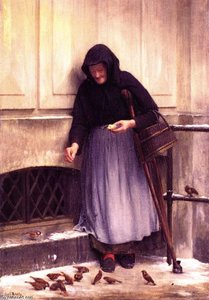
The Woman with the Sparrows (1886) by Carl Bloch

The Woman with the Sparrows

1886

A woman sits by a window, her black dress absorbing the light. She wears a hooded shawl that frames a face turned toward a small, intimate miracle. Her hand rests upon the sill, a steady anchor in a world of movement. From her open palm, small birds descend. They are sparrows, seeking sustenance in the stillness of the room. A handbag rests nearby on the floor, a silent witness to…

Carl Bloch's famous paintings, numbers 11 to 65

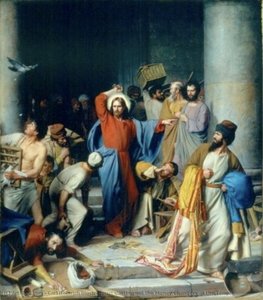
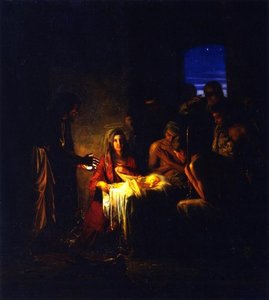
11Healing of the Blind Man (1871) by Carl BlochHealing of the Blind Man1871 12A Fisherman from Sorrento, Italy (1860) by Carl BlochA Fisherman from Sorrento, Italy1860 · Statens Museum For Kunst 13En gammel bondekone, der ser ud af et vindue (1874) by Carl BlochEn gammel bondekone, der ser ud af et vindue1874 · Statens Museum For Kunst 14The Transfiguration (1872) by Carl BlochThe Transfiguration1872 · Frederiksborg Palace 15A Fishwife (1875) by Carl BlochA Fishwife1875 · Statens Museum For Kunst 16The Artist’s Parents, Mr. and Mrs. J. P. Bloch in Their Sitting Room (1855) by Carl BlochThe Artist’s Parents, Mr. and Mrs. J. P. Bloch in Their Sitting Room1855 17The Daughter of Jairius (1863) by Carl BlochThe Daughter of Jairius1863 · Statens Museum For Kunst 18Christ on the Cross (1870) by Carl BlochChrist on the Cross1870 19Fishermen's families avaiting their return in an approsching storm. From the west coast of Jutland. (1858) by Carl BlochFishermen's families avaiting their return in an approsching storm. From the west coast of Jutland.1858 · Hirschsprung Collection 20Two monks (1861) by Carl BlochTwo monks1861 21Prometheus Unbound (1864) by Carl BlochPrometheus Unbound1864 · Ribe Kunstmuseum 22The Artist's Wife, Alma Bloch, née Trepka (1868) by Carl BlochThe Artist's Wife, Alma Bloch, née Trepka1868 · Statens Museum For Kunst 23A boy on a bench. (1871) by Carl BlochA boy on a bench.1871 24The Temptation of Jesus (1868) by Carl BlochThe Temptation of Jesus1868 25Two women talking (1874) by Carl BlochTwo women talking1874 · Nivaagaards Malerisamling 26Still Life with Fish (1878) by Carl BlochStill Life with Fish1878 · Statens Museum For Kunst 27A girl in white dress (1873) by Carl BlochA girl in white dress1873 28Jesus Casting out the Money Changers at the Temple (1874) by Carl BlochJesus Casting out the Money Changers at the Temple1874 29A Fransciscan monk (1873) by Carl BlochA Fransciscan monk1873 30Reading lady (1882) by Carl BlochReading lady1882 31Windy weather (1885) by Carl BlochWindy weather1885 32Christ and the Sinner (1890) by Carl BlochChrist and the Sinner1890 33Portrait of Clara Emilie Rose Bloch (1886) by Carl BlochPortrait of Clara Emilie Rose Bloch1886 34A baker cooling off (1888) by Carl BlochA baker cooling off1888 35A girl washing herself for carnival (1887) by Carl BlochA girl washing herself for carnival1887 36Landscape from Hellebæk (1886) by Carl BlochLandscape from Hellebæk1886 37Adoration of the Shepherds (1882) by Carl BlochAdoration of the Shepherds1882 · Nationalmuseum 38En ung pige, der lugter til en rose (1889) by Carl BlochEn ung pige, der lugter til en rose1889 · Statens Museum For Kunst 39Old People (1874) by Carl BlochOld People1874 · Hirschsprung Collection 40Self Portrait (1886) by Carl BlochSelf Portrait1886 41En forstyrret middagssøvn (1870) by Carl BlochEn forstyrret middagssøvn1870 · Statens Museum For Kunst 42Evening at a moonlit lake. (1871) by Carl BlochEvening at a moonlit lake.1871 43Massacre of the Innocents (1868) by Carl BlochMassacre of the Innocents1868 44The Wedding at Cana (1870) by Carl BlochThe Wedding at Cana1870 45Rear view of a writing man with a hat (1866) by Carl BlochRear view of a writing man with a hat1866 46The Holy Night (1867) by Carl BlochThe Holy Night1867 47The Resurrection (1873) by Carl BlochThe Resurrection1873 48Christus Colsulator (1875) by Carl BlochChristus Colsulator1875 49Jesus and the Samaritan Woman (1872) by Carl BlochJesus and the Samaritan Woman1872 50Cleansing of the Temple (1874) by Carl BlochCleansing of the Temple1874 51A Slaughterhouse in Hellebæk (1884) by Carl BlochA Slaughterhouse in Hellebæk1884 · Statens Museum For Kunst 52A conversation between two fishermen, Hornbæk (1880) by Carl BlochA conversation between two fishermen, Hornbæk1880 53The Shepherds and the Angel (1879) by Carl BlochThe Shepherds and the Angel1879 54Landscape at Ellekilde in North Zealand. Sunset. (1889) by Carl BlochLandscape at Ellekilde in North Zealand. Sunset.1889 · Statens Museum For Kunst 55Descent from the Cross (1886) by Carl BlochDescent from the Cross1886 · Statens Museum For Kunst 56Stone beach shore (1889) by Carl BlochStone beach shore1889 57View of the sea (1887) by Carl BlochView of the sea1887 58Man in profile by Carl BlochMan in profile 59Let's go for a Swim! by Carl BlochLet's go for a Swim!Statens Museum For Kunst 60Surprise! by Carl BlochSurprise! 61View of the Roman Campagna (preparatory study for To Munke, Aften) by Carl BlochView of the Roman Campagna (preparatory study for To Munke, Aften) 62Temple ruins (from Paestum?) by Carl BlochTemple ruins (from Paestum?) 63Samson and the Philistines (1863) by Carl BlochSamson and the Philistines1863 · Statens Museum For Kunst 64Prometheus' Liberation (1864) by Carl BlochPrometheus' Liberation1864 65Christian II in Prison at Sonderborg Castle (1871) by Carl BlochChristian II in Prison at Sonderborg Castle1871 · Statens Museum For Kunst

The subjects that held Carl Bloch's eye

The four subjects that come back most often in these originals, each with its finest example.

The museums that keep Carl Bloch's originals

The 6 museums that hold the most of the paintings on this page.

Museum City Works by Carl Bloch Paintings from this list
Statens Museum For Kunst, KopenhagStatens Museum For Kunst Kopenhag 15 In a Roman Osteria, A Fisherman from Sorrento, Italy, En gammel bondekone, der ser ud af et vindue
Hirschsprung Collection, KopenhagHirschsprung Collection Kopenhag 2 Fishermen's families avaiting their return in an approsching storm. From the west coast of Jutland., Old People
Frederiksborg Palace, HillerødFrederiksborg Palace Hillerød 1 The Transfiguration
Ribe Kunstmuseum, EsbjergRibe Kunstmuseum Esbjerg 1 Prometheus Unbound
Nivaagaards Malerisamling, NibeNivaagaards Malerisamling Nibe 1 Two women talking
Nationalmuseum, StockholmNationalmuseum Stockholm 1 Adoration of the Shepherds

Carl Bloch across the decades: one unique original for each

Works per decade

Pick a decade to see the original that defines it.

Carl Bloch's paintings: questions for the gallery

What is the single most famous work of Carl Bloch?Reveal the answer

In a Roman Osteria (1866), Statens Museum For Kunst, Kopenhag. The Last Supper (1876) and Jesus Raises Lazarus from the Dead (1871) come next.

At what age did Carl Bloch create In a Roman Osteria?Reveal the answer

32 years old: In a Roman Osteria dates from 1866, and Carl Bloch was born in 1834.

Which ten paintings by Carl Bloch are the most famous?Reveal the answer

In a Roman Osteria, The Last Supper, Jesus Raises Lazarus from the Dead, Let the Little Children Come unto Me, Christ in Gethsemane, Sermon on the Mount, The Twelve-Year-Old Jesus in the Temple, The Meeting of Mary and Elizabeth, The Denial of Peter and The Woman with the Sparrows. The ranking above gives each one's year and museum.

How many works by Carl Bloch are known?Reveal the answer

Our catalog holds 65 works by Carl Bloch, dated from 1855 to 1890.

Where can the most famous Carl Bloch originals be seen?Reveal the answer

Mostly in Statens Museum For Kunst (Kopenhag), Hirschsprung Collection (Kopenhag) and Frederiksborg Palace (Hillerød). The museum table above lists them all.

During which period did Carl Bloch create the best-known paintings?Reveal the answer

In 1870s: 25 of the 65 works on this page were made then, The Last Supper among them.

Which famous Carl Bloch painting is the earliest, and which the latest?Reveal the answer

On this page, the earliest is The Artist’s Parents, Mr. and Mrs. J. P. Bloch in Their Sitting Room (1855) and the latest Christ and the Sinner (1890).

What subjects did Carl Bloch favour?Reveal the answer

People (8), Woman (7) and Jesus (5), across the 65 works on this page.

What materials did Carl Bloch paint with most?Reveal the answer

Oil On Canvas, for 14 of the 65 works on this page.

Which movement does the work of Carl Bloch belong to?Reveal the answer

Realism, judging by the originals on this page.

What Carl Bloch originals can I see at the Statens Museum For Kunst?Reveal the answer

In a Roman Osteria, A Fisherman from Sorrento, Italy and En gammel bondekone, der ser ud af et vindue: the Statens Museum For Kunst, Kopenhag holds 15 of the works on this page.

Where can I order a hand-painted Carl Bloch reproduction?Reveal the answer

Yes, as a reproduction: the original stays in its museum, but any painting on this page can be painted by hand for you, made to order one at a time, from the painting's own page.

Carl Bloch: a portrait of the artist

Carl Heinrich Bloch: Hayata ve İmana Adanmış Bir Ressam

Carl Heinrich Bloch, 23 Mayıs 1834’te Kopenhag’da doğmuş, adını özellikle dini anlatımlara ve gündelik yaşamın sessiz saygınlığına getirdiği etkileyici tasvirleriyle özdeşleştirmiş bir Danimarkalı ressamdır. Sanatçı olarak yolculuğu başlangıçta ebeveynleri tarafından desteklenmedi; onlar oğulları için denizcilik gibi daha geleneksel bir kariyer hayal ediyordu. Ancak Bloch’un sanat tutkusu karşı konulamaz olduğunu kanıtladı ve 1855 yılında Wilhelm Marstrand’ın rehberliğinde Kraliyet Danimarka Güzel Sanatlar Akademisi’ne kaydoldu. Bu resmi eğitim, sanatsal gelişiminin temelini oluşturarak becerilerini geliştirdi ve estetik duyarlılığını şekillendirdi. Erken dönem eserleri, kırsal sahneler üzerine odaklanan keskin bir gözlem yeteneği ortaya koyuyor ve sıradan varoluşun özünü olağanüstü bir hassasiyetle yakalıyordu.

İtalyan Uyanışı ve Sanatsal Olgunlaşma

Bloch’un sanatsal evriminde dönüm noktası, 1859 ile 1866 yılları arasında İtalya'da geçirdiği uzun süre oldu. Bu dönem, onu zengin bir sanat mirasıyla tanıştırarak ve stilini derinden etkileyerek dönüştürücü kanıtlandı. Tam da bu yıllarda Rembrandt van Rijn’ın eserleriyle karşılaşması, resim yaklaşımını kalıcı olarak değiştirecekti. Hollandalı ustasının ışık ve gölge kullanımı – aydınlanma ile karanlığın dramatik etkileşimi – Bloch için derin bir yankı uyandırdı ve kendi işinin tanımlayıcı bir özelliği haline geldi. Sadece teknik yönleri değil, aynı zamanda Rembrandt’ın tuvaline getirdiği duygusal derinliği ve psikolojik içgörüyü de özümsedi. Roma'da kişisel mutluluğu da buldu; 1868 yılında Alma Trepka ile evlendi. Evlilikleri, karısının erken ölümüyle gölgelenene kadar bir neşe kaynağı oldu (1886).

Frederiksborg’daki Başarı ve Kalıcı Miras

Bloch’un şöhrete yükselişi, 1865 yılında Kopenhag'da sergilenen Prometheus Unbound ile başladı. Kısa sürede önde gelen bir sanatçı olarak kendini kanıtladı ve Marstrand’ın ardından Kopenhag Üniversitesi tören salonunun dekorasyonunu tamamlamayı başardı. Ancak, İncil'deki olayları konu alan yirmi üç tablodan oluşan Frederiksborg Sarayı Şapel Komisyonu (1865-1879 yılları arasında) mirasını pekiştirdi. Nefes kesen detay ve yoğun duygularla sunulan bu sahneler büyük beğeni topladı ve en önemli başarıları olarak kabul ediliyor. Bu görsellerin gücü Danimarka sınırlarının ötesine uzandı; Bloch daha sonra Frederiksborg tablolarına dayalı sunağlar yaptı ve bunlar Danimarka ve İsveç'teki kiliselerde yer buldu.

Stil, Etkiler ve Kalıcı Etki

Bloch’un sanatsal stili gerçekçilik ve romantizmin etkileyici bir karışımıydı. İncil anlatımlarını hem tarihi doğrulukla hem de derin duygusal rezonansla tasvir etme konusunda olağanüstü bir yeteneğe sahipti. Rembrandt'ın ışık ve gölge kullanımındaki etkisi, ruhsallığı ve insan dramını yoğunlaştıran dramatik efektler yaratarak inkar edilemezdir. Aynı zamanda “Eckersberg Geleneği”ne de aitti; bu okul gerçekçiliğe ve ulusal temalara olan bağlılığıyla biliniyordu. Teknik becerisinin ötesinde, Bloch’un işi samimi empati ve ruhani derinliği nedeniyle izleyicilerle yankı uyandırdı. Resimleri sadece illüstrasyon değildi; inancı, ıstırabı ve kurtuluşu düşünmeye davet eden çağrılardı. Kilise İsa Mesih, Bloch’un Frederiksborg Sarayı tablolarını kiliselerinde ve basılı materyallerinde kapsamlı bir şekilde kullandı, bunların kutsal hikayeleri netlik ve duygusal güç ile aktarma gücünü kabul etti. Hatta İncil olaylarını tasvir eden filmler için görsel referans olarak da hizmet ettiler. Ünlü Danimarkalı yazar H.C. Andersen, Bloch’un olağanüstü yeteneğini fark ederek “dünya üzerinde asil olacağını” ve “büyük sanat cennetine” doğru yükseleceğini tahmin etmişti. Karl Madsen de onu "hepsinden soylu olanlardan biri" ilan etti. Carl Heinrich Bloch, 22 Şubat 1890’da Kopenhag'da hayatını kaybetti ve geride hayranlık uyandıran ve saygı gören bir eser bıraktı. Resimleri, sanatsal dehasının ve kalıcı inancının kanıtları olmaya devam ediyor; bu miras onu 19. yüzyılın en sevilen dini sanatçılarından biri olarak güvence altına alıyor.

All 65 works by Carl Bloch →