Early Life and Artistic Foundations
Richard John Spare, born in Chelmsford in 1951, embarked on a journey that would establish him as a pivotal figure in British printmaking and a celebrated artist in his own right. His formative years at Maidstone College of Art from 1971 to 1974 laid the groundwork for a career deeply rooted in traditional techniques yet remarkably attuned to contemporary artistic currents. This period wasn’t merely about mastering paint application; it was an immersion into the very language of visual expression, fostering a sensitivity that would later define his nuanced approach to
etching and drypoint. Following college, Spare's apprenticeship with Thomas Ross & Son proved invaluable. He honed his skills in mezzotint printing and restoration, working on significant projects like
George Stubbs’ works for the
Tate Gallery and meticulously restoring J.M.W. Turner’s aquatints for a Royal Academy exhibition—a direct connection to the masters that instilled a profound respect for
art history.
The Hockney Collaboration and Rise as a Master Printmaker
A defining moment arrived in 1977 when Spare was entrusted with establishing
David Hockney's
etching studio, undertaking the editioning of *The Blue Guitar* series. This wasn’t simply a technical task; it offered an intimate glimpse into
Hockney’s
creative process and provided invaluable experience. Observing
Hockney at work on his designs for Mozart’s *The Magic Flute* at Glyndebourne further broadened Spare's artistic horizons, exposing him to the collaborative energy of opera and stage design. The following decade saw a flourishing of collaborations with an extraordinary roster of contemporary artists—
Jasper Johns,
Keith Haring,
Robert Ryman,
Francesco Clemente,
Howard Hodgkin—each project pushing the boundaries of printmaking technique and solidifying Spare’s reputation as a master craftsman. He wasn't merely reproducing images; he was interpreting them through his own skilled hand, contributing to their very essence.
Establishing Wellington Studio and a Distinct Artistic Voice
In 1989, Richard Spare founded Wellington Studio in London, marking a pivotal shift towards focusing on his personal artistic vision. While continuing to edition prints for others, the studio became a space for exploring his own creative impulses—a haven dedicated to nature, travel, and the
quiet beauty of
everyday life. This period saw the development of his signature style: richly coloured drypoint etchings characterized by velvety textures and evocative compositions. His garden in Charlton, brimming with hollyhocks, foxgloves, and wisteria, became a primary source of inspiration—a microcosm of wildlife and
botanical detail that he translated onto copper plates with remarkable sensitivity. The resourceful use of
everyday objects as vases – water bottles or pesto jars – speaks to an appreciation for the beauty found in simplicity.
International Recognition and Enduring Legacy
Spare’s work quickly garnered international acclaim, particularly through a series of annual solo exhibitions across Japan spanning eleven years. These shows weren't merely displays of artistic talent; they were cultural exchanges, fostering a deep connection with Japanese audiences who resonated with the delicate balance of detail and colour in his prints. Solo exhibitions followed in Australia, further expanding his global reach. Throughout this period, Spare remained a frequent exhibitor at prestigious venues like the Royal Academy Summer Exhibition—a testament to his consistent artistic quality and enduring appeal. In 2025, the Open University bestowed upon him an Honorary Doctorate, recognizing his significant “Services to the Arts.” His works now reside in esteemed public collections including the Victoria & Albert Museum, British Library, and
Hunterian Art Gallery, cementing his place within the canon of contemporary
British art.
Themes, Influences, and Artistic Significance
Richard Spare’s artistic significance lies not only in his technical mastery but also in his ability to imbue seemingly ordinary subjects with a profound sense of beauty and emotion. His work is deeply rooted in observation—a careful study of nature, travel, and the subtle nuances of
light and shadow. The influence of earlier masters like Stubbs, Turner, Hogarth, Cruikshank, Rowlandson, Gillray, Landseer, and Martin is evident in his meticulous attention to detail and narrative quality. However, Spare’s work transcends mere imitation; it's a unique synthesis of tradition and contemporary sensibility. He doesn’t simply depict what he sees; he transforms it—infusing it with colour, texture, and a deeply personal vision that resonates with viewers on an emotional level. His dedication to the art of printmaking, coupled with his unwavering commitment to his own artistic voice, has established him as a truly exceptional figure in
British art, whose legacy will continue to inspire generations of artists to come.


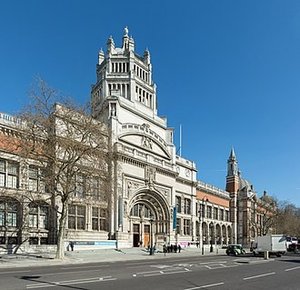 Victoria and Albert Museum
 Leeds Art Gallery


