

1


Kasım 2026 tarihinde güncellendi · popülerlik puanımıza göre sıralanmıştır (her bir eser için aramalar, ziyaretler ve siparişler) · 36 eser Ray Howard Jones kataloğumuzda
Özetle
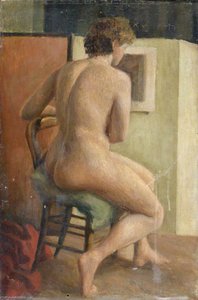
Ray Howard Jones tarafından bırakılan tüm orijinal eserler arasında en ünlüsü Untitled adlı çalışmasıdır. Hemen ardından Seated Female Nude ve Girl with Bird geliyor. Kataloğumuz Ray Howard Jones tarafından yapılmış 36 eser barındırmaktadır; galeri, her biri tarihi, müzesi ve hikayesiyle birlikte sergilenen, dünyanın en çok hayranlık duyduğu 36 eseri muhafaza etmektedir.


 Brigadier L. Howard Jones, OBE, Royal Electrical and Mechanical Engineers, 8th Army (1942–1943)1943
12
 Entrance to Home Guard Camp Colonel Llewellyn, Western Command1942
13
 Fortified Islands in the Bristol Channel Two Inch Naval UP Projector on an Earlier Fortification1943
14
 Bird in a Landscape1940 · Royal Albert Memorial Museum
15
 Homage to James Cowie1946
16
 Untitled (recto)
17
 Evening Skomer
18
 Sorel at Sanndins First Skomer
19
 Seascape (study)
20
 Untitled (verso)
21
 Landscape with Fields and Farm Buildings
22
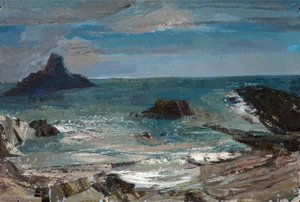 Seascape
23
 Landscape with Buildings (study)
24
 Derelict Farmhouse
25
 Mounthaven Monks Way to the Sea (verso)
26
 Landscape (study)
27
 Highcliff and Gateholm
28
 The Moon and the Wind
29
 Island of Scalmeye
30
 Gateholm and the Moon
31
 'The Moon in St Brides' Skomer
32
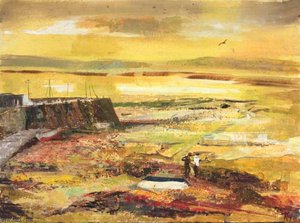 Evening in Alderney
33
 Sun on the Northern Ridge, Skomer
34
 Rock Pool
35Flowers in Front of a Mirror
36
 Gateholm, Low WaterGovernment Art Collection
Bu orijinal eserlerde en sık karşılaşılan ve her biri en seçkin örneğine sahip olan dört konu.
Bu sayfadaki tabloların çoğuna ev sahipliği yapan 2 müze.
| Müze | Şehir | Ray Howard Jones Eserleri | Bu listedeki tablolar |
|---|---|---|---|
 Royal Albert Memorial Museum |
Exeter | 1 | Bird in a Landscape |
 Government Art Collection |
Londra | 1 | Gateholm, Low Water |
1920 ile 1946 yılları arasında, Ray Howard Jones 27 yıl boyunca çalıştı: bu seçki, sanatçının uzun kariyerini en seçkin orijinal eserleri üzerinden yıl yıl takip ediyor.
Orijinallerini görmek için bir yıl seçin.


1943 hakkında daha fazlası

Untitled. Ardından Seated Female Nude ve Girl with Bird geliyor.
Untitled, Seated Female Nude, Girl with Bird, Madonna, Man with Birds, Mounthaven Monks Way to the Sea (recto), Figures by a Lake, Female Figure Standing, Mary Constance ve Fortified Islands (Building the North Battery, Flatholm, Bristol Channel). Yukarıdaki sıralama, her birinin yapım yılını ve bulunduğu müzeyi göstermektedir.
Kataloğumuzda Ray Howard Jones tarafından 1920 ile 1946 tarihleri arasında üretilmiş 36 eser bulunmaktadır.
Çoğunlukla Royal Albert Memorial Museum (Exeter) ve Government Art Collection (Londra) bünyesinde yer almaktadır. Yukarıdaki müze tablosu tümünü listelemektedir.
1943 döneminde: Bu sayfadaki 36 eserin 3 tanesi o dönemde yapılmıştır, bunların Fortified Islands (Building the North Battery, Flatholm, Bristol Channel) tanesi ise Fortified Islands (Building the North Battery, Flatholm, Bristol Channel) arasındadır.
Bu sayfadaki en eski eser Figures by a Lake (1920), en yeni eser ise Homage to James Cowie (1946)'dir.
Geometric shapes (2) ve Coastal landscape (2), bu sayfadaki 36 eser genelinde.
Born in 1903 in Lambourn, Berkshire – a small village nestled within the rolling hills of southern England – Rosemary Howard-Jones, later known simply as Ray, was destined for a life deeply intertwined with both the natural world and the burgeoning artistic currents of her time. Her early years were shaped by the loss of her father, a decorated Royal Army Veterinary Corps officer who succumbed to wounds sustained during World War I, and a subsequent separation between her parents. This poignant beginning instilled in Ray a resilience and independence that would profoundly influence her approach to both life and art. Moving to Penarth, Wales, at the age of two, she was raised by her grandparents, absorbing the rugged beauty of the Welsh coastline – a landscape that would become the enduring subject of her paintings for decades to come.
Ray’s artistic journey began formally at the Slade School of Art in London, where she honed her skills in painting, wood engraving, and design. The Slade, renowned for its progressive approach and emphasis on observation, provided Ray with a solid foundation, but it was her experiences beyond the classroom that truly shaped her distinctive style. During the 1930s, she found work as an illustrator for the National Museum of Wales, meticulously documenting archaeological reconstructions – a task that demanded both technical precision and a keen eye for detail. This period also saw her contribute to the vibrant cultural scene of Cardiff, working as a designer and creative director for the East Moors Theatre, a local venue dedicated to providing entertainment for the city’s less privileged communities.
World War II marked a pivotal moment in Ray's artistic career. Recognizing the need for visual documentation of the conflict’s impact on Wales, she submitted a series of drawings to the War Artists’ Advisory Committee (WAAC). While these submissions were not ultimately selected, they demonstrated her willingness to engage with significant historical events and capture their essence through art. More significantly, Ray was commissioned to paint fortifications on several remote islands in the Bristol Channel – Skomer and Steep Holm – documenting the strategic preparations for D-Day. These paintings, imbued with a sense of both urgency and quiet contemplation, offer a rare glimpse into a crucial period of British history.
Following the war, Ray sought respite from the turmoil and found solace in the wild beauty of Pembrokeshire. She established a close relationship with Raymond Moore, a fellow artist and photographer, and together they spent many summers on Skomer Island, one of Wales’s most important wildlife sanctuaries. This period proved transformative, deepening her connection to the landscape and inspiring a series of evocative paintings that captured the island's unique atmosphere – its dramatic cliffs, teeming birdlife, and ever-changing light. Her work during this time is characterized by a masterful use of color and texture, conveying not just the visual appearance of the coastline but also its emotional resonance.
Ray’s artistic output extended beyond painting to encompass mosaic design. She created stunning mosaics for both public and private commissions, including a large-scale mural for Thomson House in Cardiff and a more intimate altarpiece for the parish church of Marchmont St Giles in Edinburgh. These works demonstrate her versatility as an artist, showcasing her ability to translate complex ideas into visually compelling forms. Her mosaics are notable for their rich color palettes, intricate patterns, and skillful integration of natural materials – reflecting her deep appreciation for the beauty of the Welsh landscape.
Throughout her career, Ray remained a fiercely independent and unconventional figure. She eschewed the conventions of the art world, preferring to work on her own terms and pursue her artistic vision with unwavering dedication. Her legacy is not simply one of beautiful paintings and intricate mosaics but also as a testament to the power of art to capture the spirit of a place and its people. Ray Howard-Jones’s life and work continue to inspire artists and art lovers alike, cementing her position as a significant figure in Welsh art history.
In later years, Ray continued to live on Skomer Island, embracing a simple lifestyle deeply connected to the rhythms of nature. She remained active as an artist until her death in 1996 at the age of 93, leaving behind a substantial body of work that reflects her unique artistic vision and profound connection to Wales. Her paintings are held by numerous museums and galleries throughout the UK, and her mosaics continue to grace public spaces, serving as enduring reminders of her remarkable talent and unwavering spirit.
Ray Howard-Jones’s art is characterized by a distinctive blend of Impressionism, Romanticism, and Celtic mysticism. She was particularly drawn to the dramatic light and color of the Welsh coastline, capturing its ever-changing moods with exquisite sensitivity. Her work is often imbued with a sense of melancholy and longing, reflecting her own personal experiences and her deep connection to the land.
