


1


Kasım 2026 tarihinde güncellendi · popülerlik puanımıza göre sıralanmıştır (her bir eser için aramalar, ziyaretler ve siparişler) · 18 eser Percy Horton kataloğumuzda
Özetle
Percy Horton tarafından bırakılan tüm orijinal eserler arasında en ünlüsü Unemployed Man (1929) adlı çalışmasıdır. Hemen ardından House on the Seine (1925) ve Flowerpiece (1929) geliyor. Kataloğumuz Percy Horton tarafından yapılmış 18 eser barındırmaktadır; galeri, her biri tarihi, müzesi ve hikayesiyle birlikte sergilenen, dünyanın en çok hayranlık duyduğu 18 eseri muhafaza etmektedir.


 Blind Workers in a Birmingham Factory1942
12
 A Corner of Ambleside1943
13
 The Road to the Fells, Ambleside1943
14
 Storm over Loughrigg1943
15Helen Marion Wodehouse1942 · Girton College
16
 The Rugmaker1946 · Ashmolean Müzesi
17
 Sydney Robert Bell, Mayor of Andover (1939–1943)1944 · Andover Guildhall
18
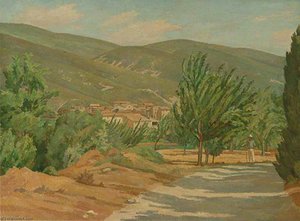 Village in Luberon, FranceTowner
Bu orijinal eserlerde en sık karşılaşılan ve her biri en seçkin örneğine sahip olan dört konu.
Bu sayfadaki tabloların çoğuna ev sahipliği yapan 4 müze.
| Müze | Şehir | Percy Horton Eserleri | Bu listedeki tablolar |
|---|---|---|---|
 Ashmolean Müzesi |
Oxford | 2 | Flowerpiece, The Rugmaker |
 Girton College |
Cambridge | 1 | Helen Marion Wodehouse |
 Andover Guildhall |
Andover | 1 | Sydney Robert Bell, Mayor of Andover (1939–1943) |
 Towner |
Eastbourne | 1 | Village in Luberon, France |
O dönemi tanımlayan orijinal eseri görmek için bir on yıl seçin.
Unemployed Man (1929). Ardından House on the Seine (1925) ve Flowerpiece (1929) geliyor.
32 yaşında: Unemployed Man 1929 yılına aittir ve Percy Horton 1897 yılında doğmuştur.
Unemployed Man, House on the Seine, Flowerpiece, Dulwich Trees, Coates Corner, Assington, Suffolk, Untitled A House at Ambleside, Lakeland Landscape, Portrait of the Artist's Mother, The Shepherd ve Mrs Simpson. Yukarıdaki sıralama, her birinin yapım yılını ve bulunduğu müzeyi göstermektedir.
Kataloğumuzda Percy Horton tarafından 1925 ile 1946 tarihleri arasında üretilmiş 18 eser bulunmaktadır.
Çoğunlukla Ashmolean Müzesi (Oxford), Girton College (Cambridge) ve Andover Guildhall (Andover) bünyesinde yer almaktadır. Yukarıdaki müze tablosu tümünü listelemektedir.
1940s döneminde: Bu sayfadaki 18 eserin 11 tanesi o dönemde yapılmıştır, bunların Untitled A House at Ambleside tanesi ise Untitled A House at Ambleside arasındadır.
Bu sayfadaki en eski eser House on the Seine (1925), en yeni eser ise The Rugmaker (1946)'dir.
Vintage art (2), Rural landscape (2) ve Historical figure (2), bu sayfadaki 18 eser genelinde.
Flowerpiece ve The Rugmaker: Ashmolean Müzesi, Oxford, bu sayfadaki eserlerden 2 tanesine ev sahipliği yapmaktadır.
Born in the coastal light of Brighton in 1897, Percy Frederick Horton emerged as a profound voice in the tapestry of twentieth-century British art. His journey was one defined by a deep-seated connection to the natural world and an unwavering commitment to the emotional truth found within observation. Growing up in a working-class family, Horton’s path was paved by talent and scholarship, leading him from the Brighton School of Art to the prestigious Royal College of Art. This formative period was not merely about technical mastery but about developing a soul that could converse with the landscape. His early years were marked by a significant moral stance; as a conscientious objector during the First World War, he faced imprisonment, an experience that undoubtedly deepened his introspective nature and perhaps fueled the psychological depth found in his later, more somber works.
Horton’s artistic evolution is a fascinating study of movement from the structured elegance of Academic Impressionism toward the raw, emotive power of Expressionism. Influenced by the monumental presence of Cézanne and the haunting psychological landscapes of Edvard Munch, he learned to use the brush not just to replicate reality, but to interpret it. His technique became a language of texture; through the deliberate use of impasto and bold, visible brushstrokes, he could convey the weight of a forest or the fleeting softness of a petal. This transition allowed him to move beyond mere depiction, capturing the very atmosphere—the moisture in the air, the brooding shadows of a woodland, and the quiet stillness of an English afternoon.
The breadth of Horton’s oeuvre reveals an artist capable of immense versatility, moving seamlessly between the grand scale of the English countryside and the intimate quietude of domestic life. His landscapes are perhaps his most enduring contribution to British art. In works such as ‘Lakeland Landscape’ (1943), one can feel the heavy, atmospheric tension of the Cumbrian forests, where the paint itself seems to hold the dampness of the mist. He possessed a rare ability to imbant a scene with a sense of time and place, whether it was the rugged beauty of the Lakes or the gentle, rolling hills of Suffolk, as seen in his evocative ‘Coates Corner’.
Yet, Horton was equally adept at finding the infinite within the small. His still lifes, such as the delicate ‘Flowerpiece’ (1929), demonstrate a masterful command of light and shadow. In these compositions, pink roses and weathered books are bathed in a soft, ethereal glow, inviting the viewer into a moment of profound tranquility. This duality—the ability to capture both the epic and the intimate—is what defines his unique artistic signature. His work often serves as a bridge between the Victorian sensibilities of his youth and the modern, fractured perspectives of the mid-twentieth century.
Beyond the canvas, Horton’s impact on the art world was cemented through his profound dedication to teaching. His career as an educator was as distinguished as his time as a painter. Serving as the Ruskin Master of Drawing at the University of Oxford from 1949 to 1964, he became a custodian of classical principles while encouraging the next generation to explore modern expression. He understood that true art required both a foundation in rigorous observation and the courage to experiment with form and emotion.
The legacy of Percy Frederick Horton resides not only in the museums that house his paintings but in the very way we perceive the British landscape. His life was a testament to the power of staying true to one's convictions, whether through political dissent or artistic innovation. Through his eyes, we continue to see the beauty of rural England—not as a static postcard, but as a living, breathing, and deeply emotional entity. His contributions to the Royal Society of British Artists and his lasting imprint on art education ensure that his vision remains an essential part of the historical narrative of British fine art.


