Károly Brocky portresi

Her Biri Benzersiz, En Ünlü 16 Károly Brocky Tablosu

Kasım 2026 tarihinde güncellendi · popülerlik puanımıza göre sıralanmıştır (her bir eser için aramalar, ziyaretler ve siparişler) · 16 eser Károly Brocky kataloğumuzda

Özetle

The Daughters of István Medgyasszay (1833), Károly Brocky tarafından yapılan ve en çok ilgi çeken tablodur. Ardından göz, Jozefína Tschildová (Fanny) (1844) ve Spring üzerine yoğunlaşır. Kataloğumuzdaki Károly Brocky imzalı 16 eser arasından seçilen bu 16 eser; yapıldığı yıl, sergilendiği müze ve zamana meydan okuma nedenleriyle birlikte sunulan en ünlü ve her biri eşsiz orijinal çalışmalardır.

1807 – 1855, Timișoara Romanticism En çok eser: Macar Ulusal Galerisi

Galerinin gözünden Károly Brocky tarafından yapılan en iyi 10 tablo

1
The Daughters of István Medgyasszay (1833) tarafından Károly Brocky

The Daughters of István Medgyasszay

1833 · Oil On Canvas

Four figures occupy a stone terrace, arranged with a formal symmetry that suggests both familial order and social standing. Three women and a young boy are positioned against a lush, outdoor backdrop where distant mountains fade into a soft atmospheric haze. The composition relies on a balanced, central axis, grounding the subjects within their immediate environment. Light falls softly across the scene, diffusing over the textures of stone and fabric…

2
Jozefína Tschildová (Fanny) (1844) tarafından Károly Brocky

Jozefína Tschildová (Fanny)

1844 · Oil On Canvas · Slovak National Gallery, Bratislava

Presented in an oval format, this mid-19th-century portrait captures a woman from the chest up in a three-quarter view. She is positioned with her hands clasped near her chest, a gesture that lends an air of elegance and composure to the composition. The subject wears a ruffled, off-the-shoulder pink gown, which creates a soft contrast against the deep green drapery in the background and the neutral, muted beige of the…

3
Spring tarafından Károly Brocky

Spring

Oil

Three children occupy a lush green field, their small forms caught in a moment of unburdened play. The sun hangs high, casting a warm glow over the meadow and the trees that line the background. One child balances on a single leg, a fleeting gesture of physical grace. Another reaches out, a finger pointing toward something unseen in the grass. A third child lingers nearby, a quiet observer of the…

10
Mother and Child (1846) tarafından Károly Brocky

Mother and Child

1846 · Macar Ulusal Galerisi, Budapeşte

The painting Mother and Child by Karoly Brocky (Charles Brocky) is a beautiful example of 19th-century art, showcasing the artist's skill in capturing intimate moments. Created in 1846, this oil on canvas piece measures 62 x 54 cm and is currently housed at the Hungarian National Gallery in Budapest, Hungary. The Artist and His Work Karoly Brocky (Charles Brocky) was a Hungarian painter known for his realistic and detailed style.…

Károly Brocky'in ünlü tabloları, 11. ile 16. arası

Károly Brocky'ın ilgisini çeken konular

Bu orijinal eserlerde en sık karşılaşılan ve her biri en seçkin örneğine sahip olan dört konu.

Károly Brocky'in orijinal eserlerinin sergilendiği müzeler

Bu sayfadaki tabloların çoğuna ev sahipliği yapan 3 müze.

Müze Şehir Károly Brocky Eserleri Bu listedeki tablolar
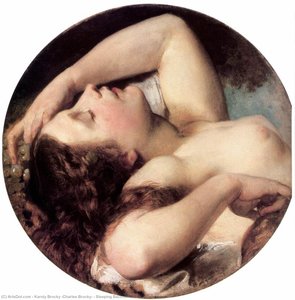
Macar Ulusal Galerisi, BudapeşteMacar Ulusal Galerisi Budapeşte 5 Sleeping Bacchante, Mother and Child, Psyche Resting
Slovak National Gallery, BratislavaSlovak National Gallery Bratislava 1 Jozefína Tschildová (Fanny)
Herman Ottó Museum, MiskolcHerman Ottó Museum Miskolc 1 Lucy Ashton and Ravenswood Visiting Blind Alice

On yıllar boyunca Károly Brocky: her biri için eşsiz bir orijinal eser

On yıllara göre eserler

O dönemi tanımlayan orijinal eseri görmek için bir on yıl seçin.

Károly Brocky'in tabloları: galeri için sorular

Károly Brocky tarafından yapılmış en ünlü eser hangisidir?Cevabı göster

The Daughters of István Medgyasszay (1833). Ardından Jozefína Tschildová (Fanny) (1844) ve Spring geliyor.

Károly Brocky, The Daughters of István Medgyasszay eserini kaç yaşında yarattı?Cevabı göster

26 yaşında: The Daughters of István Medgyasszay 1833 yılına aittir ve Károly Brocky 1807 yılında doğmuştur.

Károly Brocky tarafından yapılmış en ünlü on tablo hangileridir?Cevabı göster

The Daughters of István Medgyasszay, Jozefína Tschildová (Fanny), Spring, Portrait of a Woman with Veil, Lucy Ashton and Ravenswood Visiting Blind Alice, Sleeping Bacchante, supid and Psyche, Summer, Winter ve Mother and Child. Yukarıdaki sıralama, her birinin yapım yılını ve bulunduğu müzeyi göstermektedir.

Károly Brocky tarafından yapılmış kaç eser bilinmektedir?Cevabı göster

Kataloğumuzda Károly Brocky tarafından 1833 ile 1850 tarihleri arasında üretilmiş 16 eser bulunmaktadır.

En ünlü Károly Brocky orijinalleri nerede görülebilir?Cevabı göster

Çoğunlukla Macar Ulusal Galerisi (Budapeşte), Slovak National Gallery (Bratislava) ve Herman Ottó Museum (Miskolc) bünyesinde yer almaktadır. Yukarıdaki müze tablosu tümünü listelemektedir.

Károly Brocky en bilinen tablolarını hangi dönemde yaptı?Cevabı göster

1840s döneminde: Bu sayfadaki 16 eserin 4 tanesi o dönemde yapılmıştır, bunların Jozefína Tschildová (Fanny) tanesi ise Jozefína Tschildová (Fanny) arasındadır.

Hangi ünlü Károly Brocky tablosu en eski, hangisi ise en yenidir?Cevabı göster

Bu sayfadaki en eski eser The Daughters of István Medgyasszay (1833), en yeni eser ise Sleeping Bacchante (1850)'dir.

Károly Brocky hangi konuları tercih ederdi?Cevabı göster

Woman (3), Children (2) ve Portraits (2), bu sayfadaki 16 eser genelinde.

Károly Brocky en çok hangi malzemelerle resim yaptı?Cevabı göster

Bu sayfadaki 16 eserin 3 tanesi Oil On Canvas türündedir.

Károly Brocky eserleri hangi akıma aittir?Cevabı göster

bu sayfadaki orijinallerine bakılırsa Romanticism,

Macar Ulusal Galerisi bünyesinde Károly Brocky imzalı hangi orijinal eserleri görebilirim?Cevabı göster

Sleeping Bacchante, Mother and Child ve Psyche Resting: Macar Ulusal Galerisi, Budapeşte, bu sayfadaki eserlerden 5 tanesine ev sahipliği yapmaktadır.

Károly Brocky: sanatçının bir portresi

A Life Forged in Motion

Born in the vibrant landscape of Temesvár in 1808, the life of Karoly Brocky—often known to the wider world as Charles Brocky—was far from a conventional path of academic stability. The son of a hairdresser, his early years were marked by the transient rhythms of the stage, having joined a troupe of strolling actors to sustain himself in his youth. This period of wandering likely imbued his later works with a profound understanding of human drama and character. His artistic metamorphosis truly began when he found refuge in the free drawing schools of Vienna, followed by rigorous training at the prestigious École du Louvre in Paris. These formative travels through Europe’s great cultural hubs allowed him to absorb a diverse palette of influences, transforming a young wanderer into a master of the brush.

Bridging the Baroque and the Romantic

Brocky’s artistry stands as a remarkable bridge between two monumental eras: the dramatic grandeur of the Baroque and the tender emotionalism of the Romantic movement. He possessed a rare ability to marry the meticulous, chiaroscuro-driven techniques of masters like Rembrandt and Caravaggio with the burgeoning sensitivity of the nineteenth century. His brushwork, while deliberate and precise, maintained a fluid grace that captured the psychological depth of his subjects. In his portraits, one finds not merely a likeness, but an exploration of the soul. This mastery is particularly evident in his use of light and shadow to sculpt form and evoke mood, creating compositions that feel both timelessly classical and intensely personal. He excelled at capturing the delicate interplay of light upon skin and fabric, a hallmark of the Baroque aesthetic adapted for a new, more emotive age.

The Echo of Intimacy and Emotion

The legacy of Brocky is best preserved in the quiet, evocative moments captured on his canvases. His works often transcend simple genre painting to touch upon the universal experiences of love, motherhood, and devotion. Through his ability to render everyday life with such reverence, he solidified his place as a significant figure in Hungarian art history.

Notable examples of his enduring mastery include:
  • Mother and Child: A poignant 1846 masterpiece that showcases his skill in rendering soft textures and tender, intimate connections through a delicate play of light.
  • Does He Love Me: A piece that exemplifies his ability to weave narrative tension and emotional ambiguity into a single, captivating scene.
  • Self-Portrait: A testament to his technical precision and his capacity for capturing the human form with both realism and expressive nuance.
Through these works, Brocky remains a painter of profound depth, reminding us of an era where technique and emotion were inextricably linked. His journey from the traveling troupes of his youth to the prestigious galleries of Europe serves as a testament to a life dedicated to capturing the very essence of the human spirit.