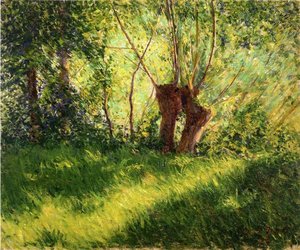
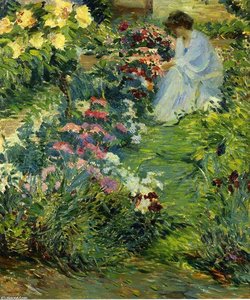
John Leslie Breck portresi

John Leslie Breck Tabloları: Bir Galerinin Gözünden En Ünlü 25 Eser

Kasım 2026 tarihinde güncellendi · popülerlik puanımıza göre sıralanmıştır (her bir eser için aramalar, ziyaretler ve siparişler) · 25 eser John Leslie Breck kataloğumuzda

Özetle

Galerinin gözünde, John Leslie Breck'in en ünlü tablosu Wetlands (1894)'tir. Study for 'Indian Summer' (1892) ve The Gilded Dome, Spring (1893), her gözün hemen fark edeceği o üçlüyü tamamlıyor. Katalogumuzdaki John Leslie Breck imzalı 25 eser arasından galerimiz, her biri yapıldığı yıl, sergilendiği müze ve onu eşsiz kılan özellikleriyle birlikte en ünlü 25 eseri aşağıda sunmaktadır.

1860 – 1899, at sea Impressionism En çok eser: Musée des impressionnismes Giverny

Galerinin en iyi 10 John Leslie Breck tablosu

1
Wetlands (1894) tarafından John Leslie Breck

Wetlands

1894 · Oil

The landscape unfolds as a quiet intersection of earth and sky, where a body of water rests amidst a sprawl of grassy banks. Scattered trees punctuate the horizon, their forms anchoring the composition against the open expanse. In the sky, birds are caught in mid-flight, adding a sense of movement to the stillness. A solitary boat rests upon the water, a small human presence within the vastness of the natural…

2
Study for 'Indian Summer' (1892) tarafından John Leslie Breck

Study for 'Indian Summer'

1892 · Oil

A quietude settles over this landscape, capturing the fleeting transition of the seasons. The composition centers on a dense arrangement of foliage, where the warmth of orange leaves defines the character of the trees. In the foreground, two bushes anchor the scene, their forms providing a sense of immediate presence against the receding layers of the woods. The arrangement of trees creates a rhythmic depth, guiding the eye from the…

3
The Gilded Dome, Spring (1893) tarafından John Leslie Breck

The Gilded Dome, Spring

1893 · Oil On Canvas

In this 1893 composition, we find ourselves looking upon a city that seems to breathe in harmony with its natural surroundings. A large, gilded dome rises in the background, acting as a silent anchor for the entire scene. Below this architectural focal point, a river winds its way through the urban landscape, flanked by the soft textures of trees that line its banks. A solitary boat rests upon the water,…

4
The River Epte, Giverny (1891) tarafından John Leslie Breck

The River Epte, Giverny

1891 · Oil On Canvas · Musée des impressionnismes Giverny, Giverny

The Epte river flows through a thicket of green, caught in the soft, dappled light of 1891. Here, the water is a mirror for the sky, broken only by the rhythmic movement of the current and the occasional flutter of a bird. The foliage is dense, a heavy curtain of leaves that creates a quiet enclosure along the banks. Sunlight filters through the canopy, casting shifting patterns upon the surface…

5
M. Baudy Behind his Desk at the Hotel Baudy (1888) tarafından John Leslie Breck

M. Baudy Behind his Desk at the Hotel Baudy

1888 · Oil On Canvas · Smithsonian Amerikan Sanat Müzesi, Washington, D.C.

A man sits anchored behind a dark wooden bar, a solitary figure framed by the geometry of a hotel interior. The scene is a study in stillness, captured in 1888. M. Baudy rests in the midground, his dark cap and jacket blending into the shadows of the service counter. Around him, the world is composed of vertical lines—the tall door to the right and the structured shelves behind him. A…

6
Yellow Fleurs-de-Lis (1888) tarafından John Leslie Breck

Yellow Fleurs-de-Lis

1888 · Oil On Canvas

Yellow Fleurs-de-Lis is an oil on canvas painting by the American artist John Leslie Breck. Executed in 1888, this work depicts iris plants with blue-green foliage and yellow blossoms. The artist's signature, "JOHN L. BRECK '88," appears in the lower left corner of the composition.

7
Grey Day on the Charles (1894) tarafından John Leslie Breck

Grey Day on the Charles

1894 · Oil On Canvas · Virginia Museum of Fine Arts, Richmond

To stand before John Leslie Breck's "Grey Day on the Charles" is to step into a moment suspended in time—a breath drawn on a tranquil riverbank. This seminal work, dating from 1894, captures more than just a waterway; it encapsulates a feeling of profound peace. The scene unfolds with an almost luminous quality, dominated by the lush embrace of greenery that crowds the banks of the Charles River. It is…

11. sıradan 25. sıraya kadar John Leslie Breck tabloları

John Leslie Breck'ın ilgisini çeken konular

Bu orijinal eserlerde en sık karşılaşılan ve her biri en seçkin örneğine sahip olan dört konu.

John Leslie Breck'in orijinal eserlerinin sergilendiği müzeler

Bu sayfadaki tabloların çoğuna ev sahipliği yapan 6 müze.

Müze Şehir John Leslie Breck Eserleri Bu listedeki tablolar
Musée des impressionnismes Giverny, GivernyMusée des impressionnismes Giverny Giverny 1 The River Epte, Giverny
Smithsonian Amerikan Sanat Müzesi, Washington, D.C.Smithsonian Amerikan Sanat Müzesi Washington, D.C. 1 M. Baudy Behind his Desk at the Hotel Baudy
Virginia Museum of Fine Arts, RichmondVirginia Museum of Fine Arts Richmond 1 Grey Day on the Charles
Museum of Fine Arts, BostonMuseum of Fine Arts Boston 1 In the Valley of the Seine
Harvard Art Museums, CambridgeHarvard Art Museums Cambridge 1 Wooded Stream
Crystal Bridges Museum of American Art, BentonvilleCrystal Bridges Museum of American Art Bentonville 1 The River Epte with Monet's Aelier-Boat

John Leslie Breck, her yılın imza tabloları

John Leslie Breck'in bu sayfadaki kariyeri 1887 ile 1898 yılları arası 12 yıla yayılmaktadır: her yıl, en ünlü orijinal eserleriyle birlikte burada yer almaktadır.

Yıla göre eserler

Orijinallerini görmek için bir yıl seçin.

John Leslie Breck'in tabloları: galeri yanıtları

Tüm John Leslie Breck tabloları arasında en ünlüsü hangisidir?Cevabı göster

Wetlands (1894). Ardından Study for 'Indian Summer' (1892) ve The Gilded Dome, Spring (1893) geliyor.

John Leslie Breck, Wetlands eserini tamamladığında kaç yaşındaydı?Cevabı göster

34 yaşında: Wetlands 1894 yılına aittir ve John Leslie Breck 1860 yılında doğmuştur.

John Leslie Breck sanatçısının en iyi 10 tablosu hangileridir?Cevabı göster

Wetlands, Study for 'Indian Summer', The Gilded Dome, Spring, The River Epte, Giverny, M. Baudy Behind his Desk at the Hotel Baudy, Yellow Fleurs-de-Lis, Grey Day on the Charles, In the Valley of the Seine, Wooded Stream ve Giverny Winter. Yukarıdaki sıralama, her birinin yapım yılını ve bulunduğu müzeyi göstermektedir.

John Leslie Breck kaç eser yarattı?Cevabı göster

Kataloğumuzda John Leslie Breck tarafından 1887 ile 1898 tarihleri arasında üretilmiş 25 eser bulunmaktadır.

John Leslie Breck'in en ünlü orijinal eserleri nerede sergileniyor?Cevabı göster

Çoğunlukla Musée des impressionnismes Giverny (Giverny), Smithsonian Amerikan Sanat Müzesi (Washington, D.C.) ve Virginia Museum of Fine Arts (Richmond) bünyesinde yer almaktadır. Yukarıdaki müze tablosu tümünü listelemektedir.

John Leslie Breck en ünlü tablolarını ne zaman yaptı?Cevabı göster

1887 döneminde: Bu sayfadaki 25 eserin 4 tanesi o dönemde yapılmıştır, bunların The River Epte with Monet's Aelier-Boat tanesi ise The River Epte with Monet's Aelier-Boat arasındadır.

John Leslie Breck'in en erken ve en geç dönemlerine ait ünlü eserleri hangileridir?Cevabı göster

Bu sayfadaki en eski eser The River Epte with Monet's Aelier-Boat (1887), en yeni eser ise View of Ipswich Bay (1898)'dir.

John Leslie Breck en çok hangi konulara geri döndü?Cevabı göster

Water (4), Trees (4) ve Boat (3), bu sayfadaki 25 eser genelinde.

John Leslie Breck en çok hangi teknikle çalıştı?Cevabı göster

Bu sayfadaki 25 eserin 5 tanesi Oil On Canvas türündedir.

John Leslie Breck hangi akımla ilişkilendiriliyor?Cevabı göster

bu sayfadaki orijinallerine bakılırsa Impressionism,

John Leslie Breck: sanatçı

Early Life and Artistic Beginnings

John Leslie Breck, born at sea off the coast of Hong Kong in 1860 to a United States naval officer and his wife, embarked on a life destined for artistic expression despite its tragically short duration. His early years were spent in Newton, Massachusetts, where he received a traditional education, attending Governor’s Academy before moving on to St. Mark's School. While these institutions provided a foundation, it was Breck’s subsequent pursuit of formal training that truly ignited his passion. In 1877, he journeyed to Europe, specifically Munich and its prestigious Royal Academy of Fine Arts, laying the groundwork for a career deeply intertwined with the evolving landscape of Impressionism.

Upon returning to Boston in 1882, Breck immersed himself in the New England art scene. His initial works reflected this environment, showcasing a meticulous attention to detail and a traditional approach to landscape painting. However, a yearning for something more – a way to capture not just the *appearance* of light and atmosphere but its very essence – led him back across the Atlantic.

The Parisian Influence and Monet’s Circle

In 1886, Breck found himself in Paris, enrolling at the Académie Julian. This move proved pivotal. He studied under Gustave Boulanger and Jules-Joseph Lefebvre, absorbing academic techniques while simultaneously encountering the burgeoning Impressionist movement. It was here that he forged connections with fellow American artists like Willard Metcalf and Theodore Robinson, friendships that would profoundly shape his artistic trajectory. The most significant encounter, however, came in 1887 when Breck traveled to Giverny, France – the idyllic home of Claude Monet.

Monet’s influence on Breck was immediate and transformative. He wasn't merely exposed to Impressionism; he was welcomed into its heart. The vibrant colors, broken brushstrokes, and focus on capturing fleeting moments of light resonated deeply with Breck’s artistic sensibilities. He absorbed Monet’s techniques, learning to depict the atmospheric perspective and luminosity that would become hallmarks of his own style. This period marked a crucial turning point, as Breck began to integrate Dutch Mastery principles with the new Impressionist aesthetic.

Introducing Impressionism to America

Breck is often credited with playing a key role in introducing Impressionism to the United States. In 1890, he organized an exhibition at the St. Botolph Club in Boston, showcasing his own works alongside those of other artists who had embraced the new style. This show was met with both curiosity and resistance; while some critics were dismissive of its perceived lack of finish, others recognized the innovative spirit and emotional power of Impressionism.

The landscapes Breck exhibited at this time – scenes of Massachusetts, Giverny, and Venice – demonstrated his mastery of atmospheric perspective and vibrant color. These paintings weren’t simply representations of places; they were evocations of feeling, capturing the ephemeral beauty of light and shadow. Despite a brief romantic entanglement with Blanche Hoschédé-Monet that ended in heartbreak, Breck continued to refine his technique and explore new subjects.

A Tragic End and Lasting Legacy

Breck’s career was tragically cut short by his untimely death in 1899 at the age of 38. The circumstances surrounding his passing – reported as asphyxiation from lighting gas poisoning – remain somewhat shrouded in mystery, adding a poignant layer to his story. Despite his brief life, Breck left behind a significant body of work that continues to captivate and inspire.

His paintings are held in numerous American museums and private collections, serving as testaments to his talent and vision. The John Leslie Breck Fund, established through his estate at St. Mark's School, ensures the continued support of fine arts education. A notable 1891 portrait of Breck by James Carroll Beckwith, currently on display at the National Gallery of Art in Washington, D.C., offers a glimpse into the artist’s personality and the artistic circles he inhabited.

Breck's legacy extends beyond his paintings themselves. He demonstrated the power of embracing new ideas and techniques, paving the way for future generations of American Impressionists. His work stands as a reminder that true artistry lies not just in technical skill but in the ability to capture the fleeting beauty of the world around us – a quality he achieved with remarkable sensitivity and grace.