Jean Tinguely portresi

En Ünlü 16 Jean Tinguely Tablosu, Bir Galeri Seçkisi

Kasım 2026 tarihinde güncellendi · popülerlik puanımıza göre sıralanmıştır (her bir eser için aramalar, ziyaretler ve siparişler) · 16 eser Jean Tinguely kataloğumuzda

Özetle

Jean Tinguely tarafından bırakılan tüm orijinal eserler arasında en ünlüsü Frigo Duchamp (1960) adlı çalışmasıdır. Hemen ardından Metamechanical Sculpture with Tripod (1954) ve Méta-Malevitch (1954) geliyor. Kataloğumuz Jean Tinguely tarafından yapılmış 16 eser barındırmaktadır; galeri, her biri tarihi, müzesi ve hikayesiyle birlikte sergilenen, dünyanın en çok hayranlık duyduğu 16 eseri muhafaza etmektedir.

1925 – 1991, Fribourg Kinetic art En çok eser: Bechtler Müzesi of Modern Art

Jean Tinguely tarafından yapılan en iyi 10 tablo: galerinin seçimi

1
Frigo Duchamp (1960) tarafından Jean Tinguely

Frigo Duchamp

1960 · Kinetic Sculpture

In this work, titled Frigo Duchamp, Jean Tinguely presents us with a modified refrigerator. Created about 1960, the piece takes a common household appliance and reconfigures its fundamental purpose. It is a quiet encounter with an object that has been stripped of its domestic utility and transformed into a sculptural entity.

8
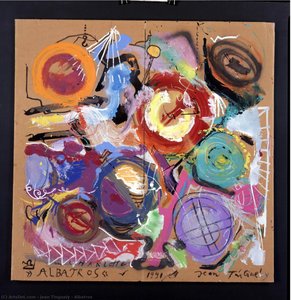
Albatros tarafından Jean Tinguely

Albatros

Kinetic Sculpture · Bechtler Müzesi of Modern Art, Charlotte

We are looking at Albatros, a work by Jean Tinguely. This piece was created about 1989 and exists as an edition. It is a significant example of the artist's later output, focusing on the form of a skull as its primary subject.

Jean Tinguely seçkisi devam ediyor, 11 ile 16 arası

Jean Tinguely'ın ilgisini çeken konular

Bu orijinal eserlerde en sık karşılaşılan ve her biri en seçkin örneğine sahip olan dört konu.

Jean Tinguely'in orijinal eserlerinin sergilendiği müzeler

Bu sayfadaki tabloların çoğuna ev sahipliği yapan 3 müze.

Müzeler Şehir Jean Tinguely Eserleri Bu listedeki tablolar
Bechtler Müzesi of Modern Art, CharlotteBechtler Müzesi of Modern Art Charlotte 4 Albatros, Santana, L
Charlotte Regional Visitors Authority, HarkersCharlotte Regional Visitors Authority Harkers 2 La Cascade, La Cascade
Swiss Institute / Contemporary Art New York, New York CitySwiss Institute / Contemporary Art New York New York City 1 Peut-être No. 11

Jean Tinguely yıl yıl: her birini tanımlayan orijinaller

Seçki, 1954 ile 1965 yılları arasındaki 12 yıllık süreçte Jean Tinguely eserlerini, her yılın en seçkin orijinallerini koruyarak takip etmektedir.

Yıllara göre eserler

Orijinallerini görmek için bir yıl seçin.

Koleksiyonerlerin Jean Tinguely'in tabloları hakkındaki soruları

Jean Tinguely en çok hangi eseriyle tanınır?Cevabı göster

Frigo Duchamp (1960). Ardından Metamechanical Sculpture with Tripod (1954) ve Méta-Malevitch (1954) geliyor.

Frigo Duchamp yapıldığında Jean Tinguely kaç yaşındaydı?Cevabı göster

35 yaşında: Frigo Duchamp 1960 yılına aittir ve Jean Tinguely 1925 yılında doğmuştur.

En ünlü on Jean Tinguely tablosu hangileridir?Cevabı göster

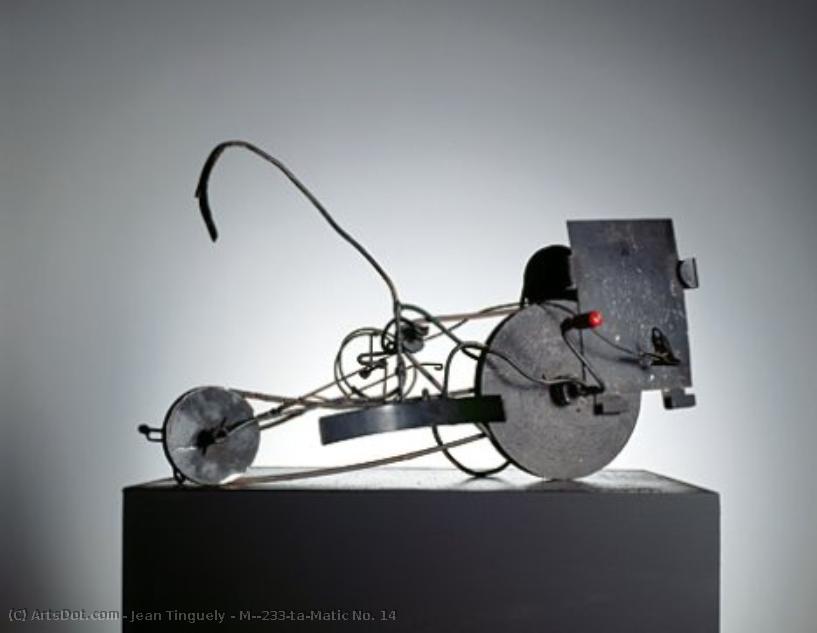
Frigo Duchamp, Metamechanical Sculpture with Tripod, Méta-Malevitch, Méta-Matic No. 14, Metamatic No. 4, Baluba, 50 RPM, Albatros, Peut-être No. 11 ve La Cascade. Yukarıdaki sıralama, her birinin yapım yılını ve bulunduğu müzeyi göstermektedir.

Jean Tinguely kaç tablo bıraktı?Cevabı göster

Kataloğumuzda Jean Tinguely tarafından 1954 ile 1965 tarihleri arasında üretilmiş 16 eser bulunmaktadır.

Jean Tinguely'in şaheserleri hangi müzelerde sergileniyor?Cevabı göster

Çoğunlukla Bechtler Müzesi of Modern Art (Charlotte), Charlotte Regional Visitors Authority (Harkers) ve Swiss Institute / Contemporary Art New York (New York City) bünyesinde yer almaktadır. Yukarıdaki müze tablosu tümünü listelemektedir.

Jean Tinguely en ünlü eserlerini hangi yıllarda yaptı?Cevabı göster

1954 döneminde: Bu sayfadaki 16 eserin 2 tanesi o dönemde yapılmıştır, bunların Metamechanical Sculpture with Tripod tanesi ise Metamechanical Sculpture with Tripod arasındadır.

Jean Tinguely sanatçısının ilk ve son ünlü orijinal eserleri nelerdir?Cevabı göster

Bu sayfadaki en eski eser Metamechanical Sculpture with Tripod (1954), en yeni eser ise 50 RPM (1965)'dir.

Jean Tinguely en çok hangi konuları seçti?Cevabı göster

Metal sculpture (2), Sculpture (2) ve Assemblage (2), bu sayfadaki 16 eser genelinde.

Jean Tinguely en çok hangi tekniği kullandı?Cevabı göster

Bu sayfadaki 16 eserin 2 tanesi Kinetic Sculpture türündedir.

Jean Tinguely hangi sanat akımına ait?Cevabı göster

bu sayfadaki orijinallerine bakılırsa Kinetic art ve Nouveau réalisme,

Bechtler Müzesi of Modern Art bünyesinde hangi Jean Tinguely eserleri sergilenmektedir?Cevabı göster

Albatros, Santana ve L: Bechtler Müzesi of Modern Art, Charlotte, bu sayfadaki eserlerden 4 tanesine ev sahipliği yapmaktadır.

Jean Tinguely: yaşamı ve eserleri

Jean Tinguely: A Symphony of Destruction and Delight

Jean Tinguely (1925-1991) stands as a singular figure in 20th-century sculpture, recognized for his audacious exploration of kinetic art—a movement rooted deeply within Dada’s rebellious spirit. More than just creating machines, Tinguely crafted performances of disintegration, transforming metal scraps into mesmerizing dances of collapse that simultaneously mocked industrial excess and celebrated the inherent beauty of decay. Born in Fribourg, Switzerland, he possessed an early fascination with sculpture, nurtured by formative encounters with artists like Kurt Schwitters and Julia Ris at Basel’s Allgemeine Gewerbeschule. These influences instilled a conviction that art should challenge conventions and provoke contemplation—a philosophy that would permeate his entire oeuvre.
  • Early Years & Influences: Tinguely's artistic journey began in Basel, where he honed his skills under Julia Ris, absorbing the ethos of Dadaism – specifically Schwitters’ Merzbau – which championed chance and improvisation as tools for artistic expression. This foundational understanding would prove crucial to his later development as a kinetic sculptor.
  • Parisian Avant-Garde & New Realism: Moving to Paris in 1952 alongside Eva Aeppli, Tinguely immersed himself in the vibrant Parisian avant-garde scene. He joined forces with fellow artists like René Lalique and Yves Klein, contributing to discussions surrounding New Realism—a movement that sought to reject illusionistic representation and embrace materiality as a primary means of artistic communication.

The Birth of Métamatics: Dada’s Legacy Revisited

Tinguely's groundbreaking approach to sculpture emerged from his unwavering commitment to Dada principles. Rejecting traditional sculptural techniques, he embraced the use of scrap metal—bicycle parts, springs, wires, and other discarded materials—to construct machines that defied gravity and movement. These ‘Métamatics,’ as Tinguely termed them, weren’t merely decorative objects; they were deliberate provocations designed to dismantle preconceived notions about sculpture and art itself. Like Dada artists before him, he deliberately incorporated elements of chance and spontaneity into his creative process, mirroring the chaotic energy of the era. The self-destructive nature of these machines wasn't simply an aesthetic gesture—it represented a critique of societal obsession with production and consumption.
  • Homage to New York (1960): Perhaps Tinguely’s most iconic work, ‘Homage to New York,’ exemplifies his artistic vision. The sculpture’s partial collapse during its unveiling at MoMA underscored the artist's belief that art should confront reality head-on and acknowledge its own impermanence.
  • Study for an End of the World No. 2 (1962): This monumental installation, detonated in the Nevada desert before a captivated audience, solidified Tinguely’s reputation as a daring innovator and cemented his place within the history of performance art.

Collaborations & Artistic Partnerships

Tinguely's artistic spirit flourished through fruitful collaborations with fellow creatives. Notably, he partnered with Eva Aeppli to create ‘The Hon – En Katedral,’ a striking architectural sculpture combining organic and mechanical elements—a testament to his ability to synthesize disparate influences into cohesive artistic statements. Furthermore, his marriage to Niki de Saint Phalle yielded remarkable projects like ‘Le Cyclop,’ where they explored themes of mythology and symbolism through monumental sculptures that pushed the boundaries of artistic expression.

Legacy & Recognition

Jean Tinguely’s influence extends far beyond his own lifetime. His pioneering use of kinetic sculpture established a new paradigm for sculptural art, inspiring generations of artists to embrace experimentation and challenge conventional notions of form and function. Recognized internationally as one of the foremost sculptors of his era, Tinguely continues to captivate audiences with his mesmerizing machines—objects that embody both destruction and delight—reminding us that beauty can be found even in disintegration and that art should provoke profound contemplation about our relationship with technology and society. His enduring legacy resides not only in his remarkable sculptures but also in the spirit of rebellious innovation that defines his artistic vision.