


1


Kasım 2026 tarihinde güncellendi · popülerlik puanımıza göre sıralanmıştır (her bir eser için aramalar, ziyaretler ve siparişler) · 28 eser Henri Evenepoel kataloğumuzda
Özetle
Man in Red (1894), en çok ilgi çeken Henri Evenepoel tablosudur; orijinali Brüksel, Musées Royaux Des Beaux bünyesinde bulunmaktadır. Ardından göz, My Ill Grandfather (1892) ve Charles Milcendeau (1899) üzerine yoğunlaşır. Kataloğumuzdaki Henri Evenepoel imzalı 28 eser arasından seçilen bu 26 eser; yapıldığı yıl, sergilendiği müze ve zamana meydan okuma nedenleriyle birlikte sunulan en ünlü ve her biri eşsiz orijinal çalışmalardır.


This portrait, titled Charles Milcendeau, was painted by Henri Evenepoel in 1899. It captures a specific individual, Charles Edmond Théodore Soullans, who is known to us through this work as Charles Milcendeau. The painting offers a direct encounter with the subject, presented in a way that feels both personal and quiet.


 Count Aymer de la Chevalerie1896 · Antwerp Kraliyet Güzel Sanatlar Müzesi
12
 The running girl1895 · Antwerp Kraliyet Güzel Sanatlar Müzesi
13
 Wrestling Barrack at a Fair1898 · Antwerp Kraliyet Güzel Sanatlar Müzesi
14
 The Poulterer1897 · Antwerp Kraliyet Güzel Sanatlar Müzesi
15
 The Box1896 · Antwerp Kraliyet Güzel Sanatlar Müzesi
16
 Portrait of Edward Tuck, Vice-Consul of the United States in Paris1899 · Museum of Fine Arts Ghent (MSK)
17
 Sunday at the Bois de Boulogne1899 · Antwerp Kraliyet Güzel Sanatlar Müzesi
18
 Sunday in the Bois de Boulogne1891
19
 Orange Market at Blida1898 · Belçika Kraliyet Güzel Sanatlar Müzeleri
20
 Sunday Fair at Les Invalides1897 · Antwerp Kraliyet Güzel Sanatlar Müzesi
21
 Mendiant. Algerie1897
22
 Veterans' Festival1898 · Musées Royaux des Beaux-Arts
23
 Henriette in a Large Hat1899 · Musées Royaux Des Beaux
24
 La chambre de l'artiste
25
 Charles in a Striped Jersey1898
26
 The Spaniard in Paris1899 · Museum of Fine Arts Ghent (MSK)
Bu sayfadaki tabloların çoğuna ev sahipliği yapan 8 müze.
| Müze | Şehir | Henri Evenepoel Eserleri | Bu listedeki tablolar |
|---|---|---|---|
 Antwerp Kraliyet Güzel Sanatlar Müzesi |
Anvers | 10 | My Ill Grandfather, Louise in Mourning, Returning from Work at Sunset |
 Museum of Fine Arts Ghent (MSK) |
Ghent | 4 | Portrait of Hélène Roulet, the Wife of the Artist Adolphe Crespin, The Clown, Portrait of Edward Tuck, Vice-Consul of the United States in Paris |
 Musées Royaux Des Beaux |
Brüksel | 2 | Man in Red, Henriette in a Large Hat |
 Belçika Kraliyet Güzel Sanatlar Müzeleri |
Brüksel | 2 | Pictures - Portrait of Louis Charles Crespin, Orange Market at Blida |
 Musée d'Orsay |
Paris | 1 | Charles Milcendeau |
 Städel Müzesi |
Frankfurt | 1 | In the Café d'Harcourt in Paris |
 Museum of Fine Arts |
Houston | 1 | At the Moulin Rouge |
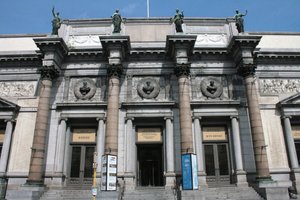 Musées Royaux des Beaux-Arts |
Brüksel | 1 | Veterans' Festival |
Henri Evenepoel'in burada sergilenen tarihli orijinal eserleri, 1891 ile 1899 arasındaki yaklaşık on yıllık bir döneme yayılmaktadır: göz, onları yıl yıl takip etmektedir.
Orijinallerini görmek için bir yıl seçin.

1896 hakkında daha fazlası
This portrait, titled Charles Milcendeau, was painted by Henri Evenepoel in 1899. It captures a specific individual, Charles Edmond Théodore Soullans, who is known to us through this work as Charles Milcendeau. The painting offers a direct encounter with the subject, presented in a way that feels both personal and quiet.
1899 hakkında daha fazlası
Man in Red (1894), Musées Royaux Des Beaux, Brüksel. Ardından My Ill Grandfather (1892) ve Charles Milcendeau (1899) geliyor.
22 yaşında: Man in Red 1894 yılına aittir ve Henri Evenepoel 1872 yılında doğmuştur.
Man in Red, My Ill Grandfather, Charles Milcendeau, In the Café d'Harcourt in Paris, Pictures - Portrait of Louis Charles Crespin, At the Moulin Rouge, Portrait of Hélène Roulet, the Wife of the Artist Adolphe Crespin, The Clown, Louise in Mourning ve Returning from Work at Sunset. Yukarıdaki sıralama, her birinin yapım yılını ve bulunduğu müzeyi göstermektedir.
Kataloğumuzda Henri Evenepoel tarafından 1891 ile 1899 tarihleri arasında üretilmiş 28 eser bulunmaktadır.
Çoğunlukla Antwerp Kraliyet Güzel Sanatlar Müzesi (Anvers), Museum of Fine Arts Ghent (MSK) (Ghent) ve Musées Royaux Des Beaux (Brüksel) bünyesinde yer almaktadır. Yukarıdaki müze tablosu tümünü listelemektedir.
1897 döneminde: Bu sayfadaki 26 eserin 5 tanesi o dönemde yapılmıştır, bunların In the Café d'Harcourt in Paris tanesi ise In the Café d'Harcourt in Paris arasındadır.
Bu sayfadaki en eski eser Sunday in the Bois de Boulogne (1891), en yeni eser ise Charles Milcendeau (1899)'dir.
My Ill Grandfather, Louise in Mourning ve Returning from Work at Sunset: Antwerp Kraliyet Güzel Sanatlar Müzesi, Anvers, bu sayfadaki eserlerden 10 tanesine ev sahipliği yapmaktadır.


