Özetle
Fairlie Harmar tarafından bırakılan tüm orijinal eserler arasında, en ünlüsü Birmingham, Birmingham Museum and Art Gallery koleksiyonunda yer alan After A Game Of Tennis (1923) adlı eserdir. Hemen ardından St Giles, Oxford ve The Bridge at Monxton (1916) geliyor. Kataloğumuz Fairlie Harmar tarafından yapılmış 18 eser barındırmaktadır; galeri, her biri tarihi, müzesi ve hikayesiyle birlikte sergilenen, dünyanın en çok hayranlık duyduğu 18 eseri muhafaza etmektedir.
Fairlie Harmar tarafından yapılan en iyi 10 tablo: galerinin seçimi
Fairlie Harmar seçkisi devam ediyor, 11 ile 18 arası
Fairlie Harmar'ın ilgisini çeken konular
Bu orijinal eserlerde en sık karşılaşılan ve her biri en seçkin örneğine sahip olan dört konu.
British painting 2 eser
Fairlie Harmar'in orijinal eserlerinin sergilendiği müzeler
Bu sayfadaki tabloların çoğuna ev sahipliği yapan 5 müze.
| Müze | Şehir | Fairlie Harmar Eserleri | Bu listedeki tablolar |
|---|---|---|---|
| Wolverhampton | 2 | Ships on the Thames, Flowers | |
| Birmingham | 1 | After A Game Of Tennis | |
| Liverpool | 1 | The Bridge at Monxton | |
| Oxford | 1 | The Laurel Walk | |
| Darlington | 1 | Chibbet, Exmoor, Somerset |
on yıl on yıl Fairlie Harmar: her dönemi tanımlayan orijinal eserler
Koleksiyonerlerin Fairlie Harmar'in tabloları hakkındaki soruları
Fairlie Harmar en çok hangi eseriyle tanınır?Cevabı göster
After A Game Of Tennis (1923), Birmingham Museum and Art Gallery, Birmingham. Ardından St Giles, Oxford ve The Bridge at Monxton (1916) geliyor.
After A Game Of Tennis yapıldığında Fairlie Harmar kaç yaşındaydı?Cevabı göster
47 yaşında: After A Game Of Tennis 1923 yılına aittir ve Fairlie Harmar 1876 yılında doğmuştur.
En ünlü on Fairlie Harmar tablosu hangileridir?Cevabı göster
After A Game Of Tennis, St Giles, Oxford, The Bridge at Monxton, The Laurel Walk, Women's Royal Air Force Workers Drilling at Andover Aerodrome, Birthday Celebration, Garden Gate, L'Aveyron, Cheyne Walk Gardens ve Sarson Farm, Early Spring. Yukarıdaki sıralama, her birinin yapım yılını ve bulunduğu müzeyi göstermektedir.
Fairlie Harmar kaç tablo bıraktı?Cevabı göster
Kataloğumuzda Fairlie Harmar tarafından 1912 ile 1938 tarihleri arasında üretilmiş 18 eser bulunmaktadır.
Fairlie Harmar'in şaheserleri hangi müzelerde sergileniyor?Cevabı göster
Çoğunlukla Wolverhampton Art Gallery (Wolverhampton), Birmingham Museum and Art Gallery (Birmingham) ve Walker Art Gallery (Liverpool) bünyesinde yer almaktadır. Yukarıdaki müze tablosu tümünü listelemektedir.
Fairlie Harmar en ünlü eserlerini hangi yıllarda yaptı?Cevabı göster
1920s döneminde: Bu sayfadaki 18 eserin 4 tanesi o dönemde yapılmıştır, bunların After A Game Of Tennis tanesi ise After A Game Of Tennis arasındadır.
Fairlie Harmar sanatçısının ilk ve son ünlü orijinal eserleri nelerdir?Cevabı göster
Bu sayfadaki en eski eser The Laurel Walk (1912), en yeni eser ise Cheyne Walk Gardens (1938)'dir.
Wolverhampton Art Gallery bünyesinde hangi Fairlie Harmar eserleri sergilenmektedir?Cevabı göster
Ships on the Thames ve Flowers: Wolverhampton Art Gallery, Wolverhampton, bu sayfadaki eserlerden 2 tanesine ev sahipliği yapmaktadır.
Fairlie Harmar: yaşamı ve eserleri
Fairlie Harmar (1876–1945): A Painter of Quiet Landscapes and Intimate Portraits
Fairlie Harmar (1876-1945) was an English painter who quietly established herself as a significant figure in early 20th-century British art. Born in Weymouth, Dorset, she pursued her artistic ambitions at the Slade School of Fine Art under the tutelage of Henry Tonks and Fred Brown—a formative experience that instilled in her a meticulous approach to observation and representation. Her oeuvre is characterized by evocative landscapes imbued with subtle tonal harmonies alongside delicately rendered portraits capturing fleeting moments of human emotion. Harmar’s work offers a poignant glimpse into the domestic life and artistic sensibilities of her era, reflecting both Impressionistic influences and a deep connection to the natural world.- Early Life & Education: Fairlie Harmar's formative years were spent in Weymouth, Dorset, where she absorbed the beauty of the coastal landscape—a visual element that would permeate much of her subsequent artistic output. Her studies at the Slade School of Fine Art provided her with invaluable technical skills and intellectual grounding, fostering a disciplined eye for detail and composition.
- Style & Technique: Harmar’s distinctive style leaned heavily towards Impressionism, prioritizing capturing atmospheric conditions and conveying subjective experience rather than striving for photographic accuracy. She skillfully employed muted palettes—often dominated by greens, blues, and browns—to evoke mood and atmosphere, layering brushstrokes to create textured surfaces that subtly shimmered with light.
- Notable Works: Among Harmar’s most celebrated paintings are “A la Chaumière” (1928), a luminous depiction of a Parisian apartment interior bathed in diffused sunlight, and “St Giles, Oxford” (1920), which captures the serene grandeur of Oxford University Chapel. These pieces exemplify her ability to distill complex emotions into simple visual forms—a hallmark of her artistic vision.
- Influences & Connections: Harmar’s artistic sensibilities were undoubtedly shaped by the broader intellectual currents of her time, including discussions surrounding Symbolism and Modernism. Her association with Ezra Pound and fellow artists fostered a stimulating environment for experimentation and critical engagement.
- Legacy & Recognition: Fairlie Harmar's contribution to British art history is recognized through inclusion in prominent collections such as the Ashmolean Museum and the Royal Collection, where her paintings continue to inspire admiration for their understated beauty and psychological depth. Her work stands as a testament to the power of quiet observation and skillful execution—qualities that resonate powerfully with viewers today.
Exploring Landscapes & Domestic Interiors
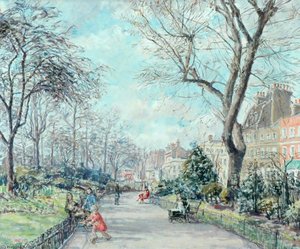
Harmar’s landscapes frequently depict tranquil scenes of Dorset countryside, capturing the subtle shifts in light and color throughout the seasons. She meticulously rendered details—such as foliage textures and reflections on water surfaces—to convey a profound sense of place. Simultaneously, her portraits delve into the inner lives of her subjects, portraying them with sensitivity and empathy. These intimate depictions reveal nuanced expressions of emotion and capture fleeting moments of human connection. Her ability to translate psychological states onto canvas solidified her reputation as one of Britain’s foremost portrait artists.- “Cheyne Walk Gardens” (1938): This Impressionistic landscape showcases Harmar's masterful use of color and brushwork, capturing the autumnal splendor of Cheyne Walk Gardens in Chelsea.