Elliot Seabrooke portresi

Her Biri Benzersiz, En Ünlü 30 Elliot Seabrooke Tablosu

Kasım 2026 tarihinde güncellendi · popülerlik puanımıza göre sıralanmıştır (her bir eser için aramalar, ziyaretler ve siparişler) · 31 eser Elliot Seabrooke kataloğumuzda

Özetle

The Bombardment of Gorizia, 21 August 1917 (1917), Elliot Seabrooke tarafından yapılan ve en çok ilgi çeken tablodur. Ardından göz, Bomb Damage Druce's Store, Baker Street, London (1944) ve Garden near a Wood (1937) üzerine yoğunlaşır. Kataloğumuzdaki Elliot Seabrooke imzalı 31 eser arasından seçilen bu 30 eser; yapıldığı yıl, sergilendiği müze ve zamana meydan okuma nedenleriyle birlikte sunulan en ünlü ve her biri eşsiz orijinal çalışmalardır.

1886 – 1950, London Borough of Newham Impressionism En çok eser: The Stanley - Audrey Burton Gallery

Galerinin gözünden Elliot Seabrooke tarafından yapılan en iyi 10 tablo

1
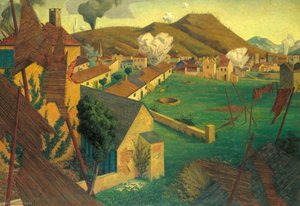
The Bombardment of Gorizia, 21 August 1917 (1917) tarafından Elliot Seabrooke

The Bombardment of Gorizia, 21 August 1917

1917 · Oil On Canvas

Smoke and heavy clouds choke the sky over Gorizia, turning the afternoon light into a bruised haze of dark blues and grays. The air feels thick, heavy with the residue of recent explosions. Below, the town lies in a state of fractured stillness. Buildings that once stood whole now lean precariously, their stone and brick walls crumbling into heaps of rubble. Roofs are missing, leaving skeletal structures to stare up…

2
Bomb Damage Druce's Store, Baker Street, London (1944) tarafından Elliot Seabrooke

Bomb Damage Druce's Store, Baker Street, London

1944 · Oil On Canvas

The scene unfolds through Bomb Damage Druce's Store, Baker Street, London, a work by the British painter Elliot Seabrooke. Created in 1944, the piece captures a fractured moment in the heart of the city. Here, the familiar streets of London bear the heavy scars of the Second World War, frozen in the immediate aftermath of destruction. The painting presents the ruins of a building, a site where the everyday rhythm…

3
Garden near a Wood (1937) tarafından Elliot Seabrooke

Garden near a Wood

1937 · Oil · William Evans Bequest, Bangor

In the quiet corners of early twentieth-century British landscape painting, few works capture the ephemeral magic of a summer afternoon as tenderly as Elliott Seabrooke’s Garden near a Wood. Painted in 1937, this exquisite composition invites the viewer into a secluded sanctuary where the boundaries between cultivated garden and wild woodland begin to blur. The scene is a masterclass in color harmony, presenting a lush tapestry of greens, yellows, and…

Elliot Seabrooke'in ünlü tabloları, 11. ile 30. arası

Elliot Seabrooke'ın ilgisini çeken konular

Bu orijinal eserlerde en sık karşılaşılan ve her biri en seçkin örneğine sahip olan dört konu.

Elliot Seabrooke'in orijinal eserlerinin sergilendiği müzeler

Bu sayfadaki tabloların çoğuna ev sahipliği yapan 8 müze.

Müze Şehir Elliot Seabrooke Eserleri Bu listedeki tablolar
The Stanley - Audrey Burton Gallery, LeedsThe Stanley - Audrey Burton Gallery Leeds 2 Rainbow, Landscape
Harris Museum - Art Gallery, PrestonHarris Museum - Art Gallery Preston 2 Bank of Trees, Joseph Livesey
Towner, EastbourneTowner Eastbourne 2 Landscape, Trees and a Red Gate
William Evans Bequest, BangorWilliam Evans Bequest Bangor 1 Garden near a Wood
Doncaster Museum And Art Gallery, DoncasterDoncaster Museum And Art Gallery Doncaster 1 Regent's Park, London, Winter
Arts Council Collection, LondraArts Council Collection Londra 1 Roses
Leeds Art Gallery, LeedsLeeds Art Gallery Leeds 1 Yarmouth, Isle of Wight
Royal Academy of Music, LondraRoyal Academy of Music Londra 1 Still Life – Flowers (Irises) and Book

On yıllar boyunca Elliot Seabrooke: her biri için eşsiz bir orijinal eser

On yıllara göre eserler

O dönemi tanımlayan orijinal eseri görmek için bir on yıl seçin.

Elliot Seabrooke'in tabloları: galeri için sorular

Elliot Seabrooke tarafından yapılmış en ünlü eser hangisidir?Cevabı göster

The Bombardment of Gorizia, 21 August 1917 (1917). Ardından Bomb Damage Druce's Store, Baker Street, London (1944) ve Garden near a Wood (1937) geliyor.

Elliot Seabrooke, The Bombardment of Gorizia, 21 August 1917 eserini kaç yaşında yarattı?Cevabı göster

31 yaşında: The Bombardment of Gorizia, 21 August 1917 1917 yılına aittir ve Elliot Seabrooke 1886 yılında doğmuştur.

Elliot Seabrooke tarafından yapılmış en ünlü on tablo hangileridir?Cevabı göster

The Bombardment of Gorizia, 21 August 1917, Bomb Damage Druce's Store, Baker Street, London, Garden near a Wood, Rainbow, Landscape, Surrey Garden, 'The Farm', Fruit, Wallflowers ve The Blue Cloth. Yukarıdaki sıralama, her birinin yapım yılını ve bulunduğu müzeyi göstermektedir.

Elliot Seabrooke tarafından yapılmış kaç eser bilinmektedir?Cevabı göster

Kataloğumuzda Elliot Seabrooke tarafından 1910 ile 1950 tarihleri arasında üretilmiş 31 eser bulunmaktadır.

En ünlü Elliot Seabrooke orijinalleri nerede görülebilir?Cevabı göster

Çoğunlukla The Stanley - Audrey Burton Gallery (Leeds), Harris Museum - Art Gallery (Preston) ve Towner (Eastbourne) bünyesinde yer almaktadır. Yukarıdaki müze tablosu tümünü listelemektedir.

Elliot Seabrooke en bilinen tablolarını hangi dönemde yaptı?Cevabı göster

1920s döneminde: Bu sayfadaki 30 eserin 6 tanesi o dönemde yapılmıştır, bunların Landscape tanesi ise Landscape arasındadır.

Hangi ünlü Elliot Seabrooke tablosu en eski, hangisi ise en yenidir?Cevabı göster

Bu sayfadaki en eski eser Rainbow (1910), en yeni eser ise Lock House, Heybridge Basin (1950)'dir.

Elliot Seabrooke hangi konuları tercih ederdi?Cevabı göster

Trees (2), Hills (2) ve Clouds (2), bu sayfadaki 30 eser genelinde.

Elliot Seabrooke en çok hangi malzemelerle resim yaptı?Cevabı göster

Bu sayfadaki 30 eserin 2 tanesi Oil On Canvas türündedir.

Elliot Seabrooke eserleri hangi akıma aittir?Cevabı göster

bu sayfadaki orijinallerine bakılırsa Impressionism,

The Stanley - Audrey Burton Gallery bünyesinde Elliot Seabrooke imzalı hangi orijinal eserleri görebilirim?Cevabı göster

Rainbow ve Landscape: The Stanley - Audrey Burton Gallery, Leeds, bu sayfadaki eserlerden 2 tanesine ev sahipliği yapmaktadır.

Elliot Seabrooke: sanatçının bir portresi

Elliott Seabrooke: A Painter of Light and Landscape

Elliott Seabrooke (1886-1950) emerges from the early 20th century as a quietly significant British painter, whose evocative landscapes and insightful still lifes offer a glimpse into a world both familiar and subtly transformed. Born in Upton Park, Essex – now part of London – his artistic journey was shaped by a confluence of influences: the rigorous training at the Slade School of Fine Art, a deep connection to the English countryside, and a period marked by significant social and political upheaval. Seabrooke’s work isn't characterized by flamboyant displays or radical experimentation; rather, it possesses a quiet dignity and an almost meditative quality, reflecting his own thoughtful nature and a profound appreciation for the natural world.

Early Years and Artistic Foundations

Seabrooke’s early artistic development was rooted in traditional academic training at the Slade School of Fine Art from 1906 to 1911. Here, he encountered the teachings of Henry Tonks, a renowned figure who emphasized careful observation and technical skill. However, Seabrooke's artistic sensibilities quickly transcended mere imitation. He demonstrated an early inclination towards capturing light and atmosphere, drawing inspiration from the Impressionist movement – particularly the work of Cézanne’s emphasis on form and color—and later, the nascent principles of Pointillism, evident in his meticulous layering of small dots to create luminous effects. This fascination with light is a recurring motif throughout his oeuvre, suggesting an attempt to distill the essence of a scene rather than simply reproduce it visually.

Wartime Service and Artistic Transformation

The First World War profoundly impacted Seabrooke’s life and artistic practice. Rejecting military service due to his pacifist beliefs, he instead dedicated himself to humanitarian work with the British Red Cross, serving on the Italian front. This experience proved transformative, exposing him to a different culture and broadening his perspective. It's during this period that he received Italy’s highest award for gallantry – a testament to his bravery and compassion. Crucially, it was also during the war that Seabrooke began experimenting with a more direct approach to color and form, influenced by the emerging theories of Seurat and Signac, incorporating these techniques into his landscapes.

A Palette of English Landscapes

Following the war, Seabrooke established himself as a dedicated landscape painter, primarily focused on capturing the beauty of England’s diverse scenery. He spent considerable time in Epping Forest, the Lake District, and other rural areas, meticulously observing and translating these locations onto canvas. His paintings are characterized by a restrained palette—often dominated by muted greens, blues, and browns – creating a sense of atmospheric depth and tranquility. He wasn't interested in dramatic vistas or heroic compositions; instead, he sought to convey the subtle nuances of light, texture, and color that define the English countryside. Notable works such as “Landscape around Fingest, Buckinghamshire” exemplify this approach, presenting a serene and contemplative view of rolling hills bathed in soft light.

Later Years and Legacy

In his later years, Seabrooke’s artistic practice continued to evolve, incorporating elements of Impressionism and Pointillism with a growing sensitivity to the changing social landscape. He remained active within the art world, serving as a Vice-President and then President of the Newnes Academy of Painters (NEAC), a prominent organization promoting contemporary British art. His work was exhibited widely, including at the Leicester Galleries and Matthiesen Gallery, and he even ventured into acting, demonstrating a multifaceted personality. Elliott Seabrooke’s legacy lies not in grand pronouncements or revolutionary techniques, but in his quietly compelling depictions of the English landscape—paintings that invite viewers to pause, reflect, and appreciate the beauty of the everyday world. His work is now held by institutions such as the Tate Gallery and the Arts Council, ensuring that this understated yet significant artist continues to be appreciated for generations to come.