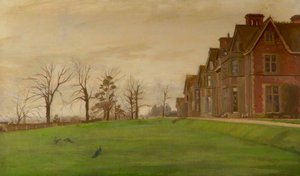
Donald Chisholm Towner: A Quiet Champion of British Ceramics and Landscape
Donald Chisholm Towner (1903-1985) wasn’t a name that frequently graces the headlines, yet his quiet dedication to the study and appreciation of British ceramics, particularly creamware, has profoundly shaped our understanding of this often-overlooked period in English pottery history. Born in Eastbourne, Sussex, into a family with strong artistic roots – his great-uncle having established the Towner Art Gallery – Towner’s life was inextricably linked to both art and the tangible beauty of objects. He wasn't merely an artist; he was a meticulous researcher, a passionate collector, and ultimately, a crucial voice in preserving a significant chapter of British manufacturing heritage.
Towner’s early artistic training at Eastbourne School of Art and later at the Royal College of Art instilled in him a deep appreciation for landscape and a keen eye for detail. However, it was his encounter with ceramics – initially through his great-uncle's gallery and later through personal collecting – that truly captivated him. He moved to Hampstead in 1927, establishing a home that would become his creative hub and the center of his ceramic scholarship. This period witnessed a shift from purely artistic pursuits to a systematic investigation into the evolution, production techniques, and aesthetic qualities of creamware, a type of earthenware distinguished by its delicate white glaze and subtle tonal variations.
The Rise of a Ceramic Scholar
Towner’s seminal work, English Cream-Coloured Earthenware (1957), marked a turning point in the field. Prior to his research, creamware was largely dismissed as a minor regional product, its origins and characteristics poorly documented. Towner meticulously examined surviving examples from various potteries – Spode, Wedgwood, Davenport, and many others – identifying distinct manufacturing processes, stylistic trends, and variations in glaze recipes. His book wasn’t simply a catalog; it offered a comprehensive analysis of the material's history, production, and artistic merit, establishing a framework for future research.
Subsequent publications, including Creamware (1978), further refined his understanding, incorporating new discoveries and expanding his scope. Towner’s approach was characterized by rigorous documentation, detailed illustrations, and a commitment to uncovering the stories behind each piece. He wasn't interested in simply admiring beauty; he sought to understand how it was created, who made it, and what its place was within the broader context of British industrial history. His work demonstrated an impressive ability to connect artistic expression with technical production.
Landscapes of Hampstead and Beyond
While his contributions to ceramic scholarship are undeniable, Towner’s artistic output deserves recognition in its own right. He produced a substantial body of landscape paintings, primarily focused on the surrounding areas of Hampstead, London, and the Sussex countryside. These works are notable for their quiet observation, subtle color palettes, and meticulous attention to detail. Unlike grand romantic landscapes, Towner's scenes often depict intimate glimpses of everyday life – gardens, farmhouses, chalk quarries, and local streets—rendered with a remarkable sense of realism and atmosphere.
His paintings of Admiral’s House in Hampstead, for example, capture the stately home bathed in the muted light of winter, showcasing his ability to convey mood and texture through careful brushwork. Similarly, his depiction of Chalk Quarries at Amberley (1945) offers a serene portrayal of rural beauty, reflecting a deep connection with the natural world. These landscapes aren’t merely representations; they are imbued with a sense of quiet contemplation and a profound appreciation for the simple pleasures of life.
Legacy and Influence
Donald Chisholm Towner's legacy extends far beyond his published works. He played a pivotal role in elevating creamware from obscurity to a subject of serious scholarly attention, inspiring generations of ceramic historians and enthusiasts. His meticulous research laid the foundation for a deeper understanding of British ceramics production, while his paintings continue to be admired for their quiet beauty and understated elegance.
The Towner Art Gallery in Eastbourne, established by his great-uncle, stands as a testament to his family’s commitment to art and culture. Today, the gallery houses a significant collection of his own work alongside a diverse range of ceramics and British art, ensuring that Towner's contributions are remembered and celebrated for years to come. His quiet dedication has left an indelible mark on both the world of ceramics and the landscape of British art history.