A Pioneer in the Shadows of Mantua
In the vibrant, Mannerist heart of late Renaissance Italy, a singular talent emerged from the storied workshops of Mantua to claim her place in the annals of art history. Diana Scultori, known variously as Diana Ghisi and Diana Mantuana, was far more than a mere participant in the artistic currents of her time; she was a trailblazer. Born around 1547 into a lineage of profound creative depth, Diana was the daughter of the esteemed sculptor and engraver Giovanni Battista Scultori. This familial immersion provided her with an education that was both technical and spiritual, as she learned to navigate the delicate interplay of light and line under the watchful eyes of her father and her elder brother, Adamo Scultori. Her early training was steeped in the meticulous precision required for printmaking, a discipline where every stroke of the burin carries the weight of permanence.
The atmosphere of Mantua during Diana’s formative years was one of dramatic elegance and stylized complexity. Influenced by the towering legacies of Giulio Romano and the grace of Raphael, her aesthetic sensibilities were shaped by the very essence of Mannerism. This period demanded an artist capable of capturing movement, tension, and a certain idealized beauty—qualities that Diana would master through her reproductive engravings. Her ability to translate the grand scale of painting into the intimate, tactile medium of print allowed her to bridge the gap between the monumental and the portable, bringing the masterpieces of her era to a wider, more diverse audience.
The Roman Ascent and Professional Mastery
As her artistry matured, Diana’s journey led her away from the familiar environs of Mantua toward the bustling, intellectual epicenter of Rome. Her marriage in 1565 to the architect Francesco da Volterra, also known as Capriani, served as a pivotal moment in her professional trajectory. Rather than retreating into the domestic sphere, Diana utilized her presence in Rome to actively engage with the most prestigious artistic circles of the age. She was not merely a companion to her husband’s architectural ambitions but a formidable force in her own right, possessing a keen understanding of the burgeoning art market and the importance of professional branding.
One of her most significant achievements was the attainment of a Papal Privilege on June 5, 1575. This rare and prestigious legal protection granted her the exclusive right to produce and market her own works, a testament to her recognized skill and her status as an independent professional. In an era where female agency was often circumscribed, Diana navigated the complexities of commerce and reputation with remarkable sophistication. She understood the power of the signature and the strategic use of dedications, ensuring that her name—and the names of those she honored—were etched into the cultural consciousness of Europe.
A Legacy Etched in Silver and Ink
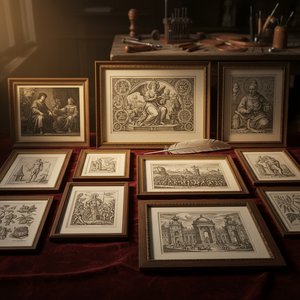
The breadth of Diana Scultori’s oeuvre is characterized by a profound reverence for classical antiquity and the High Renaissance. Her engravings often served as windows into the past, reproducing the divine compositions of Raphael and the muscular dynamism of Roman sculpture. Through her work, the grandeur of ancient forms was preserved and disseminated, rendered with a delicate touch that honored the original inspiration while showcasing her unique technical prowess. Her mastery lay in the ability to use fine lines to suggest volume, texture, and the subtle gradations of shadow, creating a sense of depth that breathed life into the cold metal of the plate.
Today, Diana Scultori is remembered not only for the beauty of her prints but as a symbol of resilience and innovation. Her historical significance rests upon several pillars:
- Pioneering Status: She stands as one of the earliest documented women printmakers, breaking through the gendered barriers of the Renaissance workshop system.
- Technical Excellence: Her work exemplifies the height of Mannerist engraving, characterized by precision, elegance, and a sophisticated command of line.
- Cultural Preservation: Through her reproductive engravings, she played a vital role in the dissemination of the works of Raphael and Giulio Romano, helping to sustain their influence across generations.
- Professional Autonomy: Her success in securing a Papal Privilege highlights her role as a self-sufficient entrepreneur within the competitive Roman art scene.
Though centuries have passed since she breathed her last in 1612, the marks left by Diana’s burin remain indelible. Her life remains a testament to the power of artistic lineage transformed into individual brilliance, and her prints continue to offer a window into the soul of the Italian Renaissance.