Bartolomeo Ammanati portresi

Bartolomeo Ammanati Tabloları: Bir Galerinin Gözünden En Ünlü 15 Eser

Kasım 2026 tarihinde güncellendi · popülerlik puanımıza göre sıralanmıştır (her bir eser için aramalar, ziyaretler ve siparişler) · 15 eser Bartolomeo Ammanati kataloğumuzda

Özetle

Galerinin gözünde, Bartolomeo Ammanati'in en ünlü tablosu, aslı Floransa, Piazza della Signoria içinde sergilenen Fountain of Neptune (1559)'dir. Parnassus (1563) ve Allegory of Winter (1563), her gözün hemen fark edeceği o üçlüyü tamamlıyor. Katalogumuzdaki Bartolomeo Ammanati imzalı 15 eser arasından galerimiz, her biri yapıldığı yıl, sergilendiği müze ve onu eşsiz kılan özellikleriyle birlikte en ünlü 15 eseri aşağıda sunmaktadır.

1511 – 1592, Settignano Mannerism En çok eser: Piazza della Signoria

Galerinin en iyi 10 Bartolomeo Ammanati tablosu

1
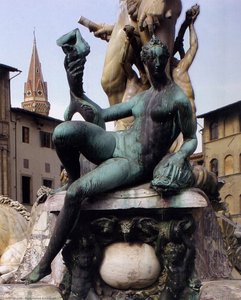
Fountain of Neptune (1559) tarafından Bartolomeo Ammanati

Fountain of Neptune

1559 · Marble · Piazza della Signoria, Floransa

In the heart of the Piazza della Signoria in Florence, Italy, the Fountain of Neptune by Bartolomeo Ammanati commands the space near the northwest corner of the Palazzo Vecchio. This monumental sculpture emerges from the urban landscape, a grand presence amidst the stone and shadow of the city. The work was commissioned by Cosimo I de' Medici in 1559, a gesture intended to celebrate the marriage of his son, Francesco…

2
Parnassus (1563) tarafından Bartolomeo Ammanati

Parnassus

1563 · Marble · Museo Nazionale del Bargello, Floransa

The marble figure known as Parnassus emerges from the shadows of history, a creation of the sculptor Bartolomeo Ammanati. Dating to about 1563, this work breathes life into the ancient myths that once governed the imagination of the Renaissance. The stone captures a moment of stillness within a realm of legend, inviting the viewer to wonder at the divine stories carved into its very surface.

3
Allegory of Winter (1563) tarafından Bartolomeo Ammanati

Allegory of Winter

1563 · Stone · Villa Medici, Castelrotto

In this stone sculpture, we encounter a figure that seems to have emerged from the very earth it inhabits. The subject is an older male, his form seated in a posture of profound stillness, reminiscent of a scholar lost in thought. His hair and beard are rendered with a detailed texture that suggests the passage of many years, catching the light in a way that emphasizes the deep lines of…

4
Victory (1540) tarafından Bartolomeo Ammanati

Victory

1540 · Marble · Museo Nazionale del Bargello, Floransa

In the quiet presence of Victory, the goddess Nike emerges from the stone, frozen in a moment of divine triumph. Created by Bartolomeo Ammanati about 1540, this classical sculpture captures the very essence of the Greek deity. She exists here not as a static symbol, but as a living force of motion and grace. Every line of her form suggests a sudden, purposeful movement, as if she has just descended…

5
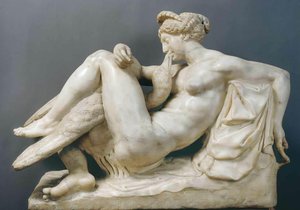
Leda with the Swan (1540) tarafından Bartolomeo Ammanati

Leda with the Swan

1540 · Marble · Museo Nazionale del Bargello, Floransa

In this marble work, titled Leda with the Swan, Bartolomeo Ammanati explores a moment of profound mythological tension. Created about 1540, the sculpture captures the intimate and transformative encounter between the Spartan queen Leda and the god Zeus. Having taken the form of a swan to approach her, Zeus initiates a sequence of events that would lead to Leda bearing his children. The piece focuses on this specific, quiet intersection…

6
Courtyard (1558) tarafından Bartolomeo Ammanati

Courtyard

1558 · Palazzo Pitti, Floransa

In this depiction of Courtyard, Bartolomeo Ammanati captures a quiet moment within the Palazzo Pitti in Florence, Italy. Created about 1558, the work presents a view of the architectural heart of the palace. The scene focuses on two ornate buildings characterized by their classical facades. These structures, defined by their rhythmic columns and arches, frame the central space of the courtyard.

7
Courtyard (1558) tarafından Bartolomeo Ammanati

Courtyard

1558 · Photography · Palazzo Pitti, Floransa

Sunlight filters through an overcast sky, casting a soft, diffused glow over the grand courtyard of the Palazzo Pitti in Florence, Italy. The air feels heavy with the quiet dignity of the Renaissance, a stillness broken only by the gentle movement of people drifting through the space. At the heart of this stone enclosure, a large fountain acts as a central anchor, its water reflecting the muted colors of the…

8
Fountain of Neptune (1559) tarafından Bartolomeo Ammanati

Fountain of Neptune

1559 · Marble · Piazza della Signoria, Floransa

In the heart of Piazza della Signoria, Florence, the marble figure of Neptune rises from an octagonal basin. The sculpture, dated 1559, captures the god in a moment of dynamic tension. His muscular torso twists as he prepares to strike, a movement mirrored by the surrounding mythological figures. This work marks a transition from the balanced stability of the Renaissance toward the theatricality of the Baroque. The god's face bears…

9
Fountain of Neptune (1559) tarafından Bartolomeo Ammanati

Fountain of Neptune

1559 · Marble · Piazza della Signoria, Floransa

In the heart of Piazza della Signoria, Florence, the Fountain of Neptune rises as a monumental assertion of maritime power. Commissioned in 1559 by Cosimo I de' Medici, the sculpture was intended to celebrate the marriage of his son, Francesco I, while simultaneously projecting the growing naval ambitions of the Florentine state. The central figure of Neptune, the Roman god of water, is captured in a moment of dynamic tension.…

10
Fountain of Neptune (1559) tarafından Bartolomeo Ammanati

Fountain of Neptune

1559 · Marble · Piazza della Signoria, Floransa

Located in the Piazza della Signoria, this marble and bronze ensemble emerged from a period of intense political and artistic transition. Commissioned by Cosimo I de' Medici in 1559, the work was intended to celebrate the marriage of his son, Francesco I de' Medici, to Joanna of Austria. The sculpture functions as a public declaration of Florentine naval power, asserting the city's reach toward the Mediterranean through the language of…

11. sıradan 15. sıraya kadar Bartolomeo Ammanati tabloları

Bartolomeo Ammanati'ın ilgisini çeken konular

Bu orijinal eserlerde en sık karşılaşılan ve her biri en seçkin örneğine sahip olan dört konu.

Bartolomeo Ammanati'in orijinal eserlerinin sergilendiği müzeler

Bu sayfadaki tabloların çoğuna ev sahipliği yapan 6 müze.

Müze Şehir Bartolomeo Ammanati Eserleri Bu listedeki tablolar
Piazza della Signoria, FloransaPiazza della Signoria Floransa 7 Fountain of Neptune, Fountain of Neptune, Fountain of Neptune
Museo Nazionale del Bargello, FloransaMuseo Nazionale del Bargello Floransa 3 Parnassus, Victory, Leda with the Swan
Palazzo Pitti, FloransaPalazzo Pitti Floransa 2 Courtyard, Courtyard
Villa Medici, CastelrottoVilla Medici Castelrotto 1 Allegory of Winter
Palazzo Ducale, LuccaPalazzo Ducale Lucca 1 Cortile degli Svizzeri
Palazzo Vecchio, FloransaPalazzo Vecchio Floransa 1 Goddess Opi

Bartolomeo Ammanati, her on yıldan bir imza tablo

On yıllara göre eserler

O dönemi tanımlayan orijinal eseri görmek için bir on yıl seçin.

Bartolomeo Ammanati'in tabloları: galeri yanıtları

Tüm Bartolomeo Ammanati tabloları arasında en ünlüsü hangisidir?Cevabı göster

Fountain of Neptune (1559), Piazza della Signoria, Floransa. Ardından Parnassus (1563) ve Allegory of Winter (1563) geliyor.

Bartolomeo Ammanati, Fountain of Neptune eserini tamamladığında kaç yaşındaydı?Cevabı göster

48 yaşında: Fountain of Neptune 1559 yılına aittir ve Bartolomeo Ammanati 1511 yılında doğmuştur.

Bartolomeo Ammanati sanatçısının en iyi 10 tablosu hangileridir?Cevabı göster

Fountain of Neptune, Parnassus, Allegory of Winter, Victory, Leda with the Swan, Courtyard, Courtyard, Fountain of Neptune, Fountain of Neptune ve Fountain of Neptune. Yukarıdaki sıralama, her birinin yapım yılını ve bulunduğu müzeyi göstermektedir.

Bartolomeo Ammanati kaç eser yarattı?Cevabı göster

Kataloğumuzda Bartolomeo Ammanati tarafından 1540 ile 1577 tarihleri arasında üretilmiş 15 eser bulunmaktadır.

Bartolomeo Ammanati'in en ünlü orijinal eserleri nerede sergileniyor?Cevabı göster

Çoğunlukla Piazza della Signoria (Floransa), Museo Nazionale del Bargello (Floransa) ve Palazzo Pitti (Floransa) bünyesinde yer almaktadır. Yukarıdaki müze tablosu tümünü listelemektedir.

Bartolomeo Ammanati en ünlü tablolarını ne zaman yaptı?Cevabı göster

1550s döneminde: Bu sayfadaki 15 eserin 6 tanesi o dönemde yapılmıştır, bunların Fountain of Neptune tanesi ise Fountain of Neptune arasındadır.

Bartolomeo Ammanati'in en erken ve en geç dönemlerine ait ünlü eserleri hangileridir?Cevabı göster

Bu sayfadaki en eski eser Victory (1540), en yeni eser ise Cortile degli Svizzeri (1577)'dir.

Bartolomeo Ammanati en çok hangi konulara geri döndü?Cevabı göster

Architecture (9), Statue (8) ve Neptune (7), bu sayfadaki 15 eser genelinde.

Bartolomeo Ammanati en çok hangi teknikle çalıştı?Cevabı göster

Bu sayfadaki 15 eserin 8 tanesi Marble türündedir.

Bartolomeo Ammanati hangi akımla ilişkilendiriliyor?Cevabı göster

bu sayfadaki orijinallerine bakılırsa Mannerism,

Piazza della Signoria bünyesinde hangi Bartolomeo Ammanati orijinalleri bulunuyor?Cevabı göster

Fountain of Neptune, Fountain of Neptune ve Fountain of Neptune: Piazza della Signoria, Floransa, bu sayfadaki eserlerden 7 tanesine ev sahipliği yapmaktadır.

Bartolomeo Ammanati: sanatçı

Klasik Zarafetin Heykeltıraşı

Bartolomeo Ammanati (1511-1592), idealize edilmiş Rönesans'tan filizlenen Barok estetiğine geçişte kilit bir figür olarak durmakta ve Floransa'nın en saygın heykeltıraşlarından biri olarak mirasını perçinlemektedir. Floransa yakınlarındaki Settignano'da doğan sanatçı, sanatsal geleneklere kök salmış bir aileden geliyordu; babası da bir heykeltıraştı. Kısa sürede İtalyan Rönesansı'nın canlı entelektüel ortamında olağanüstü bir yetenek olarak kendini kanıtladı. İlk yılları, döneme hükmeden klasik ideallerin derin bir etkisi altında geçti; bu durum, 15. yüzyılın huzurlu istikrarı ile 16. yüzyıl sonlarının dramatik hareketi arasında bir köprü kurmasına olanak tanıdı.

Ammanati'nin yetişme yılları, dönemin kuşkusuz en etkili sanatçısı olan Andrea del Verrocchio'nun gözetiminde ustalığını geliştirmekle geçti. Verrocchio'nun atölyesi, inovasyon ve realizm için bir pota görevi görerek Ammanati'nin anatomik doğruluk ve ustaca uygulama konusundaki anlayışını besledi. Bu çıraklık dönemi, sanatçının vizyonunu derinden şekillendirecek olan ve özellikle Michelangelo tarafından savunulan klasik ideallere karşı derin bir takdir kazandırdı. Olgunlaştıkça eserleri, mermer üzerindeki sofistike hakimiyetini yansıtmaya başladı ve basit bir taklidin ötesine geçerek yaşamın ve hareketin özünü yakalamaya yöneldi.

Barok Vizyonun Zaferi

Belki de Ammanati'nin en kalıcı şaheseri, şüphesiz Roma, Piazza Navona'daki Neptün Çeşmesidir. 1587 yılında tamamlanan bu eser, huzurlu bir simetri ve ölçülü süslemelerle karakterize edilen erken dönem Rönesans çeşmelerinden, daha dinamik ve tiyatral bir Barok stiline doğru dramatik bir kopuşu temsil eder. Heykel, Roma'nın imparatorluk gücünü ve sanatsal hırsını simgeleyen deniz canavarı Caryatid'i çeken, arabasının üzerinde duran Neptün'ü tasvir eder. Ammanati, bu eseriyle mermeri hareket ve ihtişam iletmek için ustalıkla kullanmış, Bernini gibi sonraki ustaların üslup gelişimlerinin habercisi olan yenilikçi tekniklerden yararlanmıştır.

Çeşme, taşı akışkan, canlı bir enerjiye dönüştürme yeteneğinin bir kanıtı olarak hizmet eder. Roma'nın kalbinde yer alan bu anıtsal başarı, sadece bir mühendislik harikası değil, aynı zamanda denizin evcilleştirilemez gücünün şiirsel bir ifadesidir. Işığın oyulmuş yüzeylerle etkileşimi ve su öğelerinin entegrasyonu, gelecek yüzyıllar boyunca kentsel tasarımı etkileyecek vizyoner bir kamusal sanat yaklaşımını gözler önüne serer.

Miras ve Sanatsal Önem

Devasa çeşmelerinin ötesinde, Ammanati'nin repertuvarı, çok yönlülüğünü sergileyen bir dizi zarif portre büstü ve mimari süslemelerden oluşuyordu. Floransa Mannerizm'in karmaşıklıklarını yönetme yeteneği, hem entelektüel açıdan titiz hem de görsel olarak büyüleyici eserler yaratmasına olanak sağladı. Avlular ve kamusal alanlar üzerindeki önemli çalışmaları da dahil olmak üzere İtalya'nın dekoratif manzaralarına yaptığı katkılar, geç Rönesans'ın estetik karakterinin tanımlanmasına yardımcı oldu.

Bartolomeo Ammanati'nin tarihsel önemi, üslup açısından bir köprü görevi görmesinde yatar. O, klasik geleneğin ağırlığını taşırken aynı zamanda duygusal yoğunluğu ve Barok dönemi tanımlayacak olan tiyatraliteyi kucaklamıştır. Hayat boyu süren çalışmaları, İtalyan sanatı hikayesinde hayati bir bölüm olmaya devam etmekte; bize heykelin doğanın temel elementlerine hükmetmek ve insan yaratıcılığının kalıcı ruhunu yüceltmek için kullanıldığı bir zamanı hatırlatmaktadır.